 YIP Note
Download
IP news · Delhi High Court · · Long read
Justice Tejas Karia, Delhi High Court (IP Division): Compilation of Findings on Questions of IP Law (July–December 2025)
Read and mark judgments in YIP Note on iPad and Android tablets. Prepare court bundles with YIP PDF for Windows.
A topic-wise compilation of the findings, interpretations and reliance on precedent in 79 judgments delivered by Justice Tejas Karia in the Intellectual Property Division of the Delhi High Court between 21 July 2025 and 24 December 2025. Each question of law — from rejection of plaint under Order VII Rule 11 to deceptive similarity, rectification and patent refusals — has a short summary and a table of the Court's own words, with paragraph references.
Part I — Trade Marks: Similarity, Infringement, Passing Off and Injunctions
1.1 Deceptive Similarity Test under the Trade Marks Act, 1999
Findings in this set restate that a trade mark is a source identifier and that deceptive similarity under Sections 2(1)(h), 11 and 29 of the Trade Marks Act, 1999 is assessed holistically from the standpoint of an average consumer of imperfect recollection, applying Amritdhara, Parle Products and Cadila Healthcare. The Court held that likelihood of confusion, not actual confusion, suffices, and applied the initial interest confusion test. Triple identity of marks, goods and trade channels was treated as weighing heavily towards confusion, while the class of purchasers and market co-existence were considered where interim relief was declined.
| S. No. | Proposition / finding / interpretation | Relevant para & judgment (verbatim) |
|---|---|---|
| 1 | A trade mark is an indicator of origin; it possesses distinctive character when it identifies and distinguishes the goods or services of one party from those of its competitors. | “A Trade Mark indicates the source of the goods or services, in respect of which it is used. A Trade Mark is an indicator of origin, distinguishing the goods and services of a party from those of its competitors. Thus, a Trade Mark is said to possess a distinctive character, when it serves to identify and distinguish the goods or services of a party from those of others.” Para 11, Sunil Niranjan Shah v. Vijay Bahadur, CS(COMM) 669/2025 (I.A. 15795/2025), decided 24.11.2025, 2025:DHC:10364 “A Trade Mark indicates the source of the goods or services, in respect of which it is used. A Trade Mark is an indicator of origin, distinguishing the goods and services of a party from those of its competitors. Thus, a Trade Mark is said to possess a distinctive character, when it serves to identify and distinguish the goods or services of a party from those of others.” Para 5, G4S Limited & Anr. v. 4Group Safeguard and Security Services Private Limited & Ors., CS(COMM) 276/2024 (I.A. 7433/2024; I.A. 39427/2024), decided 26.09.2025, 2025:DHC:8657 “A Trade Mark indicates the source of the goods or services, in respect of which it is used. A Trade Mark is an indicator of origin, distinguishing the goods and services of a party from those of its competitors. Thus, a Trade Mark is said to possess a distinctive character, when it serves to identify and distinguish the goods or services of a party from those of others.” Para 8, ITC Limited v. Pelican Tobacco Co Ltd & Ors., CS(COMM) 221/2024, decided 24.11.2025, 2025:DHC:10358 “A Trade Mark indicates the source of the goods or services, in respect of which it is used. A Trade Mark is an indicator of origin, distinguishing the goods and services of a party from those of its competitors. Thus, a Trade Mark is said to possess a distinctive character, when it serves to identify and distinguish the goods or services of a party from those of others.” Para 9, A.O. Smith Corporation & Anr. v. Star Smith Export Pvt. Ltd. & Anr., CS(COMM) 532/2022 (I.A. No. 12253/2022), decided 24.12.2025, 2025:DHC:11885 “A Trade Mark indicates the source of the goods or services, in respect of which it is used. A Trade Mark is an indicator of origin, distinguishing the goods and services of a party from those of its competitors. Thus, a Trade Mark is said to possess a distinctive character, when it serves to identify and distinguish the goods or services of a party from those of others.” Para 9, Tesla Inc. v. Tesla Power India Private Limited & Ors., CS(COMM) 353/2024 (I.A. 9755/2024), decided 24.11.2025, 2025:DHC:10367 |
| 2 | Trade marks are source identifiers; where, on a holistic comparison, marks are likely to confuse an average consumer of imperfect recollection, the subsequently adopted mark is to be injuncted and/or rectified, depending on the facts. | “It is trite law that trade marks are source identifiers and allow the proprietors to establish the trust and develop goodwill with consistent use and providing quality of services or goods. The interest of an average consumer has to be protected by eliminating any likelihood of confusion or deception. On a holistic comparison, if the marks are found to be similar and likely to cause confusion in the minds of an average consumer having imperfect recollection, the mark that is adopted subsequently has to be injuncted and / or rectified depending on the facts of each case.” Para 19, Rajvaidya Shital Prasad and Sons v. Karna Goomar & Anr., C.O. (COMM.IPD-TM) 385/2021, decided 24.12.2025 |
| 3 | Following Amritdhara, deceptive similarity asks whether the mark, in ordinary use in the relevant market, is likely to mislead purchasers, considering visual and phonetic similarity, nature of goods and class of purchasers. | “Deceptive similarity, is assessed by considering whether the Trade Mark, in its ordinary use in a relevant market, is likely to mislead or confuse purchasers due to its similarity to an existing registered mark. This requires an evaluation of all surrounding circumstances, including visual and phonetic similarities, the nature of the goods, and the class of purchasers.” Para 35, Shri Ved Prakash Garg trading as M/s Parul Food Products v. Mr. Dhruv Singh & Anr., C.O. (COMM.IPD-TM) 80/2021 & C.O. (COMM.IPD-TM) 121/2022, decided 31.07.2025 |
| 4 | Under Cadila Healthcare, deceptive similarity is judged on overall impression, weighing phonetic, visual and structural similarity, nature of the marks and goods, class of consumers and surrounding trade circumstances. | “As held in Cadila Healthcare (supra), the deceptive similarity has to be considered in holistic manner while keeping in mind the nature of the rival marks, the class of consumers and overall circumstances surrounding the trade.” Para 20, Rajvaidya Shital Prasad and Sons v. Karna Goomar & Anr., C.O. (COMM.IPD-TM) 385/2021, decided 24.12.2025 “The Supreme Court in Cadila (supra) observed that the test is one of overall impression, keeping in view the phonetic, visual and structural similarity of the marks, the nature of the goods, the class of purchasers and the likelihood of confusion in the mind of a consumer of average intelligence and imperfect recollection. Applying the said principles to the present case, the Subject Marks and the Impugned Marks, when considered as a whole, exhibit phonetic and structural similarities that are likely to cause deception and confusion, particularly in relation to identical goods and overlapping consumer base.” Para 9, Havells India Limited & Anr. v. Cawels Electric Private Limited, CS(COMM) 1122/2025 (I.A. 25952/2025), decided 01.12.2025, 2025:DHC:11704 |
| 5 | In comparing rival marks, similarity rather than dissimilarity is considered; a side-by-side comparison is not required and overall similarity governs (Cadila Healthcare, Parle Products). | “As held in Cadila Healthcare (supra), at the time of comparison, it is the similarity between the marks that has to be considered as compared to the dissimilarity. It is settled law that the Court is not required to do side by side comparison of the rival marks. It is the overall similarity between the marks that has to be seen as held in Parle Products (supra).” Para 23, Rajvaidya Shital Prasad and Sons v. Karna Goomar & Anr., C.O. (COMM.IPD-TM) 385/2021, decided 24.12.2025 |
| 6 | Confusion is tested from the perspective of an average or unwary consumer of average intelligence and imperfect recollection; almost identical marks and packaging are likely to confuse such a person as to source. | “The test of confusion is to be seen from the perspective of an average person with imperfect recollection getting confused and in view of the Plaintiff’s Marks and the Impugned Marks being almost identical, any ordinary person would get confused and would not be able to distinguish between the Plaintiff’s Marks and the Impugned Marks.” Para 12, Sunil Niranjan Shah v. Vijay Bahadur, CS(COMM) 669/2025 (I.A. 15795/2025), decided 24.11.2025, 2025:DHC:10364 “Further the test of confusion is to be seen from the perspective of an average person with imperfect recollection getting confused and in view of the Plaintiffs’ Marks and the Impugned Marks being almost similar, any ordinary person would get confused and would not be able to distinguish between the Plaintiffs’ Marks and the Impugned Marks.” Para 7, G4S Limited & Anr. v. 4Group Safeguard and Security Services Private Limited & Ors., CS(COMM) 276/2024 (I.A. 7433/2024; I.A. 39427/2024), decided 26.09.2025, 2025:DHC:8657 “The Defendants’ Marks and packaging are nearly identical / deceptively similar to the Plaintiff’s Marks and packaging, such that an unwary consumer of average intelligence is likely to be confused regarding the source or origin of the infringing product and may associate the same with the Plaintiff.” Para 16-17, Castrol Limited v. Malang Haji Shaikh & Anr., CS(COMM) 723/2024 (I.A. 24959/2025), decided 08.10.2025, 2025:DHC:9084 |
| 7 | Where the Parle Products and Sun Pharma v. Lupin tests are satisfied and the impugned mark is proposed for identical or similar goods, the mark is deceptively similar and liable to rectification. | “The Impugned Mark is deceptively similar to the Petitioner’s Mark and there is a high likelihood of confusion as the Impugned Mark is proposed to be used for goods identical or similar to the Petitioner’s Products. The test of deceptive similarity as laid down in Parle Products (supra) and Sun Pharma Laboratories (supra) has been satisfied in the present case.” Para 10, Ms. Bhupinder Mehta v. Sh. Pradeep Bareja & Anr., C.O. (COMM.IPD-TM) 163/2024, decided 24.12.2025 |
| 8 | The relevant consumer must be identified having regard to the nature of the goods, circumstances of sale and class of purchasers, since perception varies with age, gender, exposure and intellect. | “It is well recognised that ‘perceptions’, be it ocular, mental or aural, can vary based on age, gender, social and economic exposure, intellect and other such factors. The person in this case must be understood, keeping in view the nature of the goods sold, the circumstances of sale, the class of persons to whom the product is sold and other factors.” Para 10, Honasa Consumer Limited v. Cloud Wellness Private Limited & Anr., CS(COMM) 483/2025 (I.A. 12474/2025), decided 26.09.2025, 2025:DHC:8662 |
| 9 | Relying on Kellogg v. Pravin Kumar Bhadabhai, the imperfect recollection principle should not be pressed too far where goods are sold to fairly educated middle-class or upper-middle-class purchasers. | “The Division Bench came to the conclusion that the principal of fading memory or imperfect recollection should not be pressed too far and the goods in question sold to people belonging to middle class or upper middle class, who are fairly educated, has to be tested accordingly. It was held that there was no chance of deception.” Para 17, Honasa Consumer Limited v. Cloud Wellness Private Limited & Anr., CS(COMM) 483/2025 (I.A. 12474/2025), decided 26.09.2025, 2025:DHC:8662 |
| 10 | At the interim stage, an informed, ingredient-attentive class of purchasers, visually and phonetically distinct brand names clearly displayed, and four-year co-existence without pleaded confusion were held to negate a prima facie case. | “Therefore, the total of all the considerations points out that firstly, the segment wherein the Plaintiff and the Defendants conduct their business, the class of purchasers is reasonably informed and ingredient-attentive; purchase decisions are materially driven by percentages, indications, and dermatological recommendations not merely by packaging colours. Secondly, the Plaintiff’s Mark ‘THE DERMA CO.’ and the Defendants’ Mark ‘DERMATOUCH’ are visually and phonetically distinct and clearly displayed on the trade dresses, enabling consumers to distinguish between the Plaintiff’s Products and the Defendants’ Products. Thirdly, surrounding circumstances include a four-year market co-existence with no pleaded instances of confusion.” Para 24, Honasa Consumer Limited v. Cloud Wellness Private Limited & Anr., CS(COMM) 483/2025 (I.A. 12474/2025), decided 26.09.2025, 2025:DHC:8662 |
| 11 | Only likelihood of confusion need be shown, not actual confusion; the Court forms that view by subjective comparison on the material before it, though proven actual confusion (including by media houses) strengthens the case. | “This Court in Exotic Mile (supra) has observed that the plaintiff is only required to prove likelihood of confusion, and not actual confusion and whether there is, or is no, likelihood of confusion, is a view that the Court has to take on the material before it by a subjective comparison, and is not dependent on evidence.” Para 10, Havells India Limited & Anr. v. Cawels Electric Private Limited, CS(COMM) 1122/2025 (I.A. 25952/2025), decided 01.12.2025, 2025:DHC:11704 “It is trite law that mere likelihood of confusion is enough to establish a case of infringement of Trade Marks and actual confusion is not required to be demonstrated. However, the Plaintiff has even been able to show the instances of actual confusion caused in the minds of not only ordinary consumers, but even reputed media houses have published news believing that the Defendants were in fact related to the Plaintiff.” Para 20, Tesla Inc. v. Tesla Power India Private Limited & Ors., CS(COMM) 353/2024 (I.A. 9755/2024), decided 24.11.2025, 2025:DHC:10367 |
| 12 | Under the initial interest confusion test (Under Armour v. Anish Agarwal), even transient confusion before purchase satisfies deceptive similarity under Section 29, though the consumer later learns the true origin. | “This Court in Under Armour Inc v. Anish Agarwal, 2025 SCC OnLine Del 3784, held that the initial interest confusion test proceeds on the principle that confusion in the minds of consumers may arise at the preliminary stage, prior to the actual purchase being completed. At the point of finalising the transaction, the consumer may no longer be in doubt as to the true origin of the goods or services. Nonetheless, even such transient confusion at the initial stage is sufficient to meet the requirement of deceptive similarity under Section 29 of the Act.” Para 22-23, Tesla Inc. v. Tesla Power India Private Limited & Ors., CS(COMM) 353/2024 (I.A. 9755/2024), decided 24.11.2025, 2025:DHC:10367 “This Court in Under Armour Inc v. Anish Agarwal 2025 SCC OnLine Del 3784, held that the initial interest confusion Test proceeds on the principle that confusion in the minds of consumers may arise at the preliminary stage, prior to the actual purchase being completed. At the point of finalising the transaction, the consumer may no longer be in doubt as to the true origin of the goods or services. Nonetheless, even such transient confusion at the initial stage is sufficient to meet the requirement of deceptive similarity under Section 29 of the Trade Marks Act, 1999.” Para 31, Hotels.com, LP v. Barath M L & Anr., CS(COMM) 1133/2024 (I.A. 18971/2025), decided 26.09.2025, 2025:DHC:8656 “It was further held that the Initial Interest Confusion Test proceeds on the principle that even if the infringing mark causes confusion, albeit limited to the initial stage only, it is sufficient to satisfy the condition of deceptive similarity as contemplated under Section 29 of the Act.” Para 15, Castrol Limited v. Malang Haji Shaikh & Anr., CS(COMM) 723/2024 (I.A. 24959/2025), decided 08.10.2025, 2025:DHC:9084 “The infringer’s objective may be served merely by diverting the consumer’s initial attention. The consumer may, thereafter, consciously opt for the infringer’s product on account of its own characteristics, with complete knowledge that it is unconnected with the registered Trade Mark.” Para 23, Tesla Inc. v. Tesla Power India Private Limited & Ors., CS(COMM) 353/2024 (I.A. 9755/2024), decided 24.11.2025, 2025:DHC:10367 |
| 13 | In a case of triple identity – identical marks, identical product category and identical trade channels and consumer base – the marks are indistinguishable and the prior user and registered owner is entitled to protection. | “This is a case of triple identity where the Plaintiff’s Trade Marks and the Impugned Trade Marks are identical, the product category is identical and the trade channel as also the consumer base is identical. The identity in the Impugned Trade Marks is so close to the Plaintiff’s Trade Marks that they are indistinguishable.” Para 44, Tesla Inc. v. Tesla Power India Private Limited & Ors., CS(COMM) 353/2024 (I.A. 9755/2024), decided 24.11.2025, 2025:DHC:10367 “This is a case of triple identity where the Plaintiff’s Marks and the Impugned Marks are identical, the product category is identical and the trade channel as also the consumer base is identical. The Plaintiff being the prior user, adopter of the Mark ‘GOLD FLAKE’ is entitled to protection.” Para 23, ITC Limited v. Pelican Tobacco Co Ltd & Ors., CS(COMM) 221/2024, decided 24.11.2025, 2025:DHC:10358 “This is a case of triple identity where the Mark is identical, the product category is identical and the trade channel as also the consumer base is identical. The Plaintiffs being the prior user, adopter and the registered owner of the Mark ‘DROTIN’ is entitled to permanent protection. The identity in the Mark is so close that the two products are indistinguishable. The Impugned Trade Marks adopted and used by the Defendants is visually, phonetically, structurally and deceptively similar to the Subject Trade Mark ‘DROTIN’. To an unwary consumer of average intelligence and imperfect recollection, the Marks are likely to appear identical, thereby leading to confusion regarding the source or origin of the goods.” Para 30, Cedar Properties and Trading LLP & Ors. v. Stafford Laboratories Private Limited & Ors., CS(COMM) 1057/2024 (I.A. 20574/2025), decided 22.08.2025, 2025:DHC:7761 |
| 14 | Use of similar marks registered in the same class for identical goods is of great consequence on a holistic comparison and weighs towards likelihood of confusion as to source. | “A holistic comparison of “FUNFINE” and “FUNSHINE” reveals significant phonetic, structural, and visual similarities that are likely to cause confusion among consumers, who may mistakenly believe the products are associated or originating from the same source. Furthermore, the fact that the Impugned Marks have been registered under the same Class and are used for identical goods is of great consequence and detrimental to the case of Respondent No. 1.” Para 34, Shri Ved Prakash Garg trading as M/s Parul Food Products v. Mr. Dhruv Singh & Anr., C.O. (COMM.IPD-TM) 80/2021 & C.O. (COMM.IPD-TM) 121/2022, decided 31.07.2025 |
| 15 | Where goods are identical and trade channels the same, precedents concerning marks for different goods, trade channels or consumer bases are inapplicable to the deceptive similarity inquiry. | “As there is no dispute about the nature of the goods in question being identical and the trade channel also being the same, the likelihood of confusion is high. Admittedly, the Petitioner is the prior adopter and user of the Petitioner’s Mark, having extensive use and reputation built over 90 years, which is not questioned by Respondent No. 1. 26. Hence, the case laws relied upon by the Parties with regard to the marks that are for different types of goods or services and having different trade channels or consumer base would not be applicable in the facts of this case.” Para 25-26, Rajvaidya Shital Prasad and Sons v. Karna Goomar & Anr., C.O. (COMM.IPD-TM) 385/2021, decided 24.12.2025 |
| 16 | Because COTPA requires most of a cigarette pack to carry health warnings, similarity in the small remaining branding space becomes more prominent and increases the likelihood of confusion. | “The Cigarettes and Other Tobacco Products (Prohibition of Advertisement and other Regulation of Trade and Commerce, Production, Supply and Distribution) Act, 2003, mandates that the cigarette packages must contain health hazard of cigarettes and accordingly, a major portion of a box of cigarettes is covered by health hazards and warning to the consumers, what little portion is left for the sellers of cigarettes to customize as per their marketing strategy becomes even more prominent and stark similarity among competing sellers in the limited space available to them would increase the likelihood of confusion among the consumers of the competing products.” Para 11, ITC Limited v. Pelican Tobacco Co Ltd & Ors., CS(COMM) 221/2024, decided 24.11.2025, 2025:DHC:10358 |
| 17 | HOTELCOM was held almost identical to HOTELS.COM; given overall similarity and the plaintiff's goodwill, consumers would assume the defendants' services originate from the plaintiff. | “In view of the overall similarity between the Plaintiff’s Mark and the Impugned Marks, the Defendants’ infringing activities are bound to cause confusion in the minds of the consumers, who will assume the Defendants’ products and services to have originated from the business or house of the Plaintiff.” Para 29-30, Hotels.com, LP v. Barath M L & Anr., CS(COMM) 1133/2024 (I.A. 18971/2025), decided 26.09.2025, 2025:DHC:8656 |
1.2 Phonetic, Visual and Structural Similarity of Trade Marks
The Court treated phonetic similarity as an important index of deceptive similarity, noting that in a multilingual country the way rival marks are spelt and pronounced matters. Findings in this set hold that marks which are visually, phonetically and structurally similar are likely to appear identical to an unwary consumer of imperfect recollection, and that minor variations – a changed letter, a rearranged word, an inserted syllable or identical placement on the product – do not dispel similarity for identical goods. These findings arise in infringement suits under Section 29 and rectification proceedings under Sections 47 and 57 of the Trade Marks Act, 1999.
| S. No. | Proposition / finding / interpretation | Relevant para & judgment (verbatim) |
|---|---|---|
| 1 | Phonetic similarity is an important index of deceptive similarity; how rival marks ring in the ears, and how they are spelt and pronounced in a multilingual country, must be considered (Encore Electronics). | “Phonetic similarity constitutes an important index of whether a mark bears a deceptive or misleading similarity to another. The phonetic structure indicates how the rival marks ring in the ears.” Para 7, Havells India Limited & Anr. v. Cawels Electric Private Limited, CS(COMM) 1122/2025 (I.A. 25952/2025), decided 01.12.2025, 2025:DHC:11704 |
| 2 | Marks that are visually, phonetically and structurally similar are likely to appear identical to an unwary consumer of average intelligence and imperfect recollection, causing confusion as to source or association. | “Prima facie, the Impugned Marks adopted and used by Defendant No. 2 is visually, phonetically and structurally similar to the Plaintiff’s Marks. To an unwary consumer of average intelligence and imperfect recollection, the Impugned Marks and the Plaintiff’s Marks are likely to appear identical, leading to confusion and deception as to the source, origin or association of the products under the Impugned Marks.” Para 10, Sun Pharmaceutical Industries Ltd. v. Oziel Pharmaceuticals P. Ltd. & Anr., CS(COMM) 1041/2024 (I.A. 22739/2025), decided 16.12.2025, 2025:DHC:11923 |
| 3 | FUNFINE and FUNSHINE were held so phonetically similar, particularly as non-vernacular words, that consumers would be unable to differentiate them. | “The two marks, i.e., “FUNFINE” and “FUNSHINE” are so phonetically similar to each other as to confuse the general public and consumers of the Petitioner. This is especially so, taking into account the fact that the aforesaid marks are not in any vernacular language. Therefore, the consumers of the products of the Petitioner are likely to get confused and not be able to differentiate in the two marks. Although, a critical comparison of the two marks might disclose some differences, however, a purchaser of average intelligence would definitely be deceived by the overall similarity of the two names.” Para 33, Shri Ved Prakash Garg trading as M/s Parul Food Products v. Mr. Dhruv Singh & Anr., C.O. (COMM.IPD-TM) 80/2021 & C.O. (COMM.IPD-TM) 121/2022, decided 31.07.2025 |
| 4 | NUROFEN and DECA-NEUROPHEN were held visually and phonetically similar. | “A comparison of the Appellant’s Mark ‘NUROFEN’ and the Impugned Mark ‘DECA-NEUROPHEN’ appears to be similar visually and phonetically.” Para 10, Reckitt and Colman Overseas Health Limited v. Ind Swift Limited & Anr., C.A.(COMM.IPD-TM) 51/2024, decided 24.12.2025, 2025:DHC:11867 |
| 5 | A pharmaceutical mark formed by retaining the first five letters and last letter of the plaintiff's mark and inserting letters (DROTISAN from DROTIN) is structurally and visually similar; its unexplained adoption was held dishonest. | “Defendant Nos. 1 and 2 have made their Mark ‘DROTISAN’ which is not only structurally but also visually similar and identical to the Subject Trade Mark without any justification for adopting the same and such adoption by the Defendants is dishonest and mala fide and has solely been done so as to earn easy profits by encashing upon the Plaintiffs’ goodwill and reputation in their Trade Mark ‘DROTIN’.” Para 26, Cedar Properties and Trading LLP & Ors. v. Stafford Laboratories Private Limited & Ors., CS(COMM) 1057/2024 (I.A. 20574/2025), decided 22.08.2025, 2025:DHC:7761 |
| 6 | A common word shared by both marks satisfies the test of phonetic similarity (applying K.R. Chinna Krishna Chettiar). | “Even the test of phonetic similarity is satisfied in the present case as the word ‘PUSHPA’ is common as held in K.R. Chinna Krishna (supra).” Para 36, Rajvaidya Shital Prasad and Sons v. Karna Goomar & Anr., C.O. (COMM.IPD-TM) 385/2021, decided 24.12.2025 |
| 7 | Prima facie, substituting a single letter (GOLD FLAME for GOLD FLAKE) does not make marks dissimilar, especially for cigarettes bought by all classes and sold loose without checking spelling. | “The Defendants have replicated all essential features of the Plaintiff’s Marks and the Plaintiff’s Labels. The Defendants’ minor variation, substituting ‘K’ with ‘M’ to form ‘GOLD FLAME’ from ‘GOLD FLAKE’ does not make the competing Marks dissimilar. Cigarettes are purchased by all classes of consumers and when sold loose, the consumers may not check the exact spelling before purchasing the Infringing Product.” Para 22, ITC Limited v. Pelican Tobacco Co Ltd & Ors., CS(COMM) 221/2024, decided 24.11.2025, 2025:DHC:10358 |
| 8 | Identical placement of the mark on the product, similar overall visual appearance and phonetic similarity, for identical goods in the same class, establish deceptive similarity. | “Perusal of the above makes it apparent that the placement of the Impugned Mark is identical to that of the Plaintiff’s Mark. Additionally, the overall visual appearance of the Impugned Mark is similar to that of the Plaintiff’s Mark. It is further noted that both the Marks are phonetically similar and are being used for identical goods under the same Class.” Para 22, Crocs Inc. v. The Registrar of Trademarks, New Delhi & Anr., C.O. (COMM.IPD-TM) 82/2023, decided 26.09.2025 |
1.3 Anti-Dissection Rule and Dominant Feature Test (Sections 15 & 17)
Findings in this set hold that composite and device marks are compared as a whole, and that under Section 17 of the Trade Marks Act, 1999 registration confers exclusivity in the mark as a whole, not in a generic or descriptive component. The Court held that the anti-dissection rule and the dominant feature test must be reconciled: where a common element is the dominant, memorable 'hook' of both marks, Sections 15 and 17 do not bar relief, and adding descriptive or laudatory words does not distinguish. Conversely, where the shared element is descriptive, an added distinguishing prefix was held sufficient.
| S. No. | Proposition / finding / interpretation | Relevant para & judgment (verbatim) |
|---|---|---|
| 1 | Composite and device marks must be compared as a whole under the anti-dissection rule, not broken into components, the question being whether the similarity is likely to cause confusion or deceive. | “The registration of the Device Mark is to be considered as a whole and while determining the deceptive similarity with another Trade Mark, both the Marks have to be examined as a whole by applying ‘anti-dissection rule’ rather than breaking the Marks into their component parts for comparison. To determine whether there is any deceptive similarity between the two Marks, it is imperative to decide if the similarity is likely to cause any confusion or deceive.” Para 68, Haveli Restaurant and Resorts Ltd. v. Registrar of Trade Marks & Anr., C.A.(COMM.IPD-TM) 57/2024 & C.A.(COMM.IPD-TM) 58/2024, decided 24.11.2025 |
| 2 | Distinctiveness of a trade mark under Section 9(1)(a) must likewise be judged as a whole, without dissecting it into its individual elements (following Under Armour v. Anish Agarwal). | “It is trite law that the distinctiveness of a Trade Mark must be judged as a whole, without dissecting it into its individual elements as has been established in the decision of this Court in the case of Under Armour Inc. v. Anish Agarawal & Another, 2025 SCC OnLine Del 3784, wherein it is held that it is well settled that the question whether competing Trade Marks are similar cannot be decided by dissecting them and then comparing their parts for similarities.” Para 20, Mensa Brand Technologies Private Limited v. Registrar of Trade Marks, C.A.(COMM.IPD-TM) 17/2025, decided 22.08.2025, 2025:DHC:7143 |
| 3 | Under Section 17, registration of a composite mark confers exclusivity in the mark taken as a whole; a proprietor with no exclusive right in a generic component cannot found deceptive similarity on it. | “As per Section 17 of the Act when a Trade Mark consists of several matters, its registration shall confer on the proprietor exclusive right to use of the Trade Mark taken as a whole. Considering that the Appellant has no exclusive right over the Mark ‘HAVELI’, there is no deceptive similarity between the Appellant’s Marks and the Impugned Marks.” Para 65, Haveli Restaurant and Resorts Ltd. v. Registrar of Trade Marks & Anr., C.A.(COMM.IPD-TM) 57/2024 & C.A.(COMM.IPD-TM) 58/2024, decided 24.11.2025 |
| 4 | Registration of a device or label mark does not automatically confer an exclusive right in a word appearing within it; the label is protected as a combination of its parts. | “It is well settled that the registration of Device Marks does not automatically grant the exclusive right in respect of the word mentioned in the Device Marks.” Para 67, Haveli Restaurant and Resorts Ltd. v. Registrar of Trade Marks & Anr., C.A.(COMM.IPD-TM) 57/2024 & C.A.(COMM.IPD-TM) 58/2024, decided 24.11.2025 |
| 5 | The anti-dissection and dominant feature doctrines must be reconciled to protect consumers of imperfect recollection; even minor phonetic or visual similarities may confuse where marks share prominent or memorable features. | “The Courts adopt a balanced approach to analyze the deceptive similarity between the two marks after applying the provisions of the Act and the principles evolved through case laws. The doctrines of anti-dissection and dominant mark have to be reconciled to achieve the goal of protecting the interest of the consumer of the rival marks by avoiding any influence on the decision taken by the consumer due to the existence of similarities that may cause confusion in their minds having imperfect recollection. In Amritdhara Pharmacy (supra), it is held that the comparison must be made from a person of average intelligence and imperfect recollection. Even minor phonetic or visual similarities may cause confusion, if the marks share prominent or memorable features.” Para 21, Rajvaidya Shital Prasad and Sons v. Karna Goomar & Anr., C.O. (COMM.IPD-TM) 385/2021, decided 24.12.2025 |
| 6 | The anti-dissection rule under Sections 15 and 17 applies to composite marks unless the common element is found to be dominant and productive of confusion. | “Accordingly, there is no dispute that the ‘anti-dissection rule’ as per Sections 15 and 17 of the Act shall apply to the facts of this case except if the word ‘PUSHPA’ is found to be dominant in the Petitioner’s Mark resultantly causing confusion as the two identities out of triple identity test are common.” Para 27, Rajvaidya Shital Prasad and Sons v. Karna Goomar & Anr., C.O. (COMM.IPD-TM) 385/2021, decided 24.12.2025 |
| 7 | Sections 15 and 17 do not bar relief where, viewed as a whole, the common word emerges as the dominant feature of both marks and acts as the 'hook' giving recall value to consumers. | “While comparing both the rival Marks, the word ‘PUSHPA’ emerges as the common part, which is likely to be remembered and influence the decision of the consumer while deciding between the Petitioner’s Goods and the Impugned Goods. Therefore, the provisions of Sections 15 and 17 of the Act shall not apply in the present facts as the word ‘PUSHPA’ is the ‘hook’ that acts as a recall value for the consumer as admitted by Respondent No. 1 itself to justify the adoption of the Impugned Mark.” Para 39, Rajvaidya Shital Prasad and Sons v. Karna Goomar & Anr., C.O. (COMM.IPD-TM) 385/2021, decided 24.12.2025 “In view of the above, the ‘anti-dissection rule’ will not apply in the present case as if compared as a whole and without dissecting the rival Marks, the word ‘PUSHPA’ emerges as a dominant feature of both the Marks especially when seen from the manner in which Respondent No. 1 is using the Impugned Mark. Accordingly, the Impugned Mark is clearly deceptively similar to the prior registered Petitioner’s Mark.” Para 37, Rajvaidya Shital Prasad and Sons v. Karna Goomar & Anr., C.O. (COMM.IPD-TM) 385/2021, decided 24.12.2025 |
| 8 | A registrant who displays the common element more prominently than the rest of its mark treats it as dominant and cannot deny its dominance when the marks are compared. | “The prominent use of the word ‘PUSHPA’ by Respondent No. 1 in the Impugned Mark clearly shows that Respondent No. 1 has treated ‘PUSHPA’ as the dominant part of the Impugned Mark. Even the submission of Respondent No. 1 that the word ‘PUSHPA’ signifies targeting women justifies the dominant use of the word ‘PUSHPA’ on the label of the Impugned Goods. Accordingly, it is not open to Respondent No. 1 to contend that the word ‘PUSHPA’ is not dominant in the Petitioner’s Mark.” Para 34-35, Rajvaidya Shital Prasad and Sons v. Karna Goomar & Anr., C.O. (COMM.IPD-TM) 385/2021, decided 24.12.2025 |
| 9 | Applying the dominant feature test (Wow Momo v. Wow Burger, DB), where the dominant feature of the rival marks is identical, a prima facie case of infringement or deceptive similarity is made out. | “The decision in Wow Momo (supra) has been set aside by the Division Bench of this Court in Wow Momo Foods Private Limited v. Wow Burger and Anr., 2025:DHC:9320-DB, with the finding that the dominant feature of the rival marks is the word ‘WOW’ and applying the dominant feature test, a prima facie case of infringement was made out. Applying the dominant feature test to the present case, the dominant feature of the Plaintiff’s Marks and the Impugned Marks is the word ‘GOLD’ and, therefore, a prima facie case of infringement is made out against the Defendant’s use of the Impugned Marks.” Para 16, ITC Limited v. Pelican Tobacco Co Ltd & Ors., CS(COMM) 221/2024, decided 24.11.2025, 2025:DHC:10358 “Applying the dominant feature test to the present case, the dominant feature of the Impugned Trade Marks ‘TESLA POWER’ and ‘TESLA POWER USA’ is clearly the prefix ‘TESLA’, as the suffix in each Mark ‘POWER’ and ‘USA’ are descriptive terms. 37. The dominant feature of the Plaintiff’s Trade Marks and the Impugned Trade Marks, i.e. ‘TESLA’, is identical. Applying the dominant feature test, a prima facie case of infringement is made out.” Para 36-37, Tesla Inc. v. Tesla Power India Private Limited & Ors., CS(COMM) 353/2024 (I.A. 9755/2024), decided 24.11.2025, 2025:DHC:10367 “The Impugned Marks are being used for services identical and similar to those of the Petitioner offered under the Petitioner’s Mark. The dominant and essential feature of both the Petitioner’s Mark and the Impugned Marks is ‘ELANTE’ leaving no scope for differentiation between the Petitioner’s Mark and the Impugned Marks.” Para 8, CSJ Infrastructure Pvt Ltd v. Mr. Akash Kohli & Anr., C.O. (COMM.IPD-TM) 184/2025, 185/2025 & 186/2025, decided 27.11.2025 |
| 10 | Prima facie, where both marks share a dominant suffix (-ELLS/-ELS), substituting consonants and omitting a letter does not materially alter pronunciation or the overall impression. | “Thus, the comparison must be made on an overall impression, considering the mark as a whole and in the way it is likely to be perceived by a consumer of average intelligence and imperfect recollection. In the facts of the present case, prima facie comparison of the Subject Marks and the Impugned Marks shows that both end with the suffix ‘‑ELLS’ / ‘‑ELS’, which constitutes the dominant and essential feature of the Subject Marks and the Impugned Marks. The substitution of consonants ‘H’ with ‘C’, ‘V’ with ‘W’, and the omission of one ‘L’ does not materially alter manner in which the Subject Marks and the Impugned Marks are pronounced.” Para 8, Havells India Limited & Anr. v. Cawels Electric Private Limited, CS(COMM) 1122/2025 (I.A. 25952/2025), decided 01.12.2025, 2025:DHC:11704 |
| 11 | Adding descriptive or laudatory words (DECA, ULTRA, POWER, USA) to a plaintiff's mark does not make the impugned mark dissimilar (Kaviraj Pandit, Ruston & Hornsby). | “The addition of a descriptive word ‘DECA’ does not make the Impugned Mark dissimilar to the Appellant’s Mark as has held been by the Supreme Court in Kaviraj Pandit (supra) and Ruston & Hornsby Ltd (supra). 14. In view of the above, it has been established that the Appellant’s Mark and the Impugned Mark are deceptively similar and there exists a likelihood of confusion between the Appellant’s Mark and the Impugned Mark.” Para 13-14, Reckitt and Colman Overseas Health Limited v. Ind Swift Limited & Anr., C.A.(COMM.IPD-TM) 51/2024, decided 24.12.2025, 2025:DHC:11867 “From the comparison of the Plaintiff’s Marks and the Impugned Marks, it is evident that the Impugned Marks are deceptively similar to the Plaintiff’s Marks. Defendant No. 1 has merely added the word ULTRA before the word SANDVIK. The word ULTRA in the Impugned Marks does not help differentiate the rival Marks. Defendant No. 1’s adoption of the Impugned Marks is ex facie dishonest and seems to be a deliberate ploy on part of Defendant No. 1 to come as close as possible to the Plaintiff’s Marks, in order to piggyback on the goodwill and reputation of the Plaintiff. The rival Trade Marks when looked at in their entirety, are nearly identical / deceptively similar in appearance, sound and structure.” Para 25, Sandvik Intellectual Property AB v. Bhanwar Lal Dhabhai & Ors., CS(COMM) 1051/2024 (I.A. 20919/2025), decided 26.09.2025, 2025:DHC:8659 “Further, the test of confusion is to be seen from the perspective of an average person with imperfect recollection getting confused and in view of the Plaintiff’s Trade Marks and the Impugned Trade Marks being almost identical, any ordinary person would get confused and would not be able to distinguish between the Plaintiff’s Trade Marks and the Impugned Trade Marks. Addition of descriptive terms like ‘USA’ and ‘POWER’ are not enough to distinguish the goods and services of the Defendants from those of the Plaintiff.” Para 21, Tesla Inc. v. Tesla Power India Private Limited & Ors., CS(COMM) 353/2024 (I.A. 9755/2024), decided 24.11.2025, 2025:DHC:10367 |
| 12 | Close imitation of the dominant features of a logo mark – its shape, overall stylisation and placement of the central device – establishes trade mark infringement. | “A comparison of the Plaintiff’s Marks with the Defendant’s Marks reveals that the dominant features of the Plaintiff’s Marks are closely imitated in the Defendant’s Marks, including the shape and overall stylization of the competing Marks in addition to the placement of the oak tree in the center. Further, the contents of the Defendant’s website ‘www.internationalgbc.org’ were significantly copied from the contents of the Plaintiff’s website ‘www.usgbc.org’. In view thereof, a clear case of Trade Mark and Copyright infringement is made out against the Defendant.” Para 34, U.S. Green Building Council v. Deming Certification Services Pvt. Ltd., CS(COMM) 664/2022 (I.A. 9946/2024), decided 24.12.2025, 2025:DHC:11865 |
| 13 | Where the shared element is descriptive or generic for the trade (HAVELI, YATRA), marks viewed as a whole may be distinguished by an added prefix such as 'AMRITSAR' or 'BookMy'. | “In the present case, the Appellant’s Marks and the Impugned Marks if considered as a whole cannot be held to be deceptively similar and are able to be distinguished by the use of word ‘AMRITSAR’. In addition, the descriptive nature of the Mark ‘HAVELI’ commonly used in the hospitality industry shows that there is no deceptive similarity between the Appellant’s Marks and the Impugned Marks.” Para 69, Haveli Restaurant and Resorts Ltd. v. Registrar of Trade Marks & Anr., C.A.(COMM.IPD-TM) 57/2024 & C.A.(COMM.IPD-TM) 58/2024, decided 24.11.2025 “When the Defendant’s Trade Mark is viewed as a whole, the same is distinguishable by the prefix ‘BookMy’.” Para 60, Yatra Online Limited v. Mach Conferences and Events Limited, CS(COMM) 1099/2024 (I.A. 47682/2024), decided 22.08.2025, 2025:DHC:7167 |
| 14 | Where the impugned mark is claimed to be a coined combination of two words, both parts are equally dominant and must be considered by the Registry when searching for conflicting earlier marks. | “Hence, both parts of the Impugned Mark are equally important as Respondent No. 1 itself has submitted that the Impugned Mark is a coined word consisting of two words from two different languages. Hence, both the words comprising the Impugned Mark are equally dominant and must be considered for comparison to determine deceptive similarity with the other earlier Trade Marks.” Para 31, Rajvaidya Shital Prasad and Sons v. Karna Goomar & Anr., C.O. (COMM.IPD-TM) 385/2021, decided 24.12.2025 |
1.4 Family of Marks: Protection for a Common Suffix ('KIND')
Findings in this set recognise a family of marks where a proprietor holds multiple registrations sharing a common element. In two matters concerning Mankind Pharma's 'KIND' marks – an appeal under Section 91 and a rectification petition – the Court held that continuous and extensive use had made the arbitrary suffix 'KIND' exclusively associated with the proprietor, entitling the family to higher protection, and that altering only the first part of a mark while retaining the family feature is likely to cause confusion.
| S. No. | Proposition / finding / interpretation | Relevant para & judgment (verbatim) |
|---|---|---|
| 1 | Multiple trade mark registrations sharing a common suffix ('KIND') establish a family of marks in which that element is an essential part (following Mankind Pharma v. Cadila). | “The Petitioner has several Trade Mark registrations granted in its favour that use the word ‘KIND’ as a suffix. Hence, the Petitioner has developed a Family of Marks with the word ‘KIND’ as an essential part of the Petitioner’s Trade Marks.” Para 21, Mankind Pharma Ltd. v. Ram Kumar M/s Dr. Kumars Pharmaceuticals & Anr., C.O. (COMM.IPD-TM) 566/2022, decided 22.08.2025 |
| 2 | An arbitrary family element that, through continuous and extensive use, is exclusively associated with the proprietor attracts higher protection; changing only the first part of a mark while retaining it is likely to confuse. | “Although the word ‘KIND’ is not related to the pharmaceutical products being sold by the Petitioner, but due to its continuous and extensive usage, the said mark has come to be exclusively associated with the Petitioner, and this would entitle the Petitioner to a higher protection for the KIND Family of Marks. Merely changing the first part of the Impugned Trade Mark and using the distinguishing family name or characteristic is likely to cause confusion in the market.” Para 22, Mankind Pharma Ltd. v. Ram Kumar M/s Dr. Kumars Pharmaceuticals & Anr., C.O. (COMM.IPD-TM) 566/2022, decided 22.08.2025 “Due to its continuous and extensive usage, the word ‘KIND’ has come to be exclusively associated with the Appellant, and this would entitle the Appellant to a higher protection for the KIND Family of Marks.” Para 25, Mankind Pharma Limited v. The Registrar of Trade Marks, C.A.(COMM.IPD-TM) 54/2024, decided 22.08.2025, 2025:DHC:7141 |
1.5 Pharmaceutical Trade Marks: Stricter Standard of Confusion
Following Cadila Healthcare, the Court held that a stricter approach governs likelihood of confusion between marks for pharmaceutical and medicinal products, because confusion may directly affect consumer health, and that in public interest two medicinal preparations of different sources and compositions cannot bear the same name. Findings in this set also note the harm to both the proprietor's goodwill and consumers when deceptively similar marks lead buyers to inferior medicinal products. These findings arise under Sections 11, 29 and 57 of the Trade Marks Act, 1999.
| S. No. | Proposition / finding / interpretation | Relevant para & judgment (verbatim) |
|---|---|---|
| 1 | A stricter approach applies when judging likelihood of confusion between pharmaceutical marks (Cadila Healthcare); in public interest, two medicinal preparations from different sources and compositions cannot bear the same name. | “It is a settled position of law that a stricter approach has to be adopted by courts while judging the likelihood of confusion between the two competing Marks in respect of pharmaceutical products as has been held in Cadila Healthcare Limited (supra). In public interest, there cannot be two medicinal preparations bearing the same name from different sources and with different compositions as has been held in Milmet Oftho Industries (supra).” Para 13, Reckitt and Colman Overseas Health Limited v. Ind Swift Limited & Anr., C.A.(COMM.IPD-TM) 51/2024, decided 24.12.2025, 2025:DHC:11867 |
| 2 | Deceptive similarity weighs visual and phonetic similarity, nature of goods and class of consumers, with particular care for pharmaceutical and medicinal goods that may directly affect consumer health. | “The test of deceptive similarity depends on consideration of visual and phonetic similarity of the marks, nature of the goods and class of consumers, especially in the field of pharmaceutical and medicinal goods as the same may directly impact the health of the consumer.” Para 22, Rajvaidya Shital Prasad and Sons v. Karna Goomar & Anr., C.O. (COMM.IPD-TM) 385/2021, decided 24.12.2025 |
| 3 | Deceptively similar marks on medicinal products are likely to dupe unwary consumers into buying inferior products, harming both the proprietor's goodwill and the consumers themselves. | “There is a strong likelihood that unwary consumers will be duped into buying the infringing products under the Impugned Marks by believing them to be originating from the Plaintiff, which is detrimental to not only the reputation and goodwill of the Plaintiff, but is also detrimental to the consumers as they are being deceived into buying inferior quality products of Defendant No. 2.” Para 14, Sun Pharmaceutical Industries Ltd. v. Oziel Pharmaceuticals P. Ltd. & Anr., CS(COMM) 1041/2024 (I.A. 22739/2025), decided 16.12.2025, 2025:DHC:11923 |
1.6 Descriptive, Generic, Suggestive and Common-to-Trade Marks
Findings in this set hold that generic or commonly descriptive words cannot be monopolised, and Section 30 of the Trade Marks Act, 1999 limits registration where use indicates kind or quality; such words acquire protection only on proof of secondary meaning. Suggestive marks, requiring a mental leap, were held protectable, as were familiar words in distinctive configuration under Section 9(1)(a). The Court held that a defendant who has itself applied to register a mark containing the word cannot call it generic, that third-party use is no defence, and that unrelated third-party registrations do not establish a crowded market. Several findings are prima facie, at the interim stage.
| S. No. | Proposition / finding / interpretation | Relevant para & judgment (verbatim) |
|---|---|---|
| 1 | Generic and commonly descriptive words describing the nature of the business cannot be exclusive to a registered proprietor; Section 30 limits the effect of registration where use indicates kind, quality or purpose. | “It is a settled law that the generic and commonly descriptive marks, which describe the nature of the business or the services cannot be exclusive to the proprietor of the registered trade mark. Section 30 of the Act provides for limits on the effect of the registered trade mark when the use of the mark in relation to goods or services indicates the kind, quality, quantity, intended purpose, value, geographical origin, the time of production of goods or rendering of services or other characteristics of goods or services.” Para 52, Yatra Online Limited v. Mach Conferences and Events Limited, CS(COMM) 1099/2024 (I.A. 47682/2024), decided 22.08.2025, 2025:DHC:7167 |
| 2 | Prima facie, a generic word cannot be monopolised even if it is the dominant part of a registered device mark; one who adopts a word in common use runs the risk of others using it. | “Although, it can be said that Mark ‘YATRA’ is dominant and essential part of the registered Device Mark of the Plaintiff, the Plaintiff cannot claim monopoly on the Mark ‘YATRA’ as the same is generic, commonly descriptive for the service of travel and tourism. When the Plaintiff has adopted words in common use for its own Trade Name / Corporate Name, it runs the risk of the same Mark being used by others. The generic or commonly descriptive word can never become trade marks on their own as they never acquire distinctiveness or a secondary meaning. These words do not indicate origin or source. It is settled law that words used in everyday language cannot be allowed to be monopolized.” Para 53, Yatra Online Limited v. Mach Conferences and Events Limited, CS(COMM) 1099/2024 (I.A. 47682/2024), decided 22.08.2025, 2025:DHC:7167 |
| 3 | To establish secondary meaning, the primary meaning of the expression must have been lost, shown by uninterrupted use for a considerable period without competitors using the mark. | “The word ‘YATRA’ cannot be said to have acquired a secondary meaning. For acquiring a secondary meaning, the primary meaning of the said expression has to be lost and left behind. The claim of a secondary meaning has to satisfy that although the primary meaning of the expression with which it began, no longer means what it used to prior to the adoption by the Plaintiff. Hence, to hold that ‘YATRA’ has acquired a secondary meaning, the Plaintiff has to demonstrate uninterrupted use for considerable length without any competitor attempting to use the said Mark.” Para 54, Yatra Online Limited v. Mach Conferences and Events Limited, CS(COMM) 1099/2024 (I.A. 47682/2024), decided 22.08.2025, 2025:DHC:7167 |
| 4 | Prima facie, rights can be claimed in descriptive marks that acquire secondary meaning through extensive, exclusive use (Pernod Ricard); 'GOLD', unconnected with cigarettes and popularised by the plaintiff, was so held. | “The use of the word ‘GOLD’ has become indelibly associated with the Plaintiff’s Product and thereby the Mark ‘GOLD’ has acquired a secondary meaning within the cigarette industry. The Plaintiff has successfully established that the Plaintiff has acquired secondary meaning in the term ‘GOLD’ and the Mark, ‘GOLD FLAME’ with respect to cigarettes. The Supreme Court in Pernod Ricard India (supra), has once again reiterated that the rights can be claimed in descriptive Marks once it is established that the descriptive Marks have acquired secondary meaning through extensive and exclusive use and are uniquely associated with the plaintiff’s goods in the mind of the public.” Para 17, ITC Limited v. Pelican Tobacco Co Ltd & Ors., CS(COMM) 221/2024, decided 24.11.2025, 2025:DHC:10358 “The word ‘GOLD’ has nothing to do with cigarettes in normal context, it is the Plaintiff who has started using the word ‘GOLD’ with respected to cigarettes.” Para 15, ITC Limited v. Pelican Tobacco Co Ltd & Ors., CS(COMM) 221/2024, decided 24.11.2025, 2025:DHC:10358 |
| 5 | Prima facie, mere adoption of a colour combination is insufficient; colour combinations and trade dress are protectable only on proof of secondary meaning, i.e., exclusive association with a single source. | “It is also a trite law that mere adoption is insufficient unless it is demonstrated that the Subject Trade Dress has acquired distinctiveness in the eyes of the public. The requirement of secondary meaning is crucial, as colour combinations are registrable and protectable only when consumers have come to associate them exclusively with a single source.” Para 22, Honasa Consumer Limited v. Cloud Wellness Private Limited & Anr., CS(COMM) 483/2025 (I.A. 12474/2025), decided 26.09.2025, 2025:DHC:8662 |
| 6 | A suggestive mark requires imagination, thought and perception – a mental leap – to connect it with the product, and is neither descriptive nor arbitrary or fanciful (Teleecare v. Asus). | “Simply put, in order for a Mark to be suggestive, the consumers must take a mental leap to understand the relationship between the suggestive Mark and the product sold under it. A suggestive Mark would neither fall into the category of descriptive Marks nor can it be said to be arbitrary or fanciful.” Para 41, Ashim Kumar Ghosh v. The Registrar of Trade Marks, C.A.(COMM.IPD-TM) 48/2025, decided 24.11.2025 “In Teleecare (supra), this Court explained that a Trade Mark is suggestive if it requires imagination, thought and perception to reach a conclusion as to the nature of goods. It was further observed that a suggestive Mark is neither exactly descriptive nor fanciful in nature.” Para 40, Ashim Kumar Ghosh v. The Registrar of Trade Marks, C.A.(COMM.IPD-TM) 48/2025, decided 24.11.2025 |
| 7 | Suggestive trade marks are entitled to protection under the Trade Marks Act, whereas descriptive marks are not. | “Hence, the Appellant’s Mark is not descriptive of the qualities, ingredients or characteristics of the Appellant’s product. It is well-settled that suggestive Trade Marks are liable to be protected under the Act, while descriptive Trade Marks are not entitled to protection. As the Appellant’s Mark is suggestive in nature, it is entitled to protection under the Act.” Para 43, Ashim Kumar Ghosh v. The Registrar of Trade Marks, C.A.(COMM.IPD-TM) 48/2025, decided 24.11.2025 |
| 8 | 'SoEasy' for Hindi learning material was held suggestive, since the juxtaposed words do not immediately describe the product without the consumer's additional imagination. | “In other words, the consumers would require a mental leap to draw a connection between the Appellant’s Mark and the product sold or services provided under the said Mark as the words ‘So’ and ‘Easy’ juxtaposed together to formulate the Appellant’s Mark would not immediately be reminiscent of the Appellant’s product or service without consumers’ additional imagination, thought and perception regarding the same.” Para 42, Ashim Kumar Ghosh v. The Registrar of Trade Marks, C.A.(COMM.IPD-TM) 48/2025, decided 24.11.2025 |
| 9 | A mark composed of familiar words may be distinctive by its configuration under Section 9(1)(a); the dot in 'PRO.FITNESS' creates a break in meaning and visual and phonetic uniqueness. | “The Subject Trade Mark, though composed of familiar words, is presented in a distinctive configuration. The dot between “PRO” and “FITNESS” is not merely punctuation, it creates a break in meaning and contributes to the overall visual and phonetic uniqueness of the Trade Mark. This nuance has not been addressed in the Impugned Order.” Para 22, Mensa Brand Technologies Private Limited v. Registrar of Trade Marks, C.A.(COMM.IPD-TM) 17/2025, decided 22.08.2025, 2025:DHC:7143 |
| 10 | 'HAVELI', a Hindi dictionary word for a traditional townhouse in widespread use, is descriptive, publici juris and common to trade, and no exclusive right lies in it absent secondary meaning. | “The Mark ‘HAVELI’ is descriptive in nature and has dictionary meaning in Hindi being a traditional townhouse or a mansion having historical and architectural significance. There is a widespread use of the Mark ‘HAVELI’ for various goods and services across India. 62. Hence, ‘HAVELI’ is publici juris and common to trade and is not uniquely identifiable with a particular goods or services of the Appellant. The Appellant has also not produced any material to show that the Mark ‘HAVELI’ has acquired secondary meaning. The Mark ‘HAVELI’ does not have an exclusive character and, therefore, the Appellant is not entitled to claim exclusive right over the same.” Para 61-62, Haveli Restaurant and Resorts Ltd. v. Registrar of Trade Marks & Anr., C.A.(COMM.IPD-TM) 57/2024 & C.A.(COMM.IPD-TM) 58/2024, decided 24.11.2025 |
| 11 | An opponent cannot claim exclusive ownership of a word where prior registrations containing that word have co-existed with its own marks. | “Hence, the Appellant cannot claim exclusive ownership over the Mark ‘HAVELI’ as admittedly there are prior registrations having ‘HAVELI’ as part of the said registrations which have co-existed with the Appellant’s Marks.” Para 56, Haveli Restaurant and Resorts Ltd. v. Registrar of Trade Marks & Anr., C.A.(COMM.IPD-TM) 57/2024 & C.A.(COMM.IPD-TM) 58/2024, decided 24.11.2025 |
| 12 | A proprietor's failure to challenge Registry orders refusing its applications for want of distinctiveness indicates the word lacks distinctive character and is common to trade. | “The fact that the Appellant has never challenged the orders passed by Respondent No. 1, shows that the Appellant did not believe that ‘HAVELI’ is having a distinctive character or is distinguishable during the course of trade with others. Accordingly, ‘HAVELI’ is common to trade and does not have distinctive character that requires protection given that there are several proprietors of registered Trade Marks having ‘HAVELI’ as a part of the said Trade Marks.” Para 60, Haveli Restaurant and Resorts Ltd. v. Registrar of Trade Marks & Anr., C.A.(COMM.IPD-TM) 57/2024 & C.A.(COMM.IPD-TM) 58/2024, decided 24.11.2025 |
| 13 | Following Vasundhara Jewellers, where a generic word forms part of composite marks, a party cannot oppose their registration by claiming monopoly over the generic word. | “As held in Vasundhara Jewellers (supra), when a generic mark is part of the composite mark the Appellant cannot oppose registrations of the composite marks including the generic mark by claiming exclusive monopoly over the said generic mark.” Para 66, Haveli Restaurant and Resorts Ltd. v. Registrar of Trade Marks & Anr., C.A.(COMM.IPD-TM) 57/2024 & C.A.(COMM.IPD-TM) 58/2024, decided 24.11.2025 |
| 14 | Prima facie, the prefix 'BOOKMY' is itself descriptive (following BigTree Entertainment), so combining it with a generic word infringes no right, disjunctively or as a whole. | “The argument of the Plaintiff that ‘BookMy’ has been adopted from another well-known third-party website, i.e., ‘BookMyShow.com’ and clubbed with the Plaintiff’s Mark ‘YATRA.COM’ cannot be accepted as this Court in case of BigTree Entertainment (supra) has held that the words ‘BOOKMY’ are descriptive in nature and the trade mark ‘BOOKMYSHOW’ had not acquired a distinctive meaning for grant of injunction against the use of the prefix ‘BOOKMY’. Hence, the Defendant’s Marks ‘BookMyYatra’ and ‘BookMyYatra.com’ do not violate any Trade Mark in ‘BOOKMY’ or ‘YATRA’ disjunctively or collectively as a whole.” Para 61, Yatra Online Limited v. Mach Conferences and Events Limited, CS(COMM) 1099/2024 (I.A. 47682/2024), decided 22.08.2025, 2025:DHC:7167 |
| 15 | Prima facie, a mark derived from a name that has amassed goodwill and is exclusively linked to the plaintiff in the relevant segment is neither descriptive, generic nor common to trade. | “The decisions in Royal County of Berkshire Polo Club (supra), Rhizome Distilleries (supra), Skyline Education Institute (India) (supra), Neon Labotories Ltd. (supra) and Vans Inc. Usa (supra) relied upon by the Defendants are distinguishable on facts as the Plaintiff’s Trade Marks have amassed considerable goodwill and are neither descriptive, nor generic. The Mark ‘TESLA’ with respect to EVs and battery segment is linked exclusively with the Plaintiff and is not common to trade.” Para 32, Tesla Inc. v. Tesla Power India Private Limited & Ors., CS(COMM) 353/2024 (I.A. 9755/2024), decided 24.11.2025, 2025:DHC:10367 |
| 16 | Third-party registrations for unrelated goods, or marks not used in India for the relevant goods, do not establish a 'crowded market' or common-to-trade defence. | “The above argument of the Defendant is misconceived as none of the cited marks containing the Mark ‘TESLA’ are used for batteries or EVs in India. The Defendants have failed to show how the facts of the present case are applicable to any other third-party entity as there is no use of the Mark ‘TESLA’ in relation to automobiles or batteries in India.” Para 34, Tesla Inc. v. Tesla Power India Private Limited & Ors., CS(COMM) 353/2024 (I.A. 9755/2024), decided 24.11.2025, 2025:DHC:10367 |
| 17 | A defendant who has itself applied to register marks containing the word cannot plead that the word, or the plaintiff's mark, is generic, descriptive or common to trade; it cannot approbate and reprobate. | “The use of the Mark ‘TESLA’ being common to trade is not available to the Defendants as the Defendants themselves have applied for the registration of the Impugned Trade Marks. The Defendants are not allowed to approbate and reprobate and take contrary stands as held in Automatic Electric Limited (supra), Mohd. Shakir (supra), Anchor Health and Beauty (supra) and PEPS Industries (supra). 32. Having sought registration over the Impugned Trade Marks, the Defendants cannot claim that the Mark ‘TESLA’ is common to trade.” Para 31-32, Tesla Inc. v. Tesla Power India Private Limited & Ors., CS(COMM) 353/2024 (I.A. 9755/2024), decided 24.11.2025, 2025:DHC:10367 “Defendants have also applied for registration of the Impugned Trade Marks, the essential feature of which is ‘SMITH’ and, therefore, are estopped in claiming that ‘SMITH’ is generic and common to trade. A party cannot approbate and reprobate as has been held in Automatic Electric Limited (supra).” Para 14-15, A.O. Smith Corporation & Anr. v. Star Smith Export Pvt. Ltd. & Anr., CS(COMM) 532/2022 (I.A. No. 12253/2022), decided 24.12.2025, 2025:DHC:11885 “Once the Defendant himself has sought registration over the Impugned Marks, the Defendant cannot take the defence that the Plaintiff’s Marks are descriptive and not entitled to protection as has been held by this Court in Automatic Electric Limited (supra) and Indian Hotels Company (supra). The Defendant cannot be allowed to approbate and reprobate.” Para 15, Sunil Niranjan Shah v. Vijay Bahadur, CS(COMM) 669/2025 (I.A. 15795/2025), decided 24.11.2025, 2025:DHC:10364 “Having applied for the Impugned Mark containing the word ‘PUSHPA’, Respondent No. 1 is not entitled to claim that the word ‘PUSHPA’ is generic and common to trade. As a registered proprietor of the Impugned Mark containing the word ‘PUSHPA’, it is not open for Respondent No. 1 to submit that the Petitioner has no right to claim exclusivity over the Petitioner’s Mark being a composite Mark containing the word ‘PUSHPA’.” Para 42, Rajvaidya Shital Prasad and Sons v. Karna Goomar & Anr., C.O. (COMM.IPD-TM) 385/2021, decided 24.12.2025 |
| 18 | A proprietor is not expected to sue every small infringer, and third-party use of similar marks is not a valid defence to infringement (Pankaj Goel v. Dabur). | “The Plaintiff is not expected to sue every small infringer and use of Marks, deceptively similar to the Plaintiff’s Marks, by third-parties is not a valid defence against infringement of Trade Marks as has been held by this Court in Pankaj Goel (supra).” Para 14, ITC Limited v. Pelican Tobacco Co Ltd & Ors., CS(COMM) 221/2024, decided 24.11.2025, 2025:DHC:10358 “The Plaintiffs are not expected to sue every small infringer. Further, use by third-party is not a valid defence for infringement of Trade Marks as has been held in Pankaj Goel v. Dabur India Ltd. (supra), Shree Nath Heritage (supra) and Dr. Reddy Laboratories (supra).” Para 15, A.O. Smith Corporation & Anr. v. Star Smith Export Pvt. Ltd. & Anr., CS(COMM) 532/2022 (I.A. No. 12253/2022), decided 24.12.2025, 2025:DHC:11885 |
1.7 Dishonest Adoption of Trade Marks: Knowledge and Conduct
Findings in this set identify circumstances from which the Court inferred dishonest adoption, mostly prima facie at the interim stage. These include knowledge of the plaintiff's mark through its citation in the Registry's examination report, near-identical adoption in a triple identity case, addition of a geographic indicator suggesting a connection with the plaintiff, refusal of the defendant's foreign applications on the basis of the plaintiff's marks, contradictory or afterthought explanations for coining the mark, and a pattern of repeated applications for similar marks by the defendant and associates.
| S. No. | Proposition / finding / interpretation | Relevant para & judgment (verbatim) |
|---|---|---|
| 1 | Where the plaintiff's mark was cited against the defendant's application in the examination report and the defendant replied to it, the defendant is fixed with knowledge of the plaintiff's mark from that date. | “This makes it clear that that the Defendants were aware about the Plaintiff’s Trade Mark since February 2021.” Para 17, Tesla Inc. v. Tesla Power India Private Limited & Ors., CS(COMM) 353/2024 (I.A. 9755/2024), decided 24.11.2025, 2025:DHC:10367 |
| 2 | In a case of triple identity, adoption of a near-identical mark indicates deliberate and dishonest adoption aimed at riding on the plaintiff's goodwill and reputation. | “This is a case of triple identity, where the Plaintiff’s Marks and the Impugned Mark are identical, the product category is identical and the trade channel as also the consumer base is identical. The Plaintiff being the prior user, adopter and the registered owner of the Plaintiff’s Marks are entitled to protection. The near identical Impugned Mark indicates a deliberate and dishonest adoption by Defendant No. 2, aimed at riding upon the goodwill and reputation of the Plaintiff’s Marks.” Para 9, Sun Pharmaceutical Industries Ltd. v. Oziel Pharmaceuticals P. Ltd. & Anr., CS(COMM) 1041/2024 (I.A. 22739/2025), decided 16.12.2025, 2025:DHC:11923 |
| 3 | Prima facie, adding 'USA' without any US client base suggests a connection with the US-based plaintiff, and refusal of the defendant's foreign applications on the plaintiff's marks evidences dishonest adoption. | “Further, despite the Defendants having no client base in the USA, have dishonestly adopted ‘TESLA POWER USA’, which is deceptive and appears to be with an intention to mislead the customers into believing that the technology that the Defendants are using originated in the USA and that the Defendants are connected with the Plaintiff, which is based in the USA. The Defendants’ applications for registration of the Impugned Trade Marks in the USA, Turkey and Hungary have been rejected on the basis of the Plaintiff’s Trade Marks, which clearly shows that the Defendants have dishonestly adopted the Impugned Trade Marks to ride on the goodwill and reputation of the Plaintiff in India.” Para 18, Tesla Inc. v. Tesla Power India Private Limited & Ors., CS(COMM) 353/2024 (I.A. 9755/2024), decided 24.11.2025, 2025:DHC:10367 |
| 4 | Prima facie, contradictory explanations for adopting the impugned mark, or an explanation contradicted by the record, are afterthoughts that do not inspire confidence and indicate dishonest adoption. | “Hence, the justification given by the Defendants for adopting the Impugned Trade Marks does not inspire confidence and prima facie, the adoption appears to be dishonest with intent to benefit from the goodwill and reputation of the Plaintiff’s Trade Marks.” Para 28-29, Tesla Inc. v. Tesla Power India Private Limited & Ors., CS(COMM) 353/2024 (I.A. 9755/2024), decided 24.11.2025, 2025:DHC:10367 “The material placed on record shows that the Impugned Marks were adopted prior to the appointment of CA SHASHI KANT on 11.02.2025. Therefore, the explanation offered to adopt the Impugned Marks appears to be an afterthought.” Para 11, Havells India Limited & Anr. v. Cawels Electric Private Limited, CS(COMM) 1122/2025 (I.A. 25952/2025), decided 01.12.2025, 2025:DHC:11704 |
| 5 | Prima facie, a history of the defendant, his son and associate repeatedly using and applying for marks deceptively similar to the plaintiff's evidences dishonest intent to ride on goodwill. | “The conduct of the Defendant, his son and his associate is prima facie dishonest and with an intent to ride upon the goodwill of the Plaintiff’s Marks. All of them have continuously used and applied for various Marks which are deceptively similar to the Plaintiff’s Marks.” Para 13, Sunil Niranjan Shah v. Vijay Bahadur, CS(COMM) 669/2025 (I.A. 15795/2025), decided 24.11.2025, 2025:DHC:10364 |
| 6 | Given the plaintiff's overwhelming goodwill, the defendant's claimed ignorance of the mark is implausible and adoption is prima facie dishonest. | “It is implausible that the Defendants were not aware of the Plaintiff and the Plaintiff’s Marks considering the overwhelming goodwill of the Plaintiff. Accordingly, the use of the Impugned Trade Marks, is prima facie dishonest and appears to be an attempt to ride on the goodwill and reputation of the Plaintiff’s Trade Marks.” Para 16, Tesla Inc. v. Tesla Power India Private Limited & Ors., CS(COMM) 353/2024 (I.A. 9755/2024), decided 24.11.2025, 2025:DHC:10367 |
| 7 | Failure to give a plausible explanation for how the impugned mark was conceived renders its use prima facie dishonest. | “The Defendants have failed to come up with a plausible reason as to how the Defendants came up with the Impugned Marks, accordingly, the use of the Impugned Marks, is prima facie dishonest.” Para 13, ITC Limited v. Pelican Tobacco Co Ltd & Ors., CS(COMM) 221/2024, decided 24.11.2025, 2025:DHC:10358 |
| 8 | Registration since 2005, continuous use, substantial turnover and advertising establish goodwill, and a deceptively similar adoption is dishonest and an attempt to ride on that goodwill. | “The Defendant’s use of the Impugned Marks is dishonest and nothing but an attempt to ride the goodwill and reputation of the Plaintiffs’ Marks so as to cause confusion in the market.” Para 9, G4S Limited & Anr. v. 4Group Safeguard and Security Services Private Limited & Ors., CS(COMM) 276/2024 (I.A. 7433/2024; I.A. 39427/2024), decided 26.09.2025, 2025:DHC:8657 |
1.8 Trade Mark Infringement under Section 29 and Defences
These findings set out when infringement under Section 29 of the Trade Marks Act, 1999 is made out. The Court held that a validly subsisting registration, read from the certificate, confers exclusive rights; that likelihood of confusion suffices without proof of damage; and that initial interest confusion meets the Section 29 standard. Triple identity of mark, goods and trade channels, and use of a mark as a trade name under Section 29(5), were held infringing; corporate name approval and third-party use were rejected as defences. Disclaimed generic words were held unable to found an infringement claim. A procedural finding addresses pleading the defendant's later registration.
| S. No. | Proposition / finding / interpretation | Relevant para & judgment (verbatim) |
|---|---|---|
| 1 | A registered proprietor whose mark, registered without disclaimer, validly subsists on the Register is entitled to exclusive rights and to protect the mark against infringement. | “The Plaintiffs’ Trade Marks have been registered without a disclaimer and, accordingly, the Plaintiffs are entitled to claim the exclusive rights over the use of the Plaintiffs’ Trade Marks. As the Plaintiffs’ Trade Marks are registered in the Trade Marks Register without a disclaimer and as long as the Plaintiffs’ Trade Marks are validly subsisting on the Trade Marks Register, the Plaintiffs are entitled to protect the Plaintiffs’ Trade Marks from infringement.” Para 12, A.O. Smith Corporation & Anr. v. Star Smith Export Pvt. Ltd. & Anr., CS(COMM) 532/2022 (I.A. No. 12253/2022), decided 24.12.2025, 2025:DHC:11885 “The Plaintiff is the registered proprietor of the Plaintiff’s Marks and the Plaintiff’s Marks have amassed considerable goodwill across India. The Plaintiff being the registered proprietor of the Plaintiff’s Marks is entitled to protect the Plaintiff’s Marks from infringement. In view of the above, a clear case of infringement of the Plaintiff’s Marks is made out. Therefore, the Plaintiff has established a case of passing off as well.” Para 7, Sun Pharmaceutical Industries Ltd. v. Oziel Pharmaceuticals P. Ltd. & Anr., CS(COMM) 1041/2024 (I.A. 22739/2025), decided 16.12.2025, 2025:DHC:11923 |
| 2 | A registered mark is assessed as registered, by its registration certificate alone (Telecare); absent a disclaimer on the certificate, disclaimer-based precedents do not assist the defendant. | “The registration of a Mark is to be looked at as they are registered and only the registration certificate is to be looked at, as has been held by this Court in Telecare Network India (supra) and the registration certificate of the Word Mark, A.O. SMITH, under Trade Mark Application No. 1668622 does not portray that the Mark, has been registered with a disclaimer and, therefore, the judgments in Yatra Online Ltd. (supra), Nilkamal Crates (supra) and Parakh Vanijya (supra) relied upon by the Defendants does not help the case of the Defendants.” Para 13, A.O. Smith Corporation & Anr. v. Star Smith Export Pvt. Ltd. & Anr., CS(COMM) 532/2022 (I.A. No. 12253/2022), decided 24.12.2025, 2025:DHC:11885 |
| 3 | A word specifically disclaimed in the registration, with the disclaimer accepted by the proprietor, cannot form the basis of an infringement claim (following Pernod Ricard). | “As the word ‘YATRA’ is specifically disclaimed by the learned Registrar of Trade Marks, which has been accepted by the Plaintiff, the same cannot be the basis for alleging infringement of the said Trade Mark.” Para 56, Yatra Online Limited v. Mach Conferences and Events Limited, CS(COMM) 1099/2024 (I.A. 47682/2024), decided 22.08.2025, 2025:DHC:7167 |
| 4 | Disclaimers prevent a proprietor expanding rights beyond legitimate bounds; where registrations are device marks, use of the disclaimed generic word alone does not constitute infringement. | “The disclaimers are placed so that the proprietor of the registered mark does not try to expand the right beyond their legitimate bounds or claim special advantages in the disclaimed portions. The Plaintiff’s registered marks are Device Marks and not Word Marks. Hence, no infringement can be brought merely because of the use of the word ‘YATRA’ by the Defendant as ‘YATRA’ is a generic and a descriptive word.” Para 57, Yatra Online Limited v. Mach Conferences and Events Limited, CS(COMM) 1099/2024 (I.A. 47682/2024), decided 22.08.2025, 2025:DHC:7167 |
| 5 | Mere likelihood of confusion is enough to establish trade mark infringement; proof of actual confusion or of damage from the infringing products is not required. | “The plea of the Defendant Nos. 1 and 2 that the Plaintiff has not been able to show damages due to the introduction of the Infringing Products in the market is not a valid plea in a case of infringement of Trade Marks. It is trite law that mere likelihood of confusion is enough to establish a case of infringement of Trade Marks and actual confusion is not required to be demonstrated.” Para 14, ITC Limited v. Pelican Tobacco Co Ltd & Ors., CS(COMM) 221/2024, decided 24.11.2025, 2025:DHC:10358 |
| 6 | Initial interest confusion — transient pre-purchase confusion even if dispelled at the point of sale — satisfies the deceptive similarity requirement under Section 29 (applying Under Armour v. Anish Agarwal). | “This Court in Under Armour Inc v. Anish Agarwal 2025 SCC OnLine Del 3784, held that the initial interest confusion test proceeds on the principle that confusion in the minds of consumers may arise at the preliminary stage, prior to the actual purchase being completed. At the point of finalising the transaction, the consumer may no longer be in doubt as to the true origin of the goods or services. Nonetheless, even such transient confusion at the initial stage is sufficient to meet the requirement of deceptive similarity under Section 29 of the Trade Marks Act.” Para 12, ITC Limited v. Pelican Tobacco Co Ltd & Ors., CS(COMM) 221/2024, decided 24.11.2025, 2025:DHC:10358 |
| 7 | In a case of triple identity — identical marks, identical goods or services, and identical trade channels and consumers — the prior user, adopter and registered proprietor is entitled to protection. | “This is a case of triple identity where the Mark is identical, the product category is identical and the trade channel as also the consumer base is identical. The Plaintiff being the prior user, adopter and the registered owner of the Mark ‘GAAY CHHAP’ is entitled to protection.” Para 19, Sunil Niranjan Shah v. Vijay Bahadur, CS(COMM) 669/2025 (I.A. 15795/2025), decided 24.11.2025, 2025:DHC:10364 “This is a case of triple identity where the Marks are identical, the product category is identical and the trade channel as also the consumer base is identical. The Plaintiffs being the prior user, adopter of the Mark ‘G4S’ are entitled to protection. The identity in the Impugned Marks is so close to the Plaintiffs’ Marks that they are indistinguishable.” Para 11, G4S Limited & Anr. v. 4Group Safeguard and Security Services Private Limited & Ors., CS(COMM) 276/2024 (I.A. 7433/2024; I.A. 39427/2024), decided 26.09.2025, 2025:DHC:8657 “The Defendant is dealing with identical goods. Even the Trade Channels as well as the consumers of the Defendants are identical to that of the Plaintiff. 14. In view of the above, a clear case of infringement of the Plaintiff’s Marks is made out.” Para 13-14, Tommy Hilfiger Europe B.V. v. Partha Chatterjee, CS(COMM) 1302/2018 (I.A. 29751/2025), decided 28.11.2025, 2025:DHC:10790 |
| 8 | Nearly identical marks with directly overlapping consumers and identical trade channels make out infringement, as consumers may perceive the defendant's services as a variant of the plaintiff's. | “A clear case of infringement of the Plaintiff’s Mark is made out. The Impugned Marks are nearly identical, the class of consumers targeted by both parties directly overlaps, and the channels of trade are identical. Consequently, there exists a likelihood that consumers may mistakenly associate the Defendants’ services with those of the Plaintiff’s or perceive them as a variant of the Plaintiff’s services, causing irreparable harm to the Plaintiff’s goodwill and reputation.” Para 32, Hotels.com, LP v. Barath M L & Anr., CS(COMM) 1133/2024 (I.A. 18971/2025), decided 26.09.2025, 2025:DHC:8656 |
| 9 | Lead acid batteries, inverters and UPS were held prima facie allied and cognate to electric vehicles and their structural parts, so use on goods covered by the registration infringes. | “As the Plaintiff’s Trade Marks are validly subsisting on the Register of Trade Marks, the Defendant cannot contend that the Plaintiff does not have the right to protect the proprietary rights in the Plaintiff’s Trade Marks. As Batteries are structural automobile parts for EVs under Class 12, the Defendants’ Products of Lead Acid Batteries for two-wheelers, four wheelers, trucks, Inverters are UPS are allied and cognate goods as the Battery is even a more essential part of EVs as compared to petrol or diesel cars. In modern EVs, the battery pack is increasingly considered a structural automobile part. As the Plaintiff’s registration for the Plaintiff’s Trade Marks in Class 09 covers Invertors, Defendants’ use of the Impugned Trade Marks for Inverters is clearly an infringement.” Para 13, Tesla Inc. v. Tesla Power India Private Limited & Ors., CS(COMM) 353/2024 (I.A. 9755/2024), decided 24.11.2025, 2025:DHC:10367 |
| 10 | That the registered proprietor has not itself sold products similar to the defendant's is irrelevant once registration covering allied and cognate goods is established. | “Hence, Defendants submissions that the Plaintiff has admittedly not sold any products under their ‘TESLA’ Marks in India or abroad that are similar to the products sold by the Defendants under the Impugned Trade Marks is not relevant. Accordingly, the Defendants have infringed the Plaintiff’s Trade Marks.” Para 14, Tesla Inc. v. Tesla Power India Private Limited & Ors., CS(COMM) 353/2024 (I.A. 9755/2024), decided 24.11.2025, 2025:DHC:10367 |
| 11 | Use of a deceptively similar trade name for identical or allied goods infringes under Section 29(5); once the marks are held infringing, an injunction must follow against the trade name too (Bloomberg Finance). | “The Defendants’ use of the Impugned Trade Name is infringing upon the Plaintiffs’ Trade Marks by virtue of Section 29(5) of the Act. The Impugned Trade Name is deceptively similar to the Plaintiffs’ Trade Marks and, therefore, the Impugned Trade Name is infringing upon the Plaintiff’s Trade Marks. The Impugned Trade Name is also being used for dealing in identical and cognate and allied goods and, therefore, an injunction must follow against the Impugned Trade Name as well as has been held in Bloomberg Finance LP (supra).” Para 17, A.O. Smith Corporation & Anr. v. Star Smith Export Pvt. Ltd. & Anr., CS(COMM) 532/2022 (I.A. No. 12253/2022), decided 24.12.2025, 2025:DHC:11885 “The infringing nature of the Impugned Trade Marks having been already established an injunction must follow with respect to the Impugned Trade Name also. Section 29(5) of the Act specifies that a registered Trade Mark is infringed by another if the registered Trade Mark is used as a Trade Name or part of a Trade Name.” Para 16, A.O. Smith Corporation & Anr. v. Star Smith Export Pvt. Ltd. & Anr., CS(COMM) 532/2022 (I.A. No. 12253/2022), decided 24.12.2025, 2025:DHC:11885 |
| 12 | Corporate name approval by the Registrar of Companies, or using an abbreviation of one's corporate name, is no defence, since use of a registered mark as a trade name itself infringes under Section 29(5). | “This submission does not constitute a valid defence against infringement or passing off. Under Section 29(5) of the Trade Marks Act, the use of a registered Trade Mark as a Trade Name itself amounts to infringement of the registered Trade Mark. The present position has been affirmed in the decisions of the Supreme Court in Laxmikant V. Patel (supra) and by this Court in Inder Raj (supra).” Para 6, G4S Limited & Anr. v. 4Group Safeguard and Security Services Private Limited & Ors., CS(COMM) 276/2024 (I.A. 7433/2024; I.A. 39427/2024), decided 26.09.2025, 2025:DHC:8657 |
| 13 | A proprietor is not expected to sue every small infringer, and third-party use of deceptively similar marks is not a valid defence to infringement (Pankaj Goel; Corn Products; National Bell). | “In any event, the Plaintiff is not expected to sue every small infringer and use of Marks, deceptively similar to the Plaintiff’s Marks, by third-parties is not a valid defence against infringement of Trade Marks as has been held by this Court in Pankaj Goel (supra), Corn Products Refining (supra) and National Bell Co. (supra).” Para 35, Tesla Inc. v. Tesla Power India Private Limited & Ors., CS(COMM) 353/2024 (I.A. 9755/2024), decided 24.11.2025, 2025:DHC:10367 |
| 14 | Placing the defendant's subsequent registration on record by amendment does not foreclose the plaintiff's infringement claim; legal submissions on its effect remain open, so the amendment causes no prejudice. | “Merely placing the fact of registration on record which has been attained by the Defendants cannot be said to have foreclosed the Plaintiff’s right to pursue the relief of infringement. Legal submissions arising from the fact of registration of the Defendants’ Marks remain open to the Plaintiff. Therefore, no prejudice will be caused to the Plaintiff if the present Application for amendment of the Written Statement is allowed.” Para 27, Redstone Consultancy Services Pvt. Ltd. v. Grofers India Private Limited & Anr., CS(COMM) 252/2018 (with CCP(O) 120/2015, I.A. 22499/2023, I.A. 22779/2023), decided 19.09.2025 |
1.9 Passing Off, Goodwill and Trade Dress: The Classical Trinity
Findings in this set restate that a passing off plaintiff must prove the classical trinity of goodwill, misrepresentation and damage, with goodwill assessed as on the date of the defendant's adoption. Goodwill was accepted on evidence of revenue, sales, marketing spend and press coverage, and dishonest adoption without plausible explanation was held to establish passing off. In a get-up case decided at the interim stage, the Court held that prominently displayed different brand names, ingredient-led purchasing and prolonged co-existence weighed against confusion, and that colours cannot be monopolised. Generic or disclaimed words, including domain-style marks, were held not protectable in passing off.
| S. No. | Proposition / finding / interpretation | Relevant para & judgment (verbatim) |
|---|---|---|
| 1 | In passing off the plaintiff bears the onus of proving the classical trinity — goodwill, misrepresentation and likelihood of damage — with goodwill shown as on the date of the defendant's adoption. | “As regards the claim of passing off, it is also a settled law that in a passing off action the plaintiff must prove the trinity of goodwill, misrepresentation and damage. Therefore, the legal onus in a passing off action is on the Plaintiff who must prove, as on the date of the Defendants’ adoption, subsisting goodwill in the get-up, a misrepresentation by the Defendants, and a likelihood of damage.” Para 25, Honasa Consumer Limited v. Cloud Wellness Private Limited & Anr., CS(COMM) 483/2025 (I.A. 12474/2025), decided 26.09.2025, 2025:DHC:8662 |
| 2 | Goodwill and reputation in a trade mark may be established through evidence of annual revenue and marketing expenditure showing recognition among the trade and the consuming public. | “The Plaintiffs have demonstrated substantial goodwill and reputation subsisting in the Subject Trade Mark through evidence of their annual revenue and marketing expenditure, thereby establishing recognition amongst both trade participants and the consuming public.” Para 28, Cedar Properties and Trading LLP & Ors. v. Stafford Laboratories Private Limited & Ors., CS(COMM) 1057/2024 (I.A. 20574/2025), decided 22.08.2025, 2025:DHC:7761 |
| 3 | Year-wise sales figures evidence goodwill; registering an identical mark on a proposed-to-be-used basis for identical goods was held an attempt to ride on the prior user's goodwill. | “The Petitioner has acquired considerable goodwill in the market which is evident through the year wise annual sales data produced by the Petitioner, which shows sales of ₹8,78,89,743.76 in the Financial Year 2022-23. Respondent No. 1 has registration of the Impugned Mark in 2021 on a proposed to be used basis in Class 11 with respect to goods identical or similar to the Petitioner’s Products under the Petitioner’s Mark. The adoption of the Impugned Mark by Respondent No. 1 is nothing but an attempt to ride the goodwill of the Petitioner’s Mark without any justification for the same.” Para 11, Ms. Bhupinder Mehta v. Sh. Pradeep Bareja & Anr., C.O. (COMM.IPD-TM) 163/2024, decided 24.12.2025 |
| 4 | A prima facie case of passing off is made out where goodwill is shown through revenue and Indian and international press coverage and actual instances of confusion are demonstrated. | “The Plaintiff has made a prima facie case of passing off as they have shown substantial goodwill for the goods and services under the Plaintiff’s Trade Marks through the revenue earned by the Plaintiff and the coverage received by the Plaintiff in various newspapers and magazines across the globe and in India. As the Plaintiff has been able to demonstrate actual instances of confusion, the Plaintiff is likely to suffer loss of reputation, if the goods and services of the Defendants are allowed to pass off as those of the Plaintiff.” Para 24, Tesla Inc. v. Tesla Power India Private Limited & Ors., CS(COMM) 353/2024 (I.A. 9755/2024), decided 24.11.2025, 2025:DHC:10367 |
| 5 | Dishonest adoption of the plaintiff's mark, or a nearly identical mark, without plausible explanation, taking unfair advantage of its goodwill and deceiving unwary consumers as to association, establishes passing off. | “The Defendants have taken unfair advantage of the reputation and goodwill of the Plaintiff’s Mark and have also deceived the unwary consumers of their association with the Plaintiff by dishonestly adopting the Impugned Marks nearly identical to the Plaintiff’s Mark without any plausible explanation. Therefore, the Plaintiff has established a case of passing off as well.” Para 33, Hotels.com, LP v. Barath M L & Anr., CS(COMM) 1133/2024 (I.A. 18971/2025), decided 26.09.2025, 2025:DHC:8656 “The Defendant has taken unfair advantage of the reputation and goodwill of the Plaintiff’s Marks and has also deceived the unwary consumers into believing their association with the Plaintiff by dishonestly adopting the Plaintiff’s Marks without any plausible explanation. Therefore, the Plaintiff has established a case of passing off as well.” Para 14, Tommy Hilfiger Europe B.V. v. Partha Chatterjee, CS(COMM) 1302/2018 (I.A. 29751/2025), decided 28.11.2025, 2025:DHC:10790 “Based on the discussion above, a clear case of infringement of Trade Mark is made out. Defendant No. 1 has taken unfair advantage of the reputation and goodwill of the Plaintiff's Marks and has also deceived the unwary consumers into believing their association with the Plaintiff by dishonestly adopting the Plaintiff's Marks without any plausible explanation. Therefore, the Plaintiff has established a case of passing off as well.” Para 27, Sandvik Intellectual Property AB v. Bhanwar Lal Dhabhai & Ors., CS(COMM) 1051/2024 (I.A. 20919/2025), decided 26.09.2025, 2025:DHC:8659 “It is also clear that the Defendant attempted to ride on the goodwill and reputation amassed by the Plaintiff. There exists a strong likelihood that the unwary consumers will be duped into opting for Defendant’s service believing that it emerges from the Plaintiff or associating it with the Plaintiff. Therefore, a clear case of infringement and passing off of the Plaintiff’s Mark is made out against the Defendant” Para 35, U.S. Green Building Council v. Deming Certification Services Pvt. Ltd., CS(COMM) 664/2022 (I.A. 9946/2024), decided 24.12.2025, 2025:DHC:11865 |
| 6 | Copying the essential features of the plaintiff's trade dress for identical products was held to establish passing off alongside infringement. | “Copying of essential features of the Plaintiff’s Trade Dress while dealing with the Infringing Products leads to the finding that the Defendants have tried to pass off the Infringing Products as the products of the Plaintiff. Accordingly, an action of passing off has also been established by the Plaintiff against the Defendants.” Para 10, ITC Limited v. Pelican Tobacco Co Ltd & Ors., CS(COMM) 221/2024, decided 24.11.2025, 2025:DHC:10358 |
| 7 | A corporate name whose dominant and identifying part is the infringing mark prima facie causes confusion, misrepresents business identity and goodwill, and is liable to be restrained. | “The Impugned Corporate Name containing the Impugned Marks as its dominant and identifying part, prima facie, also gives rise to a likelihood of confusion and amounts to a misrepresentation of the business identity and goodwill of the Plaintiffs, and is also liable to be restrained.” Para 15, Havells India Limited & Anr. v. Cawels Electric Private Limited, CS(COMM) 1122/2025 (I.A. 25952/2025), decided 01.12.2025, 2025:DHC:11704 |
| 8 | Relying on Wadlow, the Court noted that goods are almost always referred to by their trade names rather than their get-up, which bears on passing off claims based on get-up alone. | “It is also pertinent to note that as stated in Professor Wadlow’s summary at Paragraph Nos. 8-133 of The Law of Passing Off (4th edition) that market reality is as such that ‘goods are almost always referred to by their trade names, not their get-up’.” Para 16, Honasa Consumer Limited v. Cloud Wellness Private Limited & Anr., CS(COMM) 483/2025 (I.A. 12474/2025), decided 26.09.2025, 2025:DHC:8662 |
| 9 | To succeed on get-up alone, the plaintiff must prima facie show deception despite prominently displayed different word marks, and that it adopted novel, original and striking get-up features which the defendant copied. | “The burden on the Plaintiffs is to prove at least, prima facie, that despite the word mark of the Defendants and that of the Plaintiffs which are prominently displayed on their respective trade-dress, the similarity in the trade-dress of the Plaintiffs and the Defendants is such that there is a possibility of deception. To discharge this burden, the Plaintiffs will have to establish that he has adopted some novel, original and striking features for his get up and that the Defendants have adopted similar features.” Para 16, Honasa Consumer Limited v. Cloud Wellness Private Limited & Anr., CS(COMM) 483/2025 (I.A. 12474/2025), decided 26.09.2025, 2025:DHC:8662 |
| 10 | The distinct identity of a product lies in the interplay of its brand name with descriptive packaging content, not a two-tone colour scheme; with differing brand names, likelihood of confusion was not prima facie found. | “It is the interplay of the Mark ‘THE DERMA CO.’ with the descriptive content on the Subject Trade Dress that provides the distinct identity to the Plaintiff’s Products, and not the mere use of two-tone colour arrangements. Therefore, when it is taken into account that the features of the product, its composition, and its intended purpose all of which are stated on both the Plaintiff’s Products and the Defendants’ Products, the likelihood of confusion does not prima facie arise so as to justify an interim injunction against the Defendants.” Para 14, Honasa Consumer Limited v. Cloud Wellness Private Limited & Anr., CS(COMM) 483/2025 (I.A. 12474/2025), decided 26.09.2025, 2025:DHC:8662 |
| 11 | For specialised skincare products whose packaging displays ingredients and percentages, purchase decisions turn on formulation and claimed efficacy, so trade dress similarity alone was held unlikely to mislead at the interim stage. | “A variation in composition or absence of a particular ingredient is sufficient to alter the consumer’s purchasing decision. When the composition itself is distinct, the product ceases to be the same in substance, and the consumer’s choice is thus guided by this fundamental difference. The decision to purchase is, therefore, guided primarily by the formulation and claimed efficacy, making it unlikely that the similarity in trade dresses alone would mislead an average purchaser.” Para 11-12, Honasa Consumer Limited v. Cloud Wellness Private Limited & Anr., CS(COMM) 483/2025 (I.A. 12474/2025), decided 26.09.2025, 2025:DHC:8662 |
| 12 | No trader can monopolise colours in all their shades for packaging (Colgate Palmolive, quoting Campbell Soup, as extracted by the Court). | “What the plaintiffs are really asking for, then, is a right to the exclusive use of labels which are half red and half white for food products. If they may thus monopolize red in all of its shades the next manufacturer may monopolize orange in all its shades and the next yellow in the same way.” Para 15, Honasa Consumer Limited v. Cloud Wellness Private Limited & Anr., CS(COMM) 483/2025 (I.A. 12474/2025), decided 26.09.2025, 2025:DHC:8662 |
| 13 | Where one manufacturer uses different colours for different variants, the natural inference is that colours differentiate kinds or qualities rather than denote trade source (Rizla, as relied upon). | “Walton J, while refusing to grant interlocutory order of temporary injunction held that where two or more colours are used separately for goods from the same manufacturer, the natural inference may be that the colours serve to differentiate different kinds, flavours or qualities rather than to denote the trade source.” Para 21, Honasa Consumer Limited v. Cloud Wellness Private Limited & Anr., CS(COMM) 483/2025 (I.A. 12474/2025), decided 26.09.2025, 2025:DHC:8662 |
| 14 | Fraudulent intent cannot be presumed from similar bottles, label colours or medallions where the defendant prominently displays its own distinct name (Schweppes v. Gibbens, as relied upon). | “It was held by the House of Lords that a fraudulent intent cannot be presumed in spite of the similarities in the bottles, labels colour and medallion because the distinguishing feature of name adopted by defendants showed that they had no intention to deceive purchasers.” Para 18, Honasa Consumer Limited v. Cloud Wellness Private Limited & Anr., CS(COMM) 483/2025 (I.A. 12474/2025), decided 26.09.2025, 2025:DHC:8662 |
| 15 | A plaintiff claiming trade dress protection must show the get-up had acquired distinctiveness exclusively associated with it at the time of the defendant's adoption. | “It is also pertinent to note that the Plaintiff has not furnished any material to establish that the Subject Trade Dress had acquired distinctiveness exclusively associated with the Plaintiff particularly at the time of the Defendants’ adoption of the Impugned Trade Dress.” Para 23, Honasa Consumer Limited v. Cloud Wellness Private Limited & Anr., CS(COMM) 483/2025 (I.A. 12474/2025), decided 26.09.2025, 2025:DHC:8662 |
| 16 | Where products have co-existed in the market for an extended period without actual confusion, the Court may infer that confusion is not likely (Himalaya Drug v. SBL, as relied upon). | “Courts reason that if there were any confusion between the marks at issue, it would have manifested itself over the time the marks were used simultaneously in the marketplace.” Para 23, Honasa Consumer Limited v. Cloud Wellness Private Limited & Anr., CS(COMM) 483/2025 (I.A. 12474/2025), decided 26.09.2025, 2025:DHC:8662 |
| 17 | A disclaimer evidences the generic character of a word; where the disclaimed word is generic, prolonged use cannot confer a right to sue for passing off (Ashok Chandra Rakhit distinguished). | “The fact that ‘YATRA’ is a generic and descriptive word is also evident from the disclaimer of the learned Registrar of Trade Marks while granting the Device Marks of the Plaintiff. The Plaintiff has relied upon the decision of Ashok Chandra Rachit (supra) to argue that the disclaimer does not affect the rights of the proprietor with respect to the part that has acquired any right due to prolonged use of those parts in respect of the services provided by the Plaintiff. However, if the disclaimed word is generic in nature, the prolonged use of the same cannot confer the Plaintiff with the right to claim passing off.” Para 55, Yatra Online Limited v. Mach Conferences and Events Limited, CS(COMM) 1099/2024 (I.A. 47682/2024), decided 22.08.2025, 2025:DHC:7167 |
| 18 | Where both the word and the '.com' suffix are generic, the combined domain-style mark is generic and cannot be protected under the common law of passing off. | “As ‘YATRA’ and ‘.com’ both are generic and commonly descriptive, ‘YATRA.COM’ also is generic and cannot be protected under common law of passing off. Hence, the Defendant cannot be prevented from using the Impugned Trade Marks ‘BOOKMYYATRA’ and ‘BOOKMYYATRA.COM’.” Para 63, Yatra Online Limited v. Mach Conferences and Events Limited, CS(COMM) 1099/2024 (I.A. 47682/2024), decided 22.08.2025, 2025:DHC:7167 |
1.10 Well-Known Marks under Section 2(1)(zg) and Trans-Border Reputation
These findings address well-known marks under Section 2(1)(zg) and the factors in Sections 11(6) and 11(7) of the Trade Marks Act, 1999. The Court held that well-known marks are protected even for dissimilar goods without proof of confusion, declared a three-dimensional shape mark well-known in a final judgment, and noted the Rule 124 procedure under the Trade Marks Rules, 2017. Third-party use and registrations were held to negate a well-known claim, and in an ex parte decree the request for declaration was left open. On trans-border reputation, the Court applied Toyota and held that actual use in India coupled with global reputation warranted protection at the interim stage.
| S. No. | Proposition / finding / interpretation | Relevant para & judgment (verbatim) |
|---|---|---|
| 1 | Well-known marks under Section 2(1)(zg) enjoy a higher degree of protection extending to dissimilar goods or services, and the proprietor need not demonstrate likelihood of confusion. | “The law accords a higher degree of protection to well-known marks, extending such protection even against use in respect of goods or services which are dissimilar. In such cases, the proprietor does not have to demonstrate the likelihood of any confusion.” Para 12, Havells India Limited & Anr. v. Cawels Electric Private Limited, CS(COMM) 1122/2025 (I.A. 25952/2025), decided 01.12.2025, 2025:DHC:11704 |
| 2 | Recognition within the relevant section of the public, decades of use and promotion, considerable promotional expenditure and consistent cross-border commercial presence support well-known status under Section 11(6). | “Having considered the submissions made by the learned Counsel for the Plaintiffs and the material placed on record, the Subject Marks have acquired extensive recognition and association within the relevant section of the public engaged in or familiar with the fashion industry. The Plaintiffs’ long-standing reputation and consistent use of the Subject Marks across jurisdictions establishes a continuous and significant commercial presence. The documents on record also indicate that the Subject Marks have been used and promoted for several decades, supported by considerable promotional expenditure and consistent visibility in the fashion industry worldwide.” Para 12, Hermes International & Anr. v. Macky Lifestyle Private Limited & Anr., CS(COMM) 716/2021, decided 24.11.2025, 2025:DHC:10346 |
| 3 | Recognition by foreign industry associations and a record of consistent enforcement before Indian and foreign courts reinforce a mark's distinctiveness and reputation for well-known status. | “The recognition accorded to the Subject Marks by industry associations in foreign jurisdictions, evidence of consistent enforcement of the Plaintiffs’ rights in the Subject Marks before the Courts in India and foreign jurisdictions reinforces the Subject Marks’ distinctiveness and reputation.” Para 13, Hermes International & Anr. v. Macky Lifestyle Private Limited & Anr., CS(COMM) 716/2021, decided 24.11.2025, 2025:DHC:10346 |
| 4 | A three-dimensional shape mark (the BIRKIN bag) was declared a well-known trade mark within Section 2(1)(zg) in a final judgment on the material placed on record. | “Accordingly, the Subject Marks merit recognition as well-known Trade Marks within the meaning of Section 2(1)(zg) of the Act. Hence, it is declared accordingly.” Para 14, Hermes International & Anr. v. Macky Lifestyle Private Limited & Anr., CS(COMM) 716/2021, decided 24.11.2025, 2025:DHC:10346 |
| 5 | Documentary evidence of third-party use and registrations of a word in the same class negates the claim that it is a well-known mark unmistakably relatable to a single source. | “The Defendant has placed on record the documentary evidence showing use of the word ‘YATRA’ by third parties and also ‘YATRA’ being part of various Trade Marks registered in Class 39. Hence, ‘YATRA’ cannot be held to be a well-known mark that is unmistakably relatable to the only source, i.e., the Plaintiff.” Para 58, Yatra Online Limited v. Mach Conferences and Events Limited, CS(COMM) 1099/2024 (I.A. 47682/2024), decided 22.08.2025, 2025:DHC:7167 |
| 6 | Well-known status requires compliance with Rule 124 of the Trade Marks Rules, 2017 and Section 2(zg); a plaintiff with a generic mark that neither followed that procedure nor sought declaration could not claim it. | “For the Mark to be declared as a well-known Mark, the Plaintiff has to follow the procedure under Rule 124 of the Trade Mark Rules, 2017 (“Rules”) and also qualify to be a well-known Trade Mark as defined in Section 2(zg) of the Act. The Act and Rules require that a well-known trade mark is such mark that would indicate a connection of the goods or services to the person using the mark so that any other use of the said mark would be likely to be taken as indicating the connection with that person. For declaration of a mark as a well-known trade mark, the conditions and factors provided under the Act and Rules have to be satisfied. The Plaintiff has not followed any such procedure for declaring ‘YATRA’ as a well-known Mark associated with the Plaintiff. The Plaintiff has also not sought any such declaration in this Suit. Given that ‘YATRA’ is a generic and descriptive word, it would not be open for the Plaintiff to claim it as a well-known Mark.” Para 59, Yatra Online Limited v. Mach Conferences and Events Limited, CS(COMM) 1099/2024 (I.A. 47682/2024), decided 22.08.2025, 2025:DHC:7167 |
| 7 | While passing an ex parte decree, the Court declined to declare the mark well-known and kept open the plaintiff's right to pursue such declaration in appropriate proceedings. | “Counsel for the Plaintiff presses for declaration of the Mark “SANDVIK” as a well-known Mark. However, the right of the Plaintiff to get its Mark “SANDVIK” declared as well-known is kept open and the same may be pursued by the Plaintiff in an appropriate proceeding.” Para 29, Sandvik Intellectual Property AB v. Bhanwar Lal Dhabhai & Ors., CS(COMM) 1051/2024 (I.A. 20919/2025), decided 26.09.2025, 2025:DHC:8659 |
| 8 | Trans-border reputation must be considered; following Toyota, a mark registered outside India can have reputation and be protected in India even if goods are not sold here. | “The Plaintiff has overwhelming goodwill in the Plaintiff’s Trade Marks and the reputation of the Plaintiff has travelled to India as well. Trans-border reputation of the Plaintiff must be considered as well. As held by the Supreme Court in Toyota Jidosha Kabushiki Kaisha (supra) a Trade Mark registered outside India can have a reputation and be protected in India even if the goods and services are not sold there.” Para 39, Tesla Inc. v. Tesla Power India Private Limited & Ors., CS(COMM) 353/2024 (I.A. 9755/2024), decided 24.11.2025, 2025:DHC:10367 |
| 9 | Actual, not experimental or intermittent, use in India coupled with enormous trans-border reputation entitled the plaintiff to protection at the interim stage; Toyota and Princeton University were distinguished. | “The Plaintiff has been able to demonstrate actual use of the Plaintiff’s Trade Marks in India since 2010 and not just experimental and intermittent use of the Plaintiff’s Trade Marks, and, therefore, the decisions of Trustees of Princeton University (supra) and Toyota Jidosha Kabushiki Kaisha (supra) does not help the case of the Defendants. The Plaintiff is entitled to protection based on actual use of the Plaintiff’s Trade Marks in India coupled with the enormous trans-border reputation of the Plaintiff and the products under the Plaintiff’s Trade Marks having acquired secondary meaning in India.” Para 40, Tesla Inc. v. Tesla Power India Private Limited & Ors., CS(COMM) 353/2024 (I.A. 9755/2024), decided 24.11.2025, 2025:DHC:10367 |
1.11 Prior User Rights vs Registered Proprietor: Trade Marks Act
Findings in this set apply the settled rule, reflected in Section 34 of the Trade Marks Act, 1999, that the rights of a prior user prevail over those of a subsequent user or prior registrant, relying on Neon Laboratories, S. Syed Mohideen and Century Traders. The principle was applied mainly in rectification petitions, including where the respondent had earlier traded in the petitioner's goods or failed to appear. Prior use coupled with foreign registrations and continuous use was held to link the mark to the petitioner. At the interim stage, a defendant's prior-use claim resting on doubtful invoices without independent or public documents was rejected.
| S. No. | Proposition / finding / interpretation | Relevant para & judgment (verbatim) |
|---|---|---|
| 1 | A prior user's rights override those of a subsequent user even if the latter holds a registered trade mark, and prior user rights are superior to those of a prior registrant (Neon Laboratories; Century Traders). | “It is trite law that a prior user’s rights will override the rights of a subsequent user even though the latter’s mark may be a registered Trade Mark as held in Neon Laboratories Ltd. v. Medical Technologies Ltd., (2016) 2 SCC 672.” Para 9, CSJ Infrastructure Pvt Ltd v. Mr. Akash Kohli & Anr., C.O. (COMM.IPD-TM) 184/2025, 185/2025 & 186/2025, decided 27.11.2025 “It is trite law that a prior user’s rights will override the rights of a subsequent user even though the latter’s mark may be a registered Trade Mark.” Para 12, Ms. Bhupinder Mehta v. Sh. Pradeep Bareja & Anr., C.O. (COMM.IPD-TM) 163/2024, decided 24.12.2025 “It is trite law that a prior user’s rights will override the rights of a subsequent user even though the latter’s mark may be a registered Trade Mark.” Para 10, Ardo Medical AG v. M/s SDB International & Anr., C.O. (COMM.IPD-TM) 92/2025, decided 13.10.2025 “There is no cavil that the rights of the prior user of the Mark are superior to the rights of the prior registrant of the Mark, as held in Century Traders (supra) relied upon by the Plaintiff.” Para 15, Sunil Niranjan Shah v. Vijay Bahadur, CS(COMM) 669/2025 (I.A. 15795/2025), decided 24.11.2025, 2025:DHC:10364 |
| 2 | Following S. Syed Mohideen, prior user rights are superior to the prior registrant's; a respondent who earlier dealt in the petitioner's goods was held well aware of the mark and its goodwill. | “Respondent No. 1, having dealt with the Petitioner in the past was well aware of the Petitioner’s products bearing the Petitioner’s Mark and it’s goodwill. The Petitioner has been able to establish its case of being the prior user of the Trade Mark ‘ ’ which was coined and adopted by the Petitioner in 2008 and the Petitioner has subsequently incorporated ‘ARDO’ in the websites being used to sell the Petitioner’s products across various jurisdictions. The Supreme Court in S. Syed Mohideen (supra) has held that the rights of the prior user of a Trade Mark are superior to the rights of the prior registrant of the Trade Mark.” Para 9, Ardo Medical AG v. M/s SDB International & Anr., C.O. (COMM.IPD-TM) 92/2025, decided 13.10.2025 |
| 3 | Prior use, coupled with several foreign registrations and continuous, uninterrupted use in the course of trade, links the mark with the petitioner's products and supports rectification. | “Therefore, in wake of prior use of the Petitioner’s Mark, coupled with several registrations abroad as well as the continuous and uninterrupted use of the Petitioner’s Mark in course of trade in respect of the goods aforementioned, the Petitioner’s Mark has become linked with the Petitioner’s products and is associated with the Petitioner.” Para 10, Ardo Medical AG v. M/s SDB International & Anr., C.O. (COMM.IPD-TM) 92/2025, decided 13.10.2025 |
| 4 | Registration held since 2008 with a user claim from 2005 established the petitioner as the first and prior adopter as against a respondent who applied in 2017. | “The registration of the Trade Mark in favour of the Petitioner since 2008, establishes the Petitioner as the first and prior adopter of the said mark qua Respondent No. 1, in respect of the goods in question.” Para 28, Shri Ved Prakash Garg trading as M/s Parul Food Products v. Mr. Dhruv Singh & Anr., C.O. (COMM.IPD-TM) 80/2021 & C.O. (COMM.IPD-TM) 121/2022, decided 31.07.2025 |
| 5 | Where the respondent fails to appear and the petitioner proves prior use, the subsequent registrant's mark may be cancelled as the prior user's right is superior (following Kia Wang). | “This Court in the judgment of Kia Wang v. Registrar of Trademarks 2023 SCC OnLine Del 5844, wherein the respondent had failed to appear and refute any claims of the petitioner, and upon the petitioner proving their prior user, held that the right of a prior user is superior in comparison to a subsequent user, and cancelled the mark of the respondent.” Para 37, Shri Ved Prakash Garg trading as M/s Parul Food Products v. Mr. Dhruv Singh & Anr., C.O. (COMM.IPD-TM) 80/2021 & C.O. (COMM.IPD-TM) 121/2022, decided 31.07.2025 |
| 6 | A defendant's prior-use claim fails at the interim stage where it rests only on doubtful invoices, including ones predating its own user claim, without independent evidence or public documents. | “The Defendant has been unable to provide any independent evidence substantiating the use of the Impugned Marks since 1973. The Defendant has relied on invoice dated 26.12.1972, which is even prior to the user claim of the Defendant. The Defendant in another invoice has mentioned date in Hindi and English (hybrid) i.e., २२/ ५/2007. There is certainly a doubt about the legitimacy of the invoices of the Defendant. There are no public documents to substantiate the user claim of the Defendant either.” Para 14, Sunil Niranjan Shah v. Vijay Bahadur, CS(COMM) 669/2025 (I.A. 15795/2025), decided 24.11.2025, 2025:DHC:10364 |
1.12 Delay, Acquiescence and Honest Concurrent Use under Section 12
Applying Midas Hygiene and Hindustan Pencils, the Court held that in trade mark infringement an injunction must follow and mere delay is no ground to refuse interim relief, particularly where adoption is prima facie dishonest. On honest concurrent use under Section 12 of the Trade Marks Act, 1999, findings in an appeal under Section 91 establish that an adopter must search the Register before adoption, that one who adopts after a prior registration discoverable by simple search is not an honest concurrent user, and that use during pendency of opposition is irrelevant. Separately, prolonged co-existence was treated as a balance-of-convenience factor against interim injunction.
| S. No. | Proposition / finding / interpretation | Relevant para & judgment (verbatim) |
|---|---|---|
| 1 | In trade mark infringement an injunction must follow; mere delay in suing is no ground to deny interim injunction, and where adoption is prima facie dishonest an injunction becomes necessary (Midas Hygiene; Hindustan Pencils). | “In cases of infringement of Trade Mark an injunction must follow and merely delay, if any, in seeking the remedy of injunction cannot be a ground to deny injunction to the Plaintiff as has been held in the cases of Midas Hygiene (supra) and Hindustan Pencils (supra). Further, as held in Midas Hygiene (supra) where the adoption of the Marks is prima facie dishonest, grant of an injunction becomes necessary.” Para 13, ITC Limited v. Pelican Tobacco Co Ltd & Ors., CS(COMM) 221/2024, decided 24.11.2025, 2025:DHC:10358 “In cases of infringement of Trade Mark an injunction must follow and merely delay, if any, in seeking the remedy of injunction cannot be a ground to deny injunction to the Plaintiff. 27. Hence, delay in filing the Suit cannot be a ground to deny the interim injunction.” Para 26-27, Tesla Inc. v. Tesla Power India Private Limited & Ors., CS(COMM) 353/2024 (I.A. 9755/2024), decided 24.11.2025, 2025:DHC:10367 |
| 2 | An adopter must carry out due diligence and search the Register of Trade Marks before adopting a mark; a mere search would have revealed the prior registered mark (Bal Pharma; Devans Modern Breweries). | “Respondent No. 1 had a responsibility to carry out due diligence before adoption of the Impugned Mark. A mere search on the Register of Trade Marks would have revealed the existence of the Appellant’s Mark on the Register of Trade Marks. Before adoption of a Mark it is the duty of the proprietor of the Mark to carry out a search of the Register of Trade Marks as has been held in Bal Pharma (supra) and Devans Modern Breweries (supra).” Para 13, Reckitt and Colman Overseas Health Limited v. Ind Swift Limited & Anr., C.A.(COMM.IPD-TM) 51/2024, decided 24.12.2025, 2025:DHC:11867 |
| 3 | An applicant adopting the mark after the opponent's registration, without pleading ignorance, when a simple Registry search would reveal it, is not an honest concurrent user and cannot invoke Section 12. | “Respondent No. 1 has not pleaded that it was not aware of the Appellant’s existence or the Appellant’s Mark being used by the Appellant, when it adopted the Impugned Mark. A simple due diligence exercise conducted on behalf of Respondent No. 1 or a Trade Marks Registry search across Class 5 would have revealed that the Appellant was the prior registered proprietor of the Appellant’s Mark in Class 5.” Para 20-22, Reckitt and Colman Overseas Health Limited v. Ind Swift Limited & Anr., C.A.(COMM.IPD-TM) 51/2024, decided 24.12.2025, 2025:DHC:11867 “In view of the above, Respondent No. 1 is not an honest and bona fide adopter or concurrent user of the Impugned Mark and, accordingly, the defence under Section 12 of the Act is not available to Respondent No. 1.” Para 22, Reckitt and Colman Overseas Health Limited v. Ind Swift Limited & Anr., C.A.(COMM.IPD-TM) 51/2024, decided 24.12.2025, 2025:DHC:11867 |
| 4 | Use during the pendency of opposition proceedings cannot count as honest concurrent use, and any use after the application date is irrelevant for registrability (Mohan Goldwater Breweries; Charak Pharmaceuticals). | “The period spent deciding the Opposition cannot be considered as honest and concurrent use and as a result cannot be considered a ground to allow the registration of the Impugned Mark. Any use made of the Impugned Mark after the date of Application for registration of the Impugned Mark is completely irrelevant, immaterial and should be ignored as has been held in Mohan Goldwater Breweries (supra), and Charak Pharmaceuticals (supra).” Para 25, Reckitt and Colman Overseas Health Limited v. Ind Swift Limited & Anr., C.A.(COMM.IPD-TM) 51/2024, decided 24.12.2025, 2025:DHC:11867 |
| 5 | Prolonged co-existence of the parties in the market, with disputed questions of originality and prior use, tilted the balance of convenience against grant of interim injunction. | “Therefore, taking into account the prolonged co-existence of the Parties in the market, the disputed questions surrounding originality, prior use and distinctiveness of the Subject Trade Dress requiring determination, and the balance of convenience, which lies in favour of allowing the Defendants to continue their business till such questions are determined at trial, no case for grant of interim injunction is made out.” Para 29, Honasa Consumer Limited v. Cloud Wellness Private Limited & Anr., CS(COMM) 483/2025 (I.A. 12474/2025), decided 26.09.2025, 2025:DHC:8662 |
1.13 Interim Injunction in IP Suits: Prima Facie Case and Balance
Findings in this set apply the three conditions for interim injunction under Order XXXIX Rules 1 and 2 CPC — prima facie case, balance of convenience and irreparable injury. The Court held that injunction is an equitable relief that follows where prior use, goodwill and grave prejudice are shown, and that whether the defendant has commenced its enterprise is relevant. Relief was granted where impugned products were at an early stage or safety-critical, and refused where no prima facie case existed or where the defendant's business had run openly for years. Unproven suppression pleas failed, and cessation of use with an undertaking did not bar a permanent injunction.
| S. No. | Proposition / finding / interpretation | Relevant para & judgment (verbatim) |
|---|---|---|
| 1 | Interim injunction under Order XXXIX Rules 1 and 2 CPC requires prima facie case, balance of convenience and irreparable injury; for trade dress copyright, deceptive similarity is judged by the class likely deceived. | “The conditions for grant of interim injunction under Order XXXIX Rules 1 and 2 of CPC are prima facie case, balance of convenience and irreparable injury. To assess whether the Defendants are liable to be injuncted pending the Suit for the alleged action of infringement of copyright in the Subject Trade Dress, the Plaintiff has to fulfil these three conditions. In applying these tests, the question of ‘deceptive similarity’ between the Subject Trade Dress and the Impugned Trade Dress assumes significance, keeping in view (i) the class of persons who are likely to be confused or deceived, and (ii) the manner in which similarities are to be evaluated in law.” Para 9, Honasa Consumer Limited v. Cloud Wellness Private Limited & Anr., CS(COMM) 483/2025 (I.A. 12474/2025), decided 26.09.2025, 2025:DHC:8662 |
| 2 | An interim injunction protects the plaintiff against injury not compensable in damages, weighed against the defendant's corresponding need for protection; whether the defendant has already commenced its enterprise is relevant. | “The object of the interim injunction, is to protect the plaintiff against injury by violation of his rights for which he could not be adequately compensated in damages recoverable in the action if the uncertainty were resolved in his favour at the trial. The need for such protection must be weighed against the corresponding need of the defendant to be protected against injury resulting from his having been prevented from exercising his own legal rights for which he could not be adequately compensated. The Court in restraining a defendant from exercising what the defendant considers his legal right and what the plaintiff would like to be prevented, puts into the scales, as a relevant consideration whether the defendant is yet to commence his enterprise or whether he has already been doing so as for determining the grant of an interim injunction.” Para 8, Honasa Consumer Limited v. Cloud Wellness Private Limited & Anr., CS(COMM) 483/2025 (I.A. 12474/2025), decided 26.09.2025, 2025:DHC:8662 |
| 3 | Injunction being an equitable relief, it follows where prior use, goodwill and reputation are established, the balance of convenience favours the plaintiff and grave prejudice would result from refusal. | “The Plaintiff has established its prior user as well as goodwill and reputation, on the basis of the documents on record. Injunction is a relief in equity, and in view of the aforesaid discussion, the same is in favour of the Plaintiff and against the Defendants. Further, the balance of convenience also lies in favour of the Plaintiff and against the Defendants and grave prejudice is likely to be caused to the Plaintiff if interim injunction as prayed for is not granted in favour of the Plaintiff and against the Defendants.” Para 43, Tesla Inc. v. Tesla Power India Private Limited & Ors., CS(COMM) 353/2024 (I.A. 9755/2024), decided 24.11.2025, 2025:DHC:10367 “The Plaintiff has established its prior user as well as goodwill and reputation, on the basis of the documents on record. Injunction is a relief in equity, and in view of the aforesaid discussion, the same is in favour of the Plaintiff and against the Defendants. Further, the balance of convenience also lies in favour of the Plaintiff and against the Defendants and grave prejudice is likely to be caused to the Plaintiff if interim injunction as prayed for is not granted in favour of the Plaintiff and against the Defendants.” Para 21, ITC Limited v. Pelican Tobacco Co Ltd & Ors., CS(COMM) 221/2024, decided 24.11.2025, 2025:DHC:10358 “The Plaintiffs have established its prior user as well as goodwill and reputation, on the basis of the documents on record. Injunction is a relief in equity, and in view of the aforesaid discussion, the same is in favour of the Plaintiffs and against the Defendants.” Para 10, G4S Limited & Anr. v. 4Group Safeguard and Security Services Private Limited & Ors., CS(COMM) 276/2024 (I.A. 7433/2024; I.A. 39427/2024), decided 26.09.2025, 2025:DHC:8657 |
| 4 | Nearly identical marks with overlapping consumers and identical trade channels create a likelihood of association causing irreparable harm to the plaintiff's goodwill, supporting interim injunction. | “A clear case of infringement of the Plaintiffs’ Trade Marks is made out. The Impugned Trade Marks are nearly identical, the class of consumers targeted by both parties directly overlaps, and the channels of trade are identical. Consequently, there exists a likelihood that consumers may mistakenly associate the Defendants’ products with those of the Plaintiffs’ or perceive them as a variant of the Plaintiffs’ products, causing irreparable harm to the Plaintiffs’ goodwill and reputation.” Para 22-23, A.O. Smith Corporation & Anr. v. Star Smith Export Pvt. Ltd. & Anr., CS(COMM) 532/2022 (I.A. No. 12253/2022), decided 24.12.2025, 2025:DHC:11885 |
| 5 | Where the impugned products are at an early stage of production and marketing, the balance of convenience favours a prior user and registered proprietor of a well-known mark with decades of sales. | “Admittedly, in the present case, the Impugned Products are at an early stage of production and have only recently begun to be marketed. Therefore, the balance of convenience favours the Plaintiffs, being a prior user, registered proprietor and owner of a well‑known mark with presence across India and abroad, and having placed material on record showing considerable sales, advertising and market recognition spanning several decades.” Para 16, Havells India Limited & Anr. v. Cawels Electric Private Limited, CS(COMM) 1122/2025 (I.A. 25952/2025), decided 01.12.2025, 2025:DHC:11704 |
| 6 | For electrical goods where safety, reliability and statutory compliance are paramount, the risk that infringing products fail standards and erode consumer trust supports a finding of prejudice to the plaintiff. | “Given the nature of the products in question namely electrical products where safety, reliability and statutory compliance are of primary concern, any failure by the Impugned Products to meet such standards could erode consumer trust and cause prejudice to the Plaintiffs’ commercial interests.” Para 17, Havells India Limited & Anr. v. Cawels Electric Private Limited, CS(COMM) 1122/2025 (I.A. 25952/2025), decided 01.12.2025, 2025:DHC:11704 |
| 7 | Interim injunction was refused where it would interdict a business conducted openly for several years without demonstrable prejudice and the balance of convenience favoured continuation until trial. | “At this stage, restraining the Defendants would amount to interdicting a business, which has been conducted openly for several years without demonstrable prejudice to the Plaintiff.” Para 28-29, Honasa Consumer Limited v. Cloud Wellness Private Limited & Anr., CS(COMM) 483/2025 (I.A. 12474/2025), decided 26.09.2025, 2025:DHC:8662 |
| 8 | Absent a prima facie case, interim injunction is refused, including relief against the defendant's domain name and website. | “Accordingly, no prima facie case is made out for granting the interim injunction against the Defendant restraining from using the Marks ‘BOOKMYYATRA’ / ‘BOOKMYYATRA.COM’ and the domain name / website, www.bookmyyatra.com. As a result, the present Application is dismissed.” Para 64, Yatra Online Limited v. Mach Conferences and Events Limited, CS(COMM) 1099/2024 (I.A. 47682/2024), decided 22.08.2025, 2025:DHC:7167 |
| 9 | A plea that the plaintiff suppressed material facts and should be denied equitable relief fails where the defendant cannot establish such suppression. | “The Defendant has not been able to establish that the Plaintiff has suppressed material facts from this Court and accordingly, the judgments in the case of S.P. Chengalvaraya Naidu (supra) and A.V. Papayya Sastry (supra), do not help the case of the Defendant either.” Para 16, Sunil Niranjan Shah v. Vijay Bahadur, CS(COMM) 669/2025 (I.A. 15795/2025), decided 24.11.2025, 2025:DHC:10364 |
| 10 | A defendant's cessation of use and undertaking before the Court does not preclude a permanent injunction where infringement and passing off are established. | “As the Defendant has already stopped using the Defendant’s Marks and its website and has given an undertaking before this Court, and in view of the finding that there is clear infringement and passing off of the Plaintiff’s Marks, permanent injunction deserves to be granted against the Defendant as prayed for this Suit.” Para 38, U.S. Green Building Council v. Deming Certification Services Pvt. Ltd., CS(COMM) 664/2022 (I.A. 9946/2024), decided 24.12.2025, 2025:DHC:11865 |
1.14 Domain Name Infringement, Online Diversion and Ancillary Relief
Findings in this set concern domain names and online use of marks. Following Satyam Infoway, the Court held that domain names, though not expressly protected by the Trade Marks Act, 1999, can be protected; that a domain name subsuming or deceptively similar to a reputed mark is impermissible; and that luring users through such a domain amounts to passing off through initial interest confusion. Using a similar mark to divert web traffic was restrained. The '.com' suffix was held generic. In an ex parte decree, ancillary directions were issued to a bank and telecom providers to freeze accounts and block numbers used by the infringer.
| S. No. | Proposition / finding / interpretation | Relevant para & judgment (verbatim) |
|---|---|---|
| 1 | As a domain name performs a source-identifying function online, use of a website domain incorporating a deceptively similar mark amounts to infringement and passing off and is liable to be restrained. | “In the online context, wherein the domain name of the website performs a source identifying function for the products and services offered thereon, the use of the Impugned Website is likely to mislead internet users into believing that the Impugned Products offered thereon are associated with or originate from the Plaintiffs. Accordingly, the use of Impugned Website amounts to infringement and passing off of the Subject Marks and is liable to be restrained.” Para 14, Havells India Limited & Anr. v. Cawels Electric Private Limited, CS(COMM) 1122/2025 (I.A. 25952/2025), decided 01.12.2025, 2025:DHC:11704 |
| 2 | A domain name that completely subsumes the plaintiff's mark and is deceptively similar to its domain names is impermissible, since use of a domain deceptively similar to a reputed mark is not allowed. | “The Impugned Domain Name completely subsumes the Plaintiffs’ Trade Marks and is similar to the Plaintiffs’ Domain Names. The Impugned Domain Name is also deceptively similar to the Plaintiffs’ Domain Names. Use of a Domain Name that is deceptively similar to a reputed Trade Mark is impermissible.” Para 18, A.O. Smith Corporation & Anr. v. Star Smith Export Pvt. Ltd. & Anr., CS(COMM) 532/2022 (I.A. No. 12253/2022), decided 24.12.2025, 2025:DHC:11885 |
| 3 | Luring users through a similar domain name causes initial interest confusion and amounts to passing off, even if users later realise the site is not the plaintiff's; domain names are protectable (Satyam Infoway). | “Even when the web users access the Impugned Domain Name they may find that it is not the Plaintiffs’ platform, the Defendants have succeeded in luring users to their site thus, resulting in passing off. The Plaintiffs and the Defendants are dealing with similar and allied and cognate goods and there exists a strong likelihood of deception through the Impugned Domain Names. Although, the Act does not provide for protection of Domain Names per se, Domain Names can be protected under the Act as has been held by this Court in Satyam Infoway Ltd. (supra).” Para 20, A.O. Smith Corporation & Anr. v. Star Smith Export Pvt. Ltd. & Anr., CS(COMM) 532/2022 (I.A. No. 12253/2022), decided 24.12.2025, 2025:DHC:11885 “Even if pursuant to visiting the Impugned Domain Name they realise that the Defendants’ products are in fact not the services of the Plaintiffs, the same still gives rise to the category of confusion identified as ‘Initial Interest Confusion’.” Para 19-20, A.O. Smith Corporation & Anr. v. Star Smith Export Pvt. Ltd. & Anr., CS(COMM) 532/2022 (I.A. No. 12253/2022), decided 24.12.2025, 2025:DHC:11885 |
| 4 | A defendant cannot use a mark or domain deceptively similar to the plaintiff's to generate traffic to its website by riding on the plaintiff's goodwill. | “The Defendants’ use of the Impugned Marks is with the purpose of causing confusion in the mind of the customers to generate traffic to the Impugned Marks riding upon the goodwill of the Plaintiff’s Mark. The Defendant cannot be allowed to take advantage of the Plaintiff’s goodwill and use a Mark that is deceptively similar to the Plaintiff’s Mark in order to generate traffic to the Impugned Website.” Para 31, Hotels.com, LP v. Barath M L & Anr., CS(COMM) 1133/2024 (I.A. 18971/2025), decided 26.09.2025, 2025:DHC:8656 |
| 5 | '.com' is a generic top-level domain incapable of distinctiveness; no one can claim exclusivity in any domain suffix, so a domain-style mark gains no protection from it. | “It is also settled law that ‘.com’ is a Top Level Domain (“TLD”) and is entirely generic and cannot have any distinctiveness at all as no one can claim exclusivity in any TLD or any domain suffix of any level.” Para 62, Yatra Online Limited v. Mach Conferences and Events Limited, CS(COMM) 1099/2024 (I.A. 47682/2024), decided 22.08.2025, 2025:DHC:7167 |
| 6 | As ancillary relief in an ex parte decree, a bank was directed to permanently freeze the infringer's account and telecom providers to permanently block the phone numbers it used. | “ii. Defendant No. 2 shall permanently close / freeze the bank account No. 065505002867 belonging to Defendant No. 1. iii. Defendant Nos. 3 and 4 shall permanently block access of the Phone Nos. +91 7426071899 and +91 9414171899 belonging to Defendant No. 1.” Para 30, Sandvik Intellectual Property AB v. Bhanwar Lal Dhabhai & Ors., CS(COMM) 1051/2024 (I.A. 20919/2025), decided 26.09.2025, 2025:DHC:8659 |
Part II — Trade Marks: Rectification, Registrar Appeals and Opposition
2.1 Non-use Rectification under Section 47, Trade Marks Act 1999
These findings address removal of registered trade marks for non-use under Section 47(1)(b) of the Trade Marks Act, 1999. The Court set out the statutory window of five years and three months, the seriatim conditions and allocation of burden between petitioner and proprietor, and the 'person aggrieved' requirement. It construed the proviso to Section 47(1), holding that bona fide use for goods or services 'of the same description' or associated goods saves the mark, and identified the relevant factors. Where the proprietor did not appear or specifically deny non-use, the Court treated the averments and investigator evidence as unrebutted and directed removal.
| S. No. | Proposition / finding / interpretation | Relevant para & judgment (verbatim) |
|---|---|---|
| 1 | A registered mark is liable to removal under Section 47(1)(b) if unused for the registered goods or services for a continuous five years from registration up to three months before the petition. | “A perusal of Section 47(1)(b) of the Act would reveal that on an application made by an aggrieved person, a registered Trade Mark is liable to be taken off the Register of Trade Marks if up to a date three months prior to the date of filing of the rectification petition, the same is not used in relation to those goods / services in respect of which it is registered for a continuous period of at least five years from the date on which the Mark is entered in the Register of Trade Marks.” Para 25, Allied Blenders and Distillers Limited v. Kulbir Singh & Anr., C.O. (COMM.IPD-TM) 191/2024, decided 22.08.2025 |
| 2 | For removal for non-use, the applicant must show it is a person aggrieved and the mark was unused for the statutory period; the proprietor must prove special circumstances, established seriatim (Hardie Trading, as extracted). | “The onus to establish the first two conditions obviously lies with the applicant, whereas the burden of proving the existence of special circumstances is on the proprietor of the trade marks. These conditions are not to be cumulatively proved but established seriatim.” Para 26, Allied Blenders and Distillers Limited v. Kulbir Singh & Anr., C.O. (COMM.IPD-TM) 191/2024, decided 22.08.2025 |
| 3 | Once locus standi is established, the rectification petitioner bears the burden of proving non-use of the impugned mark for the full continuous statutory period under Section 47. | “Under Section 47 of the Act, after establishing its locus standi, the Petitioner has to discharge the burden of proving the factum of non-use of the Impugned Mark for a continuous period of at least five years from the date on which the Mark is entered in the Register of Trade Marks, up to a date at least three months prior to the date of filing the Present petition.” Para 31, Allied Blenders and Distillers Limited v. Kulbir Singh & Anr., C.O. (COMM.IPD-TM) 191/2024, decided 22.08.2025 |
| 4 | A 'person aggrieved' is one whose interest is affected in some possible, not fanciful, way; a likelihood of injury from the mark remaining on the Register meets the locus standi test (Infosys, as extracted). | “To be an aggrieved person under Section 46, he must be one whose interest is affected in some possible way; it must not be a fanciful suggestion of grievance. A likelihood of some injury or damage to the applicant by such trade mark remaining on the register may meet the test of locus standi.” Para 27, Allied Blenders and Distillers Limited v. Kulbir Singh & Anr., C.O. (COMM.IPD-TM) 191/2024, decided 22.08.2025 |
| 5 | A petitioner holding registered variants of its mark in the same class, with long use, substantial sales and a mark similar to the impugned mark, was held to be a 'person aggrieved' under Section 47. | “In view of the above discussion, this Court has no qualms that there is a likelihood of injury or damage to the Petitioner if the Impugned Mark is not removed from the register. Therefore, the Petitioner satisfies the test of being a ‘person aggrieved’ under Section 47 of the Act.” Para 29-30, Allied Blenders and Distillers Limited v. Kulbir Singh & Anr., C.O. (COMM.IPD-TM) 191/2024, decided 22.08.2025 |
| 6 | Unless non-use is explained by special circumstances, the mark is liable to removal; a user claim recorded in the application, unsupported by proof of use, does not save the registration. | “Thus, unless the non-use is explained by way of special circumstances, the mark would be liable to be removed for non-use. In the present case, no special circumstances have been cited and, therefore, the Impugned Mark would be liable to be removed on the ground of non-use itself. The material placed on record shows that the Impugned Application records a user claim since 15.05.2014. However, the absence of proof of use, and the unrebutted averments of non-use make the Impugned Mark liable to be removed under Section 47(1)(b) of the Act.” Para 10, Casetagram Limited v. Tushar Malhotra Trading as M/s. Nukkads & Anr., C.O. (COMM.IPD-TM) 251/2024, decided 24.12.2025 |
| 7 | Under the proviso to Section 47(1), removal must be refused if the proprietor shows bona fide use, in the relevant period, for goods or services of the same description or associated goods or services. | “If either of the two conditions of bona fide use of the Trade Mark in question by the proprietor is satisfied under the proviso to Section 47(1) of the Act, the application under Section 47(1) for the removal of the Mark on the ground of non-use would be liable to be refused.” Para 14, Hubei Ji Su Kan Dian Technology Co., Ltd. v. Lark Engineering Company (India) Pvt. Ltd. & Anr., C.O. (COMM.IPD-TM) 119/2021, decided 24.12.2025 |
| 8 | Whether goods or services are 'of the same description' depends on their nature and composition, uses and functions, and trade channels; the weight of each factor varies with the facts (Eagle Potteries). | “From a perusal of the above, it emerges that in order to determine whether goods or services are of the same description under the proviso to Section 47(1) of the Act, the relevant factors to consider are the nature and composition of goods or services, their respective uses and functions, and the trade channel through which they have been marketed and sold. However, each case has to be decided based on its own facts and circumstances, and depending upon the goods or services in question, one or two of these characteristics may have greater significance or emphasis over the other.” Para 16, Hubei Ji Su Kan Dian Technology Co., Ltd. v. Lark Engineering Company (India) Pvt. Ltd. & Anr., C.O. (COMM.IPD-TM) 119/2021, decided 24.12.2025 |
| 9 | Software and hardware services used with the proprietor's machinery, sold under the same mark through the same source and trade channels, were held to be of the same description and protected by the proviso. | “Considering that the source and the trade channel of the Poultry and Cattle Feed Machinery and the Impugned Services are the same, and that the latter is used in conjunction with the former, they fall within the same description, and thus, the Impugned Services shall be accorded the protection envisaged under the proviso to Section 47(1) of the Act.” Para 19, Hubei Ji Su Kan Dian Technology Co., Ltd. v. Lark Engineering Company (India) Pvt. Ltd. & Anr., C.O. (COMM.IPD-TM) 119/2021, decided 24.12.2025 |
| 10 | Physical and online investigation, supported by an investigator's affidavit, was accepted as establishing that the registered proprietor had no commercial presence under the impugned mark. | “The Petitioner’s physical and online investigations, supported by the Investigator’s Affidavit dated 03.12.2024, demonstrate that Respondent No. 1 has no commercial presence under the Impugned Mark.” Para 7, Casetagram Limited v. Tushar Malhotra Trading as M/s. Nukkads & Anr., C.O. (COMM.IPD-TM) 251/2024, decided 24.12.2025 |
| 11 | Where the registered proprietor neither appears nor files a reply, the pleadings in the non-use rectification petition remain uncontroverted and are deemed admitted. | “At the outset, it is to be noted that in the absence of any appearance and Reply by Respondent No. 1, the pleadings made in the present Petitions remain uncontroverted. It is clear that Respondent No. 1 is not interested in contesting the matter. Accordingly, the pleadings herein are deemed to have been admitted by Respondent No. 1.” Para 22, Allied Blenders and Distillers Limited v. Kulbir Singh & Anr., C.O. (COMM.IPD-TM) 191/2024, decided 22.08.2025 “In the absence of Reply to the present Petition by Respondent No. 1, the averments made in the present Petition remain uncontroverted.” Para 6, Casetagram Limited v. Tushar Malhotra Trading as M/s. Nukkads & Anr., C.O. (COMM.IPD-TM) 251/2024, decided 24.12.2025 |
| 12 | Where the proprietor is proceeded ex parte, the petitioner's averments and evidence of non-use stand unrebutted and may be relied upon (following A.K. Al Muhaidib and DORCO). | “Considering that Respondent No. 1 has been proceeded ex-parte and no Reply has been filed by it, the Petitioner's averments stand unrebutted. Further, the evidence which has been placed with regard to non-use by the Petitioner can be relied upon, in light of there being no repudiation of the same by Respondent No. 1.” Para 36, Allied Blenders and Distillers Limited v. Kulbir Singh & Anr., C.O. (COMM.IPD-TM) 191/2024, decided 22.08.2025 |
| 13 | Allegations of non-use not specifically denied are deemed admitted, rendering the mark liable to removal from the Register under Section 47(1)(b) (DORCO Co. Ltd. v. Durga Enterprises). | “The observations of a Coordinate Bench of this Court in DORCO Co. Ltd. (supra), rendered in the context of a plea of ‘non-user’ and the absence of a specific denial thereof are applicable, wherein it is held that where allegations of non-use are not specifically denied, the same are deemed to be admitted, rendering the Impugned Mark liable to be removed from the Register under Section 47(1)(b) of the Act.” Para 8, Casetagram Limited v. Tushar Malhotra Trading as M/s. Nukkads & Anr., C.O. (COMM.IPD-TM) 251/2024, decided 24.12.2025 “In the present case, the allegations of “non-user” against the respondent no. 1 stand admitted in the absence of a specific denial of the same and the impugned trademark is liable to be removed from the Register of Trade Marks on account of “non-user” as contemplated under Section 47(1)(b) of the Act.” Para 35, Allied Blenders and Distillers Limited v. Kulbir Singh & Anr., C.O. (COMM.IPD-TM) 191/2024, decided 22.08.2025 |
2.2 Rectification under Section 57: Sections 9 & 11, Bad Faith, Locus
These findings concern cancellation of registrations under Section 57 of the Trade Marks Act, 1999 as 'wrongly remaining' on the Register. The Court held that marks registered in breach of Sections 9(2)(a), 11(1) and 11(2) read with Section 18 are liable to removal to preserve the purity of the Register, while emphasising that likelihood of confusion, assessed with regard to trade channels and consumers, is foundational. It addressed 'person aggrieved', bad-faith adoption and trade mark squatting, and when prior use negates mala fides. Procedural findings cover deemed admission on non-appearance, service of notice, Section 124 and rectification filed before a suit, and remand of unreasoned Registrar orders.
| S. No. | Proposition / finding / interpretation | Relevant para & judgment (verbatim) |
|---|---|---|
| 1 | Purity of the Register is a matter of public interest; where a likelihood of deception or confusion exists, rectification of the Register may be warranted (following Khoday Distilleries). | “It was held that the Registrar of Trade Marks, before registering a Trade Mark, must first determine whether, considering the nature of the mark, its intended use, and the class of purchasers, there exists a likelihood of deception or confusion. If such likelihood is found, the process of rectification and correction of the Register may be warranted.” Para 36, Shri Ved Prakash Garg trading as M/s Parul Food Products v. Mr. Dhruv Singh & Anr., C.O. (COMM.IPD-TM) 80/2021 & C.O. (COMM.IPD-TM) 121/2022, decided 31.07.2025 |
| 2 | A mark likely to cause confusion or association because of the prior registration of an identical or similar mark must be removed from the Register to maintain its purity. | “Accordingly, the Trade Mark that is likely to cause confusion or association due to prior registration of identical / similar Trade Mark is required to be rectified by removing from the Register of Trade Marks in order to maintain purity of the Register.” Para 29, Rajvaidya Shital Prasad and Sons v. Karna Goomar & Anr., C.O. (COMM.IPD-TM) 385/2021, decided 24.12.2025 “Considering the above discussion and the settled law, in order to maintain the purity of the Register of Trade Marks, the Impugned Mark ‘ ’ deserves to be cancelled/removed from the Register of Trade Marks.” Para 24, Crocs Inc. v. The Registrar of Trademarks, New Delhi & Anr., C.O. (COMM.IPD-TM) 82/2023, decided 26.09.2025 |
| 3 | The registered proprietor of a mark alleged to be deceptively similar to the impugned registration is a 'person aggrieved' entitled to maintain a cancellation petition under Section 57. | “The Petitioner being the owner of the Mark ‘CROCS’, is clearly a ‘person aggrieved’ and can maintain a cancellation petition under Section 57 of the Act.” Para 20, Crocs Inc. v. The Registrar of Trademarks, New Delhi & Anr., C.O. (COMM.IPD-TM) 82/2023, decided 26.09.2025 |
| 4 | A registration deceptively similar to a mark already on the Register for identical or similar goods is hit by Section 11(1)(b) of the Trade Marks Act and is liable to cancellation. | “Therefore, the Impugned Mark is hit by Section 11(1)(b) of the Act, which prohibits registration of a Trade Mark that is deceptively similar to a Trade Mark, which is already on the register in respect of identical or similar goods.” Para 23-24, Crocs Inc. v. The Registrar of Trademarks, New Delhi & Anr., C.O. (COMM.IPD-TM) 82/2023, decided 26.09.2025 |
| 5 | A subsequent registration obtained in violation of Section 11 in the face of a prior registered and used mark is liable to be cancelled (following Dr. Reddy's Laboratories and Jainsons Lights). | “As the Petitioner’s Mark is having prior registration and use and the Impugned Mark being the subsequent registered Trade Mark, having been registered in violation of Section 11 of the Act, is liable to be cancelled as held in Dr. Reddy’s Laboratories (supra) and Jainsons Lights (supra).” Para 44, Rajvaidya Shital Prasad and Sons v. Karna Goomar & Anr., C.O. (COMM.IPD-TM) 385/2021, decided 24.12.2025 |
| 6 | Registration of a deceptively similar mark for identical goods violates Sections 9(2)(a), 11(1) and 11(2) read with Section 18, and is liable to removal from the Register under Section 57. | “In view of the above analysis, the registration of the Impugned Marks violates Section 9(2)(a), 11(1) and 11(2) read with Section 18 of the Trade Marks Act, and, thus are liable to be removed from the Register under Section 57 of the Trade Marks Act.” Para 40, Shri Ved Prakash Garg trading as M/s Parul Food Products v. Mr. Dhruv Singh & Anr., C.O. (COMM.IPD-TM) 80/2021 & C.O. (COMM.IPD-TM) 121/2022, decided 31.07.2025 |
| 7 | Adopting a phonetically close mark for identical goods years after the petitioner's prior use was held to show a deliberate attempt to approximate the earlier mark, warranting removal. | “The Petitioner's prior user, i.e., since 01.04.2005, of the mark “FUNFINE” and Respondent No. 1's registration of the Impugned Marks is dated 03.07.2017, establishes a clear attempt by Respondent No. 1 to bring its mark phonetically as close to that of the Petitioner.” Para 39-40, Shri Ved Prakash Garg trading as M/s Parul Food Products v. Mr. Dhruv Singh & Anr., C.O. (COMM.IPD-TM) 80/2021 & C.O. (COMM.IPD-TM) 121/2022, decided 31.07.2025 |
| 8 | A mark deceptively similar to a prior registered mark and family of marks, adopted dishonestly to trade on the petitioner's goodwill, contravenes Section 11 and is liable to cancellation under Section 57. | “The Impugned Trade Mark is confusingly / deceptively similar to the Petitioner’s prior adopted, registered Mark ‘MANKIND’ and KIND Family of Marks. The Impugned Trade Mark has been adopted by Respondent No.1 dishonestly to trade upon the established goodwill and reputation of the Petitioner and to project itself to be associated with the Petitioner. Therefore, the continuation of the Impugned Trade Mark on the Register of Trade Marks is in contravention of the provisions of Section 11 of the Act and is liable to be cancelled under Section 57 of the Act.” Para 24, Mankind Pharma Ltd. v. Ram Kumar M/s Dr. Kumars Pharmaceuticals & Anr., C.O. (COMM.IPD-TM) 566/2022, decided 22.08.2025 |
| 9 | Likelihood of confusion is foundational to rectification and must be examined with reference to the respective classes, trade channels, business model and consumer segmentation. | “The likelihood of confusion, a foundational requirement for sustaining rectification, must necessarily be examined considering trade channels, business model, and consumer segmentation. The Impugned Order is entirely silent on this essential aspect.” Para 15, Malkit Singh Proprietor Makhan Fish Corner v. Registrar of Trade Marks & Anr., C.A.(COMM.IPD-TM) 80/2025, decided 26.11.2025 |
| 10 | Mere similarity of marks, irrespective of class differences and commercial realities, does not justify rectification; overlap of the consumers of the respective goods and services must be examined. | “The Impugned Order proceeds on the erroneous assumption that mere similarity of marks, irrespective of class differentiation and commercial realities, is sufficient to justify rectification of the Trade Mark. There is no examination of whether consumers of Class 43 services overlap with consumers of fish products and / or commission agency services under Classes 29 and 35. This failure to undertake such essential analysis renders the finding legally unsustainable.” Para 16, Malkit Singh Proprietor Makhan Fish Corner v. Registrar of Trade Marks & Anr., C.A.(COMM.IPD-TM) 80/2025, decided 26.11.2025 |
| 11 | Subsequent adoption of a mark identical to the prior user's mark for identical goods or services indicates mala fides; the entry is 'wrongly remaining' on the Register and liable to rectification under Section 57. | “Respondent No. 1 has subsequently adopted the Impugned Mark, which is identical to the Petitioner’s Mark for identical goods. Such conduct undermines the sanctity of the Register of Trade Marks and highlights the necessity to uphold and protect the rights of bona fide proprietors. It is evident that the entry relating to the Impugned Mark is wrongly remaining on the Register of Trade Marks warranting rectification under Section 57 of the Act.” Para 14, Ms. Bhupinder Mehta v. Sh. Pradeep Bareja & Anr., C.O. (COMM.IPD-TM) 163/2024, decided 24.12.2025 “Respondent No. 1 has subsequently adopted the Impugned Marks, which are identical to the Petitioner’s Mark for identical services. Such conduct suggests mala fide intent for dishonest adoption. It is evident that the entries relating to the Impugned Marks are wrongly remaining on the Register, warranting rectification under Section 57 of the Act.” Para 11, CSJ Infrastructure Pvt Ltd v. Mr. Akash Kohli & Anr., C.O. (COMM.IPD-TM) 184/2025, 185/2025 & 186/2025, decided 27.11.2025 |
| 12 | Prior use or rights, identity of marks, similarity of goods or services, likelihood of confusion and lack of bona fide adoption together justify removal of the impugned registration. | “In view of the Petitioner’s prior use, the identity of the competing marks, the similarity of goods, the likelihood of confusion, and the lack of bona fide adoption or use by Respondent No. 1, the Impugned Mark is liable to be removed from the Register of Trade Marks.” Para 15, Ms. Bhupinder Mehta v. Sh. Pradeep Bareja & Anr., C.O. (COMM.IPD-TM) 163/2024, decided 24.12.2025 “In view of the Petitioner’s prior rights, the identity of the competing marks, the similarity of services, the likelihood of confusion, and the lack of bona fide adoption or use by Respondent No. 1, the Impugned Marks are liable to be removed from the Register.” Para 12, CSJ Infrastructure Pvt Ltd v. Mr. Akash Kohli & Anr., C.O. (COMM.IPD-TM) 184/2025, 185/2025 & 186/2025, decided 27.11.2025 |
| 13 | Registration obtained in bad faith warrants rectification; demanding an exorbitant sum from the true owner to assign the mark evidences bad faith and an intention to extort (Kia Wang, Russell Corpn., BPI Sports). | “This Court in Kia Wang (supra), Russell Corpn. (supra) and BPI Sports (supra), has directed the rectification of the Register of Trade Marks when the registration of the Trade Mark itself was done in bad faith. Respondent No. 1 has sought an exorbitant amount of money from the Petitioner to transfer the ownership of the Impugned Mark in the name of the Petitioner. The conduct of Respondent No. 1 portrays bad faith and that the Impugned Mark was registered by Respondent No. 1 with an intention to extort the Petitioner into paying Respondent No. 1 a hefty amount for the transfer of the ownership of the Impugned Mark.” Para 11, Ardo Medical AG v. M/s SDB International & Anr., C.O. (COMM.IPD-TM) 92/2025, decided 13.10.2025 |
| 14 | Applying to register a mark identical to a globally reputed mark, intending to sell it at a premium to the genuine proprietor, is trade mark squatting that undermines the sanctity of the Register. | “Respondent No. 1’s approach of applying for the Impugned Mark identical to the Petitioner’s Mark which is globally reputed reflects a deliberate practice of Trade Mark Squatting. This manipulative tactic entails adopting, seeking registration of, or even securing registration for Trade Marks linked with established brands, with the calculated intent of later selling these rights at a premium to the genuine Trade Mark proprietors. Such conduct undermines the sanctity of the Trade Mark Register and highlights the necessity to uphold and protect the rights of bona fide proprietors.” Para 12, Ardo Medical AG v. M/s SDB International & Anr., C.O. (COMM.IPD-TM) 92/2025, decided 13.10.2025 |
| 15 | A registrant who obtains registration of a single 'coined' word but highlights one part in actual use dissects its own mark, showing dishonest intention to ride on the prior proprietor's goodwill. | “It is Respondent No. 1, who has isolated the two parts of a composite Mark being the Impugned Mark and used one part more prominently than the other despite obtaining registration of the Impugned Mark as one single word and claiming to be a coined word. Hence, the dissection by Respondent No. 1 in actual use of the Impugned Mark clearly shows that Respondent No. 1 has adopted the Impugned Mark with dishonest intention to ride on the goodwill of the Petitioner.” Para 38, Rajvaidya Shital Prasad and Sons v. Karna Goomar & Anr., C.O. (COMM.IPD-TM) 385/2021, decided 24.12.2025 |
| 16 | Even where no monopoly lies over a common word, bad-faith adoption for identical goods after the petitioner's use requires emphasis on similarity in deciding cancellation (following Himalaya Wellness). | “Although the Petitioner cannot claim exclusivity on monopoly over the word ‘PUSHPA’, which is a common word being used by many others to identify the products relating to women, the manner in which the Impugned Mark is adopted and used for the identical goods for the same Class-05 subsequent to the adoption and use of the Petitioner’s Mark clearly shows mala fide intention to cause confusion and gain benefit out of the same. In case of bad faith adoption of the Mark, the emphasis has to be given on the similarity to decide whether the Impugned Mark deserves to be cancelled / rectified as held in Himalaya Wellness Company (supra).” Para 40, Rajvaidya Shital Prasad and Sons v. Karna Goomar & Anr., C.O. (COMM.IPD-TM) 385/2021, decided 24.12.2025 |
| 17 | A registrant shown to be the prior user of the mark in the relevant class, ahead of the petitioner's proposed-to-be-used application, was held not to have adopted the mark mala fide. | “Thus, Respondent No. 1 is the prior registered proprietor and user of the Impugned Mark in respect of services in Class 42. Accordingly, it follows that there is no mala fide adoption of the Impugned Mark qua Impugned Services by Respondent No. 1 as Respondent No. 1 is the prior-user of the Impugned Mark in respect of the Impugned Services.” Para 23, Hubei Ji Su Kan Dian Technology Co., Ltd. v. Lark Engineering Company (India) Pvt. Ltd. & Anr., C.O. (COMM.IPD-TM) 119/2021, decided 24.12.2025 |
| 18 | Where continuous use of the mark since 1994 for machinery and associated software and hardware was shown, the registration was held not to rest on a false user claim. | “Therefore, the Impugned Mark has been put to use and has continuously been used by Respondent No. 1 and its predecessor-in-title for the development of Poultry and Cattle Feed Machinery and its associated software and hardware. Hence, the registration of the Impugned Mark was not obtained on basis of false user claim.” Para 25-26, Hubei Ji Su Kan Dian Technology Co., Ltd. v. Lark Engineering Company (India) Pvt. Ltd. & Anr., C.O. (COMM.IPD-TM) 119/2021, decided 24.12.2025 |
| 19 | Where the registered proprietor neither appears nor files a reply, the averments in the rectification petition remain uncontroverted and are deemed admitted. | “At the outset, in the absence of any appearance and Reply by Respondent No. 1, the averments made in the present Petition have remained uncontroverted. Accordingly, for all purposes, the pleadings herein are deemed to have been admitted by Respondent No. 1.” Para 8, Ms. Bhupinder Mehta v. Sh. Pradeep Bareja & Anr., C.O. (COMM.IPD-TM) 163/2024, decided 24.12.2025 “At the outset, it is to be noted that in the absence of any appearance and reply by Respondent No. 1, the averments made in the present Petition have remained uncontroverted, accordingly, for all purposes, they are deemed to have been admitted.” Para 8, Ardo Medical AG v. M/s SDB International & Anr., C.O. (COMM.IPD-TM) 92/2025, decided 13.10.2025 “At the outset, it is to be noted that in the absence of any appearance and reply by Respondent No. 1 the pleadings made in the present Petitions have remained uncontroverted. Accordingly, for all purposes, the pleadings herein are deemed to have been admitted by Respondent No. 1.” Para 26, Shri Ved Prakash Garg trading as M/s Parul Food Products v. Mr. Dhruv Singh & Anr., C.O. (COMM.IPD-TM) 80/2021 & C.O. (COMM.IPD-TM) 121/2022, decided 31.07.2025 “In the absence of any appearance and Reply to the present Petitions by Respondent No. 1, the averments made in the present Rectification Petitions have remained uncontroverted and they are deemed to have been admitted.” Para 5, CSJ Infrastructure Pvt Ltd v. Mr. Akash Kohli & Anr., C.O. (COMM.IPD-TM) 184/2025, 185/2025 & 186/2025, decided 27.11.2025 “At the outset, it is to be noted that in the absence of any appearance and reply by Respondent No. 1, the pleadings made in the present Petition have remained uncontroverted. Accordingly, for all purposes, the pleadings herein are deemed to have been admitted by Respondent No. 1.” Para 20, Mankind Pharma Ltd. v. Ram Kumar M/s Dr. Kumars Pharmaceuticals & Anr., C.O. (COMM.IPD-TM) 566/2022, decided 22.08.2025 |
| 20 | Advance service of the paper book, or knowledge of the rectification proceedings, does not dispense with formal service of notice before a respondent's right to file a reply is closed. | “As regards the submission that the paper book of the Rectification Petitions was already served on the Appellant giving knowledge of the proceedings in Rectification Petitions is concerned, the same cannot dispense with the requirement of service of Notice.” Para 37, Star Sintered Products Ltd. v. Karan Bhutani trading as M/s KMSP Industries & Anr., O.A. 219-223/2024 in C.O. (COMM.IPD-TM) 63/2024, 64/2024, 65/2024, 66/2024 & 67/2024 (with CS(COMM) 97/2022), decided 31.07.2025, 2025:DHC:6286 |
| 21 | Patel Field Marshal does not apply where the rectification petition was filed before the infringement suit; no prima facie tenability finding under Section 124 is then required (order issuing notice). | “In view of the above submissions, the decision of Patel Field Marshal (supra) is not applicable to the facts of the present case as the Rectification Petitions were filed prior to filing of the Suit and the decision Patel Field Marshal (supra) was confined to a case where rectification petition was not pending as on the date of the institution of the suit and the effect of the Court not finding the challenge to the registration of the mark challenged in the suit to be prima facie tenable as held in Perfetti Van Melle (supra) and, accordingly, there is no requirement of prima facie tenability under Section 124 of the Act in situations where the rectification petition is filed prior to the institution of the suit.” Para 90, Merck Sharp and Dohme LLC v. Biological E. Limited & Anr., C.O. (COMM.IPD-TM) 145/2025, 146/2025 & 147/2025, decided 26.09.2025 |
| 22 | The prima facie tenability safeguard under Section 124 applies only to rectification filed after an infringement suit, to weed out frivolous invalidity pleas (following Burger King v. Ranjan Gupta). | “A Coordinate Bench of this Court in Burger King Corpn. v. Ranjan Gupta, 2023 SCC OnLine Del 1383 has held that the legislature has placed the safeguard of prima facie tenability in cases where the rectification proceedings are filed after a suit for infringement has been filed, whereas no such safeguard is there in cases where rectification proceedings have been filed before the suit while relying on Patel Field Marshal (supra) that the requirement of prima facie tenability is to avoid false, frivolous and untenable claims of invalidity.” Para 92, Merck Sharp and Dohme LLC v. Biological E. Limited & Anr., C.O. (COMM.IPD-TM) 145/2025, 146/2025 & 147/2025, decided 26.09.2025 |
| 23 | Section 124(1)(b)(i) is not attracted where no Section 30(2)(e) defence was taken in the suit, so no leave of the suit court was needed before filing rectification. | “Additionally, the defence under Section 30(2)(e) of the Act has not been taken in the Suit and, therefore, Section 124(1)(b)(i) of the Act is not applicable in the facts of the present case as the Petitioner has filed the Rectification Petitions prior to the defence under Section 30(2)(e) of the Act being taken in the Suit. Therefore, permission under Section 124 of the Act of this Court in the Suit prior to filing of the present Rectification Petition was not required.” Para 91, Merck Sharp and Dohme LLC v. Biological E. Limited & Anr., C.O. (COMM.IPD-TM) 145/2025, 146/2025 & 147/2025, decided 26.09.2025 |
| 24 | Rectification petitions filed a day before the suit were not non est; the Court's jurisdiction over them is not contingent on a prima facie invalidity finding under Section 124 in the suit. | “Accordingly, the Rectification Petitions filed on 28.05.2025, prior to the Suit, which was filed on 29.05.2025 were not non est and the jurisdiction of this Court to entertain the Rectification Petitions is not contingent upon this Court prima facie finding the plea of invalidity of the Impugned Trade Marks under Section 124 of the Act in the Suit pending before this Court.” Para 99, Merck Sharp and Dohme LLC v. Biological E. Limited & Anr., C.O. (COMM.IPD-TM) 145/2025, 146/2025 & 147/2025, decided 26.09.2025 |
| 25 | There is no automatic stay of an infringement suit under Section 124(1); a stay requires a prima facie case for rectification, so apprehended stay is no ground to refuse notice (Amrish Aggarwal). | “Accordingly, the objection of Respondent No. 1 with regard to automatic stay of the Suit if the notice is issued in the Rectification Petition does not arise in view of the decision of the Division Bench of this Court in Amrish Aggarwal (supra). In case, the Petitioner seeks stay of the Suit in view of the pendency of the present Rectification Petitions, there will be no automatic stay of the Suit and a prima facie case for rectification of the mark will be required to be made prior to granting the stay of the Suit by this Court.” Para 95, Merck Sharp and Dohme LLC v. Biological E. Limited & Anr., C.O. (COMM.IPD-TM) 145/2025, 146/2025 & 147/2025, decided 26.09.2025 |
| 26 | Earlier adjournments of rectification petitions awaiting the Larger Bench were by consent; absent such agreement, notice may issue, without prejudice to the pending territorial jurisdiction objection. | “When there is no mutual agreement to adjourn the Rectification Petitions, there is no impediment for issuing Notice in the present Rectification Petitions without prejudice to the objection of Respondent No. 1 with regard to territorial jurisdiction to entertain and decide the Rectification Petitions as the Impugned Trade Marks were granted by the Trade Mark Registry in Mumbai, which issue is pending consideration before the Full Bench of this Court.” Para 84, Merck Sharp and Dohme LLC v. Biological E. Limited & Anr., C.O. (COMM.IPD-TM) 145/2025, 146/2025 & 147/2025, decided 26.09.2025 |
| 27 | Any change in the law on the 'dynamic effect' of registration by the Larger Bench or Supreme Court will apply to pending rectification petitions, which proceed subject to that outcome. | “If during the pendency of the Rectification Petitions, if there is change in legal position regarding the dynamic effect of registration, the same will be applicable to these Rectification Petitions as well depending on outcome of the matters pending before the Larger Bench of this Court and the Supreme Court.” Para 82, Merck Sharp and Dohme LLC v. Biological E. Limited & Anr., C.O. (COMM.IPD-TM) 145/2025, 146/2025 & 147/2025, decided 26.09.2025 |
| 28 | A Registrar's rectification order proceeding on the erroneous assumption that the proprietor filed no evidence of prior use, contrary to the record, reflects non-consideration of material evidence. | “The perusal of the Impugned Order reveals that Respondent No. 1 has not undertaken any analysis or evaluation of the evidence furnished by the Appellant. The findings proceed on the erroneous assumption that the Appellant failed to file any documents to demonstrate user prior to 2013. This assumption is contrary to the record and demonstrates non-consideration of relevant and material evidence.” Para 13, Malkit Singh Proprietor Makhan Fish Corner v. Registrar of Trade Marks & Anr., C.A.(COMM.IPD-TM) 80/2025, decided 26.11.2025 |
| 29 | An unreasoned rectification order of the Registrar was set aside and remanded for fresh decision after hearing within six months, with merits left open and a copy sent to the CGPDTM. | “Accordingly, the present Appeal is allowed and the Impugned Order dated 14.08.2025 is set aside. Rectification Petition No. 283976 is remanded back to Respondent No. 1 for a fresh decision after an opportunity of hearing to be given to the Parties in accordance with law and consideration of all the material on record.” Para 21-23, Malkit Singh Proprietor Makhan Fish Corner v. Registrar of Trade Marks & Anr., C.A.(COMM.IPD-TM) 80/2025, decided 26.11.2025 |
2.3 Section 91 Appeals against Refusal under Sections 9 & 11
These findings arise from appeals under Section 91 of the Trade Marks Act, 1999 against refusals of registration. On Section 9(1)(a), the Court held that non-distinctiveness must rest on inherent incapacity or identified third-party use, and that marks are to be assessed as a whole. On Section 11(1), it held that similarity of marks alone is insufficient: similarity of goods (not merely the same class) and likelihood of confusion are required. The Court also addressed the Registry's duty to examine consistently and cite all earlier marks, the need to consider replies to examination reports and to afford effective (including virtual) hearings, and when to decide on merits rather than remand.
| S. No. | Proposition / finding / interpretation | Relevant para & judgment (verbatim) |
|---|---|---|
| 1 | Under Section 9(1), a mark devoid of distinctive character or designating characteristics of the goods or services cannot be registered, save under the proviso (acquired distinctiveness or well-known status). | “Accordingly, if any Trade Mark is devoid of any distinctive character, or may serve to designate the kind, quality, quantity, intended purpose, values, geographical origin, time of production of goods / rendering of service, or other characteristics of the goods or service, such a Trade Mark cannot be registered except in accordance with the proviso to the aforesaid provision.” Para 36, Ashim Kumar Ghosh v. The Registrar of Trade Marks, C.A.(COMM.IPD-TM) 48/2025, decided 24.11.2025 |
| 2 | So long as no one else uses the mark or a similar mark, a finding of non-distinctiveness under Section 9(1)(a) ordinarily cannot be returned (Abu Dhabi Global Market, as extracted). | “So long as others do not use the mark, or any similar mark, I am of the opinion that a finding of non-distinctiveness can ordinarily not be returned as, howsoever innocuous a mark may appear to be, if it is used only by one person, it would, in plain etymological terms, be distinctive.” Para 17, Goodview Fashion Private Limited v. The Registrar of Trade Marks, C.A.(COMM.IPD-TM) 18/2025, decided 22.08.2025 |
| 3 | Non-distinctiveness must rest either on inherent incapacity to distinguish or on such common trade use that the mark cannot identify source; in the latter case the order must identify that third-party use. | “It is well-settled from the above decisions clear that a finding of non-distinctiveness must fall into one of the following two categories – first, the Mark inherently lacks in distinctiveness such that ipso facto it is incapable of being used to distinguish the goods or service with respect to which it is used and second, the Mark is commonly found or used in connection with the relevant category of goods or services such that it is incapable of acting as a source identifier, and the order of the Registrar in that case has to identify the use of the Mark or any similar Mark by others.” Para 19, Goodview Fashion Private Limited v. The Registrar of Trade Marks, C.A.(COMM.IPD-TM) 18/2025, decided 22.08.2025 |
| 4 | A Section 9(1)(a) refusal not preceded by specific reference to third-party use of the same or a similar mark was held unsustainable. | “Adverting to the merits of the present case, there is no reference in the Impugned Order to any such other Mark, which is similar to the Appellant’s Pi logo, which is sought to be registered by the Appellant. Therefore, the Respondent’s finding of non-distinctiveness of the Appellant’s Pi logo is not preceded by any specific reference to other uses of the said Mark or any other similar Mark by other parties.” Para 20, Goodview Fashion Private Limited v. The Registrar of Trade Marks, C.A.(COMM.IPD-TM) 18/2025, decided 22.08.2025 |
| 5 | A creative, multi-coloured device depicting the 'Pi' symbol as an artistic representation of the applicant's brand was held distinctive; a 'common surname/personal name' objection was misplaced. | “Further, Pi logo is clearly distinctive as it is a creative depiction of the mathematical symbol ‘Pi’, entailing a combination of golden and black multi-colored lines, while also being an artistic representation of the Appellant’s brand/label ‘Tarun Tahiliani’.” Para 21, Goodview Fashion Private Limited v. The Registrar of Trade Marks, C.A.(COMM.IPD-TM) 18/2025, decided 22.08.2025 |
| 6 | Treating 'PRO' and 'FITNESS' as separate generic words, instead of assessing 'PRO.FITNESS' as a whole, was held contrary to the anti-dissection rule. | “The Respondent’s treatment of “PRO” and “FITNESS” as separate generic words fails to consider the Subject Trade Mark in its entirety, contrary to the Anti-Dissection Rule affirmed in Ticona Polymers Inc. (supra), Grey Matters Educational Trust (supra), and Muneer Ahmad (supra).” Para 21, Mensa Brand Technologies Private Limited v. Registrar of Trade Marks, C.A.(COMM.IPD-TM) 17/2025, decided 22.08.2025, 2025:DHC:7143 |
| 7 | A Section 9(1)(a) refusal without a finding that the mark is common to trade or incapable of identifying source is belied by the Registry's acceptance of the applicant's identical or formative marks for identical goods. | “The Respondent has not concluded that “PRO.FITNESS” is a commonly used expression in the trade, or that it is incapable of identifying the source of the goods. The subsequent acceptance of over 15 Applications of the Appellant bearing the identical and other formative marks for identical goods by the Respondent belies the conclusion arrived at in the Impugned Order.” Para 23, Mensa Brand Technologies Private Limited v. Registrar of Trade Marks, C.A.(COMM.IPD-TM) 17/2025, decided 22.08.2025, 2025:DHC:7143 |
| 8 | An applicant has no statutory duty to inform the Registrar of its other pending applications; the onus of fair, thorough and consistent examination lies on the Registrar. | “The Respondent’s contention that the Appellant was duty-bound to apprise the Respondent of the other Trade Mark Applications is fundamentally misconceived. No such obligation is imposed upon an Applicant under the provisions of the Act. The onus of conducting a fair, thorough, and consistent examination lies squarely with the Respondent.” Para 24, Mensa Brand Technologies Private Limited v. Registrar of Trade Marks, C.A.(COMM.IPD-TM) 17/2025, decided 22.08.2025, 2025:DHC:7143 |
| 9 | Identity or similarity of marks alone does not justify refusal under Section 11(1); identity or similarity of goods and a resulting likelihood of confusion, including association, must also be shown. | “It is clear, from a bare reading of Section 11(1) of the Act that mere identity or similarity of the mark, of which registration is sought, and the earlier mark, is not sufficient as a ground to reject the Application seeking registration. Section 11(1)(a) of the Act bars the registration of a Trade Mark that is identical to an earlier Trade Mark and used in relation to similar goods or services. Similarly, Section 11(1)(b) bars the registration of a Trade Mark that is similar to an earlier Trade Mark and used in relation to identical or similar goods or services. In either case, a third condition is required to be satisfied that owing to the identity or similarity between the Appellant’s Mark and the Cited mark, and the identity or similarity between the goods covered under two marks, there exists a likelihood of confusion on the part of the public, which would include a likelihood of association with the earlier Trade Mark.” Para 23, Mankind Pharma Limited v. The Registrar of Trade Marks, C.A.(COMM.IPD-TM) 54/2024, decided 22.08.2025, 2025:DHC:7141 |
| 10 | The Section 11(1)(a) and (b) bar applies to identical or similar goods and services, not merely goods in the same Class, and likelihood of confusion is an additional requirement (Manu Garg). | “In Manu Garg & Ratan Behari Agrawal v. Registrar of Trade Marks 2023 SCC OnLine Del 581, a Coordinate Bench of this Court held that the prohibition under Section 11(1)(a) and Section 11(1)(b) of the Act applies specifically in respect of similar/identical goods and services, and not in respect of goods being under the same Class. It has been further emphasised that an additional requirement under both Sections 11(1)(a) and 11(1)(b) of the Act would be the aspect of likelihood of confusion.” Para 24, Mankind Pharma Limited v. The Registrar of Trade Marks, C.A.(COMM.IPD-TM) 54/2024, decided 22.08.2025, 2025:DHC:7141 |
| 11 | Likelihood of confusion is not to be lightly presumed; the nature of goods and purchasers matters, and a cited mark filed on a proposed-to-be-used basis without active use weighed against refusal. | “Likelihood of confusion is not to be easily presumed. The nature of the goods and the class of their purchasers has to be borne in mind. A perusal of the response to the Examination Report, shows that the Cited Mark was applied for on a proposed to be used basis and there is no active user of the Cited Mark.” Para 26, Mankind Pharma Limited v. The Registrar of Trade Marks, C.A.(COMM.IPD-TM) 54/2024, decided 22.08.2025, 2025:DHC:7141 |
| 12 | An earlier-filed cited mark did not justify refusal where the applicant established long prior use and over 210 Class 5 registrations of 'KIND'-suffixed marks with substantial goodwill. | “The Appellant has established that they have been using various marks with the suffix ‘KIND’ since 1986 and the use of the ‘KIND’ is affiliated to the Appellant especially with respect to goods falling under Class 5. The Appellant has over 210 registered Trade Marks in Class 5 alone with the suffix ‘KIND’ and the Appellant has amassed significant goodwill. The Cited Mark in the Examination Report would not lead to rejection of the Subject Trade Mark considering the overwhelming use and registrations of marks with the suffix ‘KIND’ by the Appellant.” Para 27, Mankind Pharma Limited v. The Registrar of Trade Marks, C.A.(COMM.IPD-TM) 54/2024, decided 22.08.2025, 2025:DHC:7141 |
| 13 | The Registrar must cite all earlier registered marks containing a common element, as for the same class of goods a suffix can cause as much confusion as a prefix. | “The purity of the Register of Trade Marks is required to be maintained as Respondent No. 2 failed to cite all the earlier registered Marks containing the suffix ‘PUSHPA’ as for the same class of goods or services even the suffix can cause similar amount of confusion as the prefix can. Therefore, it is the duty of Respondent No. 2 to point out any likelihood of confusion by citing similar / identical Marks that fall in the category of ‘earlier trade mark’ in terms of the provisions of the Act.” Para 43, Rajvaidya Shital Prasad and Sons v. Karna Goomar & Anr., C.O. (COMM.IPD-TM) 385/2021, decided 24.12.2025 |
| 14 | Where the applicant's pending rectification against the Section 11(1) cited mark exists, the Court directed that the rectification be decided before the application. | “It is further directed that the Rectification Petition No. 273414 shall be decided prior to the decision in the Subject Application No. 470633 for the registration of the Subject Trade Mark.” Para 29, Cargill Incorporated v. The Registrar of Trade Marks, C.A.(COMM.IPD-TM) 43/2024, decided 07.08.2025 |
| 15 | A refusal that does not address the applicant's reply to the examination report, or apply any meaningful distinctiveness analysis, is unreasoned and liable to be set aside. | “A perusal of the Reply to the Examination Report and the Impugned Order clearly shows that none of the submissions made by the Appellant were considered by the Respondent while passing the Impugned Order.” Para 26, Cargill Incorporated v. The Registrar of Trade Marks, C.A.(COMM.IPD-TM) 43/2024, decided 07.08.2025 “Furthermore, the Impugned Order suffers from a complete absence of reasoning. It fails to address the specific contentions raised in response to the FER and neglects to apply any meaningful analysis under the distinctiveness test.” Para 24, Mensa Brand Technologies Private Limited v. Registrar of Trade Marks, C.A.(COMM.IPD-TM) 17/2025, decided 22.08.2025, 2025:DHC:7143 |
| 16 | A boilerplate recital that all records and submissions were perused does not cure an order that is silent on the applicant's documents and submissions, such as a co-existence arrangement. | “Accordingly, the Impugned Order has been passed without considering the submissions made by the Appellant and is contrary to the records before the Respondent. Although the Impugned Order mentions that “After perusal of all the documents on record and submission made by the applicant / authorized agent it is concluded that.....”, none of the documents submitted or the submissions made by the Appellant before the Respondent have been considered or even referred in the Impugned Order. This clearly shows that the Impugned Order has been passed without appreciation of the documents and the submissions on record before the Respondent and, therefore, is bad in law.” Para 27, Cargill Incorporated v. The Registrar of Trade Marks, C.A.(COMM.IPD-TM) 43/2024, decided 07.08.2025 “In any event, the Respondent ought to have considered all the documentary evidence available for coming to the decision. However, the Impugned Order is silent on any of the submissions or documents despite the Respondent has observed that “I have gone through the records”.” Para 16, Impresario Entertainment and Hospitality Private Limited v. The Registrar of Trademarks, C.A.(COMM.IPD-TM) 89/2024, decided 07.08.2025 |
| 17 | Where the Registry does not deny receiving the applicant's e-mail that it could not join the virtual hearing, the Registrar must address that grievance before passing an order. | “During the hearing, the learned CGSC did not deny the receipt of E-mail by the Respondent. Hence, it was incumbent upon the Respondent to address the grievance of the Appellant regarding not being permitted to join the hearing, before proceeding to pass the Impugned Order.” Para 13, Impresario Entertainment and Hospitality Private Limited v. The Registrar of Trademarks, C.A.(COMM.IPD-TM) 89/2024, decided 07.08.2025 |
| 18 | Denial of effective participation through technical impediments or procedural lacunae in a hearing is a grave violation of audi alteram partem and vitiates the resulting order. | “Where such opportunity is denied or the procedural requirements are not substantially complied with, the resultant order suffers from the vice of violation of natural justice. This Court is of the view that the denial of effective participation through technical impediments or procedural lacunae constitutes a grave violation of the principle of audi alteram partem, which is the cornerstone of fair adjudication.” Para 15, Impresario Entertainment and Hospitality Private Limited v. The Registrar of Trademarks, C.A.(COMM.IPD-TM) 89/2024, decided 07.08.2025 |
| 19 | Where the appellant presses for a decision on merits, the Court may decide the Section 9 appeal itself and direct advertisement instead of remanding as the Registrar requested. | “In view of the above, Impugned Order dated 31.12.2024 is set aside, with the direction to the Respondent that Application No. 5292417 shall proceed for advertisement and, thereafter, be proceeded in accordance with the provisions of the Trade Marks Act, 1999 and the Trade Marks Rules, 2017.” Para 22-23, Goodview Fashion Private Limited v. The Registrar of Trade Marks, C.A.(COMM.IPD-TM) 18/2025, decided 22.08.2025 |
| 20 | Even where a refusal order has no procedural infirmity, the Court in a Section 91 appeal may interfere on merits, set aside the refusal and direct the application to proceed. | “In view of the above, even though there is no procedural infirmity with the Impugned Order, interference is required on merits of the decision of the Respondent. Accordingly, the present Appeal is hereby allowed and the Impugned Order passed by the Respondent in Trade Mark Application No. 5799569 in Class 16 for the Mark ‘SoEasy’ is set aside.” Para 44-45, Ashim Kumar Ghosh v. The Registrar of Trade Marks, C.A.(COMM.IPD-TM) 48/2025, decided 24.11.2025 |
| 21 | Where the applicant's submissions were wrongly recorded or not considered, the refusal was set aside and remanded, with liberty to file additional evidence and an opportunity of hearing. | “As the submissions made by the Appellant before the Respondent are either wrongly recorded or not considered at all, the Impugned Order deserves to be set aside and the Subject Application is required to be remanded back to the Respondent for fresh consideration after giving opportunity to the Appellant to file additional evidence / documents and hearing the Appellant.” Para 28, Cargill Incorporated v. The Registrar of Trade Marks, C.A.(COMM.IPD-TM) 43/2024, decided 07.08.2025 |
| 22 | A refusal passed without effective hearing was set aside and remanded for fresh hearing and decision within six months on all material, with a copy sent to the CGPDTM for compliance. | “In view thereof, the Impugned Order dated 17.09.2024 is hereby set aside and the matter is remanded back to the Respondent for giving an opportunity of hearing and consider all the material available on record before making the decision.” Para 18, Impresario Entertainment and Hospitality Private Limited v. The Registrar of Trademarks, C.A.(COMM.IPD-TM) 89/2024, decided 07.08.2025 |
| 23 | Where a Section 11 refusal is set aside and the mark directed to be advertised, any opposition is to be decided on its own merits, uninfluenced by the appellate order. | “The Subject Trade Mark ought not to have been rejected and deserves to proceed for advertisement. However, it is made clear that if there are any opposition proceedings filed against the Subject Trade Mark, the same would be decided in accordance with law on its own merits, without any reference to and without being influenced by the present Order.” Para 28, Mankind Pharma Limited v. The Registrar of Trade Marks, C.A.(COMM.IPD-TM) 54/2024, decided 22.08.2025, 2025:DHC:7141 |
2.4 Trade Mark Opposition Procedure, Section 19 and Registry Practice
These findings cover opposition proceedings under Section 21 of the Trade Marks Act, 1999 and the Trade Marks Rules, 2017. The Court held that a registered mark with an earlier application date is an 'earlier trade mark' under Section 11, that prior use is not required to oppose on its basis, and that Section 11 need not be read with Section 47. It held Rule 45 timelines mandatory, with deemed abandonment if the opponent neither files evidence nor intimates reliance on its notice. Other findings concern inconsistent stands before the Registry, evidence of use, withdrawal of acceptance under Section 19, recordal of assignments, and hearings and reasoned orders.
| S. No. | Proposition / finding / interpretation | Relevant para & judgment (verbatim) |
|---|---|---|
| 1 | Under clause (a) of the Explanation to Section 11, a registered trade mark with an earlier application date than the mark in question is an 'earlier trade mark'. | “Clause (a) of Explanation in Section 11 of the Act makes it clear that an ‘earlier Trade Mark’ means a registered Trade Mark, which has a date of application earlier than that of the Trade Mark in question. 21. In the present case, there is no cavil that the date of filing the application for the registration of the Appellant’s Mark is prior in time to the date of filing of the application for the registration of the Subject Mark in question. Therefore, the Appellant’s Mark is clearly the earlier Trade Mark in accordance with the provisions of Section 11 of the Act.” Para 20-21, Street One GmbH v. The Registrar of Trade Marks & Ors., C.A.(COMM.IPD-TM) 38/2024, decided 28.11.2025 “Therefore, the Appellant’s Mark is clearly the earlier Trade Mark in accordance with the provisions of Section 11 of the Act. 17. Further, Section 11(1) of the Act provides that a Trade Mark will not be registered, if there exists a likelihood of confusion on the part of the public because of its identity or similarity to an earlier Trade Mark.” Para 16-18, Reckitt and Colman Overseas Health Limited v. Ind Swift Limited & Anr., C.A.(COMM.IPD-TM) 51/2024, decided 24.12.2025, 2025:DHC:11867 |
| 2 | In an opposition under Section 11, the Registrar must first decide whether the opponent's mark is an 'earlier trade mark' and then whether identity or similarity causes a likelihood of confusion. | “Further, from a perusal of Section 11(1) of the Act, it is evident that a Trade Mark will not be registered if there exists a likelihood of confusion on the part of the public because of its identity or similarity to an earlier Trade Mark. 23. Therefore, for the purpose of deciding whether the Subject Mark is identical or deceptively similar to the prior registered Appellant’s Mark, Respondent No. 1 ought to have considered whether the Appellant’s Mark constitutes an ‘earlier Trade Mark’ in accordance with the provisions of Section 11 of the Act.” Para 22-23, Street One GmbH v. The Registrar of Trade Marks & Ors., C.A.(COMM.IPD-TM) 38/2024, decided 28.11.2025 |
| 3 | Prior use is not necessary to oppose under Section 21 on the basis of an earlier registered mark; dismissing an opposition for want of proof of prior use is contrary to the Act's scheme. | “The reason for dismissing the Appellant’s Opposition is fallacious as unless there is prior use, no applicant of earlier Trade Mark can ever file the opposition under Section 21 of the Act, which gives right to ‘any person’ to file opposition. Hence, prior user is not necessary for filing opposition under Section 21 of the Act. The observations in the Impugned Order are contrary to the scheme of the Act as prior use of the registered Trade Mark has no significance for the determination of the Appellant’s Opposition since the Appellant’s Mark is clearly an ‘earlier Trade Mark’ in terms of Section 11 of the Act, especially when Section 21 of the Act does not put any such requirement and allows ‘any person’ to file opposition.” Para 24, Street One GmbH v. The Registrar of Trade Marks & Ors., C.A.(COMM.IPD-TM) 38/2024, decided 28.11.2025 “Therefore, Respondent No. 2 has erred in dismissing the Appellant’s Opposition on the ground that the Appellant’s claim of prior use has not been established.” Para 18, Reckitt and Colman Overseas Health Limited v. Ind Swift Limited & Anr., C.A.(COMM.IPD-TM) 51/2024, decided 24.12.2025, 2025:DHC:11867 |
| 4 | Likelihood of confusion under Section 11(1) must be examined irrespective of actual use; requiring use would render Section 11(1) otiose, and registration is prima facie evidence of validity. | “Accordingly, Respondent No. 1 was required to examine the likelihood of confusion under Section 11 (1) of the Act irrespective of the actual use of the Appellant’s Mark as the same is not necessary at all to determine the likelihood of confusion. If for filing opposition, the opponent is required to establish prior use, Section 11 (1) would be rendered otiose as held in case of as held in Sun Pharma (supra) for the marks that are registered or the marks of which the registration has been sought on ‘proposed to be used’ basis. The registration of the Trade Mark is a prima facie evidence of its validity and the registered proprietor of the Trade Mark acquires valuable rights on account of the registration as held in American Home Products (supra).” Para 25, Street One GmbH v. The Registrar of Trade Marks & Ors., C.A.(COMM.IPD-TM) 38/2024, decided 28.11.2025 “Neither Section 11 of the Act nor any other provision requires use of a registered Trade Mark as a prerequisite to protect the statutory rights. Accordingly, Respondent No. 2 was required to properly examine the likelihood of confusion under Section 11(1) of the Act as the actual use is not necessary to determine the likelihood of confusion. If for filing opposition, the opponent is required to establish prior use, Section 11(1) of the Act would be rendered otiose. The registration of a Trade Mark is a prima facie evidence of its validity and the registered proprietor of the Trade Mark acquires valuable rights on account of the registration.” Para 24, Reckitt and Colman Overseas Health Limited v. Ind Swift Limited & Anr., C.A.(COMM.IPD-TM) 51/2024, decided 24.12.2025, 2025:DHC:11867 |
| 5 | Section 11 need not be read with Section 47: until removed for non-use, a registered mark continues to be an 'earlier trade mark' for Section 11. | “The submission of learned Counsel for Respondent No. 3 that Section 11 has to be read in conjunction with Section 47 of the Act cannot be accepted as the Appellant’s Mark has not been removed from the Register of Trade Marks under Section 47 on account of non-use and, therefore, the Appellant’s Mark shall continue to be considered as an ‘earlier Trade Mark’ for the purposes of Section 11 of the Act.” Para 26, Street One GmbH v. The Registrar of Trade Marks & Ors., C.A.(COMM.IPD-TM) 38/2024, decided 28.11.2025 |
| 6 | An opponent without registration of the word mark or formative marks in the relevant class was held not to have established ownership over the word for assessing deceptive similarity. | “Accordingly, the Appellant has not been able to establish ownership over the Mark ‘HAVELI’ in absence of the registration of Word Mark ‘HAVELI’ or any ‘HAVELI’ formative Marks in Class 30, which is relevant for examining the deceptive similarity of the Impugned Marks.” Para 53, Haveli Restaurant and Resorts Ltd. v. Registrar of Trade Marks & Anr., C.A.(COMM.IPD-TM) 57/2024 & C.A.(COMM.IPD-TM) 58/2024, decided 24.11.2025 |
| 7 | An opponent that distinguished its marks from cited formative marks on phonetic, structural and visual grounds in examination replies cannot later oppose third-party marks on deceptive similarity. | “Further, the Appellant itself has taken inconsistent stands on phonetic / visual differences of the Mark ‘HAVELI’ and, therefore, is not entitled to oppose the registration of the Impugned Marks on the ground of deceptive similarity between the Appellant’s Marks and the Impugned Marks” Para 66, Haveli Restaurant and Resorts Ltd. v. Registrar of Trade Marks & Anr., C.A.(COMM.IPD-TM) 57/2024 & C.A.(COMM.IPD-TM) 58/2024, decided 24.11.2025 “The Appellant’s reliance on the pending applications for the ‘HAVELI’ formative Marks claiming to be prior user of the Mark ‘HAVELI’ also cannot be sustained as the Appellant has taken a stand before Respondent No. 1 that the Appellant’s Marks are phonetically, structurally and visually different.” Para 54, Haveli Restaurant and Resorts Ltd. v. Registrar of Trade Marks & Anr., C.A.(COMM.IPD-TM) 57/2024 & C.A.(COMM.IPD-TM) 58/2024, decided 24.11.2025 |
| 8 | The Registrar was justified in discounting uncertified sales figures, undated cuttings and unlinked invoices; an order recording and considering all submissions and documents was held reasoned and compliant with natural justice. | “Accordingly, the Impugned Orders are well reasoned and contain thorough analysis and examination of the documentary evidence presented before Respondent No. 1. Further, the Impugned Orders have recorded all the submissions made by the Appellant and considered the same while deciding the opposition filed by the Appellant. 72. In view of the above, there is no infirmity with regard to not giving opportunity to the Appellant to present its case as alleged by the Appellant.” Para 71-72, Haveli Restaurant and Resorts Ltd. v. Registrar of Trade Marks & Anr., C.A.(COMM.IPD-TM) 57/2024 & C.A.(COMM.IPD-TM) 58/2024, decided 24.11.2025 |
| 9 | Timelines in the Trade Marks Act and Rules for opposition proceedings are mandatory; the Registrar cannot extend them or condone delay, and Rule 45 (pari materia old Rule 50) is mandatory. | “It is settled law that if any timeline is prescribed in the Act or the Rules, the same is binding and mandatory in nature and Respondent No. 2 has no power to extend the same or condone the delay in complying with the same. This Court in the case of Surinder Corporation, U.S.A. v. Hindustan Lever Limited & Anr. 2007 SCC OnLine Del 1018, has observed that Rule 50 of the Trade Mark Rules, 2002, which is pari materia to Rule 45 of the Rules is mandatory in nature. The legislature consciously did not give the Registrar, the discretion to extend the timeline prescribed.” Para 26, Tablets (India) Limited v. M/s. Spey Medicals Private Limited & Anr., C.A.(COMM.IPD-TM) 76/2022, decided 31.07.2025 |
| 10 | Where the date the applicant received the opposition notice is not on record, a counter-statement filed days beyond two months from the notice's date may be treated as timely. | “There is nothing on record to show that when was the notice dated 22.06.2017 was received by Respondent No. 1. Given that the Counter Statement was filed eight days beyond the prescribed period of two months to file the same, it is safe to assume that it would have taken around that much time for the notice dated 22.06.2017 to be served upon Respondent No. 1.” Para 27-29, Tablets (India) Limited v. M/s. Spey Medicals Private Limited & Anr., C.A.(COMM.IPD-TM) 76/2022, decided 31.07.2025 |
| 11 | An objection to non-service of the counter-statement goes to the root and should be raised as a preliminary objection; it fails where the Registry's service records are undenied. | “If the Counter Statement was not served in accordance with law, the same goes to the root of the matter and the objection about the same would have been taken as a preliminary objection. In any case, there is no denial by the Appellant to the documents produced at Annexure R1 and Annexure R2 filed along with the Written Synopsis, which clearly show service of Counter Statement upon the Appellant.” Para 33-34, Tablets (India) Limited v. M/s. Spey Medicals Private Limited & Anr., C.A.(COMM.IPD-TM) 76/2022, decided 31.07.2025 |
| 12 | Section 21(4) read with Rule 45(1) requires the opponent, within two months of service of the counter-statement, to file evidence or intimate reliance on its notice; otherwise the opposition is deemed abandoned under Rule 45(2). | “A conjoint reading of Section 21(4) of the Act and Rule 45 of the Rules shows that the manner prescribed for submission of evidence as contemplated under Section 21(4) of the Act is provided in Rule 45(1) of the Rules. The Rule 45(1) prescribes two options for the Appellant. First, if the Appellant wishes to submit evidence in support of its Opposition, it may do so within two months from the service of copy of the Counter Statement. Secondly, if the Appellant does not desire to adduce evidence in support of its Opposition, the Appellant has to intimate the Respondents in writing that the Appellant intends to rely on the facts stated in the notice of Opposition without adducing the Evidence in support of its Opposition.” Para 37, Tablets (India) Limited v. M/s. Spey Medicals Private Limited & Anr., C.A.(COMM.IPD-TM) 76/2022, decided 31.07.2025 |
| 13 | Filing evidence in support of an opposition is not compulsory, but intimation that no evidence will be filed is mandatory; 'may' in Section 21(4) does not dispense with Rule 45(1). | “It is clear from the above that it is not compulsory for the Appellant to adduce Evidence in support of its Opposition. However, if the Appellant chooses not to adduce Evidence, it is incumbent upon the Appellant to intimate the Respondents that it does not desire to adduce Evidence and, instead, rely upon the facts stated in the notice of Opposition. As the Appellant has not taken either of the actions as contemplated under Rule 45(1) of the Rules, the deemed abandonment of the Opposition as provided in Rule 45(2) shall be effected in absence of any intimation to the Respondents by the Appellant. Hence, even though Section 21(4) of the Act mentions that the Appellant “may” rely upon any Evidence, the same has to be in the prescribed manner and within the prescribed time as stipulated in Rule 45(1) of the Rules.” Para 38-39, Tablets (India) Limited v. M/s. Spey Medicals Private Limited & Anr., C.A.(COMM.IPD-TM) 76/2022, decided 31.07.2025 |
| 14 | The duty to consider written arguments under Rule 50(5) arises only at a hearing after closure of evidence; an opponent cannot use written arguments to escape deemed abandonment under Rule 45(2). | “Rule 50(1) of the Rules provides that Respondent No. 2 shall give notice to the parties of the first hearing after the closure of the evidence. Hence, the hearing and decision as contemplated in Rule 50 would be only if the Appellant had submitted Evidence in support of its Opposition and Respondent No. 1 had submitted Evidence in support of its Application.” Para 44-46, Tablets (India) Limited v. M/s. Spey Medicals Private Limited & Anr., C.A.(COMM.IPD-TM) 76/2022, decided 31.07.2025 “The Appellant having not adduced the Evidence or intimating the Respondents about the same under Rule 45(1) of the Rules, cannot bypass the consequence under Rule 45(2) of the Rules of abandonment of its Opposition by filing Written Arguments and rely upon Rule 50 (5) of the Rules to assail the Impugned Order. 46. As Rule 45(2) of the Rules provides that in case of no action under Rule 45(1) of the Rules the Opposition shall be deemed to have abandoned, Rule 50(5) of the Rules shall not come to the rescue of the Appellant to oppose the Application by filing Written Arguments.” Para 45-46, Tablets (India) Limited v. M/s. Spey Medicals Private Limited & Anr., C.A.(COMM.IPD-TM) 76/2022, decided 31.07.2025 |
| 15 | A hearing fixed when evidence was never closed is not a Rule 50 hearing, and the Registrar need not consider written arguments before treating the opposition as abandoned. | “As Rule 50(1) clearly provides that the hearing would be after the closure of the evidence, the hearing scheduled in the present case on 04.05.2018 was not in terms of Rule 50 of the Rules.” Para 47, Tablets (India) Limited v. M/s. Spey Medicals Private Limited & Anr., C.A.(COMM.IPD-TM) 76/2022, decided 31.07.2025 |
| 16 | Under Section 23(1), registration of an accepted and unopposed mark is subject to Section 19; the Registrar may withdraw acceptance even where no opposition was filed. | “However, Section 23(1) of the Act provides that the registration of a Trade Mark that has been accepted and not been opposed within the statutory time-limit for notice of objection, is subject to the provisions of Section 19 of the Act. In other words, even if a Trade Mark has been accepted and advertised and, thereafter, no objection has been filed against the same, Section 19 of the Act empowers the Registrar to withdraw the acceptance given to the said Mark before its registration.” Para 25, Ashim Kumar Ghosh v. The Registrar of Trade Marks, C.A.(COMM.IPD-TM) 48/2025, decided 24.11.2025 |
| 17 | An applicant has no vested right to a registration certificate merely because no opposition was filed; acceptance may be withdrawn under Section 19 at any stage before the certificate issues. | “Hence, the scheme of the Act is very clear that the Respondent has the power under Section 19 of the Act to withdraw acceptance at any stage before issuing the Registration Certificate and there is no vested right of the Appellant to demand the Registration Certificate on the basis of absence of any opposition.” Para 26, Ashim Kumar Ghosh v. The Registrar of Trade Marks, C.A.(COMM.IPD-TM) 48/2025, decided 24.11.2025 |
| 18 | A Section 19 notice that does not specify a clause is treated as issued under Section 19 as a whole, not confined to Section 19(a). | “Hence, the Notice was under Section 19 of the Act entirely and not restricted to Section 19(a) of the Act alone.” Para 28, Ashim Kumar Ghosh v. The Registrar of Trade Marks, C.A.(COMM.IPD-TM) 48/2025, decided 24.11.2025 |
| 19 | Section 19 serves purity of the Register but confers no unfettered power: it is confined to accepted but unregistered marks and to the grounds in clauses (a) and (b). | “Section 19 of the Act envisages prevention of the registration of Trade Marks that do not satisfy the requirements for registration under the Act in order to maintain the purity of the Register of Trade Marks. However, the scheme of the Act does not give unfettered powers to the Registrar and confines it to the limits of revisiting and withdrawing the acceptance given to only those Marks that are accepted but are not yet registered, on the grounds provided for under Clauses (a) and (b) of Section 19 of the Act.” Para 30, Ashim Kumar Ghosh v. The Registrar of Trade Marks, C.A.(COMM.IPD-TM) 48/2025, decided 24.11.2025 |
| 20 | Section 19 does not bar the Registrar from revisiting acceptance on grounds, such as Section 9, already considered at the examination stage. | “Section 19 of the Act does not impose any bar on the Registrar to revisit and examine the acceptance even though the same grounds have been adjudicated upon previously while granting acceptance. The intent of Section 19 of the Act is to maintain the purity of the Register of Trade Marks and weed out any error that might have crept in while giving acceptance to a Trade Mark that should not be registered or should only be registered subject to specific conditions or limitations.” Para 32, Ashim Kumar Ghosh v. The Registrar of Trade Marks, C.A.(COMM.IPD-TM) 48/2025, decided 24.11.2025 |
| 21 | The Registrar's records must accurately reflect proprietorship in accordance with a duly executed deed of assignment and the Registry's own order allowing its recordal. | “Accordingly, the records of Respondent No. 1 should accurately reflect the Petitioner’s proprietorship in accordance with the Deed of Assignment dated 25.08.2003 and Order No. 689/PR/2007 dated 02.02.2007 passed by Respondent No. 1.” Para 21, M/s Metglas Inc. v. The Registrar of Trademarks & Anr., W.P.(C)-IPD 55/2025, decided 16.10.2025, 2025:DHC:9706 |
| 22 | A non-speaking, unreasoned or cryptic order passed without considering the relevant facts, evidence and applicable law cannot be sustained. | “It is trite law that a non-speaking, unreasoned or cryptic order passed or judgment delivered without taking into account the relevant facts, evidence available and the applicable law cannot be sustained.” Para 18, ABC Mechanicals v. ABC Trade Agencies & Anr., C.A.(COMM.IPD-TM) 127/2021, decided 24.09.2025 “It is trite law that a non-speaking, unreasoned or cryptic order passed or judgment delivered without taking into account the relevant facts, evidence available and the applicable law cannot be sustained.” Para 19, Malkit Singh Proprietor Makhan Fish Corner v. Registrar of Trade Marks & Anr., C.A.(COMM.IPD-TM) 80/2025, decided 26.11.2025 |
| 23 | A registered proprietor whose statutory rights are affected is entitled not merely to a hearing but to a reasoned, speaking order; conclusions without reasons violate natural justice. | “The Impugned Order also suffers from violation of the principles of natural justice. It contains conclusions without underlying reasons, thereby depriving the Appellant of the right to understand the basis of the adverse findings and meaningful appellate scrutiny as well. A party is entitled not merely to a hearing, but to a reasoned and speaking order, particularly where statutory rights of a registered proprietor are being interfered with.” Para 18, Malkit Singh Proprietor Makhan Fish Corner v. Registrar of Trade Marks & Anr., C.A.(COMM.IPD-TM) 80/2025, decided 26.11.2025 |
| 24 | A decision taken without an effective hearing and without reasons is contrary to natural justice; parties must have sufficient opportunity, followed by a speaking and reasoned order. | “Any decision without affording an effective hearing opportunity without giving reasons is contrary to the fundamental tenets of natural justice. It is imperative that due process is followed, and all parties are given sufficient opportunity to present their case and thereafter a speaking and reasoned order is passed.” Para 20, ABC Mechanicals v. ABC Trade Agencies & Anr., C.A.(COMM.IPD-TM) 127/2021, decided 24.09.2025 “The fundamental principle of audi alteram partem demands that adequate opportunity be provided to the concerned parties to present their case and respond to adverse material. Where such opportunity is denied or the procedural requirements are not complied with, the resultant order is in violation of the principles of natural justice.” Para 21, ABC Mechanicals v. ABC Trade Agencies & Anr., C.A.(COMM.IPD-TM) 127/2021, decided 24.09.2025 “Any decision without affording an effective hearing opportunity is contrary to the fundamental tenets of principles of natural justice. It is imperative that due process is followed, and all parties are given sufficient opportunity to present their case.” Para 14, Impresario Entertainment and Hospitality Private Limited v. The Registrar of Trademarks, C.A.(COMM.IPD-TM) 89/2024, decided 07.08.2025 |
| 25 | Legitimate expectation obliges statutory bodies to act fairly and give reasons; exclusion through inadequate notice, technical impediments or procedural irregularity denies substantive rights, and administrative convenience cannot override this. | “Where an applicant or their duly authorized representative is precluded from effectively participating in the proceedings, either through inadequate notice, technical impediments, or procedural irregularities, such exclusion constitutes a denial of substantive rights. It is consistently held that administrative convenience cannot override the fundamental requirement of affording a meaningful hearing and providing the reasons for arriving at a conclusion after duly considering the facts and circumstances of each case.” Para 22, ABC Mechanicals v. ABC Trade Agencies & Anr., C.A.(COMM.IPD-TM) 127/2021, decided 24.09.2025 “Furthermore, the doctrine of legitimate expectation creates a corresponding duty upon statutory bodies to conduct the proceedings in a manner that is not only fair but also appears to be fair to a reasonable observer. Where an applicant or their duly authorized representative is precluded from effectively participating in the proceedings, either through inadequate notice, technical impediments, or procedural irregularities, such exclusion constitutes a denial of substantive rights. It is consistently held that administrative convenience cannot override the fundamental requirement of affording a meaningful hearing.” Para 17, Impresario Entertainment and Hospitality Private Limited v. The Registrar of Trademarks, C.A.(COMM.IPD-TM) 89/2024, decided 07.08.2025 “The doctrine of legitimate expectation creates a corresponding duty upon statutory bodies to conduct the proceedings in a manner that is not only fair, but also appears to be fair. It is consistently held that the fundamental requirement of providing the reasons for arriving at a conclusion after duly considering the facts and circumstances of each case and dealing with all the relevant submissions is mandatory. Any decision without giving reasons is contrary to the fundamental tenets of natural justice.” Para 20, Malkit Singh Proprietor Makhan Fish Corner v. Registrar of Trade Marks & Anr., C.A.(COMM.IPD-TM) 80/2025, decided 26.11.2025 |
| 26 | A hasty single-sentence order rejecting a TM-16 application without hearing was set aside and remanded for a reasoned decision after hearing the parties. | “The Impugned Order has been passed in a haste and is a single sentence order dismissing the Subject Application without giving the Appellant an opportunity to be heard. The Impugned Order is contrary to the principles of natural justice and is, accordingly, unsustainable.” Para 23-24, ABC Mechanicals v. ABC Trade Agencies & Anr., C.A.(COMM.IPD-TM) 127/2021, decided 24.09.2025 |
Part III — Patents
3.1 Inventive Step & Obviousness under Section 2(1)(ja), Patents Act
Findings in this set apply Section 2(1)(ja) of the Patents Act, 1970, using the structured enquiry in Hoffmann-La Roche v. Cipla and the three-step requirement in Agriboard for refusal orders. The Court held that the Patent Office must show how the cited documents, read together, lead the person skilled in the art to the claimed invention, with reasons for any mosaic, and without hindsight. It addressed teaching away, motivation to combine, selection of ranges and target species, synergy, and the need to consider working examples and economic significance. Obviousness was upheld in two appeals and refusals were set aside in others for inadequate reasoning.
| S. No. | Proposition / finding / interpretation | Relevant para & judgment (verbatim) |
|---|---|---|
| 1 | Inventive step under Section 2(1)(ja) is to be assessed through the structured enquiry laid down in Hoffmann-La Roche v. Cipla. | “Therefore, it is important to examine whether the claimed invention exhibits an inventive step under Section 2(1)(ja) of the Act, in the light of Documents D1 to D4. This analysis would be carried out in the light of Hoffmann-La Roche Ltd. v. Cipla Ltd., (2016) 65 PTC 1 (Del.), which provides the procedure for assessing the inventive step.” Para 43, Amylin Pharmaceuticals, LLC & Anr. v. Assistant Controller of Patents and Designs, C.A.(COMM.IPD-PAT) 76/2022, decided 24.11.2025 |
| 2 | A refusal for lack of inventive step must discuss the cited prior art, the invention in the application, and how the invention would be obvious to a person skilled in the art (Agriboard). | “Therefore, the learned Controller has to discuss the present invention disclosed in the cited prior art documents D1 to D4, the present invention disclosed in the Subject Application, and the manner in which present invention would be obvious to a person skilled in the art (“PSITA”).” Para 34, Osaka University v. Assistant Controller of Patents and Designs, C.A.(COMM.IPD-PAT) 390/2022, decided 24.12.2025 “The judgment mandates that the controller must discuss the cited prior arts and the invention disclosed in the patent application. Thereafter, the order should discuss the manner in which the invention in question would be obvious to the PSITA.” Para 30, Neeraj Gupta v. The Controller of Patents and Designs, C.A.(COMM.IPD-PAT) 29/2023, decided 26.09.2025 |
| 3 | The burden lies on the Patent Office to demonstrate how the cited documents render the claimed invention obvious, citing specific passages; differences between US and Indian criteria do not dispense with this. | “The Court agrees with the submission of the Respondent that the criteria for determining inventive step are not identical in the US and India. However, while rejecting the Subject Application on the ground of lack of inventive step, the learned Controller ought to explain how the documents D1 to D4 would render the claimed invention obvious, citing the specific paragraphs of the documents.” Para 63, Trident Limited v. Controller of Patents, C.A.(COMM.IPD-PAT) 162/2022, decided 24.11.2025 “Therefore, the Respondents have failed to demonstrate how the cited Documents D1 to D4 would render the claimed invention obvious under the Subject Application.” Para 47, Valent Biosciences LLC v. The Controller of Patents and Designs & Anr., C.A.(COMM.IPD-PAT) 25/2022, decided 26.09.2025 |
| 4 | Prior art may be mosaiced to show obviousness, but the reasons for combining documents, and how the skilled person would be led to combine them, must be clearly spelt out (BMS; Guangdong Oppo). | “In Bristol-Myers Squibb Holdings Unlimited Company and Others v. BDR Pharmaceuticals International Pvt. Ltd., 2020 SCC OnLine Del 1700, it is held that mosaic of prior arts may be done while claiming obviousness, however the party claiming must be able to demonstrate that how the person of ordinary skill in the art would have been led to combine the relevant components relied from the mosaic of prior art.” Para 73, Amylin Pharmaceuticals, LLC & Anr. v. Assistant Controller of Patents and Designs, C.A.(COMM.IPD-PAT) 76/2022, decided 24.11.2025 “Additionally, in Guangdong Oppo Mobile Telecommunications Corp., Ltd. v. Controller of Patents and Designs, 2023 SCC OnLine Cal 6650, it was held that while relying on prior arts together, the reasons for doing so must be clearly spelt out.” Para 46, Valent Biosciences LLC v. The Controller of Patents and Designs & Anr., C.A.(COMM.IPD-PAT) 25/2022, decided 26.09.2025 |
| 5 | Where several documents are cited, the order must explain how their combined disclosure leads to the claimed invention; discussing essentially one document without correlating the others fails the third Agriboard step. | “The Impugned Order does not provide an explanation that how the combined disclosure of documents D1 to D4 makes claims 1 to 12 of the Subject Application obvious to PSITA. Therefore, the limited reasoning of the learned Controller in the Impugned Order that the limited disclosure in the prior art D1 to D4 would make it obvious when applying the same to the five pests mentioned under the Subject Application, cannot be accepted.” Para 44, Valent Biosciences LLC v. The Controller of Patents and Designs & Anr., C.A.(COMM.IPD-PAT) 25/2022, decided 26.09.2025 “The third step of the Agriboard International LLC (supra) which requires that the manner in which present invention would be obvious to a PSITA has to be discussed. This step is crucial to determine whether there is significant technical advancement in the present invention under the Subject Application as compared to cited prior art D2. Contrary to this, the learned Controller, under the “Controller’s Remark” in the Impugned Order has primarily discussed the document D2 and has completely missed the relationship between the four cited prior arts D1 to D4. In the absence of such corelation, the above mentioned third step is challenging to determine.” Para 53, Osaka University v. Assistant Controller of Patents and Designs, C.A.(COMM.IPD-PAT) 390/2022, decided 24.12.2025 |
| 6 | Presence of each element of the invention in the prior art does not establish obviousness; a coherent thread must lead from prior art to invention, and hindsight deduction is impermissible (Enercon). | “In Enercon (India) Limited (supra) where it has been held that mere presence of elements of the invention in the prior arts will not ipso facto mean obviousness, there must be a coherent thread that leads from the prior arts to the invention in question.” Para 66, Trident Limited v. Controller of Patents, C.A.(COMM.IPD-PAT) 162/2022, decided 24.11.2025 “The mere existence in the prior arts, of each of the elements in the invention, will not ipso facto mean obviousness. For after all most inventions are built with prior known puzzle-pieces. There must be a coherent thread leading from the prior arts to the invention, the tracing of the thread must be an act which follows obviously. We must apply this reasoning to test if indeed it is obvious, or if it seems to us to be obvious to the person skilled in the art because of what we know now. If it is the latter, it is hindsight deduction and is not acceptable, but if it is the former, then the patent must go.” Para 66, Trident Limited v. Controller of Patents, C.A.(COMM.IPD-PAT) 162/2022, decided 24.11.2025 |
| 7 | A statement in the primary prior art identifying an unmet need for improvement supplies the motivation for the skilled person to consult other documents for a solution. | “The statement in the said Paragraph that “there exists the need for improved PLGA microspheres containing biologically active agents that have controlled release profiles.”, would make the PSITA refer to other cited Documents to find a solution. Further, the discussion under Paragraph No. [0014] of D2 discloses the scope for GLP-1 being long-acting and sustained formulations, which would, along with D1, suggest coming to the present invention. Additionally, Paragraph No. [0018] of D2, which discusses the burst / lag issues, would teach to refer to other cited documents like D4.” Para 76, Amylin Pharmaceuticals, LLC & Anr. v. Assistant Controller of Patents and Designs, C.A.(COMM.IPD-PAT) 76/2022, decided 24.11.2025 |
| 8 | That prior art teaches towards one solution and not another does not mean it 'teaches away' from the other (following AstraZeneca v. Torrent). | “In Astrazeneca AB and Another v. Torrent Pharmaceuticals Ltd, 2020 SCC OnLine Del 1446, this Court held that merely because there is teaching towards one solution (ethoxy) and not another (methoxy), does not mean that there is “teaching away” from the later.” Para 66, Amylin Pharmaceuticals, LLC & Anr. v. Assistant Controller of Patents and Designs, C.A.(COMM.IPD-PAT) 76/2022, decided 24.11.2025 |
| 9 | Where a prior-art reference teaches two alternatives and prefers one, the skilled person reads it neutrally, neither singling out the 'teaching towards' nor the 'teaching away' statement. | “Similarly, in Fresenius Kabi Oncology Limited v. Glaxo Group Limited & Anr, 2013 SCC Online IPAB, the Intellectual Property Appellate Board held that if a prior art reference teaches two alternative methods to reach the same result, while indicating that one method gives better result than other, and the alternative carries several disadvantages, the person skilled in the art would read the statements neutrally in such a way that he would neither picking out the “teaching towards” statement nor seeking out the “teaching away” statement.” Para 67, Amylin Pharmaceuticals, LLC & Anr. v. Assistant Controller of Patents and Designs, C.A.(COMM.IPD-PAT) 76/2022, decided 24.11.2025 |
| 10 | If a combination of prior-art documents fails, even on hindsight analysis, to give the claimed result, it is treated as teaching away (following Pharmacyclics). | “Further, in Pharmacyclics, LLC (supra), the Intellectual Property Appellate Board held that the pharmaceutical guidelines itself illustrate in one of its examples that even after a “hindsight analysis” if combination of two prior art documents fails to provide the result as claimed in an invention in question, then the teaching of such prior art documents is considered to be teaching away.” Para 67, Trident Limited v. Controller of Patents, C.A.(COMM.IPD-PAT) 162/2022, decided 24.11.2025 |
| 11 | Where common general knowledge teaches away from the claimed invention, obviousness must be clearly established. | “In light of submissions made from these publications that were placed on record by the Appellant, it becomes crucial to establish the obviousness clearly, as the common knowledge teaches away from the claimed invention.” Para 64, Trident Limited v. Controller of Patents, C.A.(COMM.IPD-PAT) 162/2022, decided 24.11.2025 |
| 12 | Prior-art language is read in its ordinary meaning: a reference to 'sterile, fixed oils' suggests triglyceride oils, and examples of other oils do not amount to teaching away. | “The statement “In addition, sterile, fixed oils are conventionally employed as a solvent or suspending medium” can reasonably be understood as suggesting the use of triglyceride oils, as “fixed oils” in ordinary usage refers to fats/oils whose principal constituents are triglycerides. The next line of the paragraph adds specific examples in the fixed‑oil domain while not replacing the baseline understanding that fixed oils, which is predominantly triglyceride oils in natural form. Therefore, “teaching away” argument will not apply here.” Para 65, Amylin Pharmaceuticals, LLC & Anr. v. Assistant Controller of Patents and Designs, C.A.(COMM.IPD-PAT) 76/2022, decided 24.11.2025 |
| 13 | A prior-art statement that any standard pharmaceutical carrier may be used unless incompatible is a suggestion to the skilled person to use a non-aqueous carrier. | “Paragraph No. [0062] of D1 states that any standard pharmaceutical carrier in the formulation can be used, unless that carrier is incompatible with the microspheres used. For example, if it causes an unwanted biological effect or interferes harmfully with the microspheres or other components. Therefore, one of the suggestions of Paragraph No. [0062] of D1 is to use a non-aqueous carrier.” Para 61, Amylin Pharmaceuticals, LLC & Anr. v. Assistant Controller of Patents and Designs, C.A.(COMM.IPD-PAT) 76/2022, decided 24.11.2025 |
| 14 | A prior-art document disclosing a different weight ratio, without suggesting or motivating its alteration, does not disclose a claimed feature for which that ratio is essential. | “The weight ratio of the two fibres is essential to get the desirable result, and the document does not suggest / motivate altering the same.” Para 50, Trident Limited v. Controller of Patents, C.A.(COMM.IPD-PAT) 162/2022, decided 24.11.2025 |
| 15 | A passing reference in the prior art to high percentages of a component, made for a different purpose, cannot support obviousness of a specific claimed range. | “The discussion of the 20% percentage by weight of soluble fibres under D2 is to make mixtures having even very high percentages by weight of soluble fibres. Hence, this specific reference cannot be relied on the support the obviousness argument.” Para 60, Trident Limited v. Controller of Patents, C.A.(COMM.IPD-PAT) 162/2022, decided 24.11.2025 |
| 16 | A refusal is deficient where it does not explain how the prior art would lead the skilled person to select the specific claimed range. | “The Impugned Order is silent on how the cited references D1 to D4 provide teaching that would lead to select the weight of the water-soluble fibres as being between 8 % and 25% of the total weight of the blended yarn as claimed under Claims 1 and 8 of the Subject Application.” Para 65, Trident Limited v. Controller of Patents, C.A.(COMM.IPD-PAT) 162/2022, decided 24.11.2025 |
| 17 | Prior art directed broadly to an order of pests (Lepidoptera, 1.65–1.8 lakh species) does not by itself make obvious a synergistic composition for five selected pests, absent reasoning on the selection. | “The five target pests mentioned under the Subject Application fall under the order Lepidoptera, and there are 1,65,000 - 1,80,000 species under this order. The learned Controller does not provide reasoning that, with respect to D1, how it would be obvious to choose the specified composition of two active compounds on the five targeted pests under the Subject Application.” Para 42, Valent Biosciences LLC v. The Controller of Patents and Designs & Anr., C.A.(COMM.IPD-PAT) 25/2022, decided 26.09.2025 |
| 18 | Where the specification shows differing synergistic effects even between pests of the same genus, efficacy against other pests does not make application to the claimed pests obvious. | “The examples 5 and 4 of the Complete Specification of the Subject Application shows that Sugarcane borer and Southwestern corn borer belong to the same genus Diatraea and still demonstrate differing effects to the composition of the claimed method. Therefore, the reasoning of the learned Controller that the reference of pests such as Diamondback moth, Cabbage moth (Mamestra brassicae), Helicoverpa armigera, Beet armyworm, etc. would make it obvious to apply the same to the five target pests mentioned under the Subject Application, cannot be accepted.” Para 41, Valent Biosciences LLC v. The Controller of Patents and Designs & Anr., C.A.(COMM.IPD-PAT) 25/2022, decided 26.09.2025 |
| 19 | A synergistic combination or working interrelation of features producing a new and improved result is patentable and is not a mere aggregation of known features (following Biomoneta). | “In, Biomoneta Research Private Limited v. Controller General of Patents Designs and Another 2023 SCC OnLine Del 1482, this Court held that the subject matter is patentable if there is a synergistic combination or a working interrelation of features which produces a new and improved result.” Para 45, Valent Biosciences LLC v. The Controller of Patents and Designs & Anr., C.A.(COMM.IPD-PAT) 25/2022, decided 26.09.2025 |
| 20 | A finding that all claimed features are in the prior art cannot stand where an essential feature, such as the valve closure member, is absent from the cited document. | “The Impugned Order states that all the essential features of the Subject Application are present in the document D1. On the other hand, the valve closure member, which is an essential feature under the Subject Application, is not present in document D1. 35. Therefore, the observations in the Impugned Order that all the features of the present invention under the Subject Application are disclosed, cannot be accepted.” Para 34-35, Neeraj Gupta v. The Controller of Patents and Designs, C.A.(COMM.IPD-PAT) 29/2023, decided 26.09.2025 |
| 21 | Where the Controller equates a prior-art element with a claimed feature, the order must explain their functional similarity and the differences; a bare equation fails the third Agriboard step. | “The third step requires the learned Controller to provide reasoning of how the present invention would be obvious to PSITA. However, the learned Controller has failed to discuss the three abovementioned differences between the document D2 and the Subject Application. Additionally, the Impugned Order does not discuss the functional similarity between the septum flange in document D2 and the valve closure member of the Subject Application. In the absence of this reasoning, it cannot be determined that document D2 render the present invention claimed under the Subject Application obvious. Therefore, the learned Controller failed to comply with the third step of Agriboard (supra).” Para 42, Neeraj Gupta v. The Controller of Patents and Designs, C.A.(COMM.IPD-PAT) 29/2023, decided 26.09.2025 “Therefore, the Impugned Order failed to explain / compare how there is functional similarity between the two. 41. Therefore, the submission on behalf of the Respondent that the Impugned Order refers to the septum flange in D2 as a valve closure member while comparing it with the Subject Application, cannot be accepted as no explanation is provided.” Para 40-41, Neeraj Gupta v. The Controller of Patents and Designs, C.A.(COMM.IPD-PAT) 29/2023, decided 26.09.2025 |
| 22 | The inventive-step analysis must address the feature actually claimed; assessing a different feature (distribution of fibres instead of pores) is an error. | “The Appellant’s claimed invention under the Subject Application is directed towards the homogenous distribution of pores between fibre and not towards the homogenous distribution of fibre.” Para 79, Trident Limited v. Controller of Patents, C.A.(COMM.IPD-PAT) 162/2022, decided 24.11.2025 |
| 23 | Working examples, manufacturing parameters and features described in the complete specification must be considered, and a contrary view must be discussed in the order. | “Therefore, the Impugned Order suffers from various infirmities that need to be addressed. The parameters under the examples of the complete specification need to be considered to determine the inventive step under Section 2(1)(ja) of the Act. The obviousness needs to be addressed in light of the documents placed on record.” Para 80, Trident Limited v. Controller of Patents, C.A.(COMM.IPD-PAT) 162/2022, decided 24.11.2025 “However, none of these examples are addressed in the Impugned Order. 76. The decision of the learned Controller that there are no special measures adopted to achieve uniform radial distribution of fibres in the yarn cross-section cannot be accepted without addressing the exemplary manufacturing parameters used by the Appellant to manufacture yarn / fabric in accordance with the teachings of the claimed invention.” Para 75-76, Trident Limited v. Controller of Patents, C.A.(COMM.IPD-PAT) 162/2022, decided 24.11.2025 “The argument of the Respondent that the description and drawing of the complete specification did not mention about the homogeneous distribution of pores across the radial cross-section of the yarn is incorrect, as the process under the complete specification does mention the same. The above-mentioned discussion of the specification at Paragraph Nos. 47 and 48 states that the homogeneous distribution of porous yarn across the radial cross-section is aimed to be achieved in the process. Even assuming that the learned Controller was of a contrary view, it was incumbent to discuss this issue in the Impugned Order.” Para 78, Trident Limited v. Controller of Patents, C.A.(COMM.IPD-PAT) 162/2022, decided 24.11.2025 |
| 24 | Comparing the prior art with the wrong example of the specification (serum stability instead of nuclease resistance) vitiates the obviousness finding. | “As discussed above, the learned Controller, to examine the “Assessment of the nuclease resistance”, has wrongly compared Example 13 of the Complete Specification of the Subject Application with Table 6 of D2 where Example 13 is not related to the assessment of the nuclease resistance. Therefore, the Impugned Order has various infirmities.” Para 54, Osaka University v. Assistant Controller of Patents and Designs, C.A.(COMM.IPD-PAT) 390/2022, decided 24.12.2025 |
| 25 | Under Section 2(1)(ja), economic significance is a subset of technical advance, and the limitations of the prior art that the invention overcomes must be considered. | “According to Section 2 (1)(ja) of the Act, the economic significance itself is a subset of technical advancement.” Para 45, Neeraj Gupta v. The Controller of Patents and Designs, C.A.(COMM.IPD-PAT) 29/2023, decided 26.09.2025 “Therefore, such limitations of documents D1 and D2 become important to discuss, which the learned Controller failed to consider while passing the Impugned Order.” Para 47, Neeraj Gupta v. The Controller of Patents and Designs, C.A.(COMM.IPD-PAT) 29/2023, decided 26.09.2025 |
| 26 | Obviousness was upheld where each claimed feature (ordered/unordered data separation, sequence numbers, modified TLS) was available in the cited prior art, one reference alone suggesting the separation. | “Since the insertion of sequence number in the header of the message is disclosed and separation of ordered delivery data and unordered delivery data in a security protocol mining on top of the transport protocol, performing different type of security processing for ordered delivery and unordered delivery data is rendered obvious in the light of disclose in the cited documents, the Impugned Order has rightly concluded that the claimed invention has no inventive step under Section 2 (1) (ja) of the Act.” Para 39, Telefonaktiebolaget LM Ericsson (Publ) v. Controller General of Patents, Designs and Trademarks, C.A.(COMM.IPD-PAT) 119/2022, decided 24.12.2025 “D1 to D3, as discussed above, discloses about TCP, SCTP, UPD, TLS and insertion of sequence number in message and sequences. These cited documents also discuss the ordered and unordered delivery of data / message and modified SSL / TLS. In other words, these features are available in the prior arts at the priority date of the Subject Application.” Para 37, Telefonaktiebolaget LM Ericsson (Publ) v. Controller General of Patents, Designs and Trademarks, C.A.(COMM.IPD-PAT) 119/2022, decided 24.12.2025 “Document D2 makes it obvious for the PSITA to separate data messages for "ordered delivery" and data messages for "unordered delivery" into two message sequence spaces on the security layer and perform data security processing differently in these two spaces and use of transmission sequence number in data chunks in SCTP.” Para 38, Telefonaktiebolaget LM Ericsson (Publ) v. Controller General of Patents, Designs and Trademarks, C.A.(COMM.IPD-PAT) 119/2022, decided 24.12.2025 |
| 27 | Obviousness was upheld where using a prior-art exenatide-sugar formulation in another document's microsphere system, with a known triglyceride carrier, was obvious; refusal under Section 2(1)(j) was sustained. | “Therefore, it would have been obvious to PSITA to arrive at the present invention, which was made to utilize pre-mixed formulations comprising active pharmaceutical ingredient Exenatide and stability agent sugar as taught by D2 in microsphere delivery systems taught by Dl. 75. Therefore, the claimed invention under the Subject Application is obvious and does not involve an inventive step under Section 2(l)(ja) of the Act in the light of the prior art documents D1 to D4, and no inventive step can be acknowledged.” Para 74-75, Amylin Pharmaceuticals, LLC & Anr. v. Assistant Controller of Patents and Designs, C.A.(COMM.IPD-PAT) 76/2022, decided 24.11.2025 “Therefore, in the light of the above reasoning, it would be obvious for PSITA to use the triglyceride fatty acid of carbon chain lengths ranging from 6 to 12, which is claimed under Claim 1 of the Subject Application. Therefore, the submission of the Appellants that Dl is silent regarding any non-aqueous carrier comprising triglycerides, much less the carbon range as set out in Claim 1, cannot be accepted.” Para 68, Amylin Pharmaceuticals, LLC & Anr. v. Assistant Controller of Patents and Designs, C.A.(COMM.IPD-PAT) 76/2022, decided 24.11.2025 “In view of the above conclusion, the Subject Application has rightly been refused by the learned Controller under Section 2(1)(j) of the Act, and does not require interference.” Para 77-78, Amylin Pharmaceuticals, LLC & Anr. v. Assistant Controller of Patents and Designs, C.A.(COMM.IPD-PAT) 76/2022, decided 24.11.2025 |
3.2 Section 3(d), 3(i) & 3(h) Exclusions under the Patents Act
The Court held that a Section 3(d) objection requires the Patent Office to identify the 'known substance' and the prior art in the FER or hearing notice. On Section 3(i), a claim to a pharmaceutical composition is not a method of treatment merely because it recites a mode of administration, unit amounts or the word 'treatment' in the preamble, and the claims as amended must be read under Section 10(4)(c). The Court also held that Section 3(i) does not cover plants, and that a Section 3(h) objection requires reasons why the claim is a conventional method of agriculture.
| S. No. | Proposition / finding / interpretation | Relevant para & judgment (verbatim) |
|---|---|---|
| 1 | For a Section 3(d) objection, the Patent Office must identify the specific 'known substance'; it cannot be left to the applicant to deduce it and supply comparative efficacy data (following DS Biopharma). | “For the said objection to be raised, the basic pre-condition would be the identification of the `a known substance’. The said `known substance’ could be one substance or a compound/s derived from a Markush formula. However, it has to be identified. It cannot be left to the Applicant to deduce as to what is the known substance and thereafter give efficacy data qua that known substance, based on the said deduction.” Para 61, Osaka University v. Assistant Controller of Patents and Designs, C.A.(COMM.IPD-PAT) 390/2022, decided 24.12.2025 |
| 2 | Where the known compound and prior art were not specified in the FER or hearing notice and appeared first in the refusal order, the applicant was denied an opportunity to answer the Section 3(d) objection. | “There is no reasoning provided under the Hearing Notice and the prior art is not specified. Additionally, the FER also raised an objection under Section 3(d) of the Act without specifying the derivative compound and the prior art. Therefore, it can be seen that the learned Controller as brought up the reasoning for the first time in the Impugned Order.” Para 60, Osaka University v. Assistant Controller of Patents and Designs, C.A.(COMM.IPD-PAT) 390/2022, decided 24.12.2025 “In the present case, the known compound as well as the prior art was not specified by the learned Controller in the FER and the Hearing Notice. Thereafter, the learned Controller specified the prior art D2 and provided the reasoning while objecting the Subject Application under Section 3(d) of the Act. Therefore, the Appellant never got the opportunity to reply to the identified derivative of D2.” Para 62, Osaka University v. Assistant Controller of Patents and Designs, C.A.(COMM.IPD-PAT) 390/2022, decided 24.12.2025 |
| 3 | An independent claim to a composition is a product claim, even if developed for prophylactic use, and is not a process of treatment under Section 3(i) (following Nestle). | “Similarly, under the Subject Application, the Independent Claim 1 is directed towards a composition, comprising of rifampicin compound selected from the group consisting of rifampicin, a derivative of rifampicin and a salt of rifampicin or the derivative, and resveratrol compound selected from the group consisting of resveratrol and a derivative of resveratrol. The composition is developed for the purpose of using it for prophylactic treatment or prevention of diseases.” Para 43, Medilabo RFP Inc v. The Controller of Patents, C.A.(COMM.IPD-PAT) 16/2024, decided 24.11.2025 |
| 4 | Every pharmaceutical product has a mode of delivery, and Section 10(4)(a) requires describing how the invention is performed; mentioning administration does not convert a product claim into a method of treatment. | “It is important to note that each pharmaceutical product has a specific mode of delivery like oral administration, sublingual and buccal (enteral), intravenous (parenteral) administration, subcutaneous, inhalation, transdermal, intramuscular administration, topical (dermal), intranasal, intrathecal / intraspinal, vaginal, rectal, ocular, etc.” Para 41, Medilabo RFP Inc v. The Controller of Patents, C.A.(COMM.IPD-PAT) 16/2024, decided 24.11.2025 |
| 5 | Use of 'treatment' or 'composition for the treatment' in the preamble does not make a claim non-patentable under Section 3(i) (following University of Miami). | “In University of Miami (supra), it is held that the expression treatment in the claim in question does not render it non-patentable under Section 3(i) of the Act. There are many patents granted by the patent office in which the expression “composition for the treatment” has been used in the preamble of many claims.” Para 45, Medilabo RFP Inc v. The Controller of Patents, C.A.(COMM.IPD-PAT) 16/2024, decided 24.11.2025 |
| 6 | Reciting unit numbers or amounts of components in a composition claim does not render it ineligible under Section 3(i) (following Bayer). | “In Bayer (supra), this Court observed that the recitations of the unit numbers of the components in the claim cannot render it ineligible under Section 3(i) of the Act.” Para 44, Medilabo RFP Inc v. The Controller of Patents, C.A.(COMM.IPD-PAT) 16/2024, decided 24.11.2025 |
| 7 | A Section 3(i) refusal that ignores Section 10(4)(c) lacks substantive basis; the Patent Manual does not place therapeutic pharmaceutical compositions within Section 3(i). | “Therefore, the Impugned Order lacks a substantive basis for dismissing the Subject Application under Section 3(i) of the Act. The learned Controller has ignored Section 10(4)(c) of the Act, which is imperative to interpret the scope of the claims. 53. Therefore, it can be stated that the Manual (supra) does not classify the pharmaceutical composition with a therapeutic / curative effect under the ambit of Section 3(i) of the Act. Therefore, the learned Controller cannot determine the patentability of the Subject Application under Section 3(i) of the Act without discussing the amendment made in the claims and examining the same from the specifications.” Para 52-53, Medilabo RFP Inc v. The Controller of Patents, C.A.(COMM.IPD-PAT) 16/2024, decided 24.11.2025 |
| 8 | Deciding a Section 3(i) objection on original claims reciting nasal administration, when post-hearing amended claims had deleted the mode of administration, is an error. | “It is important to note that the mode of administration is deleted in the amended claims, while the learned Controller, while considering the original claims, has raised the arguments regarding the same.” Para 35, Medilabo RFP Inc v. The Controller of Patents, C.A.(COMM.IPD-PAT) 16/2024, decided 24.11.2025 |
| 9 | A Section 3(i) refusal is unreasoned where the Controller does not explain, with reference to the specification, how the claim boundaries extend to a method of treatment. | “The learned Controller in the Impugned Order has not provided the details as to how the claimed invention is a composition and not a method of treatment. The learned Controller has not specified from the specification of the Subject Application that how the boundaries of the claim extend to the “method of treatment”.” Para 39, Medilabo RFP Inc v. The Controller of Patents, C.A.(COMM.IPD-PAT) 16/2024, decided 24.11.2025 |
| 10 | A specification that speaks of a formulation and of providing a prophylactic or therapeutic drug does not by that alone disclose a method of treatment. | “The discussions in Paragraph Nos. 1, 12 and 14 of the complete specification indicate the formulation. The complete specification, under the heading ‘Advantages of the Invention’, states that rifampicin, which is formulated in the form of a combination preparation with resveratrol. Additionally, it also states that the objective of the present invention is to provide a prophylactic or therapeutic drug. Therefore, the submission of the Respondent that the complete specification discusses the method of treatment, may not be acceptable.” Para 38, Medilabo RFP Inc v. The Controller of Patents, C.A.(COMM.IPD-PAT) 16/2024, decided 24.11.2025 |
| 11 | Section 3(i) bars treatment processes only for human beings and animals and does not extend to plants, which informs the reading of Section 3(h). | “The process for the medicinal, surgical, curative, prophylactic, diagnostic, therapeutic or other treatment of human beings or animals is already barred under Section 3(i) of the Act and does not include plants.” Para 52, Valent Biosciences LLC v. The Controller of Patents and Designs & Anr., C.A.(COMM.IPD-PAT) 25/2022, decided 26.09.2025 |
| 12 | Section 3(h) covers traditional methods of agriculture; a plant pest-control method using a synergistic composition is not within it unless the Controller explains why it is a conventional method. | “In the present case, the learned Controller has not provided sufficient justification as to why a method of plant pest control claimed under the Subject Application would fall within the purview of Section 3(h) of the Act, which covers traditional methods of agriculture. Hence, Section 3(h) of the Act is not applicable in the facts of the present case.” Para 56, Valent Biosciences LLC v. The Controller of Patents and Designs & Anr., C.A.(COMM.IPD-PAT) 25/2022, decided 26.09.2025 “The Impugned Order does not provide the reasoning as to how the claimed invention under the Subject Application is a conventional method.” Para 53, Valent Biosciences LLC v. The Controller of Patents and Designs & Anr., C.A.(COMM.IPD-PAT) 25/2022, decided 26.09.2025 |
3.3 Patent Office Hearings, New Grounds & Natural Justice
The Court held that a patent applicant must be told of every objection and every prior-art document before the hearing under Section 14 of the Patents Act, 1970. A ground, prior art or reasoning that appears for the first time in the hearing notice, the refusal order or the Patent Office's reply in appeal cannot be relied upon. On pre-grant opposition, the Court held that the grounds in Section 25(1) are exhaustive, that examination and opposition are separate proceedings, and that an opponent's hearing right under Rule 55 is confined to the issues raised in its representation.
| S. No. | Proposition / finding / interpretation | Relevant para & judgment (verbatim) |
|---|---|---|
| 1 | The Controller exercises quasi-judicial power and is not the applicant's adversary; every prior-art objection must be made known to the applicant so that it can respond at the hearing. | “The Respondent exercises quasi-judicial power while dealing with the grant of a Patent, and being a quasi-judicial Authority, it does not operate in an adversarial capacity against the Appellant. Therefore, any objection to the Prior Art must be known to the Appellant so that the Appellant has an opportunity to reply to such objection and make submissions during the hearing.” Para 26, Croda Inc v. The Controller of Patents, C.A.(COMM.IPD-PAT) 490/2022, decided 04.08.2025 |
| 2 | New grounds of objection cannot be raised for the first time in the hearing notice, at the hearing or in the final order, as that denies a reasonable opportunity of hearing (following Perkinelmer). | “Therefore, raising new grounds in the Hearing Notice or, as in this case, in the final Order is not permissible as it does not provide a reasonable opportunity to the applicant to be heard.” Para 19, Proprietect L P v. The Controller of Patents, C.A.(COMM.IPD-PAT) 168/2022, decided 29.07.2025 “The coordinate bench of this Court in Perkinelmer Health Sciences Inc.and Ors vs Controller Of Patents, 2023 SCC OnLine Del 8590 has held that the learned Controller cannot raise new grounds during the hearing as it does not provide sufficient opportunity to the Applicant to contest the same.” Para 18, Proprietect L P v. The Controller of Patents, C.A.(COMM.IPD-PAT) 168/2022, decided 29.07.2025 |
| 3 | A refusal order that relies substantially on prior art not cited in the hearing notice or discussed at the hearing violates natural justice and is vitiated. | “Since the Respondent in the Impugned Order has substantially relied on Document D3, the Appellant ought to have been given a chance to file submission with respect to Document D3. When the Respondent sent Hearing Notice, the Applicant should have been to notice of all the objections raised therein and the Prior Arts sought to be relied on by the Respondent. Relying on Prior Arts in the Impugned Order for the first time that were not discussed or considered in the FER or the Hearing Notice clearly vitiates the Impugned Order and is against the principles of Natural Justice.” Para 28, Croda Inc v. The Controller of Patents, C.A.(COMM.IPD-PAT) 490/2022, decided 04.08.2025 |
| 4 | Raising a new ground (such as Section 10(5)) or new reasoning in the refusal order, which was absent from the FER and hearing notice, warrants remand so that the applicant can answer it. | “By raising a new ground i.e. objection under Section 10(5) of the Act, in the final Order, the Respondent has not given sufficient opportunity to the Appellant to present its case. Additionally, by passing the Impugned Order without considering the explanations / justifications offered by the Applicant, it vitiates the process followed by the Respondent. Accordingly, the Impugned Order is liable to be set aside, and the matter is required to be remanded back to the learned Controller for a de-novo consideration.” Para 25, Proprietect L P v. The Controller of Patents, C.A.(COMM.IPD-PAT) 168/2022, decided 29.07.2025 “Additionally, the learned Controller has also come up with additional reasoning that was not there in the FER and the Hearing Notice. Therefore, it would be appropriate to give the Appellant an opportunity to defend with respect to such new reasoning.” Para 55, Osaka University v. Assistant Controller of Patents and Designs, C.A.(COMM.IPD-PAT) 390/2022, decided 24.12.2025 |
| 5 | The Patent Office cannot raise a new ground of refusal, such as lack of drawings, for the first time in its reply to an appeal; such objections belong in the FER or hearing notice. | “It is important to note that the Impugned Order does not raise any such objection. The issue regarding the requirements of drawings should have raised an objection at the time of issuance of the FER or at the time of issuance of the Hearing Notice. Since this ground is raised at a belated stage of Reply to this Appeal and, therefore, cannot be allowed.” Para 27, Aethlon Medical, Inc. v. Controller General of Patents, Designs and Trademarks & Anr., C.A.(COMM.IPD-PAT) 251/2022, decided 26.09.2025 |
| 6 | The grounds of pre-grant opposition in Section 25(1) are exhaustive ('but no other ground'); alleged impropriety of claim amendments is not a ground and cannot be raised in opposition or, consequently, in a writ. | “Section 25(1) of the Act provides for grounds for opposition at the pre-grant stage and ends with “but no other ground”. Accordingly, the grounds mentioned in Section 25 (1) of the Act are exhaustive and if any particular ground is not mentioned therein, it would not be permissible for Respondent No. 1 to consider any such ground for objection during the pre-grant opposition phase. Section 25(1) of the Act does not specify the ground of amendment of the claim and, therefore, it is not open for the Petitioner to raise that ground in the Pre-Grant Opposition.” Para 47, Zydus Healthcare Ltd. v. Assistant Controller of Patents and Designs & Anr., W.P.(C)-IPD 23/2023, decided 24.12.2025, 2025:DHC:11932 |
| 7 | Examination under Section 14 and pre-grant opposition under Section 25 are separate, independent proceedings; amendments filed in response to a Section 14 hearing notice form part of examination. | “As the Third Amendment was made pursuant to the Hearing Notice for Hearing II under Section 14 of the Act, it was during the examination process independent of Pre-Grant Opposition under Section 25 of the Act.” Para 48-49, Zydus Healthcare Ltd. v. Assistant Controller of Patents and Designs & Anr., W.P.(C)-IPD 23/2023, decided 24.12.2025, 2025:DHC:11932 |
| 8 | Rule 55(5) of the Patents Rules does not give a pre-grant opponent a participative right in examination; its hearing right is confined to the issues raised in its representation. | “Therefore, the legislative intent of the Rule 55(5) of the Rules is not to confer a participative right upon the opponent in the examination process. Therefore, the right of hearing of the opponent under Rule 55 of the Rules is confined to a consideration of issues raised in the Pre-Grant Opposition. The two processes are separate from each other as the examination process demands a focused evaluation of the application while the opposition process is to address the concerns of external stakeholders.” Para 57, Zydus Healthcare Ltd. v. Assistant Controller of Patents and Designs & Anr., W.P.(C)-IPD 23/2023, decided 24.12.2025, 2025:DHC:11932 |
| 9 | Once the opponent has been heard on its Section 25(1) grounds, no notice or second hearing is required on later examination hearings or post-hearing claim amendments; there is no breach of natural justice. | “As the pre-grant opposition and examination of patent are two separate proceedings, a pre-grant opponent cannot be countenanced to have a right of hearing in the examination process. There was no violation of principles of natural justice as there was no requirement to give opportunity of hearing for a second time, if any further amendments to claim are made after the hearing of pre-grant opposition is given such opposition is not contemplated under Section 25(1) of the Act.” Para 60(e), Zydus Healthcare Ltd. v. Assistant Controller of Patents and Designs & Anr., W.P.(C)-IPD 23/2023, decided 24.12.2025, 2025:DHC:11932 “As the examination process is entirely different and independent of the opposition process, there is no requirement to issue notice and give opportunity of hearing to the opponent so long as opportunity of hearing is given for any of the grounds specified in Section 25(1) of the Act to oppose the grant of patent in the pre-grant opposition phase.” Para 59, Zydus Healthcare Ltd. v. Assistant Controller of Patents and Designs & Anr., W.P.(C)-IPD 23/2023, decided 24.12.2025, 2025:DHC:11932 |
| 10 | Where the Section 14 hearing notice and post-hearing written submissions were uploaded on the Patent Office website, the opponent could have sought leave by miscellaneous petition and cannot complain of lack of hearing. | “Therefore, Respondent No. 1 has followed the procedure i.e., uploading Hearing Notice for Hearing II as well as the Written Submissions filed by Respondent No. 2 post-Hearing II. Therefore, the Petitioner had ample opportunity to file a Miscellaneous Petition before Respondent No. 1, seeking liberty to make further submissions, which the Petitioner did not avail.” Para 51, Zydus Healthcare Ltd. v. Assistant Controller of Patents and Designs & Anr., W.P.(C)-IPD 23/2023, decided 24.12.2025, 2025:DHC:11932 |
| 11 | An objection not taken in the pre-grant opposition, such as the absence of a formal order on pre-FER amendments, cannot be raised for the first time in a writ petition. | “The Petitioner has not raised the above objection regarding the procedural step of determination regarding allowing or rejecting the First Amendment prior to issuance of FER in the Pre-Grant Opposition as FER already considered the First Amendment. Hence, it is not open for the Petitioner to raise the same belated by way of this Petition.” Para 40, Zydus Healthcare Ltd. v. Assistant Controller of Patents and Designs & Anr., W.P.(C)-IPD 23/2023, decided 24.12.2025, 2025:DHC:11932 |
3.4 Reasoned Orders by the Controller of Patents & Remand
The Court held that application of mind and a reasoned decision are basic requirements of natural justice when the Controller refuses an application or revokes a patent. Orders that only acknowledge written submissions, reproduce the hearing notice or the opponent's case, or adopt Opposition Board recommendations under Section 25(4) and Rule 62(5) without independent thought were set aside. The Controller must decide every ground in the hearing notice. A minor mislabelling in an otherwise adequately reasoned order does not warrant interference. The remedy in these cases was remand for a fresh hearing and a time-bound decision, often before a different Controller, without the Court examining merits.
| S. No. | Proposition / finding / interpretation | Relevant para & judgment (verbatim) |
|---|---|---|
| 1 | Application of mind and recording of reasons are basic elements of natural justice that must be scrupulously observed when rejecting patent applications (following Agriboard). | “There can be no doubt that scrupulous adherence to these principles would be required while rejecting patent applications.” Para 32, Treibacher Industrie AG v. The Assistant Controller of Patents and Designs, C.A.(COMM.IPD-PAT) 92/2024, decided 31.07.2025 |
| 2 | A refusal order that gives no reasons for its conclusion and does not consider the applicant's written submissions is not a speaking order and violates natural justice. | “As the Impugned Order does not provide any reason to support the conclusion, the Impugned Order cannot be considered as a speaking order. Further, the learned Controller has not considered the WS filed by the Appellant, which ought to have been done. In view of the same, the Impugned Order is against the principles of natural justice.” Para 34, Treibacher Industrie AG v. The Assistant Controller of Patents and Designs, C.A.(COMM.IPD-PAT) 92/2024, decided 31.07.2025 |
| 3 | An order passed without application of mind that does not deal with the submissions made before the authority cannot be sustained (following Qualcomm). | “A bare perusal of the operative portion of the Impugned Order shows that there is no independent appreciation of the submissions made by the Appellant by Respondent No. 1 for accepting the Recommendation of the OB. In Quakcomm incorporated v. Controller Patents 2023 SCC OnLine Del 4308, this Court has held that an order passed by an authority without application of mind cannot sustain, either in law or on facts.” Para 32, Bayer Cropscience Aktiengesellschaft v. Deputy Controller of Patents and Designs & Anr., C.A.(COMM.IPD-PAT) 80/2024, decided 28.07.2025 |
| 4 | Merely acknowledging, or reciting that the Controller considered, the applicant's written submissions while not actually dealing with them vitiates the order. | “Although the Impugned Order acknowledges the WS submitted by Appellant dated 20.01.2023, the learned Controller has not considered the WS in the Impugned Order. The Appellant in the WS submitted a detailed table of claims providing support/references in the specification. Additionally, the Appellant also submitted another table providing a comparison of the PCT Claims and amended claims to illustrate that the amended claims do not fall outside the scope of the PCT claims. The Impugned Order has not provided any reason to reject the said submissions.” Para 31, Treibacher Industrie AG v. The Assistant Controller of Patents and Designs, C.A.(COMM.IPD-PAT) 92/2024, decided 31.07.2025 “The Impugned Order at Page 26 states that the arguments of both Respondent No. 2 and the Appellant have been considered. However, a bare perusal of the Impugned Order shows that the arguments of the Appellants have not been considered by Respondent No. 1.” Para 27-28, Bayer Cropscience Aktiengesellschaft v. Deputy Controller of Patents and Designs & Anr., C.A.(COMM.IPD-PAT) 80/2024, decided 28.07.2025 |
| 5 | An order that substantially reproduces the hearing notice or the opponent's submissions and rejects the applicant's case in a blanket manner, without independent analysis, reflects non-application of mind (following Boehringer Ingelheim). | “The coordinate bench of this Court in Boehringer Ingelheim VetmedicaGmbh vs The Controller of Patents 2024 SCC OnLine Del 8578 observed that the Controller had passed the impugned order without going into the explanations / justifications offered by the Applicant, and the impugned order has also substantially reproduced the contents of the Hearing Notice. Accordingly, the Court set aside the impugned order, and the matter was remanded back to the patent office.” Para 24, Proprietect L P v. The Controller of Patents, C.A.(COMM.IPD-PAT) 168/2022, decided 29.07.2025 “Therefore, the Impugned Order is merely a reproduction of the submissions of Respondent No. 2 and the Recommendations of OB. The Impugned Order does not provide any independent reasoning / analysis of the submissions made by the Parties and the Recommendation of OB, which clearly shows non-application of mind as is evident from the only two paragraphs containing the reasons in the Impugned Order reproduced hereinunder:” Para 31, Bayer Cropscience Aktiengesellschaft v. Deputy Controller of Patents and Designs & Anr., C.A.(COMM.IPD-PAT) 80/2024, decided 28.07.2025 |
| 6 | A refusal that repeats the hearing-notice objection without considering claims amended in reply to the FER or in post-hearing written submissions is unreasoned. | “In respect of Claim No. 1, no further reasoning has been provided in the Impugned Order. The learned Controller has neither considered the claims filed in the Reply to FER nor considered the amended claims filed in WS by the Appellant after the hearing.” Para 23, Proprietect L P v. The Controller of Patents, C.A.(COMM.IPD-PAT) 168/2022, decided 29.07.2025 |
| 7 | In post-grant opposition, Opposition Board recommendations carry weight, but the Controller must apply independent thought and may diverge; a revocation order resting wholly on them while ignoring the patentee's reply cannot stand. | “The Controller, nevertheless, retains the prerogative to diverge from the findings of the Opposition Board, should the facts and circumstances justify such an action. While the recommendations carry weight, the Controller is required to employ independent thought in determining whether to uphold, modify, or revoke the patent.” Para 33, Bayer Cropscience Aktiengesellschaft v. Deputy Controller of Patents and Designs & Anr., C.A.(COMM.IPD-PAT) 80/2024, decided 28.07.2025 “In Willowood Chemicals Private Limited v Assistant Controller Of Patents And Designs & Anr, W.P.(C)-IPD 15/2023, this Court noted that while the recommendations of OB carry weight, the Controller is required to employ independent thought to decide the issue.” Para 33, Bayer Cropscience Aktiengesellschaft v. Deputy Controller of Patents and Designs & Anr., C.A.(COMM.IPD-PAT) 80/2024, decided 28.07.2025 “Respondent No. 1 has failed to employ any independent thought / reasoning and has entirely relied on the Recommendations of the OB and failed to consider the Reply Statement and the WS submitted by the Appellant. Therefore, the Impugned Order cannot be sustained.” Para 34, Bayer Cropscience Aktiengesellschaft v. Deputy Controller of Patents and Designs & Anr., C.A.(COMM.IPD-PAT) 80/2024, decided 28.07.2025 |
| 8 | The Controller must examine and decide all grounds of objection in the hearing notice, even if the application is refused on one ground (following Adama Makhteshim). | “It is important to note that the hearing notice had other objections under Sections 2(1)(ja), 59 and 3(d) of the Act. These objections are not addressed in the Impugned Order. In Adama Makhteshim Ltd v. The Controller of Patents & Designs, C.A. (Comm IPD-PAT) 167/2022, it is held that the Controller should examine all grounds of objection while deciding an application, even if the application is found to be nonpatentable on any one of the preliminary or technical grounds.” Para 55, Medilabo RFP Inc v. The Controller of Patents, C.A.(COMM.IPD-PAT) 16/2024, decided 24.11.2025 |
| 9 | Internally contradictory findings in the Controller's order undermine the refusal. | “The statement in Paragraph No. 19 that “uniform distribution of pores across the cross section of the yarn is due to homogeneous distribution of water soluble PVA fibres within the base fibres”, it seems that the learned Controller agrees that there is uniform distribution of pores across the cross-section of the yarn. If so, it becomes contrary to the conclusion of the learned Controller under Paragraph No. 24 of the Impugned Order.” Para 70, Trident Limited v. Controller of Patents, C.A.(COMM.IPD-PAT) 162/2022, decided 24.11.2025 |
| 10 | A refusal order giving detailed and adequate obviousness reasoning will not be disturbed merely because prior-art documents are inadvertently mislabelled in parts of the order. | “The Impugned Order provides the detailed and adequate reasoning on how it would be obvious for PSITA to separate ordered delivery data and unordered delivery data in a security protocol mining on top of the transport protocol in the light of documents D1 to D3. 41. It is also obvious that there appears to be an inadvertent error in Paragraph Nos. 9 and 12 of the Impugned Order as submitted by the learned CGSC for the Respondent. Accordingly, the Impugned Order does not require any interference.” Para 40-41, Telefonaktiebolaget LM Ericsson (Publ) v. Controller General of Patents, Designs and Trademarks, C.A.(COMM.IPD-PAT) 119/2022, decided 24.12.2025 |
| 11 | Where a refusal is inadequately reasoned, the order is set aside and remanded for de novo consideration with a fresh hearing, a decision within six months, and no finding by the Court on merits. | “Considering the submissions made by the Parties and in view of the above finding, the Impugned Order deserves to be set aside, and the matter is directed to be remanded to the Respondents for de novo consideration. 58. Prior to deciding the matter afresh, Appellant shall be granted an opportunity of hearing. After completion of the hearing, the decision on the Subject Application shall be rendered within a period of six months from the date of conclusion of the hearing.” Para 57-58, Valent Biosciences LLC v. The Controller of Patents and Designs & Anr., C.A.(COMM.IPD-PAT) 25/2022, decided 26.09.2025 “It is clarified that the merits of the case have not been examined and the Respondent shall decide the Subject Application in accordance with law without being influenced by any observations made by this Court in this Judgment and the same will be decided within a period of six months from the date. The Appellant shall be granted a fresh hearing before deciding the Subject Application.” Para 63-64, Osaka University v. Assistant Controller of Patents and Designs, C.A.(COMM.IPD-PAT) 390/2022, decided 24.12.2025 “Accordingly, the Impugned Order dated 21.12.2023 is set aside and the Subject Application is remanded back to the Respondent for fresh consideration including the amended Claims.” Para 56-57, Medilabo RFP Inc v. The Controller of Patents, C.A.(COMM.IPD-PAT) 16/2024, decided 24.11.2025 “Accordingly, in view of the above discussion, the Impugned Order dated 11.02.2021 and the Appeal Order dated 06.01.2023 passed by the learned Controller are set aside, and the matter is remanded back to the Patent Office for fresh consideration. The learned Controller shall afford a fresh opportunity of hearing to the Appellant before deciding the Subject Application.” Para 48-50, Neeraj Gupta v. The Controller of Patents and Designs, C.A.(COMM.IPD-PAT) 29/2023, decided 26.09.2025 |
| 12 | On remand, the matter may be directed to a Controller other than the one who passed the impugned order, with a copy of the judgment sent to the CGPDTM for administrative action. | “It is directed that the matter would be adjudicated by any Controller other than one who passed this Impugned Order preferably withing six months from the communication of this Order.” Para 37-38, Bayer Cropscience Aktiengesellschaft v. Deputy Controller of Patents and Designs & Anr., C.A.(COMM.IPD-PAT) 80/2024, decided 28.07.2025 “For the aforesaid reasons, the Impugned Order passed by the learned Controller is hereby set aside. The Application is remanded back to the learned Controller of Patents for reconsideration to be decided afresh by another learned Controller within a period of six month from the date of this decision.” Para 35, Treibacher Industrie AG v. The Assistant Controller of Patents and Designs, C.A.(COMM.IPD-PAT) 92/2024, decided 31.07.2025 “Accordingly, the Impugned Order is quashed and set aside, and the matter is remanded back to Respondent No. 1 for deciding afresh after independently considering all the submissions made by the Appellant.” Para 35-37, Bayer Cropscience Aktiengesellschaft v. Deputy Controller of Patents and Designs & Anr., C.A.(COMM.IPD-PAT) 80/2024, decided 28.07.2025 |
| 13 | Where auxiliary or amended claims are filed in appeal, the remand directs the Controller to consider the application in light of those claims after hearing the applicant. | “It is further clarified that the merits of the case have not been examined. Accordingly, the matter is remanded back to the learned Controller General of Patents, Designs and Trademarks for reconsideration and is directed to consider the Subject Application in view of the proposed Auxiliary Claims.” Para 28-29, Aethlon Medical, Inc. v. Controller General of Patents, Designs and Trademarks & Anr., C.A.(COMM.IPD-PAT) 251/2022, decided 26.09.2025 “The Respondent shall afford a fresh opportunity of hearing to the Appellant before deciding the Subject Application. The Respondent shall consider the auxiliary claims submitted by the Appellant before this Court and pass an appropriate order. 82. The matter shall be decided by another Controller than who passed this Impugned Order.” Para 81-82, Trident Limited v. Controller of Patents, C.A.(COMM.IPD-PAT) 162/2022, decided 24.11.2025 |
| 14 | On remand for breach of natural justice, the Controller must issue a fresh hearing notice setting out all objections and allow submissions on every prior art to be relied on. | “The Respondent shall hear the Appellant after issuing a fresh Hearing Notice providing all the objections and after giving opportunity to the Appellant to place on record the submissions regarding all the Prior Arts to be considered by the Respondent during the hearing.” Para 30, Croda Inc v. The Controller of Patents, C.A.(COMM.IPD-PAT) 490/2022, decided 04.08.2025 |
3.5 Amendment of Patent Claims under Section 59, Patents Act
Findings in this set address amendment of claims under Sections 57 and 59 of the Patents Act, 1970. The Court held that voluntary amendments filed before the First Examination Report need no separate order and may be dealt with in the FER, and that claims may be amended even at the appellate stage. An amendment that merges a dependent claim into the independent claim and is supported by the specification does not broaden the claims. A refusal under Section 59(1) must explain why the amended claims go beyond the original disclosure, and the Controller must examine the amended claims actually on record.
| S. No. | Proposition / finding / interpretation | Relevant para & judgment (verbatim) |
|---|---|---|
| 1 | Voluntary amendments filed before the First Examination Report need no separate 'determination' order; the Controller may consider them in the FER itself, and the absence of a separate order is not a jurisdictional error. | “There is no requirement under the Act or the Rules to pass a separate order determining the voluntary amendments sought prior to First Examination Report issued by the learned Controller and the same can be considered and determined in the First Examination Report itself.” Para 60(c), Zydus Healthcare Ltd. v. Assistant Controller of Patents and Designs & Anr., W.P.(C)-IPD 23/2023, decided 24.12.2025, 2025:DHC:11932 “In view of the above rival contentions, this Court is of the view that the First Amendment was made prior to FER and, therefore, there was no requirement for separate ‘determination’ by Respondent No. 1 as regards the amendment by passing an order prior to issuance of the FER. The FER mentions the amended claims, which indicates that Respondent No. 1 has applied its mind to the amended claims while issuing FER. As the First Amendment was duly considered by Respondent No. 1 in FER, the Act and Rules do not contemplate the two-step procedure for issuance of a formal order in cases where the applicant has made amendments voluntarily prior to the issuance of FER. Respondent No. 1 is entitled to duly consider the un-amended and amended claims in a consolidated manner in FER as examination phase is a continuous process.” Para 39, Zydus Healthcare Ltd. v. Assistant Controller of Patents and Designs & Anr., W.P.(C)-IPD 23/2023, decided 24.12.2025, 2025:DHC:11932 “Hence, the objection by the Petitioner regarding non-passing of a formal order after the First Amendment and before the FER to determining either to accept or reject the First Amendment by Respondent No. 1 is hereby rejected as there is no jurisdictional error by examining the amendments sought prior to FER in the FER itself as there is no requirement under the Act or the Rules to pass a separate order determining the pre-FER amendment by way of separate order and FER itself is the determination of the pre-FER amendments.” Para 41, Zydus Healthcare Ltd. v. Assistant Controller of Patents and Designs & Anr., W.P.(C)-IPD 23/2023, decided 24.12.2025, 2025:DHC:11932 |
| 2 | Section 57(3) requires advertisement only of amendments the Controller considers substantive, and Section 57(6) preserves the applicant's right to amend to meet the Controller's objections before grant. | “Therefore, Section 57(6) of the Act provides that its provisions are applicable without prejudice to the right of the applicant to amend the specification / any document to comply with the directions / overcome the objection raised by the learned Controller issued before the grant of a patent.” Para 53-54, Zydus Healthcare Ltd. v. Assistant Controller of Patents and Designs & Anr., W.P.(C)-IPD 23/2023, decided 24.12.2025, 2025:DHC:11932 |
| 3 | There is no statutory bar on amending patent claims at the appellate stage, and the High Court has power to allow such amendment (following Nestle and Albemarle). | “In Societe Des Produits Nestle SA Versus Controller of Patents and Design and Another, 2023 SCC OnLine Del 582, this Court noted that there is no specific bar for the amendment even at the subsequent stage.” Para 23-24, Aethlon Medical, Inc. v. Controller General of Patents, Designs and Trademarks & Anr., C.A.(COMM.IPD-PAT) 251/2022, decided 26.09.2025 “The above position was also reiterated in Albemarle Corporation v The Controller of Patents, 2025 SCC OnLine Del 4729, wherein this Court noted that the Court has the power to allow the amendment of claims at the appellate stage.” Para 24, Aethlon Medical, Inc. v. Controller General of Patents, Designs and Trademarks & Anr., C.A.(COMM.IPD-PAT) 251/2022, decided 26.09.2025 |
| 4 | Auxiliary claims are acceptable under Section 59 where they do not broaden the unamended claims and their subject matter is disclosed in the specification. | “Therefore, the Auxiliary Claims are acceptable as they do not broaden the scope of the unamended claims, and the subject matter of the proposed amendment in the Auxiliary Claims is disclosed in the Specification.” Para 25, Aethlon Medical, Inc. v. Controller General of Patents, Designs and Trademarks & Anr., C.A.(COMM.IPD-PAT) 251/2022, decided 26.09.2025 |
| 5 | Deleting a dependent claim and merging its features into the independent claim does not broaden the scope of the unamended claims. | “In the Auxiliary Claims, the Appellant has deleted the dependent Claim 3 and merged it with the independent Claim 1. Accordingly, the inclusion of a paragraph in Claim 1 that states an additional agent capable of binding immune suppressive microvesicular particles selected from a specified group does not broaden the scope of the unamended claims.” Para 20, Aethlon Medical, Inc. v. Controller General of Patents, Designs and Trademarks & Anr., C.A.(COMM.IPD-PAT) 251/2022, decided 26.09.2025 |
| 6 | An amendment whose features are described in the detailed description and working examples of the specification complies with Section 59(1). | “Further, the detailed description of the invention also describes the antibody, protein, surface that selectively restricts microvesicles from passage and surface with selective adhesion to microvesicles given under the group from which the additional agent is selected. Additionally, the aptamers are discussed in Example 7 of the Specification. Therefore, the Auxiliary Claim 1 is acceptable as it complies with the condition provided under Section 59(1) of the Act.” Para 22, Aethlon Medical, Inc. v. Controller General of Patents, Designs and Trademarks & Anr., C.A.(COMM.IPD-PAT) 251/2022, decided 26.09.2025 |
| 7 | A refusal under Section 59(1) must explain, applying the Nippon A&L conditions, how the amended claims exceed the originally filed claims or lack support in the specification; a bare conclusion is not a reasoned decision. | “However, the Impugned Order does not explain how the amended claims are beyond the scope of the claims as originally filed, as required by the conditions laid down in the above-quoted judgment. The Impugned Order does not point out any specific claim or step thereof that is not described in the CS. 29. As the Impugned Order has not given any justification as to how the amended claims are not supported by the earlier filed claims, the Impugned Order is not a reasoned decision.” Para 28-29, Treibacher Industrie AG v. The Assistant Controller of Patents and Designs, C.A.(COMM.IPD-PAT) 92/2024, decided 31.07.2025 |
| 8 | The Controller must decide patentability on the amended claims on record; assessing objections, such as Section 2(1)(j), against the originally filed claims is an error. | “Therefore, the learned Controller must decide the patentability of the invention under the Subject Application in the light of the amended claims. The learned Controller has failed to specify in the complete specifications how the boundaries of the claim extend to the ‘method of treatment’.” Para 49, Medilabo RFP Inc v. The Controller of Patents, C.A.(COMM.IPD-PAT) 16/2024, decided 24.11.2025 “The claims mentioned in the Impugned Order are the initially filed claims, not the amended claims.” Para 30, Treibacher Industrie AG v. The Assistant Controller of Patents and Designs, C.A.(COMM.IPD-PAT) 92/2024, decided 31.07.2025 |
| 9 | Amended claims that add specific elements and clarify scope may overcome objections raised against earlier claims, and must therefore be examined by the Controller. | “The characteristics of the claimed laminate product that may represent an advancement over the art and, therefore, the objections raised in the earlier submitted claims, i.e., the objections raised in the Hearing Notice, may not apply to the Amended Claims as submitted in the WS after the hearing.” Para 23, Proprietect L P v. The Controller of Patents, C.A.(COMM.IPD-PAT) 168/2022, decided 29.07.2025 |
3.6 Proof of Right under Section 7(2) & Employment Agreements
In an appeal against refusal under Section 15 of the Patents Act, 1970 for want of proof of right, the Court held that Section 68 applies only to granted patents, while assignment of the right to apply is governed by Sections 6 and 7(2). An employment agreement signed by the inventor, read with the employer's declarations, was held to be acceptable proof of right. The Court also observed that procedural requirements should not be applied to defeat an application, and noted the Patent Office's acceptance of the same documents in related applications.
| S. No. | Proposition / finding / interpretation | Relevant para & judgment (verbatim) |
|---|---|---|
| 1 | Section 68 (form of assignment) applies only to granted patents; assignment of the right to apply for a patent is governed by Section 7(2). | “As per Section 68 of the Act an assignment of a patent / a share in a patent / a mortgage / licence / the creation of any other interest in a patent is possible once the patent is granted. Hence, this provision is not applicable in the present case as the patent is yet to be granted. This is a case of assignment of the right to apply for the patent and not assignment of patent.” Para 38, Nippon Steel Corporation v. The Controller of Patents, C.A.(COMM.IPD-PAT) 10/2025, decided 24.12.2025 |
| 2 | Section 6(1)(b) does not bar an assignee-employer from relying on its employment agreement with the employee-inventor as 'proof of the right' under Section 7(2). | “As per Section 6 of the Act if the assignee files the application, Section 7(2) of the Act requires the applicant to provide ‘proof of the right’ to make the application within the prescribed period. Section 6(1)(b) of the Act does not bar the assignee from filing the Employment Agreement entered between the Employer (assignee) and Employee (inventor) to comply with the requirement of ‘proof of the right’ under Section 7(2) of the Act.” Para 42, Nippon Steel Corporation v. The Controller of Patents, C.A.(COMM.IPD-PAT) 10/2025, decided 24.12.2025 |
| 3 | An employment agreement duly signed by the (deceased) inventor is acceptable proof of right; the view that employment contracts are inherently too general to qualify is incorrect (drawing on EPO and USPTO practice). | “Therefore, Employment Agreement entered between the Employer (assignee) and Employee (inventor), which is duly signed by the deceased inventor, is an acceptable document to comply with the requirement of ‘proof of the right’ under Section 7(2) of the Act. 46. Accordingly, the observation in the Impugned Order that the EE Agreement cannot constitute valid ‘proof of the right’ or assignment for the Subject Application due to its generic nature, inherent ambiguity, and non-compliance with the mandatory requirements prescribed under Sections 6(1)(b), 7(2), and 68 of the Act is not correct.” Para 45-46, Nippon Steel Corporation v. The Controller of Patents, C.A.(COMM.IPD-PAT) 10/2025, decided 24.12.2025 |
| 4 | An employment agreement signed by the inventor and attested by a guarantor, read harmoniously with the employer's declaration and IP regulations, sufficiently establishes ownership of the invention. | “The EE Agreement bears the duly executed signature of the deceased inventor, Mr. Sano and has been further attested by a guarantor, thereby lending additional legal sanctity to the document. When construed harmoniously with the accompanying declarations, the EE Agreement sufficiently establishes and addresses the ownership of IPR vested thereunder.” Para 47, Nippon Steel Corporation v. The Controller of Patents, C.A.(COMM.IPD-PAT) 10/2025, decided 24.12.2025 |
| 5 | Procedural requirements such as proof of right are handmaids of justice and should not be applied to frustrate a patent application (applying Kailash v. Nanhku). | “Procedural laws are intended to subserve, and not to subvert, the cause of justice. Procedural laws are an instrument that facilitates rather than obstructs adjudication.” Para 48, Nippon Steel Corporation v. The Controller of Patents, C.A.(COMM.IPD-PAT) 10/2025, decided 24.12.2025 |
| 6 | The Patent Office's acceptance of the same declaration and employment agreement in six other applications of the same inventors showed the correct procedure and supports consistent treatment. | “Further, the acceptance of Appellant’s six different patent applications having the same four inventors, which were also supplemented with the same declaration and EE Agreement shows that the Respondent had applied the correct procedure in other identical applications.” Para 49, Nippon Steel Corporation v. The Controller of Patents, C.A.(COMM.IPD-PAT) 10/2025, decided 24.12.2025 |
3.7 Patent Claim Construction: Preamble, Transition & Body
The only finding in this category during the period arose in a patent appeal under the Patents Act, 1970. Relying on the Manual of Patent Office Practice and Procedure, the Court noted that a claim usually has a preamble, a transitional phrase and a body, and that the preamble identifies the category and sometimes the purpose of the invention. The Controller was asked to consider whether deleting the purpose phrase from the preamble changes the claim.
| S. No. | Proposition / finding / interpretation | Relevant para & judgment (verbatim) |
|---|---|---|
| 1 | A claim usually has a preamble, transitional phrase and body; the preamble identifies the category and sometimes the purpose of the invention; the Controller should consider whether deleting the purpose phrase changes the claim. | “As per the Manual (supra), a claim usually consists of three parts, which are Preamble, Transitional phrase, and Body. The Preamble is an introductory part that identifies the category of invention and sometimes the purpose of the invention.” Para 47-48, Medilabo RFP Inc v. The Controller of Patents, C.A.(COMM.IPD-PAT) 16/2024, decided 24.11.2025 |
Part IV — Copyright
4.1 Copyright Originality, Copying, Rectification & Moral Rights
The Court held that copyright subsists in an artistic work only if it meets the threshold of originality, and that labels are compared on broad features and colour scheme. Under Section 50 of the Copyright Act, 1957, a registration that substantially reproduces a prior work may be expunged at the instance of a person aggrieved. Copying was not established where access to the work was not proved. At the interim stage, a disputed claim of originality in trade dress was left for trial. The Court also held that moral rights under Section 57 subsist with the author regardless of ownership.
| S. No. | Proposition / finding / interpretation | Relevant para & judgment (verbatim) |
|---|---|---|
| 1 | Copyright protection is granted to an artistic work only if it meets the threshold of originality. | “It is well-settled in law that Copyright protection is granted to an artistic work under the Act, only if the said work meets the threshold of originality.” Para 20, Rajani Products v. Madhukar Varandani, Proprietor of M/s Naturalindia Oils and Proteins & Anr., C.O.(COMM.IPD-CR) 16/2024, decided 24.11.2025 |
| 2 | When comparing labels or artistic works for originality and reproduction, broad features, colour scheme and objects are compared, not minute differences; passing-off label tests apply equally (following Marico v. Jagit Kaur). | “In Marico Ltd. v. Jagit Kaur, 2018 SCC OnLine Del 8488, this Court held that when two labels or artistic works are compared to determine if they are original, the broad features of both the labels / artistic works are to be compared. It was further held that the colour scheme and the objects used in the labels / artistic works should also be considered for determining substantial reproduction / similarity between them.” Para 18, Rajani Products v. Madhukar Varandani, Proprietor of M/s Naturalindia Oils and Proteins & Anr., C.O.(COMM.IPD-CR) 16/2024, decided 24.11.2025 “Though the above observation has been rendered in the context of comparison of label marks in a passing off action, the tests for comparison of labels which are artistic works, would be the same.” Para 18, Rajani Products v. Madhukar Varandani, Proprietor of M/s Naturalindia Oils and Proteins & Anr., C.O.(COMM.IPD-CR) 16/2024, decided 24.11.2025 |
| 3 | A registered artistic work that substantially reproduces another's prior work lacks originality and is liable to be expunged from the Register of Copyrights. | “Considering the above, the Impugned Artistic Work lacks originality and is liable to be expunged from the Register of Copyright.” Para 22, Rajani Products v. Madhukar Varandani, Proprietor of M/s Naturalindia Oils and Proteins & Anr., C.O.(COMM.IPD-CR) 16/2024, decided 24.11.2025 |
| 4 | Under Section 50 of the Copyright Act, an entry wrongly made and remaining on the Register of Copyrights can be expunged on a rectification petition by any person aggrieved. | “Under Section 50 of the Act, an entry that has been made wrongly and continues to remain on the Register of Copyright, can be expunged by filing a rectification petition. Such a rectification petition can be filed by a any ‘person aggrieved’ by the registration of the said entry.” Para 16, Rajani Products v. Madhukar Varandani, Proprietor of M/s Naturalindia Oils and Proteins & Anr., C.O.(COMM.IPD-CR) 16/2024, decided 24.11.2025 |
| 5 | A registered owner of prior artistic works in the same trade, whose goodwill would be diluted by the impugned registration, is a 'person aggrieved' under Section 50. | “In the present case, the Petitioner is clearly a person aggrieved as - firstly, the Petitioner is the registered owner of the Petitioner’s Artistic Works; and secondly, the Petitioner and Respondent No.1 are operating in the same trade, i.e., edible oil and other allied / cognate goods.” Para 17, Rajani Products v. Madhukar Varandani, Proprietor of M/s Naturalindia Oils and Proteins & Anr., C.O.(COMM.IPD-CR) 16/2024, decided 24.11.2025 |
| 6 | Where the registrant files no reply to a copyright rectification petition, the pleadings in the petition remain uncontroverted. | “At the outset, it is noted that in the absence of any Reply filed by Respondent No.1, the pleadings made in the present Petition remain uncontroverted.” Para 15, Rajani Products v. Madhukar Varandani, Proprietor of M/s Naturalindia Oils and Proteins & Anr., C.O.(COMM.IPD-CR) 16/2024, decided 24.11.2025 |
| 7 | Without proof that the work was communicated to the alleged infringer, there can be no copying; an undelivered letter that did not enclose the work does not establish access. | “Therefore, the allegation that the APAAR ID Project is a copy of the ‘SPAN’ Project as the same was shared with the Respondents in the letter dated 24.02.2017 is without any basis. Hence, there cannot be any copy or reproduction of ‘SPAN’ Project by the Respondents while implementing the APAAR ID Project.” Para 23, Champion Project Enterprises & Ors. v. Union of India & Ors., W.P.(C)-IPD 47/2025, decided 22.08.2025, 2025:DHC:7165 “A perusal of the copy of the letter dated 24.02.2017 said to have been sent shows that there is no proof of dispatch or receipt of the said letter as claimed to have been sent by the Petitioners. Assuming that the said letter was sent, it did not annex the copy of the ‘SPAN’ Project as filed with this Petition. The Petitioners have provided a comparison between ‘SPAN’ Project and APAAR ID Project in Paragraph No. 8 of the Petition. None of the details mentioned in this comparison forms part of the alleged letter dated 24.02.2017.” Para 22, Champion Project Enterprises & Ors. v. Union of India & Ors., W.P.(C)-IPD 47/2025, decided 22.08.2025, 2025:DHC:7165 |
| 8 | At the interim stage, where pre-existing similar artworks and third-party use are pleaded, originality of a claimed trade-dress artwork is a triable issue; prima facie protection would create a monopoly in features. | “At this stage, the over-extension of proprietary rights would amount to creating a monopoly in features without first examining their distinctiveness, originality and secondary meaning. The Defendants have specifically raised the plea of existence of similar art works and use by other entities, and such objections go to the root of the claim of originality. Therefore, originality of the Subject Trade Dress as claimed by the Plaintiff is itself a matter that requires trial. Likewise, the question of prior adoption and use between the parties is also a disputed question of fact.” Para 27, Honasa Consumer Limited v. Cloud Wellness Private Limited & Anr., CS(COMM) 483/2025 (I.A. 12474/2025), decided 26.09.2025, 2025:DHC:8662 |
| 9 | Section 57 of the Copyright Act protects the author's moral rights of attribution and integrity, and pleaded removal of authorship falls within it. | “Section 57 of the Act protects the author’s moral rights, including the right to claim authorship and the right to restrain or seek redress for any distortion, mutilation, modification or other act prejudicial to the author’s moral rights. The Plaint specifically pleads acts that fall squarely within the scope of moral-rights protection.” Para 16, Envitech Consultants India Pvt. Ltd. v. Rudrabhishek Enterprises Limited & Ors., CS(COMM) 892/2023 (I.A. 8257/2024), decided 24.11.2025, 2025:DHC:10351 |
| 10 | Moral rights under Section 57 subsist with the author regardless of who owns the copyright, even the Government, so a plaint pleading their breach cannot be rejected under Order VII Rule 11. | “Considering the averments made in the Plaint as true, the Plaintiff retains statutory moral rights under Section 57 of the Act, which subsist with the author regardless of ownership, and enable the pursuit of relief against distortion, mutilation or denial of attribution. Section 57 of the Act protects the author’s right of paternity as also the right of integrity. Distortion, mutilation or modification if established to be prejudicial to the author’s reputation or honour are actionable. The averments premised on inter alia breach of contract and damages for reliefs for infringement of author’s moral rights give rise to a cause of action in the present Suit. Therefore, the Plaint cannot be rejected under Order VII Rule 11 CPC.” Para 20, Envitech Consultants India Pvt. Ltd. v. Rudrabhishek Enterprises Limited & Ors., CS(COMM) 892/2023 (I.A. 8257/2024), decided 24.11.2025, 2025:DHC:10351 |
| 11 | A writ petition seeking compensation for alleged copyright infringement by the Government fails where infringement by copying is not established. | “The Petitioners have not been able to establish any infringement of copyright by the Respondents in implementation of APAAR ID Project by copying the same from the ‘SPAN’ Project of the Petitioners. Accordingly, the present Petition is devoid of any merit and is hereby dismissed.” Para 25, Champion Project Enterprises & Ors. v. Union of India & Ors., W.P.(C)-IPD 47/2025, decided 22.08.2025, 2025:DHC:7165 |
Part V — Civil Procedure in IP Suits
5.1 Territorial Jurisdiction: Section 134 TM Act & Section 20 CPC
Objections to territorial jurisdiction under Order VII Rule 10 CPC were held to be decided on demurrer, taking the plaint averments as true. The Court held that Section 134 of the Trade Marks Act, 1999 provides an additional forum without ousting Section 20 CPC, and that, following Sanjay Dalia and Ultra Home, a plaintiff may sue where a subordinate office is located if part of the cause of action arises there. Applying Banyan Tree, interactive websites and e-commerce listings accessible in Delhi were held prima facie sufficient; disputed facts about online activity were directed to be tried as a preliminary issue rather than leading to return of the plaint.
| S. No. | Proposition / finding / interpretation | Relevant para & judgment (verbatim) |
|---|---|---|
| 1 | Objections to territorial jurisdiction under Order VII Rule 10 CPC are decided on demurrer, assuming all plaint averments to be true and asking whether the court lacks jurisdiction as a matter of law. | “Under Order VII Rule 10 of the CPC, objections to jurisdiction are decided by demurrer, thereby all pleaded facts are assumed to be true at this preliminary stage, and the Plaintiff is not required to prove those facts through evidence. The demurrer principle requires the Court to assume the correctness of all averments made in the Plaint and determine whether, even while accepting those facts to be true, the Court lacks jurisdiction as a matter of law.” Para 25, Sun Pharmaceutical Industries Ltd. v. Artura Pharmaceuticals P. Ltd., CS(COMM) 1038/2024 (I.A. 17275/2025), decided 24.11.2025, 2025:DHC:10348 “It is trite law that while deciding the Application under Order VII Rules 10 and 11 of CPC, the averments made in the Plaint are presumed to be correct and the Application is decided on demurrer. In Sonal Kanodia (supra), World Wrestling (supra), M/s Bhatia Industries (supra) and LT Foods Limited (supra), it has been held that while deciding on the issue of territorial jurisdiction, averments made in the plaint are required to be considered as correct on a demurrer.” Para 10, Sunil Niranjan Shah v. Vijay Bahadur, CS(COMM) 669/2025 (I.A. 15795/2025), decided 24.11.2025, 2025:DHC:10364 |
| 2 | Section 134 of the Trade Marks Act does not oust Section 20 CPC; it provides an additional forum where the plaintiff resides, carries on business or personally works for gain. | “It is well-settled that Section 134 of the Act does not oust the applicability of Section 20 of the CPC and provides an additional remedy to the Plaintiff to file a Suit where the Plaintiff resides or carries on his business or personally works for gain.” Para 19, Astral Ltd. v. M/s. Ajay Enterprises, CS(COMM) 540/2024 (I.A. 27025/2025), decided 24.12.2025, 2025:DHC:11925 |
| 3 | Following Sanjay Dalia, part of the cause of action must arise where the plaintiff carries on business to found Section 134 jurisdiction; business via an interactive website and e-commerce platforms in the forum suffices. | “Accordingly, it is held that where the cause of action has arisen at a place where the plaintiff is carrying on business would oust the jurisdiction of other place where the cause of action has not arisen though the plaintiff might be carrying on business at those places. Thus, it is necessary that a part of cause of action should arise at the place where the plaintiff is carrying on business to confer the jurisdiction on a Court under Section 134 of the Act. As the Respondent is carrying on business through its interactive website and other e-commerce platforms within the jurisdiction of the learned Commercial Court and that the cause of action has arisen as the Petitioners are also offering to sell the products with Impugned Trade Marks within the jurisdiction of the learned Commercial Court, the objection with regard to the territorial jurisdiction as raised by the Petitioners is not maintainable.” Para 53, Sushil Kumar T/A Da Polo & Anr. v. The Polo/Lauren Company L.P., CM(M)-IPD 31/2025 & CM 180/2025, decided 22.08.2025, 2025:DHC:7159 |
| 4 | After Sanjay Dalia, the deeming provision in the Explanation to Section 20 CPC is read into Section 134(2) to determine where the plaintiff carries on business (Ultra Home). | “This Court in Ultra Home (supra) clarified that by virtue of the Supreme Court’s judgment in Sanjay Dalia (supra), the deeming provision contained in the Explanation to Section 20 of the CPC, has been read into Section 134(2) of the Act in order to determine where the plaintiff can be said to be carrying on its business for the purposes of the said provision.” Para 21, Astral Ltd. v. M/s. Ajay Enterprises, CS(COMM) 540/2024 (I.A. 27025/2025), decided 24.12.2025, 2025:DHC:11925 |
| 5 | Where a corporation operates from multiple locations, cause of action arising at a subordinate office results in the plaintiff carrying on business there in addition to its principal office. | “In other words, where the plaintiff is carrying out business from multiple locations, Section 20 of the CPC provides that the cause of action coupled with the subordinate place of business, would result in plaintiff carrying on business at that place in addition to the place at which the principal office is located.” Para 24-25, Astral Ltd. v. M/s. Ajay Enterprises, CS(COMM) 540/2024 (I.A. 27025/2025), decided 24.12.2025, 2025:DHC:11925 |
| 6 | Where the cause of action arises in part at both the principal and subordinate offices, courts at both places have jurisdiction; the Explanation to Section 20 CPC is an enabling provision, not exclusionary. | “Where the cause of action arises in part at both the places where the principal and subordinate offices are located, Section 20 provides that the Court at both places would have jurisdiction as even the place where subordinate office is located shall be treated as place where the plaintiff carries on business to confer the jurisdiction to the Court at that place. Accordingly, the plaintiff will have two places of carrying on business; (i) where the principal office is located; and (ii) where the cause of action and subordinate office both are at the same place. 28. Both these places are not mutually exclusive for the purpose of the institution of a Suit and the Courts at both places shall have jurisdiction.” Para 27-28, Astral Ltd. v. M/s. Ajay Enterprises, CS(COMM) 540/2024 (I.A. 27025/2025), decided 24.12.2025, 2025:DHC:11925 “The Court at the place where the principal office is located would not exclude the jurisdiction of the place where the subordinate office is located, if the cause of action has arisen at both the places. On the contrary, the Explanation to Section 20 is an enabling provision specifically with respect to when cause of action arises at a place where a corporation’s subordinate office is located. In that case, the plaintiff is entitled to institute a suit at the said place as well.” Para 28, Astral Ltd. v. M/s. Ajay Enterprises, CS(COMM) 540/2024 (I.A. 27025/2025), decided 24.12.2025, 2025:DHC:11925 |
| 7 | Since Section 134 aims to minimise the plaintiff's inconvenience, the court at a subordinate office deemed a place of business because cause of action arose there also has jurisdiction. | “Accordingly, when the place of subordinate office is deemed to be the place where the plaintiff is carrying on business by virtue of cause of action having arisen at that place, the Court at such place will also have jurisdiction. 30. In the present case, as the Plaintiff has a subordinate office in Delhi, and the cause of action has partly arisen in Delhi, the Plaintiff is entitled to institute a Suit before this Court in accordance with Section 134 of the Act read with Section 20 of the CPC.” Para 29-30, Astral Ltd. v. M/s. Ajay Enterprises, CS(COMM) 540/2024 (I.A. 27025/2025), decided 24.12.2025, 2025:DHC:11925 |
| 8 | In trade mark infringement and passing off suits, cause of action arises where confusion or deception occurs or where injury is caused to the plaintiff. | “In Trade Mark infringement and passing off Suits, Section 20 of the CPC governs territorial jurisdiction, which arises where the wrong occurred or where the cause of action, in whole or in part, arose within the jurisdiction of the Court, and as observed in Millennium & Copthorne International Limited (supra), the cause of action axiomatically arises where confusion or deception essential for infringement or passing off takes place or where injury is caused to the plaintiff, requiring examination of whether any part of the cause of action arose within Delhi.” Para 26, Sun Pharmaceutical Industries Ltd. v. Artura Pharmaceuticals P. Ltd., CS(COMM) 1038/2024 (I.A. 17275/2025), decided 24.11.2025, 2025:DHC:10348 |
| 9 | The Banyan Tree 'sliding scale' and 'effects' tests determine purposeful availment of a forum, but are not to be used to deny jurisdiction at the threshold where accessibility and interactivity are specifically pleaded. | “The principles governing internet jurisdiction were laid down in Banyan Tree (supra), which established that the Court must apply the “sliding scale test” and “effects test” to determine jurisdiction in internet-based disputes. These tests are to be applied to determine the nature and extent of the Defendant’s activities and whether they amount to purposeful availment of the forum, and not to deny jurisdiction at the threshold stage where the Plaintiff has made specific averments about website accessibility and interactivity.” Para 27, Sun Pharmaceutical Industries Ltd. v. Artura Pharmaceuticals P. Ltd., CS(COMM) 1038/2024 (I.A. 17275/2025), decided 24.11.2025, 2025:DHC:10348 |
| 10 | The Banyan Tree classification of passive, passive plus and interactive websites is not a rigid categorisation to be mechanically applied at the preliminary stage. | “The distinction between passive, passive plus, and interactive websites as laid down in Banyan Tree (supra) is not a rigid categorization that can be mechanically applied at the preliminary stage, but requires detailed examination of the actual functionality, purpose, and effect of the Impugned Website, which can only be properly undertaken through trial after Parties lead evidence about the nature of online interactions, the purpose, functionality and effect of the Impugned Website, and whether any confusion or deception actually occurred in Delhi.” Para 30, Sun Pharmaceutical Industries Ltd. v. Artura Pharmaceuticals P. Ltd., CS(COMM) 1038/2024 (I.A. 17275/2025), decided 24.11.2025, 2025:DHC:10348 |
| 11 | Targeting of a forum need not be aggressive marketing; the looming presence of a website accessible to customers in a geography may suffice in a given case (Tata Sons). | “As observed by this Court in Tata Sons (supra), that the targeting need not be a very aggressive act of marketing aiming at a particular set of customers and mere looming presence of a website in a geography and ability of the customers therein to access the website is sufficient, in a given case.” Para 32, Sun Pharmaceutical Industries Ltd. v. Artura Pharmaceuticals P. Ltd., CS(COMM) 1038/2024 (I.A. 17275/2025), decided 24.11.2025, 2025:DHC:10348 |
| 12 | An interactive website or presence on third-party e-commerce platforms (e.g. IndiaMart) and social media through which forum customers can buy the impugned goods satisfies the 'purposeful availment' test. | “As the Plaint has sufficiently shown that the Petitioners are having an interactive website and presence on third party e-commerce and social media platforms, where the customers located within the jurisdiction of the learned Commercial Court can buy and sell the products with the Impugned Trade Marks, the same would satisfy the test of having ‘purposefully availed’ of the jurisdiction of the learned Commercial Court by making the goods available and targeting the customers within the jurisdiction of the learned Commercial Court.” Para 50, Sushil Kumar T/A Da Polo & Anr. v. The Polo/Lauren Company L.P., CM(M)-IPD 31/2025 & CM 180/2025, decided 22.08.2025, 2025:DHC:7159 “As the Plaint has sufficiently shown that the Defendant is present on interactive third party e-commerce platform, IndiaMart, where the customers located within the jurisdiction of this Court can buy and sell the products with the Impugned Marks, the same would satisfy the test of having ‘purposefully availed’ of the jurisdiction of this Court by making the goods available and targeting the customers within the jurisdiction of this Court. Accordingly, this Court has the territorial jurisdiction in view of the accessibility of the IndiaMart listing, which is interactive in nature and because the Defendant has purposefully availed itself of the jurisdiction of this Court.” Para 8, Sunil Niranjan Shah v. Vijay Bahadur, CS(COMM) 669/2025 (I.A. 15795/2025), decided 24.11.2025, 2025:DHC:10364 |
| 13 | Screenshots filed with the plaint showing use of the impugned mark and availability of goods to customers in the forum prima facie establish part cause of action there, even absent proof of an actual sale. | “However, a bare perusal of the Plaint would show that the Respondent has sufficiently pleaded that the cause of action has arisen within the jurisdiction of the learned Commercial Court by relying upon the screenshots showing the use of the Impugned Trade Mark by the Petitioners which is deceptively similar to the Respondent’s Trade Mark. The evidence relied upon by the Respondent in the Plaint is sufficient to prima facie establish that the Petitioners are indulging in buying and selling of the products bearing the Impugned Trade Marks, which are deceptively similar to the Respondent’s Trade Marks, and are available to the customers within the jurisdiction of the learned Commercial Court. Hence, there is clear cause of action that has arisen within the jurisdiction of the learned Commercial Court.” Para 45, Sushil Kumar T/A Da Polo & Anr. v. The Polo/Lauren Company L.P., CM(M)-IPD 31/2025 & CM 180/2025, decided 22.08.2025, 2025:DHC:7159 “The evidence relied upon by the Plaintiff in the Plaint is sufficient to prima facie establish that the Defendant is engaged in selling of the Infringing Products bearing the Impugned Trade Marks, which are deceptively similar to the Plaintiff’s Marks, and are available to the customers within the jurisdiction of this Court. Hence, there is clear cause of action that has arisen within the jurisdiction of this Court.” Para 7, Sunil Niranjan Shah v. Vijay Bahadur, CS(COMM) 669/2025 (I.A. 15795/2025), decided 24.11.2025, 2025:DHC:10364 |
| 14 | Pleaded 'Contact Us' invitations, downloadable brochures bearing the impugned marks and trade-platform listings, accessible in Delhi, prima facie establish purposeful availment and part cause of action in Delhi. | “These averments, which must be accepted as true at this stage, establish prima facie that the Defendant has made its products accessible to consumers in Delhi through internet platforms, and that the Defendant is purposefully availing itself of the forum by maintaining an online presence that is accessible to and targets consumers in Delhi, thereby creating the potential for confusion and deception among Delhi-based consumers who may encounter these Impugned Marks online.” Para 28, Sun Pharmaceutical Industries Ltd. v. Artura Pharmaceuticals P. Ltd., CS(COMM) 1038/2024 (I.A. 17275/2025), decided 24.11.2025, 2025:DHC:10348 “Such accessibility of the products containing the Impugned Marks on the Impugned Website creates the likelihood of confusion and deception among the consumers within the jurisdiction of this Court, who can freely access the Impugned Website and contact the Defendant through “Contact Us” page for availing the services. The only service the Defendant offers is manufacturing and sale of the products that includes products containing the Impugned Marks. This amounts to part of the cause of action having arisen in Delhi.” Para 33, Sun Pharmaceutical Industries Ltd. v. Artura Pharmaceuticals P. Ltd., CS(COMM) 1038/2024 (I.A. 17275/2025), decided 24.11.2025, 2025:DHC:10348 |
| 15 | Absence of sales invoices or purchase orders for Delhi does not defeat jurisdiction where the plaint pleads an accessible website offering goods; whether it is 'passive plus' is a mixed question for trial. | “Such functionality of the Impugned Website can reasonably be construed as facilitating commercial transactions, and whether the same amount to sufficient interactivity to establish jurisdiction is a mixed question of law and fact requiring determination at the stage of trial.” Para 29, Sun Pharmaceutical Industries Ltd. v. Artura Pharmaceuticals P. Ltd., CS(COMM) 1038/2024 (I.A. 17275/2025), decided 24.11.2025, 2025:DHC:10348 |
| 16 | Whether a third-party platform listing is a passive directory entry or sufficient commercial activity to found jurisdiction is a question of fact not to be summarily decided for the defendant at the threshold. | “Whether this amounts to sufficient commercial activity to establish jurisdiction or is merely a passive directory listing is a question of fact requiring examination through evidence and cannot be summarily determined at this preliminary stage in favor of the Defendant.” Para 31, Sun Pharmaceutical Industries Ltd. v. Artura Pharmaceuticals P. Ltd., CS(COMM) 1038/2024 (I.A. 17275/2025), decided 24.11.2025, 2025:DHC:10348 |
| 17 | Territorial jurisdiction, as a mixed question of law and fact involving disputed online activity, may not always be resolved at the threshold stage. | “The issue of territorial jurisdiction, being a mixed question of law and fact, involving factual controversies about the nature and extent of online activities may not be always resolved at the threshold stage.” Para 33, Sun Pharmaceutical Industries Ltd. v. Artura Pharmaceuticals P. Ltd., CS(COMM) 1038/2024 (I.A. 17275/2025), decided 24.11.2025, 2025:DHC:10348 |
| 18 | Where the jurisdictional objection turns on disputed facts, the proper course is to frame territorial jurisdiction as a preliminary issue to be decided after evidence, rather than return the plaint. | “In the facts and circumstances of this case, the proper course is to allow the Suit to proceed for trial after completion of pleadings and framing of Issues, where the Defendant’s objection to territorial jurisdiction of this Court shall be framed and decided as a Preliminary Issue, after both Parties are given opportunity to lead evidence on the factual aspects, including evidence about the nature and functionality of the Impugned Website and the Subject Website, the extent of the Defendant’s activities in Delhi, whether any commercial transactions or enquiries originated from Delhi, and whether any confusion or deception occurred amongst Delhi-based consumers.” Para 37, Sun Pharmaceutical Industries Ltd. v. Artura Pharmaceuticals P. Ltd., CS(COMM) 1038/2024 (I.A. 17275/2025), decided 24.11.2025, 2025:DHC:10348 |
| 19 | Admissions in the defendant's Rule 45 opposition evidence and its trade mark application claiming pan-India availability bind it and constitute a valid cause of action in Delhi for infringement and passing off. | “The Defendant’s admission in its evidence adduced under Rule 45 of the Rules in the opposition proceedings against the Plaintiff’s Trade Mark Application No. 5256692 dated 22.12.2021, that the Defendant’s products under the Defendant’s Mark are readily available and are advertised and promoted all over the Country, is binding on the Defendant. Additionally, as the Suit concerns infringement of the Plaintiff’s Mark ‘ASTRAL’ in addition to passing off, filing of the Trade Mark Application bearing No. 2437289 dated 04.12.2012 for the registration of the Defendant’s Mark with a representation that the products of the Applicant / Defendant using Defendant’s Mark are available on pan India basis, constitutes valid cause of action for filing the present Suit before this Court.” Para 14, Astral Ltd. v. M/s. Ajay Enterprises, CS(COMM) 540/2024 (I.A. 27025/2025), decided 24.12.2025, 2025:DHC:11925 |
| 20 | Pendency of the Larger Bench reference in Hershey on the forum for rectification is no ground to reject a petition pleading 'dynamic effect' in Delhi, as Dr. Reddy's Laboratories is prior in time and unstayed. | “As there is no stay of the operation of the decision in Dr. Reddy’s Laboratories (supra), which is prior in time, and given the averments made in the Rectification Petitions regarding the existence of dynamic effect of registration of the Impugned Trade Marks within territorial jurisdiction of this Court, the preliminary objection with regard to lack of jurisdiction on the ground of pendency of the issue before the Larger Bench is not tenable at this stage in view of the decisions in Ashok Sadarangani (supra), Harbhajan Singh (supra) and Neeraj Singhal (supra).” Para 81, Merck Sharp and Dohme LLC v. Biological E. Limited & Anr., C.O. (COMM.IPD-TM) 145/2025, 146/2025 & 147/2025, decided 26.09.2025 |
5.2 Rejection of Plaint under Order VII Rule 11 CPC in IP Suits
The Court held that Order VII Rule 11 CPC is a drastic remedy whose conditions must be strictly satisfied, and that an application under it is decided on demurrer by examining only the plaint read with the documents relied on. Pleadings alleging authorship and moral-rights infringement were held to disclose a cause of action, while whether a work is a 'Government work' under Sections 2(k) and 17(d) of the Copyright Act, 1957 was left for trial. On valuation, the Court held that a bona fide provisional valuation is ordinarily accepted, and rejection for undervaluation follows only if the plaintiff fails to correct it after the court fixes the value.
| S. No. | Proposition / finding / interpretation | Relevant para & judgment (verbatim) |
|---|---|---|
| 1 | Order VII Rule 11 CPC is a drastic, special remedy to terminate a suit at the threshold; its conditions must be strictly met, and only the plaint read with documents relied upon is examined. | “The remedy under Order VII Rule 11 of CPC is an independent and special remedy, wherein the court is empowered to summarily dismiss a suit at the threshold, without proceeding to record evidence, and conducting a trial, on the basis of the evidence adduced, if it is satisfied that the action should be terminated on any of the grounds contained under Order VII Rule 11 of CPC. The power conferred on the court to terminate a civil action is a drastic one, and the conditions enumerated in Order VII Rule 11 of CPC are required to be strictly adhered to. Under Order VII Rule 11 of CPC, a duty is cast on the court to determine whether the plaint discloses a cause of action by scrutinizing the averments in the plaint, read in conjunction with the documents relied upon, or whether the suit is barred by any law.” Para 13, Envitech Consultants India Pvt. Ltd. v. Rudrabhishek Enterprises Limited & Ors., CS(COMM) 892/2023 (I.A. 8257/2024), decided 24.11.2025, 2025:DHC:10351 |
| 2 | Applications under Order VII Rules 10 and 11 CPC are decided on demurrer, presuming the plaint averments to be correct and on a prima facie perusal of the documents filed with it. | “It is trite law that while deciding the Application under Order VII Rules 10 and 11 of CPC, the averments made in the Plaint are presumed to be correct and the Application is decided on demurrer. Considering the overall averments made in the Plaint and the prima facie perusal of the documents filed along with the Plaint show that the Respondent has made out a case for maintaining the Suit before the learned Commercial Court.” Para 55, Sushil Kumar T/A Da Polo & Anr. v. The Polo/Lauren Company L.P., CM(M)-IPD 31/2025 & CM 180/2025, decided 22.08.2025, 2025:DHC:7159 |
| 3 | At the threshold the court only asks whether the plaint, read as a whole, discloses a cause of action; where the averments raise issues warranting judicial determination, rejection is unwarranted. | “In view of the foregoing, the question of whether the Subject Work qualifies as a ‘Government work’ under Sections 2(k) and 17(d) of the Act involves legal and factual question that cannot be determined at the threshold. At this stage, the Court is only required to ascertain whether the Plaint, when read as a whole, discloses a cause of action. Since the averments in the Plaint, taken at face value, raise issues warranting judicial determination, the rejection of the Plaint under Order VII Rule 11 of the CPC is unwarranted.” Para 23, Envitech Consultants India Pvt. Ltd. v. Rudrabhishek Enterprises Limited & Ors., CS(COMM) 892/2023 (I.A. 8257/2024), decided 24.11.2025, 2025:DHC:10351 |
| 4 | Averments that the plaintiff authored the work and the defendant passed it off as its own prima facie disclose infringement of moral rights and a cause of action for Order VII Rule 11 purposes. | “These are allegations which for the limited purpose of Order VII Rule 11 of the CPC, constitute a cause of action appropriate for judicial determination.” Para 19, Envitech Consultants India Pvt. Ltd. v. Rudrabhishek Enterprises Limited & Ors., CS(COMM) 892/2023 (I.A. 8257/2024), decided 24.11.2025, 2025:DHC:10351 |
| 5 | Whether a work is a 'Government work' under Sections 2(k) and 17(d) of the Copyright Act is a complex question of law and fact not to be decided at the Order VII Rule 11 stage. | “As regards the question that whether the Subject Work is a ‘Government work’ within the meaning of Section 2(k) and Section 17(d) of the Act is a complex legal and factual question that the Court is not required to delve into at this stage.” Para 21, Envitech Consultants India Pvt. Ltd. v. Rudrabhishek Enterprises Limited & Ors., CS(COMM) 892/2023 (I.A. 8257/2024), decided 24.11.2025, 2025:DHC:10351 |
| 6 | Absent an objective standard, the plaintiff may value relief by its own estimation; a plaint is rejected for undervaluation only if the plaintiff fails to correct the valuation within the time the court fixes. | “It is a settled law that when there exist no objective standards, the plaintiff has the right to value the relief claimed according to his own estimation and such valuation has ordinarily to be accepted by the Court. It is only in cases where, on a consideration of the facts and circumstances, the valuation appears arbitrary, unreasonable, or demonstrably undervalued that the court may interfere. Further, under Order VII Rule 11 of the CPC, a plaint can be rejected for undervaluation only if, after the court determines the correct valuation, the plaintiff fails to correct it within the time fixed.” Para 25, Envitech Consultants India Pvt. Ltd. v. Rudrabhishek Enterprises Limited & Ors., CS(COMM) 892/2023 (I.A. 8257/2024), decided 24.11.2025, 2025:DHC:10351 |
| 7 | A bona fide, provisional valuation of damages should ordinarily be accepted; reference to an invoice for computing interest does not make that invoice the measure of damages. | “Courts have consistently held that where no objective standard exists to determine the precise amounts of damages, the plaintiff’s bona fide and provisional valuation must ordinarily be accepted. The objection of Defendant No. 1 proceeds on a misconstruction of the prayer clause ‘D.’, inasmuch as the invoice is only a reference point for determining past and future compound interest and does not represent the measure of damages for losses and injuries suffered.” Para 26, Envitech Consultants India Pvt. Ltd. v. Rudrabhishek Enterprises Limited & Ors., CS(COMM) 892/2023 (I.A. 8257/2024), decided 24.11.2025, 2025:DHC:10351 |
5.3 Order II Rule 2 CPC: Bar on Subsequent Suit on Same Cause of Action
The Court held that Order II Rule 2 CPC bars a subsequent suit for reliefs arising from the same cause of action that the plaintiff omitted, intentionally or inadvertently, to claim in the first suit. Reading both plaints as a whole, the Court found the causes of action identical and held that subsequent developments, omitted reliefs and unimpleaded parties should be brought into the first suit by amendment rather than by a fresh suit. Re-circulation of the same material was not treated as a fresh or continuing cause of action where the plaintiff knew the facts when filing the first suit.
| S. No. | Proposition / finding / interpretation | Relevant para & judgment (verbatim) |
|---|---|---|
| 1 | Order II Rule 2 CPC bars a subsequent suit seeking reliefs arising from the same cause of action that the plaintiff intentionally or inadvertently omitted to claim in the first suit. | “Such an approach is clearly barred under Order II Rule 2 of CPC. The Plaintiff cannot file a subsequent suit seeking reliefs arising out of the same cause of action, which the Plaintiff intentionally or inadvertently omitted from seeking in the First Suit.” Para 23, Castrol Limited v. Sanjay Sonavane & Ors., CS(COMM) 946/2025, decided 24.11.2025, 2025:DHC:10370 |
| 2 | Order II Rule 2 CPC targets multiplicity of suits; identical causes of action differ from distinct causes in one transaction, and a 'continuing cause of action' plea does not avoid the bar. | “Order II Rule 2 of CPC is aimed against multiplicity of the suits in respect of same cause of action. Complete identity of cause of action and various reliefs flowing therefrom has not to be confused with various causes of action, which may accrue under same transaction.” Para 31, Castrol Limited v. Sanjay Sonavane & Ors., CS(COMM) 946/2025, decided 24.11.2025, 2025:DHC:10370 |
| 3 | Reading both plaints as a whole (Coffee Board), where the causes of action are the same and the reliefs could have been sought earlier, the later suit is barred. | “Accordingly, perusal of the plaint in the First Suit and the present Plaint in their entirety, it is evident that the causes of action in both the plaints are based on the Search and Seizure Proceedings, Media Reports and YouTube Video. The Plaintiff has specifically pleaded the circulation of the media coverage of the Search and Seizure Proceedings and the YouTube Video in First Suit and could have sought reliefs against the media coverage of the Search and Seizure Proceedings and disparagement of the Plaintiff’s Marks and the Plaintiff’s Products. However, as the Plaintiff has omitted to do so, the Plaintiff cannot be allowed to file a subsequent suit based on the same cause of action because of the omission to seek certain reliefs.” Para 27, Castrol Limited v. Sanjay Sonavane & Ors., CS(COMM) 946/2025, decided 24.11.2025, 2025:DHC:10370 |
| 4 | A plaintiff that omitted available reliefs or known parties in the first suit must amend that suit; a fresh suit on the same cause of action causes multiplicity and is not permitted. | “However, the Plaintiff cannot get advantage of its failure to claim entire relief available to the Plaintiff at the time of filing of the First Suit and join all the necessary and proper parties for claiming the said relief. For bringing on record subsequent developments at an early stage for First Suit, it is open for the Plaintiff to amend the First Suit rather than filing a fresh Suit.” Para 29, Castrol Limited v. Sanjay Sonavane & Ors., CS(COMM) 946/2025, decided 24.11.2025, 2025:DHC:10370 “The Plaintiff cannot be allowed to file a fresh suit on account of its omission to seek the relevant reliefs or seek the permission of this Court to file subsequent claims with respect to any other claim that may arise out of the same cause of action. Filing fresh Suit on the same cause of action will lead to multiplicity of the proceedings and cannot be permitted.” Para 29, Castrol Limited v. Sanjay Sonavane & Ors., CS(COMM) 946/2025, decided 24.11.2025, 2025:DHC:10370 |
| 5 | A post-filing development, such as the defendant forwarding the same video, should be brought on record by amending the first suit and does not entitle the plaintiff to a fresh suit. | “Forwarding the same video by Defendant No. 1 subsequent to filing of the Suit is a development that could have brought on record by suitably amending the First Suit, but that does not entitle the Plaintiff to file a fresh Suit on the same cause of action, which already forms part of the First Suit. Having omitted to seek the prayer for take down of the media coverage and YouTube Video despite providing the URL in the First Suit, the Plaintiff is not entitled to file the present Plaint seeking reliefs omitted in the First Suit as the causes of action for both the First Suit and the present Plaint are identical.” Para 22, Castrol Limited v. Sanjay Sonavane & Ors., CS(COMM) 946/2025, decided 24.11.2025, 2025:DHC:10370 |
| 6 | The rule that reliefs unavailable when the first suit was filed are not barred does not apply where the plaintiff then knew the facts; re-circulating the same media coverage is no new cause of action. | “Defendant No. 1’s circulation of the media coverage of the Search and Seizure Proceedings cannot be considered as a different cause of action for which the Plaintiff is entitled to file an entirely fresh suit. Even in the First Suit the Plaintiff had raised the apprehension that the articles published by Defendant Nos. 2 to 4 in the present Plaint were at the behest of Defendant No. 1. The Plaintiff ought to have claimed the reliefs sought in the present Plaint in the First Suit itself and the Plaintiff cannot be allowed to file a fresh suit for reliefs that has not been sought in the First Suit although the same being available at the filing of the First Suit.” Para 30, Castrol Limited v. Sanjay Sonavane & Ors., CS(COMM) 946/2025, decided 24.11.2025, 2025:DHC:10370 |
5.4 Summary Judgment under Order XIII-A CPC in IP Suits
The Court held that, under Order XIII-A CPC as applicable to commercial disputes, trial is no longer the default procedure and summary judgment may be granted where the defendant has no real prospect of successfully defending the claim and there is no compelling reason for oral evidence. Where defendants did not appear, did not file written statements or set up no substantial defence, plaint averments and documents were treated as admitted under Rule 3 of the Delhi High Court (Original Side) Rules, 2018, and directing ex parte evidence was held to serve no purpose.
| S. No. | Proposition / finding / interpretation | Relevant para & judgment (verbatim) |
|---|---|---|
| 1 | Under Order XIII-A CPC, trial is no longer the default in commercial disputes; summary judgment may issue where the defendant has no real prospect of success and no compelling reason for oral evidence exists (Su-Kam). | “In fact, the applicability of Order XIIIA, CPC to commercial disputes, demonstrates that the trial is no longer the default procedure / norm. Rule 3 of Order XIIIA, CPC, as applicable to commercial disputes, empowers the Court to grant a summary judgment against the defendant where the Court considers that the defendant has no real prospects of successfully defending the claim and there is no other compelling reason why the claim should not be disposed of before recording of oral evidence.” Para 33, Cedar Properties and Trading LLP & Ors. v. Stafford Laboratories Private Limited & Ors., CS(COMM) 1057/2024 (I.A. 20574/2025), decided 22.08.2025, 2025:DHC:7761 |
| 2 | Summary judgment may be granted without trial where the court can make the necessary findings of fact on the basis of the facts and documents on record. | “It is well settled that this Court is empowered to grant a Summary Judgment where the Defendants have no real prospect of successfully defending the claim, and if the Court can make the necessary finding of fact on the basis of the facts and documents on record, there is no requirement to hold trial.” Para 28, Hotels.com, LP v. Barath M L & Anr., CS(COMM) 1133/2024 (I.A. 18971/2025), decided 26.09.2025, 2025:DHC:8656 |
| 3 | Where defendants raise no substantial defence, they have no real prospect of successfully defending the claim, no purpose is served by trial, and the plaintiff is entitled to summary judgment with costs. | “In view of the above, Defendant Nos. 1 and 2 have no real prospect of successfully defending the claims in the present Suit. Further, taking into account that the Defendants have not set up any substantial defence, there is no compelling reason for the recording of oral evidence.” Para 34, Cedar Properties and Trading LLP & Ors. v. Stafford Laboratories Private Limited & Ors., CS(COMM) 1057/2024 (I.A. 20574/2025), decided 22.08.2025, 2025:DHC:7761 “Accordingly, no purpose shall be served in putting the matter for trial, when no defense has been raised by the Defendants. Further, considering the facts and circumstances of the present case, the Defendants do not appear to have any real prospect of succeeding in the present case. 27. Accordingly, the Plaintiff is entitled to a Summary Judgment in its favour under Order XIII-A of the CPC. The Plaintiff is also entitled to recover the costs of this proceedings.” Para 26-27, Hotels.com, LP v. Barath M L & Anr., CS(COMM) 1133/2024 (I.A. 18971/2025), decided 26.09.2025, 2025:DHC:8656 |
| 4 | A defendant who never appears despite service and suffers an ex parte ad interim injunction has no substantive grounds to contest, so directing ex parte evidence by affidavit serves no purpose. | “Moreover, since the Defendants have never entered appearance despite service and having suffered an ex-parte ad-interim injunction, it is evident that Defendant Nos. 1 and 2 possess no substantive grounds upon which to challenge the Plaintiffs’ case. 32. Therefore, no purpose would be served by directing the Plaintiffs to lead ex-parte evidence by filing an Affidavit of Evidence for which the next date of hearing is already fixed for 02.09.2025 before the learned Joint Registrar vide order dated 28.05.2025.” Para 31-32, Cedar Properties and Trading LLP & Ors. v. Stafford Laboratories Private Limited & Ors., CS(COMM) 1057/2024 (I.A. 20574/2025), decided 22.08.2025, 2025:DHC:7761 |
| 5 | In a summary judgment application, where the defendant neither appears nor files a written statement, plaint averments are admitted and undenied documents are deemed admitted under Rule 3, DHC (Original Side) Rules, 2018. | “In view of the fact that Defendant No. 2 has not entered appearance and no Written Statement has been filed on behalf of Defendant No. 2, all the averments made in the Plaint are considered to be admitted. Further, since no Affidavit of Admission / Denial has been filed on behalf of Defendant No. 2 in respect of the documents filed with the Plaint, in terms of Rule 3 of the Delhi High Court (Original Side) Rules, 2018 (“Rules, 2018”), the same are deemed to have been admitted.” Para 5, Sun Pharmaceutical Industries Ltd. v. Oziel Pharmaceuticals P. Ltd. & Anr., CS(COMM) 1041/2024 (I.A. 22739/2025), decided 16.12.2025, 2025:DHC:11923 |
5.5 Ex Parte Decree & Non-Filing of Written Statement: Order VIII Rule 10
The Court held that Order VIII Rule 10 CPC enables judgment against a defendant who fails to file a written statement, to curb dilatory tactics, subject to the court being satisfied of the plaint and documents (Nirog Pharma). Where no written statement was filed, or one remained under uncured objections, plaint averments were taken as admitted and undenied documents deemed admitted under Rule 3 of the Delhi High Court (Original Side) Rules, 2018. Failure to contest despite service and an ad interim injunction was held to show no defence on merits, and fresh notice was held unnecessary once defendants were proceeded ex parte.
| S. No. | Proposition / finding / interpretation | Relevant para & judgment (verbatim) |
|---|---|---|
| 1 | Order VIII Rule 10 CPC aims to expedite justice and curb dilatory non-filing of written statements, but the court must be satisfied that the plaint and documents are of unimpeachable character (Nirog Pharma). | “Order VIII Rule 10 has been inserted by the legislature to expedite the process of justice. The courts can invoke its provisions to curb dilatory tactic, often resorted to by defendants, by not filing the written statement by pronouncing judgment against it.” Para 12, Castrol Limited v. Malang Haji Shaikh & Anr., CS(COMM) 723/2024 (I.A. 24959/2025), decided 08.10.2025, 2025:DHC:9084 |
| 2 | Where no written statement is filed, the averments in the plaint are taken as admitted, and documents not denied by an affidavit of admission/denial are deemed admitted under Rule 3, DHC (Original Side) Rules, 2018. | “In view of the fact that the Defendant has not entered appearance and no Written Statement has been filed on behalf of the Defendant, all the averments made in the Plaint have to be taken to be admitted. Further, since no Affidavit of Admission / Denial has been filed on behalf of the Defendant in respect of the documents filed with the Plaint, in terms of Rule 3 of the Rules, the same are deemed to have been admitted.” Para 9, Tommy Hilfiger Europe B.V. v. Partha Chatterjee, CS(COMM) 1302/2018 (I.A. 29751/2025), decided 28.11.2025, 2025:DHC:10790 “In view of the fact that no Written Statement has been filed on behalf of the Defendants, all the averments made in the Plaint have to be taken to be admitted. Further, since no Affidavit of Admission / Denial has been filed on behalf of the Defendants in respect of the documents filed with the Plaint, in terms of Rule 3 of the Delhi High Court (Original Side) Rules, 2018, the same are deemed to have been admitted.” Para 25, Hotels.com, LP v. Barath M L & Anr., CS(COMM) 1133/2024 (I.A. 18971/2025), decided 26.09.2025, 2025:DHC:8656 “In view of the fact that no Written Statement has been filed on behalf of the Defendant No. 1, all the averments made in the Plaint have to be taken to be admitted. Further, since no Affidavit of Admission / Denial has been filed on behalf of the Defendant No. 1 in respect of the documents filed with the Plaint, in terms of Rule 3 of the Delhi High Court (Original Side) Rules, 2018, the same are deemed to have been admitted.” Para 23, Sandvik Intellectual Property AB v. Bhanwar Lal Dhabhai & Ors., CS(COMM) 1051/2024 (I.A. 20919/2025), decided 26.09.2025, 2025:DHC:8659 |
| 3 | Where a written statement remains under objections and its defects are never cured despite opportunities, the plaint averments stand unrebutted and are deemed admitted. | “However, the Defendant failed to take appropriate steps to remove the defects and the Written Statement continued to remain under objections. Therefore, the averments made in the Plaint filed by the Plaintiff stand unrebutted and are deemed to have been admitted.” Para 29, U.S. Green Building Council v. Deming Certification Services Pvt. Ltd., CS(COMM) 664/2022 (I.A. 9946/2024), decided 24.12.2025, 2025:DHC:11865 |
| 4 | Where the right to file written statements stands closed and no defence is raised, the court may pronounce judgment under Order VIII Rule 10 CPC, as no purpose is served by trial. | “In the present case, the Defendants have not put up any defence and the right of the Defendants to file the Written Statements stands closed. Therefore, in the absence of any defence by the Defendants, this is fit case for exercising power under Order VIII Rule 10 of the CPC to pronounce a judgment against the Defendants. No purpose shall be served by putting the matter for trial, when no defence has been raised by the Defendants.” Para 13, Castrol Limited v. Malang Haji Shaikh & Anr., CS(COMM) 723/2024 (I.A. 24959/2025), decided 08.10.2025, 2025:DHC:9084 |
| 5 | A defendant's dilatory tactics and failure to comply with directions to file pleadings justify exercise of jurisdiction under Order VIII Rule 10 CPC to pronounce judgment. | “The Defendant has clearly employed dilatory tactics and adopted casual approach by failing to comply with any direction passed in this matter. The Defendant’s conduct does not inspire any confidence.” Para 31-33, U.S. Green Building Council v. Deming Certification Services Pvt. Ltd., CS(COMM) 664/2022 (I.A. 9946/2024), decided 24.12.2025, 2025:DHC:11865 |
| 6 | A defendant's failure to contest despite service and an ad interim injunction order shows that there is no defence on merits. | “Since Defendant No. 1 has failed to contest the present Suit, despite having been served and passing of an ad interim injunction order, it is evident that there is no defence to put forth on merits.” Para 28, Sandvik Intellectual Property AB v. Bhanwar Lal Dhabhai & Ors., CS(COMM) 1051/2024 (I.A. 20919/2025), decided 26.09.2025, 2025:DHC:8659 |
| 7 | Judgment under Order VIII Rule 10 CPC was pronounced where the unrebutted record established the plaintiff's registration and the goodwill and reputation attached to its marks. | “In view of the above, this is a fit case for exercising jurisdiction under Order VIII Rule 10 of the CPC. The Plaintiff has been able to establish that the Plaintiff is the registered proprietor of the Plaintiff’s Marks. Due to the extensive use of the Plaintiff’s Marks, the Plaintiff has been able to establish that significant goodwill and reputation is attached with the Plaintiff’s Marks.” Para 33, U.S. Green Building Council v. Deming Certification Services Pvt. Ltd., CS(COMM) 664/2022 (I.A. 9946/2024), decided 24.12.2025, 2025:DHC:11865 |
| 8 | Once all defendants have been proceeded against ex parte, fresh notice need not issue before deciding an application for summary judgment under Order XIII-A CPC. | “Since all the Defendants have already been proceeded against ex-parte, fresh notices need not be issued before deciding the present Application under Order XIIIA Rule 3 & 6(1)(A) of the CPC seeking Summary Judgment.” Para 24, Cedar Properties and Trading LLP & Ors. v. Stafford Laboratories Private Limited & Ors., CS(COMM) 1057/2024 (I.A. 20574/2025), decided 22.08.2025, 2025:DHC:7761 |
5.6 Section 12A, Amendment of Pleadings & Written Statement Timelines
Findings in this set concern procedure in commercial IP suits and allied proceedings. The Court granted exemption from pre-institution mediation under Section 12A of the Commercial Courts Act, 2015 where urgent interim relief was contemplated. On Order VI Rule 17 CPC, the Court held that inadvertent errors and delay alone do not bar a pre-issue amendment, and that registrations obtained pendente lite may be pleaded. The Court also addressed condonation of delay in filing the written statement within the 120-day outer limit, computation of time for replication under Rule 5, Chapter VII of the Delhi High Court (Original Side) Rules, 2018, and when a filing is non-est.
| S. No. | Proposition / finding / interpretation | Relevant para & judgment (verbatim) |
|---|---|---|
| 1 | Procedural rules must serve the ends of justice, and courts retain discretion to extend time or grant procedural indulgence where circumstances warrant, so that lapses do not cause undue prejudice. | “The observations of the Supreme Court as reproduced above further underscore the importance of ensuring that procedural rules serve the ends of justice and are not applied in a manner that results in undue prejudice.” Para 38, Star Sintered Products Ltd. v. Karan Bhutani trading as M/s KMSP Industries & Anr., O.A. 219-223/2024 in C.O. (COMM.IPD-TM) 63/2024, 64/2024, 65/2024, 66/2024 & 67/2024 (with CS(COMM) 97/2022), decided 31.07.2025, 2025:DHC:6286 “In the same vein, the discretionary jurisdiction of a court to extend time or grant procedural indulgence where warranted by the circumstances is also well established.” Para 36, Star Sintered Products Ltd. v. Karan Bhutani trading as M/s KMSP Industries & Anr., O.A. 219-223/2024 in C.O. (COMM.IPD-TM) 63/2024, 64/2024, 65/2024, 66/2024 & 67/2024 (with CS(COMM) 97/2022), decided 31.07.2025, 2025:DHC:6286 |
| 2 | Exemption from pre-institution mediation under Section 12A of the Commercial Courts Act is granted where the suit contemplates urgent interim relief, applying Yamini Manohar v. T.K.D. Krithi. | “As the present matter contemplates urgent interim relief, in light of the judgment of the Supreme Court in Yamini Manohar v. T.K.D. Krithi, 2023 SCC OnLine SC 1382, exemption from the requirement of pre-institution Mediation is granted.” Para 4, Tata Sons Private Limited & Anr. v. Svera Agro Limited & Anr., CS(COMM) 1050/2025, decided 26.09.2025, 2025:DHC:8797 |
| 3 | Rules of procedure are handmaidens of justice; amendment of pleadings under Order VI Rule 17 CPC cannot be refused merely for inadvertent errors, negligence or technical considerations. | “The rules of procedure are handmaidens of justice and cannot defeat the substantive rights of the parties to a dispute. It is well-established in law that amendment of pleadings cannot be refused merely on account of inadvertent errors or negligence. In such cases, the Court shall not refuse amendment of pleadings based on technical considerations as the power to grant amendment is intended to prevent any miscarriage of justice.” Para 15, Archidply Industries Limited v. Archit Nuwood Industries Private Limited & Ors., CS(COMM) 693/2024 (I.A. 42894/2024), decided 24.12.2025, 2025:DHC:11922 |
| 4 | An amendment that corrects an inadvertent error without affecting the merits should be allowed so that the real questions in controversy between the parties are adjudicated. | “It is also clear that the amendment of the Plaint as sought in the present Application, will not affect the merits of the case. As discussed above, the power to grant amendment of pleadings seeks to serve the ends of justice. In the present case, the error on the Plaintiff’s part appears to be inadvertent in nature and the same is required to be corrected to ensure proper adjudication of the real questions in controversy between the Parties in the present Suit.” Para 19, Archidply Industries Limited v. Archit Nuwood Industries Private Limited & Ors., CS(COMM) 693/2024 (I.A. 42894/2024), decided 24.12.2025, 2025:DHC:11922 |
| 5 | Correcting an affidavit in support of electronic records that bore an unrelated third party's signature, with contents unchanged, is a permissible amendment and not an impermissible replacement of the affidavit. | “Therefore, the said error appears to be inadvertent in nature, and arises out of negligence on the Plaintiff’s part. 18. Accordingly, the amendment is only limited to the correction of the error that the Affidavit in question bears the signature of a third-party, apart from which, the contents of the said Affidavit remain the same. Therefore, there is no force in the Defendant’s contention that the Plaintiff is attempting to replace the Affidavit in question under the garb of amendment.” Para 17-18, Archidply Industries Limited v. Archit Nuwood Industries Private Limited & Ors., CS(COMM) 693/2024 (I.A. 42894/2024), decided 24.12.2025, 2025:DHC:11922 |
| 6 | Mere delay and laches are not a ground to refuse an amendment that is necessary to decide the real controversy, where the other side can be compensated by costs. | “Therefore, in our view, mere delay and laches in making the application for amendment cannot be a ground to refuse the amendment.” Para 24, Redstone Consultancy Services Pvt. Ltd. v. Grofers India Private Limited & Anr., CS(COMM) 252/2018 (with CCP(O) 120/2015, I.A. 22499/2023, I.A. 22779/2023), decided 19.09.2025 |
| 7 | Trial commences only on framing of issues; Order VI Rule 17 CPC distinguishes pre-issue and post-issue amendments, and a pre-issue amendment is not barred by delay, particularly where issues were not pressed. | “Trial commences only upon framing of issues. The law under Order VI Rule 17 CPC distinguishes between amendments sought before and after framing of issues in the suit. It is also pertinent to note that the record shows that the Plaintiff has not pressed for framing of issues.” Para 26, Redstone Consultancy Services Pvt. Ltd. v. Grofers India Private Limited & Anr., CS(COMM) 252/2018 (with CCP(O) 120/2015, I.A. 22499/2023, I.A. 22779/2023), decided 19.09.2025 |
| 8 | Registration of a trade mark obtained during pendency of a suit is a supervening event that may be brought on record by amendment of pleadings. | “The supervening event of registration of trademark under the Trade and Merchandise Marks Act, 1958 is a fact which can be taken note of and on that basis the application for amendment deserves to be allowed.” Para 22, Redstone Consultancy Services Pvt. Ltd. v. Grofers India Private Limited & Anr., CS(COMM) 252/2018 (with CCP(O) 120/2015, I.A. 22499/2023, I.A. 22779/2023), decided 19.09.2025 |
| 9 | Amending a written statement to plead trade mark registrations secured pendente lite merely expatiates statutory rights and is distinguishable from an amendment that withdraws admissions. | “The facts in the concerned case were different wherein an application under Order VI Rule 17 of CPC was filed by the plaintiff therein seeking to amend the prayer in the plaint wherein the effect of such amendment was allowing the plaintiff therein to withdraw the admissions made in the plaint affecting the rights of defendants, as opposed to the present case, wherein the amendment sought by the Defendants is for expatiating the rights which the Defendants have secured by a statute during the pendency of the Suit.” Para 23, Redstone Consultancy Services Pvt. Ltd. v. Grofers India Private Limited & Anr., CS(COMM) 252/2018 (with CCP(O) 120/2015, I.A. 22499/2023, I.A. 22779/2023), decided 19.09.2025 |
| 10 | An order on first appearance warning of costs of Rs. 25,000 per day for future delay in filing the written statement is precautionary and deterrent, not a penalty binding the court later. | “The reasoning given by the learned Trial Court, that unless the First Impugned Order is reviewed or set aside the same is binding, is not justified as the First Impugned Order was passed peremptorily on the first date of appearance of the Petitioner. At the time of passing of the First Impugned Order, there was no delay and the said Order only cautioned the Parties that, in case of delay, a cost of ₹25,000/- per day will be imposed. The said Order was precautionary and deterrent in the nature and not a penalty imposed upon the Parties.” Para 28, VI-John Healthcare India LLP v. Dabur India Limited, CM(M)-IPD 15/2025, decided 31.07.2025, 2025:DHC:6269 |
| 11 | Even where an earlier order described a cost stipulation as final, the trial court is not barred from considering subsequent developments and condoning delay in filing the written statement on justifiable grounds. | “Although the First Impugned Order states that the same is final insofar as it relates to imposition of cost in case of any delay in filing the Written Statement, there is no absolute bar on the learned Trial Court to consider the subsequent developments and condone the delay if justifiable grounds are made out in the Application for condonation of delay.” Para 29, VI-John Healthcare India LLP v. Dabur India Limited, CM(M)-IPD 15/2025, decided 31.07.2025, 2025:DHC:6269 |
| 12 | Each application must be decided on its own merits; the court must examine the grounds for delay and cannot reject them merely because an earlier order in a different context is said to bind it. | “Any application filed by the parties has to be decided on its own merits, independently, and without being influenced or bound by the previous orders passed by the same court in case there are subsequent developments and the circumstances prevailing at the time of passing of the previous order have changed while considering the application at a later stage. It is incumbent upon the Court to examine the facts and submissions without being influenced by the previous orders passed in a different context. The Court should at least examine the grounds made out for delay and cannot brush it aside only on the ground that the previous order was binding.” Para 30, VI-John Healthcare India LLP v. Dabur India Limited, CM(M)-IPD 15/2025, decided 31.07.2025, 2025:DHC:6269 |
| 13 | A 48-day delay in filing the written statement, within the 120-day outer limit and explained by settlement talks, was held not inordinate and liable to be condoned. | “As the delay in filing of the Written Statement is only 48 days and well within the outer limit of 120 days as prescribed, it cannot be said that there was an inordinate delay on the part of the Petitioner without any justifiable reason.” Para 34, VI-John Healthcare India LLP v. Dabur India Limited, CM(M)-IPD 15/2025, decided 31.07.2025, 2025:DHC:6269 |
| 14 | Where a belated written statement comes on record only on condonation of delay, time for replication under Rule 5, Chapter VII DHC (Original Side) Rules runs from the date it is taken on record. | “This Court, in a consistent line of decisions in SNS Products (supra), Aroti Sarkar (supra), Parmeet Singh Anand (supra), Tata Sons (supra), and Neeraj Saran Srivastava (supra) has interpreted Rule 5 of Chapter VII of DHC Rules purposively. These decisions uniformly hold that where a written statement is filed beyond the prescribed period and can come on record only on an application for condonation of delay in filing the written statement being allowed by the court, the period for filing replication would commence from the date when the written statement is taken on record. The reasoning underlying this interpretation is compelling.” Para 13, Helsinn Healthcare SA & Anr. v. Hetero Healthcare Limited, CS(COMM) 347/2024 (I.A. 41780/2024), decided 26.09.2025, 2025:DHC:8658 “The objection of the Defendant premised on a literal application of Rule 5 of Chapter VII of DHC Rules divorced from the context of belated filing of the Written Statement, cannot therefore be sustained. 17. This Court is, therefore, of the opinion that the Replication filed by the Plaintiffs is within the maximum statutorily permissible limit of 45 days.” Para 16-17, Helsinn Healthcare SA & Anr. v. Hetero Healthcare Limited, CS(COMM) 347/2024 (I.A. 41780/2024), decided 26.09.2025, 2025:DHC:8658 |
| 15 | Since a replication is a responsive pleading and a belated written statement may never come on record, computing replication time from advance service of a written statement whose status is sub judice is illogical. | “A replication is a responsive pleading filed by the plaintiff. If the court were to refuse condonation of delay in filing a belated written statement, the written statement would not become a part of the record and the necessity of filing replication would not arise at all. It would therefore be illogical to expect the Plaintiffs to compute time from the date of advance service of the Written Statement whose very status was sub judice. Such a construction would defeat the object of procedural rules, which is to enable effective adjudication on merits rather than to trap parties in technicalities.” Para 14, Helsinn Healthcare SA & Anr. v. Hetero Healthcare Limited, CS(COMM) 347/2024 (I.A. 41780/2024), decided 26.09.2025, 2025:DHC:8658 |
| 16 | Authorities treating the 30+15 day replication limit under Rule 5, Chapter VII DHC Rules as mandatory do not address when time starts after a belated written statement, so their application is limited. | “The strict line of authority relied upon by the Defendant undoubtedly holds that the time prescribed under Rule 5 of Chapter VII of the DHC Rules is mandatory and that a replication filed beyond the maximum statutorily permissible limit of 45 days cannot be entertained. However, as those authorities do not deal with the precise question arising in the present case, their applicability stands limited.” Para 12, Helsinn Healthcare SA & Anr. v. Hetero Healthcare Limited, CS(COMM) 347/2024 (I.A. 41780/2024), decided 26.09.2025, 2025:DHC:8658 |
| 17 | A filing is non-est only where it is made merely to save limitation without essential pleadings or documents; curable Registry defects promptly cured do not render a petition non-est. | “The non-est filing would be one in which a party makes a filing only to save the limitation without filing the essential pleadings or documents in support at the time of filing. Further, the nature of the defects and time taken to cure such defects also play an important aspect in deciding whether the filing is non-est. In the present case, the defects notified by the Registry were curable defects and the same were promptly cured by the Petitioner despite there being vacation in the Court. Accordingly, the filing of Rectification Petitions was not non-est.” Para 98, Merck Sharp and Dohme LLC v. Biological E. Limited & Anr., C.O. (COMM.IPD-TM) 145/2025, 146/2025 & 147/2025, decided 26.09.2025 |
| 18 | Where the record is ambiguous on who accepted notice and no appearance was marked, delay cannot be attributed to the party; the order closing its right to reply was set aside on costs. | “However, there is no formal appearance recorded for the Appellant, nor is it clear who accepted the said Notice. None of the orders passed in the Rectification Petitions prior to 25.09.2024 record the Appellant’s presence. In such circumstances, it would not be possible to attribute the delay to the Appellant. In view of the ambiguity on record, it would be in the interest of justice to give benefit of doubt to the Appellant.” Para 40, Star Sintered Products Ltd. v. Karan Bhutani trading as M/s KMSP Industries & Anr., O.A. 219-223/2024 in C.O. (COMM.IPD-TM) 63/2024, 64/2024, 65/2024, 66/2024 & 67/2024 (with CS(COMM) 97/2022), decided 31.07.2025, 2025:DHC:6286 |
5.7 Additional Documents & Evidence under Order XI CPC (Commercial Suits)
These findings deal with filing of additional documents in commercial IP suits under Order XI CPC as amended by the Commercial Courts Act, 2015. The Court held that leave under Order XI Rule 1(5) requires 'reasonable cause', a lower threshold than 'sufficient cause', and that documents responsive to the defence may be filed with the replication. Leave was granted at a nascent stage, before framing of issues and subject to costs, but refused where a party gave no account of steps taken to procure its own documents and had a history of non-compliance. A Local Commissioner's report was held to be read as a whole.
| S. No. | Proposition / finding / interpretation | Relevant para & judgment (verbatim) |
|---|---|---|
| 1 | Under Order XI Rule 1(5) CPC as applicable to commercial suits, a plaintiff may rely on documents not filed with the plaint only with leave, granted on establishing 'reasonable cause' for non-disclosure. | “A perusal of Order XI Rule 1(5) of the CPC would show that the Plaintiff shall seek the Court’s leave to file an addition document on record, which can only be granted if the Plaintiff can establish “reasonable cause” for non-disclosure of the said document along with the Plaint.” Para 14, Xero Degrees v. M/s Frankart Global Private Limited & Ors., CS(COMM) 12/2024 (I.A. 43782/2024), decided 26.09.2025, 2025:DHC:8663 |
| 2 | 'Reasonable cause' under Order XI Rule 1(5) CPC requires a lower degree of proof than 'good cause' or 'sufficient cause' (Hassad Food v. Bank of India). | “In Hassad Food Co. Q.S.C. v. Bank of India, 2019 SCC OnLine Del 10647, this Court held that the phrase “reasonable cause”, as used in Order XI Rule 1(5) of the CPC, requires lower degree of proof when compared to “good cause” or “sufficient cause”.” Para 15, Xero Degrees v. M/s Frankart Global Private Limited & Ors., CS(COMM) 12/2024 (I.A. 43782/2024), decided 26.09.2025, 2025:DHC:8663 |
| 3 | Although Order XI CPC introduces urgency into commercial proceedings, it should not be read so that technical considerations trample substantive justice (Vijay Kumar Varshney v. Longlast Power Products). | “This Court in the case of Vijay Kumar Varshney v. Longlast Power Products Ltd., 2023 SCC OnLine Del 3775, held that while the essence of Order XI of the CPC is to introduce a sense of urgency in commercial proceedings, it should not be read in a manner that enables technical considerations to trample substantive justice.” Para 16, Xero Degrees v. M/s Frankart Global Private Limited & Ors., CS(COMM) 12/2024 (I.A. 43782/2024), decided 26.09.2025, 2025:DHC:8663 |
| 4 | The discretion under Order XI Rule 10 CPC, as amended by the Commercial Courts Act, to permit additional documents must be exercised consistently with the Act's object of expeditious disposal of commercial disputes. | “The Statement of Objects and Reasons of the CC Act refers to the need for expeditious disposal of commercial disputes. The Court cannot be oblivious of the Objects and Reasons for which the CC Act was enacted. Needless to say, the CC Act being a special statute must operate with full thoroughness in respect of commercial disputes. The discretion vested in the Court under Order XI Rule 10 CPC as amended by the CC Act is thus required to be exercised in consonance with the Objects and Reasons of the CC Act of ensuring the expeditious disposal of commercial disputes.” Para 14, The Coca-Cola Company & Anr. v. M/s Raj Trade Links & Anr., CS(COMM) 439/2018 & CC 970/2007 (I.A. 34207/2024 & I.A. 34208/2024), decided 24.11.2025, 2025:DHC:10369 |
| 5 | Documents filed by the plaintiff in response to the case set up by the defendant, such as complete chats answering selective extracts in the written statement, fall within Order XI Rule 1(1)(c)(ii) CPC. | “It is apparent that the said additional documents sought to be placed on record by the Plaintiff are in response to the case set up by the Defendants, and therefore, the same is in accordance with Order XI Rule 1(1)(c)(ii) of the CPC.” Para 18, Xero Degrees v. M/s Frankart Global Private Limited & Ors., CS(COMM) 12/2024 (I.A. 43782/2024), decided 26.09.2025, 2025:DHC:8663 |
| 6 | Documents filed with the replication answering a specific plea in the written statement are responsive documents, admissible under Rule 5, Chapter VII DHC Rules without an Order XI Rule 1(5) application. | “Hence, the documents sought to be placed on record are in the nature of responsive documents to the averments made by the Defendants in the Written Statement. These documents are relevant for determining the controversy between the Parties. Further, Rule 5 of the DHC Rules also permits the documents to be filed along with the Replication.” Para 21, Condor Footwear (India) Limited & Anr. v. Nexgen Footwear Private Limited & Ors., CS(COMM) 605/2024 (OA No. 74/2025), decided 22.08.2025, 2025:DHC:7140 |
| 7 | Where responsive documents are taken on record with the replication, the defendant is given liberty to file additional documents in response. | “Accordingly, there is no infirmity with the Impugned Order and no interference is required in this Appeal as prayed by the Defendants. However, the Defendants are given liberty to produce any additional documents in response to the documents filed along with the Replication by the Plaintiffs within a period of four weeks from the date of this Judgment.” Para 22, Condor Footwear (India) Limited & Anr. v. Nexgen Footwear Private Limited & Ors., CS(COMM) 605/2024 (OA No. 74/2025), decided 22.08.2025, 2025:DHC:7140 |
| 8 | Reasonable cause was held established where the documents responded to the defendant's case, took time to retrieve from old communications, and were relevant to assess the completeness of the defendant's documents. | “The standard of “reasonable cause” as provided for under Order XI Rule 1(5) of the CPC, is met in the present case as firstly, the said documents are only being filed in response to the case set up by the Defendants; secondly, the Plaintiff took time to retrieve communication dating back to 2020-21; and lastly, the said documents are relevant for the just and proper adjudication of the present Suit to appreciate the completeness of documents produced by the Defendants.” Para 19, Xero Degrees v. M/s Frankart Global Private Limited & Ors., CS(COMM) 12/2024 (I.A. 43782/2024), decided 26.09.2025, 2025:DHC:8663 |
| 9 | No prejudice arises from permitting additional documents, including registration certificates obtained after the written statement, where the suit is nascent and issues are unframed; leave may be conditioned on costs. | “Accordingly, no prejudice will be caused to the Defendants by permitting the Plaintiff to place the additional documents on record, subject to payment of costs, especially since the present Suit is at a nascent stage and the Issues are yet to be framed.” Para 20-21, Xero Degrees v. M/s Frankart Global Private Limited & Ors., CS(COMM) 12/2024 (I.A. 43782/2024), decided 26.09.2025, 2025:DHC:8663 “In view of the submissions made by the learned Counsel for the Defendants, the Application is allowed. The Registration certificate of the Trade Mark Application Nos. bearing 2871721, 2871719, 3019879, 3047692, 3530700, 3530701, 4188297 is taken on record.” Para 10, Redstone Consultancy Services Pvt. Ltd. v. Grofers India Private Limited & Anr., CS(COMM) 252/2018 (with CCP(O) 120/2015, I.A. 22499/2023, I.A. 22779/2023), decided 19.09.2025 |
| 10 | A party seeking to file its own documents belatedly must aver the steps it took to procure them at the relevant time, particularly before closure of the opponent's evidence. | “Defendant No. 2 has not made any averment with regard to the steps that were taken by Defendant No. 2 to procure the Additional Documents at the relevant time and place them on record, more so before the closure of the Plaintiffs’ evidence.” Para 15, The Coca-Cola Company & Anr. v. M/s Raj Trade Links & Anr., CS(COMM) 439/2018 & CC 970/2007 (I.A. 34207/2024 & I.A. 34208/2024), decided 24.11.2025, 2025:DHC:10369 |
| 11 | A party's own Income Tax Returns are deemed always within its knowledge and possession; a COVID-19 explanation cannot justify delay in producing documents that pre-date the pandemic by years. | “The Additional Documents, being the Income Tax Returns of Defendant No. 2, are documents of which Defendant No. 2 would necessarily have been aware at all times and in power and possession of Defendant No. 2. The explanation that the Additional Documents were available only with the Chartered Accountant’s office and said officer was not operating during the corona pandemic is, therefore, appears to be an afterthought and does not provide satisfactory justification for delay in production of the documents that pre-date the corona pandemic by several years.” Para 16, The Coca-Cola Company & Anr. v. M/s Raj Trade Links & Anr., CS(COMM) 439/2018 & CC 970/2007 (I.A. 34207/2024 & I.A. 34208/2024), decided 24.11.2025, 2025:DHC:10369 |
| 12 | A history of repeated adjournments and non-compliance with court directions weighs heavily against indulgence for belated filing of additional documents. | “The history of repeated adjournments and non-compliance with the Court’s directions by Defendant No. 2 weighs heavily against the grant of any indulgence for belated filing of Additional Documents. The Court has already afforded multiple opportunities, which have not been utilized responsibly by Defendant No. 2.” Para 17, The Coca-Cola Company & Anr. v. M/s Raj Trade Links & Anr., CS(COMM) 439/2018 & CC 970/2007 (I.A. 34207/2024 & I.A. 34208/2024), decided 24.11.2025, 2025:DHC:10369 |
| 13 | Absent reasonable cause, additional documents cannot be taken on record at a late stage, as that would be contrary to orderly conduct under the Commercial Courts Act and prejudice the opposite party. | “No reasonable cause has been shown to justify taking on record of the Additional Documents at this stage. Entertaining the present Application would be contrary to the orderly conduct of proceedings under the CC Act and would also occasion prejudice to the Plaintiffs.” Para 18, The Coca-Cola Company & Anr. v. M/s Raj Trade Links & Anr., CS(COMM) 439/2018 & CC 970/2007 (I.A. 34207/2024 & I.A. 34208/2024), decided 24.11.2025, 2025:DHC:10369 |
| 14 | A Local Commissioner's report must be read as a whole and not selectively; a passage read with the preceding findings did not amount to an undisputed acknowledgment by the defendant. | “The LC Report cannot be read selectively, when the preceding Paragraph No. 11 is also considered, wherein the Local Commissioner upon inspection of the premises of Defendant No. 2 has recorded that no infringing material of the ISP was found on the devices inspected by the Local Commissioner on the date of the Local Commission. Thus the LC Report, taken as a whole, does not reveal any undisputed acknowledgment by Defendant No. 2 of having commenced the alleged infringing business from any date.” Para 19, Koninklijke Philips N.V. & Ors. v. Karma Mindtech & Ors., CS(COMM) 914/2023 (CRL.M.A. 21803/2025), decided 24.11.2025, 2025:DHC:10345 |
5.8 Transfer & Consolidation: Rule 26 IPD Rules & Section 24 CPC
The Court held that Rule 26 of the Delhi High Court Intellectual Property Rights Division Rules, 2022 empowers consolidation of proceedings relating to the same or related IPR subject matter, irrespective of whether the parties are the same, and that a matter pending before a Commercial Court is first transferred under Section 24 CPC and then consolidated. Section 24 CPC was held to be a general power, not curtailed by Rule 26, that extends to non-commercial suits, may be exercised at any stage and suo motu. Suits overlapping with rectification petitions were transferred to avoid conflicting decisions; delay and stage of the suit did not outweigh that object.
| S. No. | Proposition / finding / interpretation | Relevant para & judgment (verbatim) |
|---|---|---|
| 1 | Rule 26 IPD Rules empowers consolidation of proceedings on the same or related IPR subject matter; a matter before a Commercial Court is first transferred under Section 24 CPC, then consolidated. | “Rule 26 of IPD Rules confers power and discretion upon this Court to consolidate multiple proceedings relating to the same or related IPR subject matter. In cases where such proceedings are pending before IPD and another Commercial Court, first the matter(s) before the Commercial Court shall be transferred by exercising powers under Section 24 of CPC and then consolidated with the matter(s) pending before the IPD.” Para 7, Fair Food Overseas Pvt. Ltd. v. KRBL Limited (with KRBL Limited v. Fair Food Overseas Pvt. Ltd. & Anr.), TR.P.(C.) 7/2024 & C.O.(COMM.IPD-CR) 707/2022, decided 04.12.2025, 2025:DHC:11705 “Rule 26 of the IPD Rules confers power and discretion upon this Court to consolidate multiple proceedings relating to the same or related IPR subject matter. In cases where such proceedings are pending before the IPD and another Commercial Court and IPD of this Court, first the matter(s) before the Commercial Court shall be transferred by exercising powers under Section 24 of the CPC and then consolidated with the matter(s) pending before the IPD.” Para 7, Surinder Kumar v. Rahul Khanna (with Shri Surinder Kumar v. Registrar of Copyrights & Anr.), TR.P.(C.) 146/2024 & C.O.(COMM.IPD-CR) 5/2024, decided 04.12.2025 “The first part of Rule 26 of the Rules relates to consolidation of the proceedings pending before this Court and the second part of Rule 26 of the Rules relates to power of transfer, when the proceedings that are sought to be consolidated are not before this Court, but one of them is pending before the Commercial Court. It is under those circumstances, this Court shall first exercise its power of transfer under Section 24 of CPC by directing the transfer of the proceedings pending before the Commercial Court to itself and then consolidate the same with matter(s) pending before this Court.” Para 33, Ashiana Ispat Limited v. Kamdhenu Limited & Ors., TR.P.(C.) 151/2025, decided 22.09.2025, 2025:DHC:8794 |
| 2 | Section 24 CPC and Rule 26 IPD Rules aim to avoid multiplicity and conflicting decisions; rights flowing from the same IPR subject matter should be decided together by one court, saving time and cost. | “The aim of Section 24 of CPC and Rule 26 of IPD Rules is the same to avoid multiplicity of proceeding and conflicting decision involving the same subject matter. In IPR matters, where the parties have multiple legal remedies before various forums, it would be expedient to ensure that rights flowing from the same or related IPR subject matters are decided at once by single Court.” Para 12, Fair Food Overseas Pvt. Ltd. v. KRBL Limited (with KRBL Limited v. Fair Food Overseas Pvt. Ltd. & Anr.), TR.P.(C.) 7/2024 & C.O.(COMM.IPD-CR) 707/2022, decided 04.12.2025, 2025:DHC:11705 “The aim of Section 24 of the CPC and Rule 26 of IPD Rules is the same to avoid multiplicity of proceeding and conflicting decision involving the same subject matter. In IPR matters, where the parties have multiple legal remedies before various forums, it would be expedient to ensure that rights flowing from the same or related IPR subject matters are decided at once by single Court.” Para 12, Surinder Kumar v. Rahul Khanna (with Shri Surinder Kumar v. Registrar of Copyrights & Anr.), TR.P.(C.) 146/2024 & C.O.(COMM.IPD-CR) 5/2024, decided 04.12.2025 “The underlying principle for Rule 26 of the Rules is to ensure that the same or related IPR subject matters are not adjudicated by different courts to avoid multiplicity of proceedings and conflicting decisions. The transfer and consolidation will increase the efficiency and reduce the cost by having consolidated adjudication of all the matters relating to the same or related IPR subject matters.” Para 29, Ashiana Ispat Limited v. Kamdhenu Limited & Ors., TR.P.(C.) 151/2025, decided 22.09.2025, 2025:DHC:8794 |
| 3 | The power to transfer and consolidate under Rule 26 exists irrespective of identity of parties, so parties cannot avoid consolidation by joining unnecessary parties or omitting necessary ones. | “Rule 26 of the Rules categorically provides that where there are multiple proceedings relating to the same or related IPR subject matter, irrespective of whether the said proceedings are between the same parties or not, this Court shall have power and the discretion to transfer the matter and consolidate the proceedings for consolidated recording of evidence / common trial and consolidated adjudication.” Para 28, Ashiana Ispat Limited v. Kamdhenu Limited & Ors., TR.P.(C.) 151/2025, decided 22.09.2025, 2025:DHC:8794 “The power to transfer and consolidate is specifically provided irrespective of the proceedings being between the same parties or not. This provision is vital as the parties should not be able to avoid transfer or consolidation by either joining unnecessary parties or avoiding to join necessary parties for proper adjudication of the disputes.” Para 30, Ashiana Ispat Limited v. Kamdhenu Limited & Ors., TR.P.(C.) 151/2025, decided 22.09.2025, 2025:DHC:8794 |
| 4 | Section 24 CPC confers a general power of transfer independent of Rule 26 IPD Rules, and a harmonious reading shows that Rule 26 does not curtail that power. | “Rule 26 of the IPD Rules refers to the power under Section 24 of CPC, which is general power of transfer available to this Court irrespective of the provision under Rule 26 of IPD Rules. A harmonious reading of Rule 26 of IPD Rules and Section 24 of CPC makes it clear that Rule 26 of IPD Rules does not curtail the power of this Court to transfer available under Section 24 of CPC in any case including matters involving same or related IPR subject matter.” Para 9-10, Fair Food Overseas Pvt. Ltd. v. KRBL Limited (with KRBL Limited v. Fair Food Overseas Pvt. Ltd. & Anr.), TR.P.(C.) 7/2024 & C.O.(COMM.IPD-CR) 707/2022, decided 04.12.2025, 2025:DHC:11705 “However, Section 24 of the CPC confers a general power to transfer proceedings pending before subordinate courts of this Court independent of the powers conferred under Rule 26 of the IPD Rules. 10. Rule 26 of the IPD Rules refers to the power under Section 24 of the CPC, which is general power of transfer available to this Court irrespective of the provision under Rule 26 of the IPD Rules. A harmonious reading of Rule 26 of the IPD Rules and Section 24 of the CPC makes it clear that Rule 26 of the IPD Rules does not curtail the power of this Court to transfer available under Section 24 of the CPC in any case including matters involving same or related IPR subject matter.” Para 9-10, Surinder Kumar v. Rahul Khanna (with Shri Surinder Kumar v. Registrar of Copyrights & Anr.), TR.P.(C.) 146/2024 & C.O.(COMM.IPD-CR) 5/2024, decided 04.12.2025 |
| 5 | Section 24 CPC draws no distinction between commercial and non-commercial matters and permits transfer at any stage, even suo motu, so the High Court may transfer IPR matters of either kind. | “However, Section 24 of CPC does not make any such distinction between commercial and non-commercial matters and permits transfer ‘at any stage’ and even on its own motion by this Court. The power to transfer is very wide under Section 24 of CPC and mere reference under Rule 26 of IPD Rules does not take away the generality of the said provision. 14. In view of the above, this Court has powers of transfer the matters under Section 24 of CPC involving IPR subject matter irrespective of whether the same are categorised as commercial or non-commercial, without any reference to Rule 26 of IPD Rules.” Para 13-14, Fair Food Overseas Pvt. Ltd. v. KRBL Limited (with KRBL Limited v. Fair Food Overseas Pvt. Ltd. & Anr.), TR.P.(C.) 7/2024 & C.O.(COMM.IPD-CR) 707/2022, decided 04.12.2025, 2025:DHC:11705 “However, Section 24 of the CPC does not make any such distinction between commercial and non-commercial matters and permits transfer ‘at any stage’ and even on its own motion by this Court. The power to transfer is very wide under Section 24 of the CPC and mere reference under Rule 26 of the IPD Rules does not take away the generality of the said provision. 14. In view of the above, this Court has powers of transfer the matters under Section 24 of the CPC involving IPR subject matter irrespective of whether the same are categorised as commercial or non-commercial, without any reference to Rule 26 of IPD Rules.” Para 13-14, Surinder Kumar v. Rahul Khanna (with Shri Surinder Kumar v. Registrar of Copyrights & Anr.), TR.P.(C.) 146/2024 & C.O.(COMM.IPD-CR) 5/2024, decided 04.12.2025 “However, the power to transfer under Section 24 of CPC is not restricted to an application by any of the parties and such power can be exercised by this Court on its own motion as well. Therefore, there is no inconsistency in the language of Rule 26 of the Rules when it refers to the powers of transfer under Section 24 of CPC and also provides that such transfer can be made irrespective of whether the parties are same or not.” Para 33, Ashiana Ispat Limited v. Kamdhenu Limited & Ors., TR.P.(C.) 151/2025, decided 22.09.2025, 2025:DHC:8794 |
| 6 | Though Rule 26 does not contemplate transfer of non-commercial matters, the Section 24 CPC power to transfer a non-commercial IP suit to the IPD is not circumscribed; Rule 26's reference to Section 24 is clarificatory. | “Although Rule 26 of IPD Rules does not contemplate transfer of non-commercial matter to IPD of this Court, the power under Section 24 of CPC to transfer a non-commercial matter to this Court is not circumscribed by Rule 26 of IPD Rules. The reference to Section 24 of CPC in Rule 26 of IPD Rules is only to provide clarity regarding provision of the CPC otherwise available for transfer and does not limit the powers available to this Court for transfer under Section 24 of CPC in any manner.” Para 11, Fair Food Overseas Pvt. Ltd. v. KRBL Limited (with KRBL Limited v. Fair Food Overseas Pvt. Ltd. & Anr.), TR.P.(C.) 7/2024 & C.O.(COMM.IPD-CR) 707/2022, decided 04.12.2025, 2025:DHC:11705 “Although Rule 26 of the IPD Rules does not contemplate transfer of non-commercial matter to IPD of this Court, the power under Section 24 of the CPC to transfer a non-commercial matter to this Court is not circumscribed by Rule 26 of IPD Rules. The reference to Section 24 of the CPC in Rule 26 of IDP Rules is only to provide clarity regarding provision of the CPC otherwise available for transfer and does not limit the powers available to this Court for transfer under Section 24 of the CPC in any manner.” Para 11, Surinder Kumar v. Rahul Khanna (with Shri Surinder Kumar v. Registrar of Copyrights & Anr.), TR.P.(C.) 146/2024 & C.O.(COMM.IPD-CR) 5/2024, decided 04.12.2025 |
| 7 | Where a transfer petition invokes Section 24 CPC and Rule 26 together, inapplicability of one provision does not bar relief under the other. | “Reference to Rule 26 of IPD in the present Petition does not take away the generality of powers available under Section 24 of CPC, as this Petition is filed under both the said provisions read with each other. If one provision is not applicable in facts of this case, the other can always be applied, if applicable.” Para 16, Fair Food Overseas Pvt. Ltd. v. KRBL Limited (with KRBL Limited v. Fair Food Overseas Pvt. Ltd. & Anr.), TR.P.(C.) 7/2024 & C.O.(COMM.IPD-CR) 707/2022, decided 04.12.2025, 2025:DHC:11705 “Reference to Rule 26 of the IPD in the present Petition does not take away the generality of powers available under Section 24 of the CPC, as this Petition is filed under both the said provisions read with each other. If one provision is not applicable in facts of this case, the other can always be applied, if applicable.” Para 16, Surinder Kumar v. Rahul Khanna (with Shri Surinder Kumar v. Registrar of Copyrights & Anr.), TR.P.(C.) 146/2024 & C.O.(COMM.IPD-CR) 5/2024, decided 04.12.2025 |
| 8 | A non-party has locus to seek transfer of a suit under Rule 26 read with Section 24 CPC where it is party to related IPD suits and the defendants act under its authorisation. | “Ideally, Respondent Nos. 2 and 3 ought to have made this Petition for transfer of the Suit, however, there is no impediment for the Petitioner to file this Petition as the Petitioner is a party to both the Suits pending before this Court and claims that the Defendants in the Suit are acting under authorisation from the Petitioner. Accordingly, the Petitioner has locus to file the present Petition for transfer of the Suit from the Commercial Court to this Court in accordance with Rule 26 of the Rules read with Section 24 of CPC.” Para 34, Ashiana Ispat Limited v. Kamdhenu Limited & Ors., TR.P.(C.) 151/2025, decided 22.09.2025, 2025:DHC:8794 |
| 9 | Transfer under Section 24 CPC is warranted where a suit and a rectification petition concern identical IPR subject matter, to avoid multiplicity, parallel adjudication and conflicting decisions. | “Clearly, Section 24 of CPC is applicable in the facts of present case, and it is a fit case for transfer of the Suit under Section 24 of CPC to avoid multiplicity of the proceedings, parallel adjudication and conflicting decisions as the subject matter of the Suit and the Rectification Petition is identical and relates to same IPR subject matter.” Para 17, Fair Food Overseas Pvt. Ltd. v. KRBL Limited (with KRBL Limited v. Fair Food Overseas Pvt. Ltd. & Anr.), TR.P.(C.) 7/2024 & C.O.(COMM.IPD-CR) 707/2022, decided 04.12.2025, 2025:DHC:11705 “Clearly, Section 24 of the CPC is applicable in the facts of present case, and it is a fit case for transfer of the Suit under Section 24 of the CPC to avoid multiplicity of the proceedings, parallel adjudication and conflicting decisions as the subject matter of the Suit and the Rectification Petition is identical and relates to same IPR subject matter.” Para 17, Surinder Kumar v. Rahul Khanna (with Shri Surinder Kumar v. Registrar of Copyrights & Anr.), TR.P.(C.) 146/2024 & C.O.(COMM.IPD-CR) 5/2024, decided 04.12.2025 |
| 10 | Independent trial of a suit against licensees or manufacturers who claim rights only through the petitioner may produce decisions conflicting with related IPD suits, attracting Rule 26. | “Hence, trying of the Suit by the Commercial Court independently may result in conflicting decisions especially when Respondent Nos. 2 and 3 have taken a stand that their rights flow from the Petitioner and they do not have any independent right over the Mark, ‘AL KAMDHENU GOLD’.” Para 31, Ashiana Ispat Limited v. Kamdhenu Limited & Ors., TR.P.(C.) 151/2025, decided 22.09.2025, 2025:DHC:8794 |
| 11 | Allegations of delay in seeking transfer cannot outweigh the need to avoid conflicting decisions on the same subject matter, particularly where the suit is at an early stage. | “The Suit is at an early stage, with the application under Order XXXIX Rules 1 and 2 of CPC and an application under Order VI Rule 17 of CPC pending consideration. Allegations of delay in approaching this Court, cannot outweigh the necessity to avoid conflicting decisions on the same subject matter.” Para 19, Fair Food Overseas Pvt. Ltd. v. KRBL Limited (with KRBL Limited v. Fair Food Overseas Pvt. Ltd. & Anr.), TR.P.(C.) 7/2024 & C.O.(COMM.IPD-CR) 707/2022, decided 04.12.2025, 2025:DHC:11705 “Allegations of delay in approaching this Court, cannot outweigh the necessity to avoid conflicting decisions on the same subject matter.” Para 20, Surinder Kumar v. Rahul Khanna (with Shri Surinder Kumar v. Registrar of Copyrights & Anr.), TR.P.(C.) 146/2024 & C.O.(COMM.IPD-CR) 5/2024, decided 04.12.2025 |
| 12 | Even an advanced stage of the suit does not bar transfer and consolidation where no tangible prejudice is shown and concluded evidence will not be reopened. | “In these circumstances, no real or tangible prejudice, whether in terms of cost, delay or otherwise, has been shown to outweigh the larger interest in favour of transfer and consolidation of the Suit and the Counter Claim with the Rectification Petitions for hearing together. 20. The transfer of the Suit and the Counter Claim to this Court will not entail reopening of evidence already concluded before the learned District Court or undo any procedural stage.” Para 19-20, Surinder Kumar v. Rahul Khanna (with Shri Surinder Kumar v. Registrar of Copyrights & Anr.), TR.P.(C.) 146/2024 & C.O.(COMM.IPD-CR) 5/2024, decided 04.12.2025 |
| 13 | Transfer and consolidation are discretionary, turning on the overall facts, submissions and stage of proceedings, so decisions on different facts are not binding in transfer matters. | “Hence, the facts were different in the said case and, in any case, it is the discretion of this Court whether to transfer the proceedings to itself considering the overall facts, submissions made and the stage of the proceedings sought to be transferred and consolidated. Hence, the decision involving different facts and circumstances are not binding in cases of transfer.” Para 20, Fair Food Overseas Pvt. Ltd. v. KRBL Limited (with KRBL Limited v. Fair Food Overseas Pvt. Ltd. & Anr.), TR.P.(C.) 7/2024 & C.O.(COMM.IPD-CR) 707/2022, decided 04.12.2025, 2025:DHC:11705 “Hence, the facts were different in the said case and, in any case, it is the discretion of this Court whether to transfer the proceedings to itself considering the overall facts, submissions made and the stages of the proceedings sought to be transferred and consolidated. Hence, the decision involving different facts and circumstances are not binding in cases of transfer.” Para 21, Surinder Kumar v. Rahul Khanna (with Shri Surinder Kumar v. Registrar of Copyrights & Anr.), TR.P.(C.) 146/2024 & C.O.(COMM.IPD-CR) 5/2024, decided 04.12.2025 |
5.9 Withdrawal of Suit with Liberty: Order XXIII Rule 1(3) CPC
The Court held that liberty to file a fresh suit on the same cause of action under Order XXIII Rule 1(3) CPC may be granted only where the suit must fail for a formal defect or sufficient grounds exist. The power is discretionary, to be exercised with caution, and rests on the public policy against re-litigation (Sarguja Transport; V. Rajendran). The Court held that a defendant's alleged concealment of facts pre-dating the suit was neither a formal defect nor a sufficient ground where the suit remained capable of adjudication on merits.
| S. No. | Proposition / finding / interpretation | Relevant para & judgment (verbatim) |
|---|---|---|
| 1 | Under Order XXIII Rule 1(3) CPC, liberty to file fresh proceedings on the same cause of action may be granted only if the suit must fail for a formal defect or sufficient grounds exist. | “The grant of liberty to file fresh proceedings upon withdrawal of suit is governed by Order XXIII Rule 1(3) CPC, which permits filing of fresh proceedings on the same cause of action only if: a. the suit must fail by reason of a formal defect, or b. there exist sufficient grounds for allowing the plaintiff to institute a fresh suit for the subject matter of suit or part of a claim.” Para 9, M/s Zentic Pharmaceutical v. Apsara Herbals, CS(COMM) 1111/2025, decided 27.11.2025, 2025:DHC:11307 |
| 2 | Grant of liberty under Order XXIII Rule 1(3) CPC is discretionary, to be exercised with caution and circumspection, and cannot be granted unless the statutory requirements are fulfilled. | “It is a settled law that the grant of liberty as envisaged under Order XXIII Rule 1(3) of CPC is at the discretion of the Court, which is to be exercised with caution and circumspection, and the Court cannot grant liberty when the statutory requirements for grant of liberty under Order XXIII Rule 1(3) CPC are not fulfilled. The main purpose of permitting the withdrawal of a suit and file fresh proceedings is to ensure that justice is not thwarted due to technicalities. Order XXIII Rule 1(3) of CPC is not intended to enable the plaintiff to get a chance to commence litigation afresh in order to avoid the multiplicity of proceedings.” Para 10, M/s Zentic Pharmaceutical v. Apsara Herbals, CS(COMM) 1111/2025, decided 27.11.2025, 2025:DHC:11307 |
| 3 | Order XXIII Rule 1(3) CPC is founded on public policy against re-litigation of the same cause of action without just cause, so suits cannot be filed one after another (Sarguja Transport). | “The Supreme Court in Sarguja Transport Service v. S.T.A.T., (1987) 1 SCC 5, has also observed that the principle underlying Order XXIII Rule 1(3) CPC is founded on public policy to prevent re-litigation of the same cause of action without just cause. A perusal of Order XXIII Rule 1(3) CPC makes it clear that no litigant can be allowed to file suits one after the other for the same cause of action, which is not only to cause harassment to the party against whom it is filed, but it has also the unnecessary impact on the public exchequer and unnecessary load on the judicial time.” Para 11, M/s Zentic Pharmaceutical v. Apsara Herbals, CS(COMM) 1111/2025, decided 27.11.2025, 2025:DHC:11307 |
| 4 | The court must be satisfied of a formal defect or sufficient grounds; the plaintiff's right to withdraw with liberty is not absolute and cannot prejudice the defendant (V. Rajendran; K.S. Bhoopathy). | “The Supreme Court in V. Rajendran v. Annasamy Pandian, (2017) 5 SCC 63, relying on K.S. Bhoopathy v. Kokila, (2000) 5 SCC 458 further observed that it is the duty of the Court to be satisfied about the existence of formal defect or sufficient grounds before granting permission to withdraw the suit with liberty to file a fresh suit under the same cause of action and that though, liberty may lie with the plaintiff in a suit to withdraw the suit at any time after the institution of suit on establishing the formal defect or sufficient grounds, such right cannot be considered to be so absolute as to permit or encourage abuse of process of court.” Para 12, M/s Zentic Pharmaceutical v. Apsara Herbals, CS(COMM) 1111/2025, decided 27.11.2025, 2025:DHC:11307 |
| 5 | The provision is meant for technical defects that would make a suit fail despite a good case on merits; permission is granted only if the conditions of Order XXIII Rule 1(3) CPC are satisfied. | “The object of Order XXIII Rule 1(3) CPC is that there may be certain technical factors on account of which a suit must fail though the plaintiff may have a good case on merits and, therefore, this may result in failure of justice and in such cases the Court normally would give permission to withdraw the suit with a liberty to file a fresh one. However, such permission can be granted only if the conditions set out under Order XXIII Rule 1(3) CPC are satisfied. Thus, the statutory mandate requires the Court to be satisfied that the suit ‘must fail’ by reason of a formal defect, or that there exist sufficient grounds for granting the liberty as envisaged under Order XXIII Rule 1(3) CPC.” Para 13, M/s Zentic Pharmaceutical v. Apsara Herbals, CS(COMM) 1111/2025, decided 27.11.2025, 2025:DHC:11307 |
| 6 | A defendant's alleged concealment of facts pre-dating the suit, such as earlier cancellation of its registration, is neither a 'formal defect' nor 'sufficient ground' where the suit remains capable of adjudication on merits. | “In the present case, the submissions made by the learned Counsel for the Plaintiff that the Defendant allegedly concealed certain facts cannot be regarded as ‘formal defect’ or ‘sufficient ground’ within the meaning of Order XXIII Rule 1(3) of CPC. The Suit as instituted by the Plaintiff remains fully capable of adjudication on its merits and no circumstance has been shown that disables this Court from deciding the Suit as framed.” Para 14-15, M/s Zentic Pharmaceutical v. Apsara Herbals, CS(COMM) 1111/2025, decided 27.11.2025, 2025:DHC:11307 “Therefore, the Plaintiff cannot be permitted to withdraw the Suit with liberty to file fresh proceedings attributing non-disclosure to the Defendant, when such non-disclosure is not rendering the Suit defective or incapable of being adjudicated.” Para 15, M/s Zentic Pharmaceutical v. Apsara Herbals, CS(COMM) 1111/2025, decided 27.11.2025, 2025:DHC:11307 |
5.10 Settlement, Mediation, Consent Decrees and Court Fee Refund
The Court observed that courts should encourage settlement and accommodate parties exploring it. Suits were decreed on defendants' undertakings, on affidavit statements accepted by plaintiffs, and on mediated settlement terms; a consent decree on an undertaking did not preclude costs and damages for the defendant's conduct. Parties may also be bound by consent minutes and referred to arbitration under Section 8 of the Arbitration and Conciliation Act, 1996. Refund of court fees under Section 16 of the Court Fees Act, 1870 was calibrated to the stage of settlement, with full court fees payable by a party later seeking enforcement.
| S. No. | Proposition / finding / interpretation | Relevant para & judgment (verbatim) |
|---|---|---|
| 1 | Courts should encourage settlement and, where parties are exploring an amicable settlement, accommodate them by granting time in accordance with law; settlement talks are a relevant ground explaining delay. | “The Court should always encourage the settlement between the parties and if the parties are exploring the possibility of amicable settlement, the Court should always accommodate and grant time to the parties in accordance with law.” Para 33, VI-John Healthcare India LLP v. Dabur India Limited, CM(M)-IPD 15/2025, decided 31.07.2025, 2025:DHC:6269 |
| 2 | A defendant's undertaking taken on record (e.g. adopting revised packaging) binds it and the suit may be decreed in terms of the injunction prayers; costs and damages may still be awarded for its conduct. | “The statement and undertaking made by the learned Counsel for the Defendants as well as the Revised Packaging are taken on record. Accordingly, the Defendants are bound by the above statement and undertaking.” Para 14, Tata Sons Private Limited & Anr. v. Svera Agro Limited & Anr., CS(COMM) 1050/2025, decided 26.09.2025, 2025:DHC:8797 “The statement made by the learned Counsel for the Defendant is taken on record and the Defendant is directed to be bound by the said statement.” Para 13, Hero Investcorp Pvt. Ltd. & Anr. v. Kartar Industries through its Proprietor Seema Sood, CS(COMM) 971/2025 (I.A. 26291/2025), decided 08.12.2025, 2025:DHC:11156 |
| 3 | A suit may be decreed where the plaintiffs accept the defendant's statements on affidavit that it never manufactured or sold infringing goods, earned no revenue and has closed its business. | “Accordingly, the Suit is decreed in favour of the Plaintiffs in terms of prayers (a) to (e) of the Plaint. Let a Decree Sheet be drawn accordingly.” Para 7, 15, Hermes International & Anr. v. Macky Lifestyle Private Limited & Anr., CS(COMM) 716/2021, decided 24.11.2025, 2025:DHC:10346 |
| 4 | Where parties settle in mediation and confirm they are bound by the terms, the suit is decreed in terms of the settlement agreement. | “In view of the Settlement Agreement, this Suit is decreed in terms of the Terms of Settlement arrived at between the Parties.” Para 3, Jaypee Brothers Medical Publishers Pvt. Ltd. v. PrepLadder Private Limited & Anr., CS(COMM) 300/2024, decided 21.07.2025, 2025:DHC:5920 |
| 5 | On consent minutes and a fresh arbitration agreement, parties may be bound by the consent terms and referred to arbitration under Section 8 of the Arbitration and Conciliation Act, with rights and contentions left open. | “i. The Parties shall be bound by the Terms of the Consent Minutes as entered into between them. ii. The Parties are referred to Arbitration in accordance with the Arbitration Agreement under Section 8 of the Arbitration Act before the learned Sole Arbitrator agreed between the Parties (“Tribunal”).” Para 15, People Media Factory Private Limited v. IVY Entertainment Private Limited (with IVY Entertainment Private Limited v. People Media Factory Private Limited & Ors.), CS(COMM) 746/2025 & CS(COMM) 782/2025, decided 26.09.2025, 2025:DHC:8796 |
| 6 | Where a matter settles at an early stage, the plaintiff is exempted from or refunded 100% of court fees under Section 16 of the Court Fees Act, 1870. | “In view of the fact that the matter has been settled at an early stage, the Plaintiffs are exempted from paying the Court Fees and if already paid, the Registry is directed to issue a certificate of refund of 100% of the Court Fees, in favour of the Plaintiffs, in terms of Section 16 of the Court Fees Act, 1870. 19. It is however, made clear that in case any dispute arises between the Parties and in the event, either Party approaches this Court for enforcement of the Settlement Agreement / Decree, the said Party or Parties will become liable to pay the entire Court Fees thereon.” Para 18-19, Tata Sons Private Limited & Anr. v. Svera Agro Limited & Anr., CS(COMM) 1050/2025, decided 26.09.2025, 2025:DHC:8797 “In view of the fact that the matter has been settled at an early stage, the Registry is directed to issue a certificate of refund of 100% of the Court Fees in favour of respective Plaintiffs in the Suits, in terms of Section 16 of the Court Fees Act, 1870.” Para 17, People Media Factory Private Limited v. IVY Entertainment Private Limited (with IVY Entertainment Private Limited v. People Media Factory Private Limited & Ors.), CS(COMM) 746/2025 & CS(COMM) 782/2025, decided 26.09.2025, 2025:DHC:8796 |
| 7 | Where a mediated settlement is reached after numerous hearings (thirteen), only 50% of court fees was directed to be refunded under Section 16 of the Court Fees Act, 1870. | “Considering that there were thirteen hearings before this Court, the Registry is directed to issue a Certificate for refund of 50% of the Court Fees in favour of the Plaintiff, in terms of Section 16 of the Court Fees Act, 1870.” Para 5, Jaypee Brothers Medical Publishers Pvt. Ltd. v. PrepLadder Private Limited & Anr., CS(COMM) 300/2024, decided 21.07.2025, 2025:DHC:5920 |
| 8 | A party that later approaches the Court to enforce the settlement agreement or consent decree becomes liable to pay the entire court fees. | “It is however, made clear that in case any dispute arises between the Parties and in the event, either Party approaches this Court for enforcement of the Settlement Agreement/ Decree, the said Party or Parties will become liable to pay the entire Court Fees thereon.” Para 6, Jaypee Brothers Medical Publishers Pvt. Ltd. v. PrepLadder Private Limited & Anr., CS(COMM) 300/2024, decided 21.07.2025, 2025:DHC:5920 |
Part VI — Remedies, Costs and Integrity of Proceedings
6.1 Damages and Costs in IP Suits: Notional, Exemplary and Actual Costs
Findings in this set address the assessment of damages and costs, largely in suits where defendants did not participate. The Court held that a defendant who stays away should not gain from evasion, and that in the absence of evidence damages are notional, granted on a broad, reasonable assessment (following Strix v. Maharaja Appliances). The Local Commissioner's report is evidence under Order XXVI Rule 10(2) CPC. Wilful disobedience of orders was held to justify exemplary damages, and actual costs were awarded under the Commercial Courts Act, 2015, the Original Side Rules, 2018 and the IPD Rules, 2022. Costs imposed for delay must be proportionate to the relief claimed.
| S. No. | Proposition / finding / interpretation | Relevant para & judgment (verbatim) |
|---|---|---|
| 1 | A defendant who deliberately stays away from proceedings should not benefit from that evasion; damages and costs can be awarded even where defendants are proceeded ex parte (Inter Ikea, Cartier v. Gaurav Bhatia). | “The court is mindful of the fact that in such a situation where the defendant chooses to stay away from the court proceedings, he should not be permitted to enjoy the benefits of such an evasion.” Para 18, Castrol Limited v. Malang Haji Shaikh & Anr., CS(COMM) 723/2024 (I.A. 24959/2025), decided 08.10.2025, 2025:DHC:9084 “The decision in Inter Ikea Systems BV v. Imtiaz Ahamed (supra) and Inter Ikea Systems BV v. Harish Chaudhary (supra) further supports the Plaintiff’s right to seek damages and recover costs even when the Defendants are proceeded ex-parte.” Para 35-36, Hotels.com, LP v. Barath M L & Anr., CS(COMM) 1133/2024 (I.A. 18971/2025), decided 26.09.2025, 2025:DHC:8656 |
| 2 | Where no evidence on damages is led, damages are notional and granted on a reasonable and fair basis through a broad assessment of the material on record (Strix Ltd. v. Maharaja Appliances). | “In Strix Ltd. v. Maharaja Appliances Ltd., 2023 SCC OnLine Del 7128, this Court held that in a case where the evidence is not led, the damages shall be notional and are to be granted on a reasonable and fair basis. It was further held that in such cases, the Court can only make a broad assessment based on the evidence on record.” Para 16, Tommy Hilfiger Europe B.V. v. Partha Chatterjee, CS(COMM) 1302/2018 (I.A. 29751/2025), decided 28.11.2025, 2025:DHC:10790 “In Strix Ltd. v. Maharaja Appliances Ltd., 2023 SCC OnLine Del 7128, this Court held that in a case where the evidence is not led, the damages shall be notional and are to be granted on a reasonable and fair basis. It was further held that in such cases, the Court can only make a broad assessment based on the evidence on record.” Para 19, Castrol Limited v. Malang Haji Shaikh & Anr., CS(COMM) 723/2024 (I.A. 24959/2025), decided 08.10.2025, 2025:DHC:9084 “In Strix Ltd. v. Maharaja Appliances Ltd., 2023 SCC OnLine Del 7128, this Court held that in a case where the evidence is not led, the damages shall be notional and are to be granted on a reasonable and fair basis. It was further held that in such cases, the Court can only make a broad assessment based on the evidence on record.” Para 15, Hero Investcorp Pvt. Ltd. & Anr. v. Kartar Industries through its Proprietor Seema Sood, CS(COMM) 971/2025 (I.A. 26291/2025), decided 08.12.2025, 2025:DHC:11156 |
| 3 | Under Order XXVI Rule 10(2) CPC, the Local Commissioner's report and evidence form part of the record and can found the assessment of damages, e.g. based on seized infringing stock. | “In Levi Strauss & Co. v. Rajesh Agarwal, 2018 SCC OnLine Del 6421, this Court held that the Local Commissioner is a representative of the Court and it is for this reason that Order XXVI Rule 10(2) of the CPC clearly provides that the evidence and the report of the Local Commissioner shall be treated as evidence in the Suit and shall form part of the record.” Para 20-21, Castrol Limited v. Malang Haji Shaikh & Anr., CS(COMM) 723/2024 (I.A. 24959/2025), decided 08.10.2025, 2025:DHC:9084 |
| 4 | Dishonest adoption of identical or deceptively similar marks to ride on the plaintiff's goodwill warrants the imposition of both costs and damages. | “Considering the conduct of the Defendants of dishonest adoption of the Marks that are deceptively similar / identical to the Plaintiff’s Marks to gain unfair advantage and ride on the goodwill and reputation of the Plaintiff in the present case, imposition of both costs and damages is warranted.” Para 23, Castrol Limited v. Malang Haji Shaikh & Anr., CS(COMM) 723/2024 (I.A. 24959/2025), decided 08.10.2025, 2025:DHC:9084 |
| 5 | Damages in counterfeiting suits may be quantified by reference to the plaintiff's investigation expenses, suit costs, Local Commissioner's fees and contempt proceedings necessitated by the defendant's conduct. | “Accordingly, the Suit is decreed against the Defendant in terms of Prayer Clauses (a) to (e) of the Plaint and the Defendant shall pay an amount of ₹2,50,000/- (Rupees Two Lakhs and Fifty Thousand Only) to the Plaintiff towards costs and damages on account of loss suffered by the Plaintiff due to counterfeiting activities of the Defendant, because of which the Plaintiff had to undertake investigation, file the present Suit, get the learned Local Commissioner appointed to whom the fees had to be paid, and due to commission of contempt during the Local Commission, file the Application for Contempt of Court. The amount of damages has been arrived at by considering and assessing the above facts and circumstances of the present case.” Para 16, Hero Investcorp Pvt. Ltd. & Anr. v. Kartar Industries through its Proprietor Seema Sood, CS(COMM) 971/2025 (I.A. 26291/2025), decided 08.12.2025, 2025:DHC:11156 “Accordingly, the Suit is decreed against the Defendant in terms of Paragraph No. 47(i) to (iv), (vi) to (viii) of the Plaint and the Defendant shall pay an amount of ₹1,50,000/- (Rupees One Lakh Fifty Thousand Only) to the Plaintiff towards damages on account of loss suffered by the Plaintiff due to counterfeiting activities of the Defendant, because of which the Plaintiff had to undertake investigation and also file the present Suit.” Para 17, Tommy Hilfiger Europe B.V. v. Partha Chatterjee, CS(COMM) 1302/2018 (I.A. 29751/2025), decided 28.11.2025, 2025:DHC:10790 |
| 6 | Wilful disobedience of court orders, repeated flouting of directions and dilatory tactics warrant exemplary damages (Rs 10 lakh awarded) along with actual costs. | “As regards the damages, given the conduct of the Defendant in the present proceedings of disobedience of the orders by flouting multiple directions despite repeated warnings and adopting dilatory tactics, it is necessary to impose exemplary damages on the Defendant. It is also necessary to award the actual costs to the Plaintiff for these proceedings.” Para 39, U.S. Green Building Council v. Deming Certification Services Pvt. Ltd., CS(COMM) 664/2022 (I.A. 9946/2024), decided 24.12.2025, 2025:DHC:11865 “The Defendant is directed to pay an amount of ₹10,00,000/- (Rupees Ten Lakh Only) to the Plaintiff towards exemplary damages on account of loss suffered by the Plaintiff, which is quantified taking into consideration the infringing activities of the Defendant because of which the Plaintiff had to file the present Suit including multiple Application for contempt and pronouncement of the Judgement, and the conduct of the Defendant involving willful disobedience of the directions passed by this Court and dilatory tactics adopted by the Defendant throughout these proceedings.” Para 41, U.S. Green Building Council v. Deming Certification Services Pvt. Ltd., CS(COMM) 664/2022 (I.A. 9946/2024), decided 24.12.2025, 2025:DHC:11865 |
| 7 | Actual costs are recoverable under the Commercial Courts Act, 2015, the Original Side Rules, 2018 and the IPD Rules, 2022, on a Bill of Costs filed in sealed cover for taxation. | “The Plaintiff is held entitled to actual costs, in terms of the Commercial Courts Act, 2015 and Delhi High Court (Original Side) Rules, 2018 read with Delhi High Court Intellectual Property Rights Division Rules, 2022 recoverable from the Defendants. Plaintiff shall file its Bill of Costs in a sealed cover in terms of Rule 5 of Chapter XXIII of the Delhi High Court (Original Side) Rules, 2018, within a period of four weeks.” Para 28, Castrol Limited v. Malang Haji Shaikh & Anr., CS(COMM) 723/2024 (I.A. 24959/2025), decided 08.10.2025, 2025:DHC:9084 “The Plaintiff is also entitled to actual costs, in terms of the Commercial Courts Act, 2015 and the Delhi High Court (Original Side) Rules, 2018, read with Delhi High Court Intellectual Property Rights Division Rules, 2022 recoverable from the Defendant. Plaintiff shall file its Bill of Costs in a sealed cover in terms of Rule 5 of Chapter XXIII of the Delhi High Court (Original Side) Rules, 2018, within a period of four weeks.” Para 42, U.S. Green Building Council v. Deming Certification Services Pvt. Ltd., CS(COMM) 664/2022 (I.A. 9946/2024), decided 24.12.2025, 2025:DHC:11865 “As regards the relief for costs as pressed by the Plaintiff, considering the facts and circumstances of this case and non-appearance of Defendant No. 2, the Plaintiff shall be entitled to recover the costs of these proceedings from Defendant No. 2 in terms of the provisions of the CC Act and Rules, 2018 read with Rules, 2022.” Para 17-18, Sun Pharmaceutical Industries Ltd. v. Oziel Pharmaceuticals P. Ltd. & Anr., CS(COMM) 1041/2024 (I.A. 22739/2025), decided 16.12.2025, 2025:DHC:11923 |
| 8 | Non-compliance with court orders, non-appearance and the need to issue bailable warrants for personal appearance are relevant factors in awarding the plaintiff the costs of proceedings. | “As regards the relief for costs as pressed by the Plaintiff, considering the facts and circumstances of this case, alleged non-compliance of the orders passed by this Court, non-appearance of the Defendant and issuance of bailable warrants for personal appearance of the Defendant, the Plaintiff shall be entitled to recover the costs of these proceedings from the Defendant in terms of the provisions of the Commercial Courts Act, 2015 and Delhi High Court (Original Side) Rules, 2018 read with Delhi High Court Intellectual Property Rights Division Rules, 2022.” Para 18-19, Tommy Hilfiger Europe B.V. v. Partha Chatterjee, CS(COMM) 1302/2018 (I.A. 29751/2025), decided 28.11.2025, 2025:DHC:10790 |
| 9 | Costs imposed for delay must be proportionate; costs of Rs 12 lakh for condoning delay in filing a written statement were disproportionate where the main monetary relief claimed was Rs 2.5 lakh. | “The learned Trial Court also lost sight of the implications of passing of the Second Impugned Order, which resulted in imposition of the cost amounting to ₹12,00,000/- upon the Petitioner, whereas the Respondent’s main relief in the Suit was payment of ₹2,50,000/- by way of damages. Clearly, the cost imposed by the learned Trial Court in the Second Impugned Order was disproportionate to the main relief sought in the Suit.” Para 32, VI-John Healthcare India LLP v. Dabur India Limited, CM(M)-IPD 15/2025, decided 31.07.2025, 2025:DHC:6269 |
| 10 | Procedural indulgence, such as a last opportunity to file a reply or an amendment necessitated by a party's own lapse, may be granted subject to payment of costs. | “Accordingly, the Impugned Order passed by the learned Joint Registrar is set aside. The Appellant is granted one last opportunity of two weeks to file its Reply to the Rectification Petitions, subject to imposition of costs of Rs 25,000/- payable to the Delhi High Court Staff Welfare Fund [A/C 15530110074442; IFSC UCBA0001553] within two weeks.” Para 40, Star Sintered Products Ltd. v. Karan Bhutani trading as M/s KMSP Industries & Anr., O.A. 219-223/2024 in C.O. (COMM.IPD-TM) 63/2024, 64/2024, 65/2024, 66/2024 & 67/2024 (with CS(COMM) 97/2022), decided 31.07.2025, 2025:DHC:6286 “In view of the above, the present Application is allowed, and the Plaintiff is permitted to replace Page Nos. 50 to 56 of Index I of the Plaint with the correct document subject to payment of costs of Rs. 25,000/- (Rupees Twenty-Five Thousand Only) in the account of Delhi High Court Staff Welfare Fund [Account No. 15530110074442; IFSC UCBA0001553] within a period of four weeks.” Para 20, Archidply Industries Limited v. Archit Nuwood Industries Private Limited & Ors., CS(COMM) 693/2024 (I.A. 42894/2024), decided 24.12.2025, 2025:DHC:11922 |
6.2 Perjury Proceedings under Section 379 BNSS in IP Suits
Findings in this set lay down the threshold for initiating perjury proceedings under Section 379 read with Section 215 of the BNSS for false evidence under Section 227 of the BNS. The Court held that the falsity must be clear and deliberate, demonstrable against unimpeachable evidence and made with intent to mislead the Court (Aarish Asgar Qureshi); inconsistencies or bare denials do not suffice. The Court must also record that proceeding is expedient in the interests of justice, and the jurisdiction is invoked only in exceptional circumstances. Explanations in pleadings, denials in interrogatory answers and denials despite a confidentiality agreement were held insufficient at the interlocutory stage.
| S. No. | Proposition / finding / interpretation | Relevant para & judgment (verbatim) |
|---|---|---|
| 1 | For 'false evidence' under Section 227 BNS, the falsity must be clear and deliberate, demonstrably false against unimpeachable evidence and made with intent to mislead the Court; inconsistencies or bare denials do not suffice. | “The law governing the initiation of criminal proceedings under Section 379 read with Section 215 of the BNSS, for offences under Sections 227, 229, 236, 237, and 246 of the BNS, provides that for a statement to constitute ‘false evidence’ under Section 227 BNS, the falsity must be clear, deliberate, and established through unimpeachable evidence. Mere inconsistencies in versions or bare denials do not meet this threshold.” Para 17, Koninklijke Philips N.V. & Ors. v. Karma Mindtech & Ors., CS(COMM) 914/2023 (CRL.M.A. 21803/2025), decided 24.11.2025, 2025:DHC:10345 “The law, as settled in Aarish Asgar Qureshi (supra), provides that to initiate criminal proceedings for an offence of perjury a statement must be demonstrably false when tested against unimpeachable evidence and made with intent to mislead the Court. In absence of a material demonstrating that the said statement is false or made with intent to mislead the Court, the foundational requirement for invoking perjury jurisdiction is not met.” Para 20, Koninklijke Philips N.V. & Ors. v. Karma Mindtech & Ors., CS(COMM) 914/2023 (CRL.M.A. 21803/2025), decided 24.11.2025, 2025:DHC:10345 |
| 2 | Before a complaint under Section 379 read with Section 215 BNSS, the Court must also find it expedient in the interests of justice; perjury jurisdiction is invoked only in exceptional circumstances. | “Before filing of the complaint under Section 379 read with Section 215 of the BNSS, the Court along with a clear and deliberate falsehood supported by an unimpeachable evidence has to record a finding to the effect that it is expedient in the interests of justice having regard to the effect or impact, such commission of offence has upon administration of justice.” Para 23, Koninklijke Philips N.V. & Ors. v. Karma Mindtech & Ors., CS(COMM) 914/2023 (CRL.M.A. 21803/2025), decided 24.11.2025, 2025:DHC:10345 “The statements made by Defendant No. 2 in the Affidavit do not make it expedient in the interest of justice, nor constitute exceptional circumstances in which perjury jurisdiction may be invoked.” Para 24, Koninklijke Philips N.V. & Ors. v. Karma Mindtech & Ors., CS(COMM) 914/2023 (CRL.M.A. 21803/2025), decided 24.11.2025, 2025:DHC:10345 |
| 3 | An explanation in a written statement, such as a bona fide purchase of allegedly pirated software, can be tested only after evidence and cannot found a perjury complaint at the interlocutory stage. | “The Written Statement reflects Defendant No. 2’s explanation that he had purchased the alleged pirated version of ISP under a bona fide belief of its genuineness, a contention the veracity of which can only be determined upon leading of evidence.” Para 17, Koninklijke Philips N.V. & Ors. v. Karma Mindtech & Ors., CS(COMM) 914/2023 (CRL.M.A. 21803/2025), decided 24.11.2025, 2025:DHC:10345 |
| 4 | The existence of an ex-employee's employment agreement with confidentiality obligations does not by itself make his denial of accessing confidential information a deliberate falsehood under Section 227 BNS. | “The Plaintiffs’ attempt to invoke the perjury jurisdiction against Defendant No. 2 on the basis of the Employment Agreement is misconceived. The mere presence of the Employment Agreement cannot, by itself, render the denial made by Defendant No. 2 as regards the allegation of having accessed confidential information a ‘deliberate falsehood’ within the meaning of Section 227 BNS.” Para 20, Koninklijke Philips N.V. & Ors. v. Karma Mindtech & Ors., CS(COMM) 914/2023 (CRL.M.A. 21803/2025), decided 24.11.2025, 2025:DHC:10345 |
| 5 | Denials in answers to interrogatories stating a party's version, without unimpeachable contrary evidence or intent to mislead, do not attract perjury; treating them otherwise would criminalise differences in factual narration. | “The law strikes a balance between deterring dishonesty and protecting the right to defend oneself. A person may deny allegations in defence or provide a version of facts that is later disproved, but that does not by itself establish intent to mislead the court. A mere denial of the Plaintiffs’ assertions in response to the interrogatories, without any unimpeachable evidence to the contrary or any indication of deliberate intent to mislead the Court for securing a favourable order, cannot by itself attract the rigours of perjury. To treat such denial as a deliberate falsehood would be to convert differences in factual narrations into a criminal proceeding, which is not permissible in law. The essence of the perjury jurisdiction lies in punishing deliberate falsehoods, and not mere differences in factual narrations.” Para 21, Koninklijke Philips N.V. & Ors. v. Karma Mindtech & Ors., CS(COMM) 914/2023 (CRL.M.A. 21803/2025), decided 24.11.2025, 2025:DHC:10345 |
6.3 Contempt under Order XXXIX Rule 2A CPC and Undertakings
Findings in this set concern contempt arising in IP suits under Order XXXIX Rule 2A CPC. The Court held that a court-appointed Local Commissioner is an officer of the Court, and that threatening him or obstructing execution of the commission is contempt; an unconditional apology is a mitigating factor on quantum but does not absolve the contemnor. An application alleging continued infringement was disposed of on the defendants' undertaking to take down residual infringing social media posts and file an affidavit of compliance.
| S. No. | Proposition / finding / interpretation | Relevant para & judgment (verbatim) |
|---|---|---|
| 1 | A Local Commissioner appointed by the Court is its officer; threatening him or obstructing execution of the commission is contempt, and an unconditional apology mitigates the quantum of punishment but does not absolve it. | “A Local Commissioner appointed by a Court is an officer of the Court and the Defendants cannot go scot-free after threatening an officer of the Court and interfering with the execution of the Commission. The Defendant / Contemnors, present in person, have sought an unconditional apology and submitted that they would not carry on the infringing activities, which is a mitigating circumstance while deciding the quantum of punishment for the Defendant / Contemnor. However, the contempt and conduct of the Defendant / Contemnors is of such a nature, which cannot absolve by them giving mere apology.” Para 7, Hero Investcorp Pvt. Ltd. & Anr. v. Kartar Industries through its Proprietor Seema Sood, CS(COMM) 971/2025 (I.A. 26291/2025), decided 08.12.2025, 2025:DHC:11156 |
| 2 | An application under Order XXXIX Rule 2A CPC may be disposed of on the defendants' undertaking to take down residual infringing social media posts and file an affidavit of compliance. | “In view of the undertaking given by the Defendants, the Defendants are directed take down the Instagram posts featuring the Impugned Marks and file an Affidavit of Compliance within a period of two weeks.” Para 17, G4S Limited & Anr. v. 4Group Safeguard and Security Services Private Limited & Ors., CS(COMM) 276/2024 (I.A. 7433/2024; I.A. 39427/2024), decided 26.09.2025, 2025:DHC:8657 |
Part VII — Writ Jurisdiction in IP Matters
7.1 Writ Jurisdiction under Articles 226 and 227 in IP Matters
The Court held that a writ under Article 226 against a Patent Controller's order is akin to an appeal, so only the High Court where the appropriate Patent Office is located has territorial jurisdiction; the 'dynamic effect' principle for Section 64 revocation petitions does not apply. Writ relief is discretionary, confined to manifest jurisdictional error, and does not extend to a merits review (including of Section 59 objections). Under Article 227, petitions against commercial court orders are maintainable despite the bar on revision but are entertained only in exceptional circumstances. Mandamus may issue to align the Trade Marks Register with the Registrar's orders.
| S. No. | Proposition / finding / interpretation | Relevant para & judgment (verbatim) |
|---|---|---|
| 1 | A writ petition alleging manifest jurisdictional error by the Controller is akin to an appeal under the Patents Act; the 'dynamic effect' principle for Section 64 revocation petitions does not extend to it. | “As the Writ Petition under Article 226 of the Constitution to examine manifest jurisdictional error committed by the learned Controller is akin to an Appeal under the Act, the observation in Dr. Reddy’s Laboratories & Anr. (supra) as applicable to the appeals under the Act would be applicable to the Writ Petitions under Article 226 of the Constitution as well. The dynamic effect principle applicable to the Revocation Petitions under Section 64 of the Act would not be applicable to the Petitions under Article 226 of the Constitution.” Para 21, Zydus Healthcare Ltd. v. Assistant Controller of Patents and Designs & Anr., W.P.(C)-IPD 23/2023, decided 24.12.2025, 2025:DHC:11932 “The concept of dynamic effect of the patent where the commercial interest of the person interested may be affected to entertain revocation petitions under Section 64 of the Act would not extend to the Writ Petitions under Article 226 of the Constitution.” Para 20, Zydus Healthcare Ltd. v. Assistant Controller of Patents and Designs & Anr., W.P.(C)-IPD 23/2023, decided 24.12.2025, 2025:DHC:11932 |
| 2 | If the appropriate Patent Office is not located within the High Court's territorial jurisdiction, a writ petition under Article 226 challenging its order is not maintainable before that High Court. | “In view of the above, it is held that as the relevant Patent Office is not located within the jurisdiction of this Court, the present Petition is not maintainable due to lack of territorial jurisdiction, and this Court cannot entertain and decide the present Petition.” Para 22, Zydus Healthcare Ltd. v. Assistant Controller of Patents and Designs & Anr., W.P.(C)-IPD 23/2023, decided 24.12.2025, 2025:DHC:11932 “If the relevant Patent Office is not located within the jurisdiction of the High Court, the Writ Petition under Article 226 of the Constitution is not maintainable due to lack of territorial jurisdiction.” Para 60(a)-(b), Zydus Healthcare Ltd. v. Assistant Controller of Patents and Designs & Anr., W.P.(C)-IPD 23/2023, decided 24.12.2025, 2025:DHC:11932 |
| 3 | A party aggrieved by rejection of its pre-grant opposition may invoke Article 226, but the remedy is discretionary and may be declined absent manifest jurisdictional error, irrespective of post-grant opposition or revocation remedies. | “Hence, the aggrieved party would have a recourse to invoke the extraordinary jurisdiction of this Court under Article 226 of the Constitution, but it is a discretionary remedy, and the Court can decline to exercise the same in cases where the petitioner is not able to establish manifest jurisdictional error irrespective alternative remedy of filing a post-grant opposition under Section 25(2) of the Act and / or filing a Revocation Petition under Section 64 of the Act.” Para 27, Zydus Healthcare Ltd. v. Assistant Controller of Patents and Designs & Anr., W.P.(C)-IPD 23/2023, decided 24.12.2025, 2025:DHC:11932 |
| 4 | A review on merits of the Controller's order granting a patent is impermissible in writ jurisdiction in the absence of jurisdictional error. | “A review of the Impugned Order on merits is not permissible while exercising the writ jurisdiction in absence of any jurisdictional error committed by Respondent No. 1 while passing the Impugned Order to warrant any interference by this Court in the present Petition.” Para 44, Zydus Healthcare Ltd. v. Assistant Controller of Patents and Designs & Anr., W.P.(C)-IPD 23/2023, decided 24.12.2025, 2025:DHC:11932 |
| 5 | An objection that claim amendments go beyond the complete specification under Section 59 of the Patents Act concerns merits and cannot be entertained under Article 226 absent manifest jurisdictional error. | “As regards the objection of the Petitioner that the First Amendment was beyond the Complete Specification and contrary to Section 59 of the Act, this Court held that such objection cannot be entertained in the present Petition under Article 226 of the Constitution as the review of the decision of Respondent No. 1 on merit is not permissible in absence of manifest jurisdictional error as held in Rich Products (supra), the Division Bench of this Court, as under:” Para 42, Zydus Healthcare Ltd. v. Assistant Controller of Patents and Designs & Anr., W.P.(C)-IPD 23/2023, decided 24.12.2025, 2025:DHC:11932 |
| 6 | Where the petitioner has already filed a counterclaim for revocation raising overlapping grounds (Sections 3(d) and 3(e)), the writ court will not enter into disputed merits, to avoid conflicting decisions. | “As the Petitioner has already availed an alternative remedy, it would not be apposite to enter into disputed questions of merits under the writ jurisdiction to avoid any conflicting decisions due to complete overlap between the grounds raised in the present Petition as well as the counterclaim filed by the Petitioner in the Suit filed by Respondent No. 2, which is pending before this Court.” Para 43, Zydus Healthcare Ltd. v. Assistant Controller of Patents and Designs & Anr., W.P.(C)-IPD 23/2023, decided 24.12.2025, 2025:DHC:11932 |
| 7 | Where the Registrar has allowed a request to record an assignment but the Register still shows the previous proprietor, a writ of mandamus issues directing the Register to be updated. | “The Register of Trade Marks reflects the previous proprietor’s name contrary to Order No. 689/PR/2007 dated 02.02.2007 passed by Respondent No. 1 allowing the request of the Petitioner. Accordingly, the Register of Trade Marks is required to be updated to give proper effect to Order No. 689/PR/2007 dated 02.02.2007.” Para 20-21, M/s Metglas Inc. v. The Registrar of Trademarks & Anr., W.P.(C)-IPD 55/2025, decided 16.10.2025, 2025:DHC:9706 “In view of the above, the present Petition is allowed. Respondent No. 1 is directed to update its records to reflect the name of the Petitioner, i.e., M/s METGLAS, Inc. as the registered proprietor of the Mark ‘METGLAS’ registered vide Registration No. 357961 in Class 6 in the Register of Trade Marks.” Para 22, M/s Metglas Inc. v. The Registrar of Trademarks & Anr., W.P.(C)-IPD 55/2025, decided 16.10.2025, 2025:DHC:9706 |
| 8 | Supervisory jurisdiction under Article 227 over orders in commercial suits is exercised in an extremely narrow scope, where the order patently lacks inherent jurisdiction, and only in exceptional and exigent circumstances. | “There is no cavil that the jurisdiction under Article 227 of the Constitution of India has to be exercised in an extremely narrow and limited scope where the orders challenged patently lack inherent jurisdiction. It is also settled that a petition under Article 227 of the Constitution of India against orders passed in a commercial suit could only be entertained in exceptional and exigent circumstances.” Para 42, Sushil Kumar T/A Da Polo & Anr. v. The Polo/Lauren Company L.P., CM(M)-IPD 31/2025 & CM 180/2025, decided 22.08.2025, 2025:DHC:7159 |
| 9 | Despite the bar on revision against interlocutory orders in commercial suits, an Article 227 petition is maintainable; whether to entertain it is discretionary on the facts (Black Diamond Trackparts). | “However, it cannot be said that the jurisdiction under Article 227 is completely barred. Accordingly, the Division Bench of this Court in Black Diamond Trackparts Pvt. Ltd. (supra) has held that the petition under Article 227 of the Constitution of India would be maintainable however the discretion, whether in the facts and circumstances such petition is to be entertained or not, is left to the Court exercising such discretion. 43. In view of the above, the present Petition is maintainable. However, whether the same is required to be entertained or not will have to be decided on the facts and circumstances of the present case.” Para 42-43, Sushil Kumar T/A Da Polo & Anr. v. The Polo/Lauren Company L.P., CM(M)-IPD 31/2025 & CM 180/2025, decided 22.08.2025, 2025:DHC:7159 |
| 10 | An objection on valuation or pecuniary jurisdiction recorded as not pressed before the Commercial Court, where that recording is not challenged, will not be examined in an Article 227 petition. | “Although, the Petitioners have raised the objection with regard to under-valuation and lack of pecuniary jurisdiction, the Impugned Order clearly states that the said objection was not pressed before the learned Commercial Court. The Petitioners have not challenged the said finding of the Impugned Order. In view of the same, there is no necessity to examine the said objection.” Para 54, Sushil Kumar T/A Da Polo & Anr. v. The Polo/Lauren Company L.P., CM(M)-IPD 31/2025 & CM 180/2025, decided 22.08.2025, 2025:DHC:7159 |
| 11 | Under Article 227, orders imposing costs for delay in filing a written statement were set aside where the trial court ignored the grounds in an uncontroverted condonation application. | “In view of the above, the First Impugned Order and the Second Impugned Order, insofar as they relate to the imposition of cost for delay in filing of the Written Statement are set-aside.” Para 35-36, VI-John Healthcare India LLP v. Dabur India Limited, CM(M)-IPD 15/2025, decided 31.07.2025, 2025:DHC:6269 |
| 12 | In an Article 227 petition, the High Court may secure compliance with a disclosure direction through affidavits filed before it and direct the Commercial Court to consider them, without quashing the impugned order. | “The Affidavit and Additional Affidavit filed by Respondent No. 1 in the present Petition shall be considered by the learned Commercial Court while adjudicating CS (COMM) 181/2022. The Petitioner is also at liberty to file the Written Submissions before the learned Commercial Court as per the liberty granted in the Impugned Order. 13. The learned Commercial Court shall continue further proceedings in CS (COMM.) 181/2022 in accordance with law.” Para 12-13, Mahboob Alam v. Flipkart Internet Private Limited & Ors., CM(M)-IPD 30/2025, decided 19.12.2025, 2025:DHC:12000 |
Part VIII — Marks Compared: Held Similar and Held Not Similar
This part collects every comparison of competing marks in the compilation where the Court reached a conclusion on similarity: 32 comparisons in all, across infringement suits, rectification petitions and Registrar appeals. Device and label marks are shown as they appear in the judgment (cropped from the judgment PDF, page reference given); word marks are shown as text. Each card carries the Court's own reasoning, verbatim, with the paragraph number. Findings at the interim stage are prima facie.
VIII.1 Marks held deceptively similar or identical (27)
Shri Ved Prakash Garg trading as M/s Parul Food Products v. Mr. Dhruv Singh & Anr.


Finding: deceptively similar
“The two marks, i.e., “FUNFINE” and “FUNSHINE” are so phonetically similar to each other as to confuse the general public and consumers of the Petitioner. This is especially so, taking into account the fact that the aforesaid marks are not in any vernacular language.”
Para 32-34, Shri Ved Prakash Garg trading as M/s Parul Food Products v. Mr. Dhruv Singh & Anr., C.O. (COMM.IPD-TM) 80/2021 & C.O. (COMM.IPD-TM) 121/2022, decided 31.07.2025
Shri Ved Prakash Garg trading as M/s Parul Food Products v. Mr. Dhruv Singh & Anr.


Finding: deceptively similar
“A comparison of Respondent No. 1's Impugned Marks “FUNSHINE” and with that of the Petitioner's Trade Mark, “FUNFINE” and other allied marks showcases that the two marks are phonetically and deceptively similar.”
Para 32, Shri Ved Prakash Garg trading as M/s Parul Food Products v. Mr. Dhruv Singh & Anr., C.O. (COMM.IPD-TM) 80/2021 & C.O. (COMM.IPD-TM) 121/2022, decided 31.07.2025
Cedar Properties and Trading LLP & Ors. v. Stafford Laboratories Private Limited & Ors.
Finding: deceptively similar
“The Impugned Trade Marks adopted and used by the Defendants is visually, phonetically, structurally and deceptively similar to the Subject Trade Mark ‘DROTIN’. To an unwary consumer of average intelligence and imperfect recollection, the Marks are likely to appear identical, thereby leading to confusion regarding the source or origin of the goods.”
Para 30, Cedar Properties and Trading LLP & Ors. v. Stafford Laboratories Private Limited & Ors., CS(COMM) 1057/2024 (I.A. 20574/2025), decided 22.08.2025, 2025:DHC:7761
Mankind Pharma Ltd. v. Ram Kumar M/s Dr. Kumars Pharmaceuticals & Anr.
Finding: deceptively similar
“Merely changing the first part of the Impugned Trade Mark and using the distinguishing family name or characteristic is likely to cause confusion in the market.”
Para 22-24, Mankind Pharma Ltd. v. Ram Kumar M/s Dr. Kumars Pharmaceuticals & Anr., C.O. (COMM.IPD-TM) 566/2022, decided 22.08.2025
Crocs Inc. v. The Registrar of Trademarks, New Delhi & Anr.

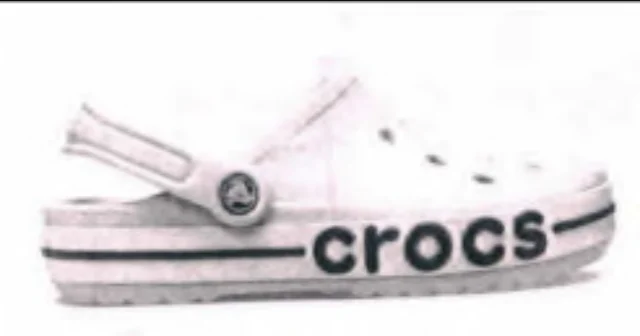

Finding: deceptively similar
“Perusal of the above makes it apparent that the placement of the Impugned Mark is identical to that of the Plaintiff’s Mark. Additionally, the overall visual appearance of the Impugned Mark is similar to that of the Plaintiff’s Mark. It is further noted that both the Marks are phonetically similar and are being used for identical goods under the same Class.”
Para 21-23, Crocs Inc. v. The Registrar of Trademarks, New Delhi & Anr., C.O. (COMM.IPD-TM) 82/2023, decided 26.09.2025
G4S Limited & Anr. v. 4Group Safeguard and Security Services Private Limited & Ors.



Finding: deceptively similar
“The Plaintiffs being the prior user, adopter of the Mark ‘G4S’ are entitled to protection. The identity in the Impugned Marks is so close to the Plaintiffs’ Marks that they are indistinguishable.”
Para 11, G4S Limited & Anr. v. 4Group Safeguard and Security Services Private Limited & Ors., CS(COMM) 276/2024 (I.A. 7433/2024; I.A. 39427/2024), decided 26.09.2025, 2025:DHC:8657
Hotels.com, LP v. Barath M L & Anr.

Finding: deceptively similar (nearly identical)
“A comparison of the Plaintiff’s Mark, ‘HOTELS.COM’, and the Defendants’ Mark, ‘HOTELCOM’, would show that the Defendants have adopted the Impugned Marks, which are almost identical to the Plaintiff's Mark.”
Para 29, Hotels.com, LP v. Barath M L & Anr., CS(COMM) 1133/2024 (I.A. 18971/2025), decided 26.09.2025, 2025:DHC:8656
Sandvik Intellectual Property AB v. Bhanwar Lal Dhabhai & Ors.


Finding: deceptively similar (nearly identical)
“Defendant No. 1 has merely added the word ULTRA before the word SANDVIK. The word ULTRA in the Impugned Marks does not help differentiate the rival Marks.”
Para 25, Sandvik Intellectual Property AB v. Bhanwar Lal Dhabhai & Ors., CS(COMM) 1051/2024 (I.A. 20919/2025), decided 26.09.2025, 2025:DHC:8659
Castrol Limited v. Malang Haji Shaikh & Anr.


Finding: deceptively similar
“The Defendants’ Marks and packaging are nearly identical / deceptively similar to the Plaintiff’s Marks and packaging, such that an unwary consumer of average intelligence is likely to be confused regarding the source or origin of the infringing product and may associate the same with the Plaintiff.”
Para 16, Castrol Limited v. Malang Haji Shaikh & Anr., CS(COMM) 723/2024 (I.A. 24959/2025), decided 08.10.2025, 2025:DHC:9084
Castrol Limited v. Malang Haji Shaikh & Anr.


Finding: deceptively similar
“The Defendants’ Marks and packaging are nearly identical / deceptively similar to the Plaintiff’s Marks and packaging, such that an unwary consumer of average intelligence is likely to be confused regarding the source or origin of the infringing product and may associate the same with the Plaintiff.”
Para 16, Castrol Limited v. Malang Haji Shaikh & Anr., CS(COMM) 723/2024 (I.A. 24959/2025), decided 08.10.2025, 2025:DHC:9084
Castrol Limited v. Malang Haji Shaikh & Anr.


Finding: identical
“The Defendants’ Marks and packaging are nearly identical / deceptively similar to the Plaintiff’s Marks and packaging, such that an unwary consumer of average intelligence is likely to be confused regarding the source or origin of the infringing product and may associate the same with the Plaintiff.”
Para 16, Castrol Limited v. Malang Haji Shaikh & Anr., CS(COMM) 723/2024 (I.A. 24959/2025), decided 08.10.2025, 2025:DHC:9084
Ardo Medical AG v. M/s SDB International & Anr.


Finding: identical
“Respondent No. 1’s approach of applying for the Impugned Mark identical to the Petitioner’s Mark which is globally reputed reflects a deliberate practice of Trade Mark Squatting.”
Para 12, Ardo Medical AG v. M/s SDB International & Anr., C.O. (COMM.IPD-TM) 92/2025, decided 13.10.2025
Tesla Inc. v. Tesla Power India Private Limited & Ors.


Finding: identical / deceptively similar (dominant feature TESLA identical; POWER and USA descriptive)
“The prominent feature of the Impugned Trade Marks is ‘TESLA’, which is identical to the Mark ‘TESLA’ being used by the Plaintiff since 2003. Applying the dominant feature test to the present case, the dominant feature of the Impugned Trade Marks ‘TESLA POWER’ and ‘TESLA POWER USA’ is clearly the prefix ‘TESLA’, as the suffix in each Mark ‘POWER’ and ‘USA’ are descriptive terms.”
Para 36, Tesla Inc. v. Tesla Power India Private Limited & Ors., CS(COMM) 353/2024 (I.A. 9755/2024), decided 24.11.2025, 2025:DHC:10367
Sunil Niranjan Shah v. Vijay Bahadur

Finding: identical / deceptively similar (triple identity)
“The test of confusion is to be seen from the perspective of an average person with imperfect recollection getting confused and in view of the Plaintiff’s Marks and the Impugned Marks being almost identical, any ordinary person would get confused and would not be able to distinguish between the Plaintiff’s Marks and the Impugned Marks.”
Para 12, Sunil Niranjan Shah v. Vijay Bahadur, CS(COMM) 669/2025 (I.A. 15795/2025), decided 24.11.2025, 2025:DHC:10364
ITC Limited v. Pelican Tobacco Co Ltd & Ors.
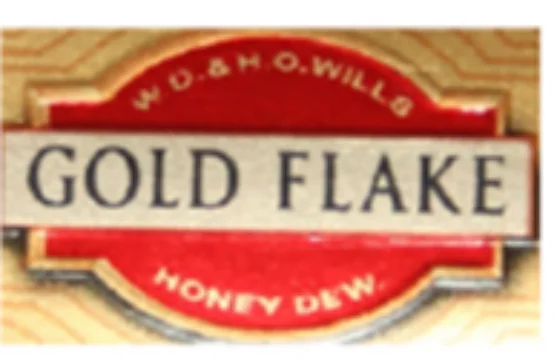


Finding: deceptively similar
“The Defendants’ minor variation, substituting ‘K’ with ‘M’ to form ‘GOLD FLAME’ from ‘GOLD FLAKE’ does not make the competing Marks dissimilar. Cigarettes are purchased by all classes of consumers and when sold loose, the consumers may not check the exact spelling before purchasing the Infringing Product.”
Para 22, ITC Limited v. Pelican Tobacco Co Ltd & Ors., CS(COMM) 221/2024, decided 24.11.2025, 2025:DHC:10358
ITC Limited v. Pelican Tobacco Co Ltd & Ors.
Finding: deceptively similar
“Not only the Impugned Marks are deceptively similar to the Plaintiff’s Marks, the Impugned Trade Dress and the Impugned Labels are also deceptively similar to the Plaintiff’s Trade Dress and the Plaintiff’s Labels.”
Para 10, ITC Limited v. Pelican Tobacco Co Ltd & Ors., CS(COMM) 221/2024, decided 24.11.2025, 2025:DHC:10358
Rajani Products v. Madhukar Varandani, Proprietor of M/s Naturalindia Oils and Proteins & Anr.

Finding: substantial imitation / reproduction (copyright artistic work comparison)
“From the above comparison, it is clear that the Impugned Artistic Work is substantially similar to Petitioner’s Artistic Works. The Impugned Artistic Work reproduces the SWASTIK device, which forms an essential part of the Petitioner’s Artistic Works.”
Para 21, Rajani Products v. Madhukar Varandani, Proprietor of M/s Naturalindia Oils and Proteins & Anr., C.O.(COMM.IPD-CR) 16/2024, decided 24.11.2025
CSJ Infrastructure Pvt Ltd v. Mr. Akash Kohli & Anr.


Finding: identical
“The dominant and essential feature of both the Petitioner’s Mark and the Impugned Marks is ‘ELANTE’ leaving no scope for differentiation between the Petitioner’s Mark and the Impugned Marks.”
Para 8, 11, CSJ Infrastructure Pvt Ltd v. Mr. Akash Kohli & Anr., C.O. (COMM.IPD-TM) 184/2025, 185/2025 & 186/2025, decided 27.11.2025
Havells India Limited & Anr. v. Cawels Electric Private Limited


Finding: deceptively similar
“The substitution of consonants ‘H’ with ‘C’, ‘V’ with ‘W’, and the omission of one ‘L’ does not materially alter manner in which the Subject Marks and the Impugned Marks are pronounced. Such minor variations do not detract from the overall phonetic similarity between the Subject Marks and the Impugned Marks and, therefore, are likely to cause confusion in the mind of an average consumer with imperfect recollection.”
Para 8, Havells India Limited & Anr. v. Cawels Electric Private Limited, CS(COMM) 1122/2025 (I.A. 25952/2025), decided 01.12.2025, 2025:DHC:11704
Sun Pharmaceutical Industries Ltd. v. Oziel Pharmaceuticals P. Ltd. & Anr.
Finding: deceptively similar
“Prima facie, the Impugned Marks adopted and used by Defendant No. 2 is visually, phonetically and structurally similar to the Plaintiff’s Marks. To an unwary consumer of average intelligence and imperfect recollection, the Impugned Marks and the Plaintiff’s Marks are likely to appear identical, leading to confusion and deception as to the source, origin or association of the products under the Impugned Marks.”
Para 10, Sun Pharmaceutical Industries Ltd. v. Oziel Pharmaceuticals P. Ltd. & Anr., CS(COMM) 1041/2024 (I.A. 22739/2025), decided 16.12.2025, 2025:DHC:11923
A.O. Smith Corporation & Anr. v. Star Smith Export Pvt. Ltd. & Anr.


Finding: deceptively similar
“The Impugned Trade Name is deceptively similar to the Plaintiffs’ Trade Marks and, therefore, the Impugned Trade Name is infringing upon the Plaintiff’s Trade Marks.”
Para 17, A.O. Smith Corporation & Anr. v. Star Smith Export Pvt. Ltd. & Anr., CS(COMM) 532/2022 (I.A. No. 12253/2022), decided 24.12.2025, 2025:DHC:11885
A.O. Smith Corporation & Anr. v. Star Smith Export Pvt. Ltd. & Anr.
Finding: deceptively similar
“The Impugned Domain Name completely subsumes the Plaintiffs’ Trade Marks and is similar to the Plaintiffs’ Domain Names. The Impugned Domain Name is also deceptively similar to the Plaintiffs’ Domain Names.”
Para 18, A.O. Smith Corporation & Anr. v. Star Smith Export Pvt. Ltd. & Anr., CS(COMM) 532/2022 (I.A. No. 12253/2022), decided 24.12.2025, 2025:DHC:11885
Ms. Bhupinder Mehta v. Sh. Pradeep Bareja & Anr.

Finding: identical / deceptively similar
“The Impugned Mark is deceptively similar to the Petitioner’s Mark and there is a high likelihood of confusion as the Impugned Mark is proposed to be used for goods identical or similar to the Petitioner’s Products.”
Para 10, Ms. Bhupinder Mehta v. Sh. Pradeep Bareja & Anr., C.O. (COMM.IPD-TM) 163/2024, decided 24.12.2025
Reckitt and Colman Overseas Health Limited v. Ind Swift Limited & Anr.
Finding: deceptively similar
“The addition of a descriptive word ‘DECA’ does not make the Impugned Mark dissimilar to the Appellant’s Mark as has held been by the Supreme Court in Kaviraj Pandit (supra) and Ruston & Hornsby Ltd (supra). 14. In view of the above, it has been established that the Appellant’s Mark and the Impugned Mark are deceptively similar and there exists a likelihood of confusion between the Appellant’s Mark and the Impugned Mark.”
Para 10, 13-14, Reckitt and Colman Overseas Health Limited v. Ind Swift Limited & Anr., C.A.(COMM.IPD-TM) 51/2024, decided 24.12.2025, 2025:DHC:11867
Rajvaidya Shital Prasad and Sons v. Karna Goomar & Anr.
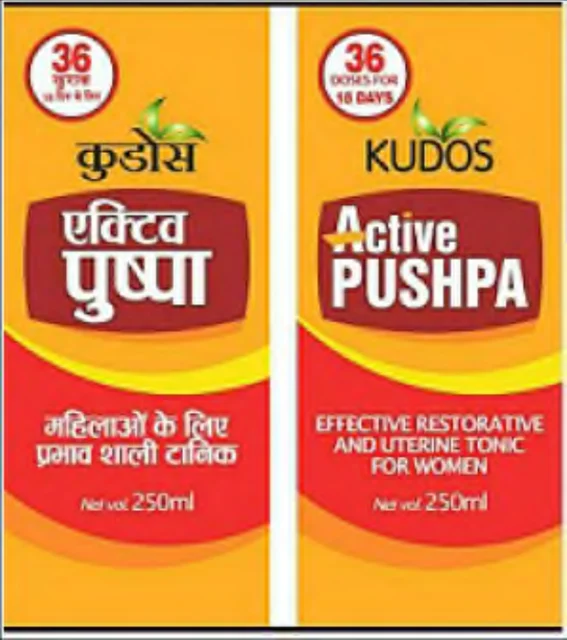
Finding: deceptively similar
“Accordingly, it is held that the Impugned Mark is deceptively similar to the Petitioner’s Mark given that the word ‘PUSHPA’ is a dominant part of the Petitioner’s Mark that requires protection and the same is not descriptive, generic or common to trade. Respondent No. 1 is guilty of dishonest adoption and use of the Impugned Mark, which is likely to cause passing off of the Impugned Goods and confusion / deception in the minds of the consumer.”
Para 45, Rajvaidya Shital Prasad and Sons v. Karna Goomar & Anr., C.O. (COMM.IPD-TM) 385/2021, decided 24.12.2025
U.S. Green Building Council v. Deming Certification Services Pvt. Ltd.


Finding: deceptively similar
“A comparison of the Plaintiff’s Marks with the Defendant’s Marks reveals that the dominant features of the Plaintiff’s Marks are closely imitated in the Defendant’s Marks, including the shape and overall stylization of the competing Marks in addition to the placement of the oak tree in the center.”
Para 34, U.S. Green Building Council v. Deming Certification Services Pvt. Ltd., CS(COMM) 664/2022 (I.A. 9946/2024), decided 24.12.2025, 2025:DHC:11865
VIII.2 Marks held not similar, or similar but not barred (5)
Mankind Pharma Limited v. The Registrar of Trade Marks
Finding: similar but no bar under Section 11(1) because no likelihood of confusion given applicant's KIND family goodwill and cited mark's non-use
“The Cited Mark in the Examination Report would not lead to rejection of the Subject Trade Mark considering the overwhelming use and registrations of marks with the suffix ‘KIND’ by the Appellant.”
Para 27, Mankind Pharma Limited v. The Registrar of Trade Marks, C.A.(COMM.IPD-TM) 54/2024, decided 22.08.2025, 2025:DHC:7141
Yatra Online Limited v. Mach Conferences and Events Limited
Finding: not deceptively similar – no infringement or passing off because 'YATRA' is generic/disclaimed and the prefix 'BookMy' distinguishes the impugned marks
“This argument of the Defendant has merit as the Word Marks ‘BookMyYatra’ and ‘BookMyYatra.com’ are distinctive with the use of prefix before the word ‘YATRA’.”
Para 60, Yatra Online Limited v. Mach Conferences and Events Limited, CS(COMM) 1099/2024 (I.A. 47682/2024), decided 22.08.2025, 2025:DHC:7167
Honasa Consumer Limited v. Cloud Wellness Private Limited & Anr.

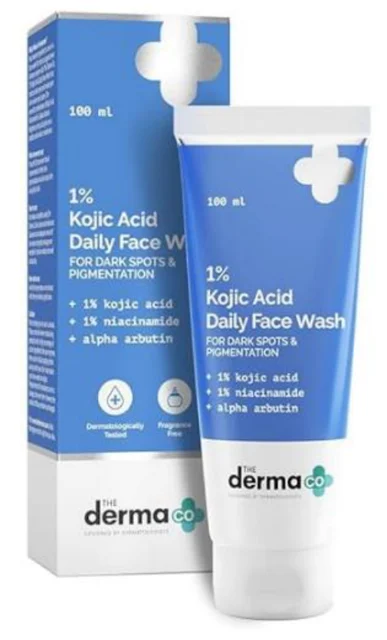
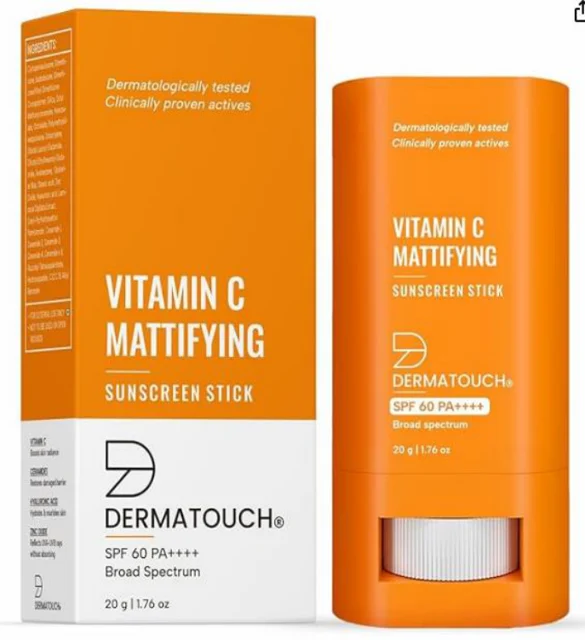

Finding: not confusingly similar (prima facie): similar two-tone scheme but distinct brand names and ingredient-led purchasing negate likelihood of confusion
“It is the interplay of the Mark ‘THE DERMA CO.’ with the descriptive content on the Subject Trade Dress that provides the distinct identity to the Plaintiff’s Products, and not the mere use of two-tone colour arrangements.”
Para 14, Honasa Consumer Limited v. Cloud Wellness Private Limited & Anr., CS(COMM) 483/2025 (I.A. 12474/2025), decided 26.09.2025, 2025:DHC:8662
Honasa Consumer Limited v. Cloud Wellness Private Limited & Anr.
Finding: not deceptively similar (visually and phonetically distinct)
“Secondly, the Plaintiff’s Mark ‘THE DERMA CO.’ and the Defendants’ Mark ‘DERMATOUCH’ are visually and phonetically distinct and clearly displayed on the trade dresses, enabling consumers to distinguish between the Plaintiff’s Products and the Defendants’ Products.”
Para 24, Honasa Consumer Limited v. Cloud Wellness Private Limited & Anr., CS(COMM) 483/2025 (I.A. 12474/2025), decided 26.09.2025, 2025:DHC:8662
Haveli Restaurant and Resorts Ltd. v. Registrar of Trade Marks & Anr.
Finding: not deceptively similar
“Accordingly, considering the Impugned Marks as a whole there is no deceptive similarity between the Appellant’s Marks and the Impugned Marks given the word ‘AMRITSAR’ as prefix to the Mark ‘HAVELI’.”
Para 64, Haveli Restaurant and Resorts Ltd. v. Registrar of Trade Marks & Anr., C.A.(COMM.IPD-TM) 57/2024 & C.A.(COMM.IPD-TM) 58/2024, decided 24.11.2025
Part IX — Patent Matters at a Glance
The 14 patent matters in this compilation are mostly appeals under Section 117A of the Patents Act, 1970 against refusals by the Controller, with one writ petition, one pre-grant opposition dispute and one infringement suit (a procedural ruling). The table lists the application, the issue, the outcome and the key finding in the Court's words. The legal propositions from these matters are tabulated topic-wise in Part III.
| S. No. | Case | Application / invention | Issue(s) | Outcome (summary) | Key finding (verbatim) |
|---|---|---|---|---|---|
| 1 | Bayer Cropscience Aktiengesellschaft v. Deputy Controller of Patents and Designs & Anr. C.A.(COMM.IPD-PAT) 80/2024 · 28.07.2025 | IN 369450 (Application No. 201817021524) Process for preparing 2-(4-chloro-2,6-dimethylphenyl)ethanol by reacting Grignard compound with ethylene oxide in presence of specified copper compounds | natural justice / hearing | Appeal allowed; Controller's order revoking the patent in post-grant opposition set aside for non-application of mind and failure to consider the patentee's written submissions; matter remanded for fresh decision by a different Controller, preferably within six months. No costs. | “Respondent No. 1 has failed to employ any independent thought / reasoning and has entirely relied on the Recommendations of the OB and failed to consider the Reply Statement and the WS submitted by the Appellant. Therefore, the Impugned Order cannot be sustained.” Para 34, Bayer Cropscience Aktiengesellschaft v. Deputy Controller of Patents and Designs & Anr., C.A.(COMM.IPD-PAT) 80/2024, decided 28.07.2025 |
| 2 | Proprietect L P v. The Controller of Patents C.A.(COMM.IPD-PAT) 168/2022 · 29.07.2025 | 5706/DELNP/2011 Foam laminate product with fibreglass reinforcement encapsulated in melted polyolefin scrim, for vehicle headliners | natural justice / hearing; sufficiency | Appeal allowed; refusal order dated 31.07.2020 set aside because the Controller raised a new Section 10(5) objection for the first time in the final order and did not consider the amended claims/submissions; remanded for de novo hearing, preferably within six months. No opinion on merits; no costs. | “On the contrary, the learned Controller, in the Impugned Order, has raised a new objection under Section 10(5) of the Act, which was not raised earlier with respect to the Application.” Para 17, Proprietect L P v. The Controller of Patents, C.A.(COMM.IPD-PAT) 168/2022, decided 29.07.2025 “Furthermore, the later Amended Claim No. 1 introduces new specific elements to the Original Claim No. 1, thereby further clarifying the scope of the invention as compared to the Original Claim No. 1.” Para 23, Proprietect L P v. The Controller of Patents, C.A.(COMM.IPD-PAT) 168/2022, decided 29.07.2025 |
| 3 | Treibacher Industrie AG v. The Assistant Controller of Patents and Designs C.A.(COMM.IPD-PAT) 92/2024 · 31.07.2025 | 201917008959 Process of catalytically oxidising carbonaceous compounds from combustion engines using ternary vanadate catalyst FexMeIyMeIIzVO4 | Section 59 amendment; natural justice / hearing | Appeal allowed; refusal under Section 59(1) and Section 2(1)(ja) set aside as an unreasoned, non-speaking order that ignored the written submissions; remanded to a different Controller for fresh decision within six months; copy to CGPDTM for administrative action. | “As the Impugned Order has not given any justification as to how the amended claims are not supported by the earlier filed claims, the Impugned Order is not a reasoned decision.” Para 29, Treibacher Industrie AG v. The Assistant Controller of Patents and Designs, C.A.(COMM.IPD-PAT) 92/2024, decided 31.07.2025 “In view of the same, the Impugned Order is against the principles of natural justice.” Para 34, Treibacher Industrie AG v. The Assistant Controller of Patents and Designs, C.A.(COMM.IPD-PAT) 92/2024, decided 31.07.2025 |
| 4 | Croda Inc v. The Controller of Patents C.A.(COMM.IPD-PAT) 490/2022 · 04.08.2025 | 1432/DELNP/2013 Agrochemical adjuvants and formulations comprising ethoxylated fatty acid mono-ester of sorbitan of formula (I) to reduce herbicide antagonism | natural justice / hearing | Appeal allowed; refusal order (inventive step and Section 3(e)) quashed because the Controller relied on prior art D3 not put to the applicant in the hearing notice; matter remanded for fresh hearing with a fresh hearing notice, to be decided preferably within six months. | “Relying on Prior Arts in the Impugned Order for the first time that were not discussed or considered in the FER or the Hearing Notice clearly vitiates the Impugned Order and is against the principles of Natural Justice.” Para 28, Croda Inc v. The Controller of Patents, C.A.(COMM.IPD-PAT) 490/2022, decided 04.08.2025 |
| 5 | Valent Biosciences LLC v. The Controller of Patents and Designs & Anr. C.A.(COMM.IPD-PAT) 25/2022 · 26.09.2025 | 201717025151 Method of controlling five Lepidopteran pests by applying a synergistic ratio (1:0.001 to 1:0.08) of Bacillus thuringiensis subsp. kurstaki and chlorantraniliprole | inventive step; natural justice / hearing; other | Appeal under Section 117A allowed; refusal on lack of inventive step (Section 2(1)(ja)) and Section 3(h) set aside and the application remanded for de novo consideration after hearing, to be decided within six months of the hearing. | “Therefore, the Respondents have failed to demonstrate how the cited Documents D1 to D4 would render the claimed invention obvious under the Subject Application.” Para 47, Valent Biosciences LLC v. The Controller of Patents and Designs & Anr., C.A.(COMM.IPD-PAT) 25/2022, decided 26.09.2025 “In the present case, the learned Controller has not provided sufficient justification as to why a method of plant pest control claimed under the Subject Application would fall within the purview of Section 3(h) of the Act, which covers traditional methods of agriculture.” Para 56, Valent Biosciences LLC v. The Controller of Patents and Designs & Anr., C.A.(COMM.IPD-PAT) 25/2022, decided 26.09.2025 “Considering the submissions made by the Parties and in view of the above finding, the Impugned Order deserves to be set aside, and the matter is directed to be remanded to the Respondents for de novo consideration.” Para 57, Valent Biosciences LLC v. The Controller of Patents and Designs & Anr., C.A.(COMM.IPD-PAT) 25/2022, decided 26.09.2025 |
| 6 | Aethlon Medical, Inc. v. Controller General of Patents, Designs and Trademarks & Anr. C.A.(COMM.IPD-PAT) 251/2022 · 26.09.2025 | 8139/DELNP/2008 Medical device for extracorporeal removal of immune suppressive microvesicular particles from blood using a lectin-based matrix | Section 59 amendment; natural justice / hearing | Appeal disposed of; auxiliary amended claims (merging dependent claim 3 into claim 1) accepted under Section 59, new objection on lack of drawings raised only in reply rejected, and matter remanded to the Controller for fresh decision on the auxiliary claims within six months after hearing. | “Therefore, the Auxiliary Claims are acceptable as they do not broaden the scope of the unamended claims, and the subject matter of the proposed amendment in the Auxiliary Claims is disclosed in the Specification.” Para 25, Aethlon Medical, Inc. v. Controller General of Patents, Designs and Trademarks & Anr., C.A.(COMM.IPD-PAT) 251/2022, decided 26.09.2025 “The issue regarding the requirements of drawings should have raised an objection at the time of issuance of the FER or at the time of issuance of the Hearing Notice.” Para 27, Aethlon Medical, Inc. v. Controller General of Patents, Designs and Trademarks & Anr., C.A.(COMM.IPD-PAT) 251/2022, decided 26.09.2025 |
| 7 | Neeraj Gupta v. The Controller of Patents and Designs C.A.(COMM.IPD-PAT) 29/2023 · 26.09.2025 | 201911036272 Intravenous catheter device with valve closure member closing valve prongs to prevent blood backflow | inventive step; natural justice / hearing | Appeal allowed: refusal order dated 11.02.2021 and review order dated 06.01.2023 set aside and matter remanded to the Patent Office for fresh hearing and decision, preferably within six months. No costs. | “In the absence of this reasoning, it cannot be determined that document D2 render the present invention claimed under the Subject Application obvious. Therefore, the learned Controller failed to comply with the third step of Agriboard (supra).” Para 42, Neeraj Gupta v. The Controller of Patents and Designs, C.A.(COMM.IPD-PAT) 29/2023, decided 26.09.2025 “It is made clear that the learned Controller shall decide the matter on the merits in accordance with the law, uninfluenced by any observations in this Order. The learned Controller shall reconsider the matter preferably within a period of six months from the date of this decision.” Para 49, Neeraj Gupta v. The Controller of Patents and Designs, C.A.(COMM.IPD-PAT) 29/2023, decided 26.09.2025 |
| 8 | Medilabo RFP Inc v. The Controller of Patents C.A.(COMM.IPD-PAT) 16/2024 · 24.11.2025 | 202117034705 Prophylactic or therapeutic drug composition of rifampicin and resveratrol compounds for neurodegenerative disease | Section 3(i); natural justice / hearing | Appeal allowed; refusal under Section 3(i) set aside and application remanded to the Controller for fresh consideration of the amended claims (and all objections) after a fresh hearing, within six months. No costs. | “Therefore, the Impugned Order lacks a substantive basis for dismissing the Subject Application under Section 3(i) of the Act. The learned Controller has ignored Section 10(4)(c) of the Act, which is imperative to interpret the scope of the claims.” Para 52, Medilabo RFP Inc v. The Controller of Patents, C.A.(COMM.IPD-PAT) 16/2024, decided 24.11.2025 “These objections are not addressed in the Impugned Order.” Para 55, Medilabo RFP Inc v. The Controller of Patents, C.A.(COMM.IPD-PAT) 16/2024, decided 24.11.2025 |
| 9 | Amylin Pharmaceuticals, LLC & Anr. v. Assistant Controller of Patents and Designs C.A.(COMM.IPD-PAT) 76/2022 · 24.11.2025 | 1498/DELNP/2011 Manufactured pre-mixed injectable suspension of PLGA microspheres containing 1-10% exenatide and 0.1-5% sugar in a non-aqueous carrier of C6-C12 triglycerides | inventive step | Appeal under Section 117A dismissed; Controller's refusal under Section 15 upheld on the ground that the claimed invention lacks inventive step over prior art D1 to D4. No costs. | “Therefore, the claimed invention under the Subject Application is obvious and does not involve an inventive step under Section 2(l)(ja) of the Act in the light of the prior art documents D1 to D4, and no inventive step can be acknowledged. Hence, the objections raised under Section 2(l)(j) of the Act at the time of the Hearing is not met.” Para 75, Amylin Pharmaceuticals, LLC & Anr. v. Assistant Controller of Patents and Designs, C.A.(COMM.IPD-PAT) 76/2022, decided 24.11.2025 “Therefore, in the light of the above reasoning, it would be obvious for PSITA to use the triglyceride fatty acid of carbon chain lengths ranging from 6 to 12, which is claimed under Claim 1 of the Subject Application.” Para 68, Amylin Pharmaceuticals, LLC & Anr. v. Assistant Controller of Patents and Designs, C.A.(COMM.IPD-PAT) 76/2022, decided 24.11.2025 |
| 10 | Trident Limited v. Controller of Patents C.A.(COMM.IPD-PAT) 162/2022 · 24.11.2025 | 1867/DEL/2010 Air rich yarn/fabric with through-pores homogenously distributed across radial cross-section, made with 8-25% water-soluble fibre slivers | inventive step; natural justice / hearing | Appeal allowed; Controller's order dated 05.01.2021 refusing the application for lack of inventive step set aside and matter remanded for fresh hearing before a different Controller, who must consider the auxiliary claims and decide within six months. No costs. | “By providing a yarn having a plurality of pores that are homogenously distributed across a radial cross-section of the yarn, the claimed invention provides a yarn structure that is neither taught nor achieved by any of the prior art references D1 to D4.” Para 63, Trident Limited v. Controller of Patents, C.A.(COMM.IPD-PAT) 162/2022, decided 24.11.2025 “Therefore, the reasoning of the learned Controller under Paragraph No. 24 of the Impugned Order cannot be accepted, which states that the Appellant has failed to suggest any special measures adopted to achieve uniform radial distribution of fibres in the yarn cross-section.” Para 77, Trident Limited v. Controller of Patents, C.A.(COMM.IPD-PAT) 162/2022, decided 24.11.2025 |
| 11 | Zydus Healthcare Ltd. v. Assistant Controller of Patents and Designs & Anr. W.P.(C)-IPD 23/2023 · 24.12.2025 | IN 426553 (Application No. 1009/MUMNP/2012) Orally administered dosage form of palonosetron (0.56 mg HCl) and netupitant (200–400 mg) for nausea and vomiting | Section 3(d); Section 59 amendment; natural justice / hearing | Writ petition by pre-grant opponent challenging grant of patent dismissed: Delhi High Court lacked territorial jurisdiction (appropriate office was Mumbai), no manifest jurisdictional error in not passing a separate order on pre-FER amendments, and no breach of natural justice in not hearing the opponent at the Section 14 hearing. No costs. | “FER itself is the determination of the pre-FER amendments.” Para 41, Zydus Healthcare Ltd. v. Assistant Controller of Patents and Designs & Anr., W.P.(C)-IPD 23/2023, decided 24.12.2025, 2025:DHC:11932 “Hence, there was no requirement to give opportunity of hearing to the Petitioner second time after the Third Amended was submitted by Respondent No. 2 whereby only the Claim Nos. 3, 4, 8, 10 and 11 were deleted and the Claim No. 7 was made dependent on Claim No. 1 and was re-numbered as Claim No. 5 while there were no changes made to Claim No. 1.” Para 49, Zydus Healthcare Ltd. v. Assistant Controller of Patents and Designs & Anr., W.P.(C)-IPD 23/2023, decided 24.12.2025, 2025:DHC:11932 “The above finding also applies to the grounds raised by the Petitioner that the Subject Patent is ultra vires Sections 3(d) and 3(e) of the Act.” Para 43, Zydus Healthcare Ltd. v. Assistant Controller of Patents and Designs & Anr., W.P.(C)-IPD 23/2023, decided 24.12.2025, 2025:DHC:11932 |
| 12 | Osaka University v. Assistant Controller of Patents and Designs C.A.(COMM.IPD-PAT) 390/2022 · 24.12.2025 | 3495/DELNP/2012 2',4'-bridged artificial nucleosides/nucleotides with 5-7 membered cyclic amide bridge (high RNA binding affinity and nuclease resistance) | Section 3(d); inventive step | Appeal allowed in effect: refusal under Sections 2(1)(j)/2(1)(ja) and 3(d) set aside for infirmities (wrong example compared, no obviousness analysis of combined prior art, new reasoning and prior art first raised in the refusal order); matter remanded for fresh hearing and decision within six months. No costs. | “Most importantly, it can be inferred from a bare perusal of the Impugned Order that the learned Controller has primarily relied on the document D2 to establish the objection under Section 2 (1)(j) of the Act.” Para 54, Osaka University v. Assistant Controller of Patents and Designs, C.A.(COMM.IPD-PAT) 390/2022, decided 24.12.2025 “Therefore, the Appellant never got the opportunity to reply to the identified derivative of D2.” Para 62, Osaka University v. Assistant Controller of Patents and Designs, C.A.(COMM.IPD-PAT) 390/2022, decided 24.12.2025 |
| 13 | Telefonaktiebolaget LM Ericsson (Publ) v. Controller General of Patents, Designs and Trademarks C.A.(COMM.IPD-PAT) 119/2022 · 24.12.2025 | 6132/DELNP/2007 Method for data security in reliable transport protocol (SCTP) separating ordered and unordered delivery data in a security protocol with sequence numbers for unordered data | inventive step; natural justice / hearing | Appeal under Section 117A dismissed; refusal for lack of inventive step under Section 2(1)(ja) upheld, the Controller's order being adequately reasoned and the D1/D3 mix-up in paras 9 and 12 treated as an inadvertent error. No costs. | “Since the insertion of sequence number in the header of the message is disclosed and separation of ordered delivery data and unordered delivery data in a security protocol mining on top of the transport protocol, performing different type of security processing for ordered delivery and unordered delivery data is rendered obvious in the light of disclose in the cited documents, the Impugned Order has rightly concluded that the claimed invention has no inventive step under Section 2 (1) (ja) of the Act.” Para 39, Telefonaktiebolaget LM Ericsson (Publ) v. Controller General of Patents, Designs and Trademarks, C.A.(COMM.IPD-PAT) 119/2022, decided 24.12.2025 “It is also obvious that there appears to be an inadvertent error in Paragraph Nos. 9 and 12 of the Impugned Order as submitted by the learned CGSC for the Respondent.” Para 41, Telefonaktiebolaget LM Ericsson (Publ) v. Controller General of Patents, Designs and Trademarks, C.A.(COMM.IPD-PAT) 119/2022, decided 24.12.2025 |
| 14 | Nippon Steel Corporation v. The Controller of Patents C.A.(COMM.IPD-PAT) 10/2025 · 24.12.2025 | 202117029591 High-strength steel sheet and its manufacturing method | Section 15 refusal | Appeal allowed; Controller's refusal under Section 15 (for want of proof of right for a deceased inventor) set aside and the Controller directed to examine the application and pass appropriate directions for grant in accordance with law. | “Therefore, Employment Agreement entered between the Employer (assignee) and Employee (inventor), which is duly signed by the deceased inventor, is an acceptable document to comply with the requirement of ‘proof of the right’ under Section 7(2) of the Act.” Para 45, Nippon Steel Corporation v. The Controller of Patents, C.A.(COMM.IPD-PAT) 10/2025, decided 24.12.2025 |
Part X — Submissions on Points of Law Not Accepted by the Court
This part lists 44 instances where a party advanced a proposition of law and the Court held that proposition to be incorrect as a matter of law — for example, that the statute or binding precedent did not support it. Instances where a cited judgment was only distinguished on facts, or where facts were found not proved, are deliberately left out. Each row reproduces the submission as recorded in the judgment and the Court's finding on it, both verbatim, followed by a one-line neutral summary.
| S. No. | Issue & case | Submission as recorded (verbatim) | Court's finding (verbatim) |
|---|---|---|---|
| 1 | Disclaimed generic word and passing off Yatra Online Limited v. Mach Conferences and Events Limited CS(COMM) 1099/2024 (I.A. 47682/2024) |
“The learned Counsel for the Plaintiff further submitted that the disclaimers do not go to the market and the customer has no knowledge of any disclaimer present in a Trade Mark registration.” Para 11, Yatra Online Limited v. Mach Conferences and Events Limited, CS(COMM) 1099/2024 (I.A. 47682/2024), decided 22.08.2025, 2025:DHC:7167 |
“The Plaintiff has relied upon the decision of Ashok Chandra Rachit (supra) to argue that the disclaimer does not affect the rights of the proprietor with respect to the part that has acquired any right due to prolonged use of those parts in respect of the services provided by the Plaintiff. However, if the disclaimed word is generic in nature, the prolonged use of the same cannot confer the Plaintiff with the right to claim passing off.” Para 55, Yatra Online Limited v. Mach Conferences and Events Limited, CS(COMM) 1099/2024 (I.A. 47682/2024), decided 22.08.2025, 2025:DHC:7167 In short: Prima facie, the Court held that where a disclaimed word is generic, prolonged use cannot confer a right to claim passing off. |
| 2 | Generic word and secondary meaning Yatra Online Limited v. Mach Conferences and Events Limited CS(COMM) 1099/2024 (I.A. 47682/2024) |
“The Mark ‘YATRA’ has become a household name and is synonymous with the Plaintiff and its business and no one else, such that the Trade Mark ‘YATRA’ has acquired a secondary significance.” Para 12, Yatra Online Limited v. Mach Conferences and Events Limited, CS(COMM) 1099/2024 (I.A. 47682/2024), decided 22.08.2025, 2025:DHC:7167 |
“The generic or commonly descriptive word can never become trade marks on their own as they never acquire distinctiveness or a secondary meaning. These words do not indicate origin or source.” Para 53, Yatra Online Limited v. Mach Conferences and Events Limited, CS(COMM) 1099/2024 (I.A. 47682/2024), decided 22.08.2025, 2025:DHC:7167 In short: Prima facie, the Court held generic or commonly descriptive words cannot on their own become trade marks, as they do not acquire distinctiveness or secondary meaning. |
| 3 | Common-to-trade plea by defendant seeking registration Tesla Inc. v. Tesla Power India Private Limited & Ors. CS(COMM) 353/2024 (I.A. 9755/2024) |
“Thus, the Plaintiff cannot claim any exclusive proprietary rights over the mark ‘TESLA’. The Plaintiff has not coined the mark ‘TESLA’ and is also a subsequent adopter and user of the mark ‘TESLA’, having co-existed with several other parties and marks worldwide, including in India. Existence of a number of Tesla themed marks, creates a ‘crowded market’ and affects the distinctive character of the Marks and reduced the risk of confusion.” Para 6.17, Tesla Inc. v. Tesla Power India Private Limited & Ors., CS(COMM) 353/2024 (I.A. 9755/2024), decided 24.11.2025, 2025:DHC:10367 |
“The use of the Mark ‘TESLA’ being common to trade is not available to the Defendants as the Defendants themselves have applied for the registration of the Impugned Trade Marks. The Defendants are not allowed to approbate and reprobate and take contrary stands as held in Automatic Electric Limited (supra), Mohd. Shakir (supra), Anchor Health and Beauty (supra) and PEPS Industries (supra).” Para 31, Tesla Inc. v. Tesla Power India Private Limited & Ors., CS(COMM) 353/2024 (I.A. 9755/2024), decided 24.11.2025, 2025:DHC:10367 In short: Prima facie, the Court held a defendant that has itself applied to register the mark cannot plead it is common to trade, as it cannot approbate and reprobate. |
| 4 | Unremoved registered mark as 'earlier trade mark' Street One GmbH v. The Registrar of Trade Marks & Ors. C.A.(COMM.IPD-TM) 38/2024 |
“The learned Counsel for Respondent No. 3 opposed the present Appeal and submitted that Section 11 of the Act has to be read in conjunction with Section 47 of the Act, which provides for the removal of a registered Trade Mark from the register on the ground of non-use of the said Mark.” Para 11, Street One GmbH v. The Registrar of Trade Marks & Ors., C.A.(COMM.IPD-TM) 38/2024, decided 28.11.2025 |
“The submission of learned Counsel for Respondent No. 3 that Section 11 has to be read in conjunction with Section 47 of the Act cannot be accepted as the Appellant’s Mark has not been removed from the Register of Trade Marks under Section 47 on account of non-use and, therefore, the Appellant’s Mark shall continue to be considered as an ‘earlier Trade Mark’ for the purposes of Section 11 of the Act.” Para 26, Street One GmbH v. The Registrar of Trade Marks & Ors., C.A.(COMM.IPD-TM) 38/2024, decided 28.11.2025 In short: The Court held that a registered mark not removed under Section 47 for non-use continues to be an 'earlier trade mark' for the purposes of Section 11. |
| 5 | Corporate name approval as defence to infringement G4S Limited & Anr. v. 4Group Safeguard and Security Services Private Limited & Ors. CS(COMM) 276/2024 (I.A. 7433/2024; I.A. 39427/2024) |
“The Impugned Marks are being used pursuant to the approval of the Impugned Trade Names by the Ministry of Corporate Affairs and the Registrar of Companies. The Mark ‘4GS’ is the abbreviation of the Trade Name, 4Group Safeguard & Security Services Private Limited, registered by the Ministry of Corporate Affairs, and Defendant No. 1 is using the abbreviation of its Trade Name as a Trade Mark.” Para 4.1, G4S Limited & Anr. v. 4Group Safeguard and Security Services Private Limited & Ors., CS(COMM) 276/2024 (I.A. 7433/2024; I.A. 39427/2024), decided 26.09.2025, 2025:DHC:8657 |
“This submission does not constitute a valid defence against infringement or passing off. Under Section 29(5) of the Trade Marks Act, the use of a registered Trade Mark as a Trade Name itself amounts to infringement of the registered Trade Mark.” Para 6, G4S Limited & Anr. v. 4Group Safeguard and Security Services Private Limited & Ors., CS(COMM) 276/2024 (I.A. 7433/2024; I.A. 39427/2024), decided 26.09.2025, 2025:DHC:8657 In short: The Court held this is no defence to infringement or passing off; under Section 29(5), use of a registered trade mark as a trade name itself amounts to infringement. |
| 6 | Third-party use as defence to infringement Tesla Inc. v. Tesla Power India Private Limited & Ors. CS(COMM) 353/2024 (I.A. 9755/2024) |
“Further, several entities around the world, including in India, have adopted, commenced use and registered the mark ‘TESLA’, even after the alleged claim of first use of the ‘TESLA’ Mark by the Plaintiff.” Para 6.15, Tesla Inc. v. Tesla Power India Private Limited & Ors., CS(COMM) 353/2024 (I.A. 9755/2024), decided 24.11.2025, 2025:DHC:10367 |
“In any event, the Plaintiff is not expected to sue every small infringer and use of Marks, deceptively similar to the Plaintiff’s Marks, by third-parties is not a valid defence against infringement of Trade Marks as has been held by this Court in Pankaj Goel (supra), Corn Products Refining (supra) and National Bell Co. (supra).” Para 35, Tesla Inc. v. Tesla Power India Private Limited & Ors., CS(COMM) 353/2024 (I.A. 9755/2024), decided 24.11.2025, 2025:DHC:10367 In short: At the interim stage, the Court held a plaintiff need not sue every small infringer and use of similar marks by third parties is not a defence to infringement. |
| 7 | Delay as ground to refuse injunction in infringement Tesla Inc. v. Tesla Power India Private Limited & Ors. CS(COMM) 353/2024 (I.A. 9755/2024) |
“Further, the Plaintiff has approached the court after considerable delay.” Para 6.33, Tesla Inc. v. Tesla Power India Private Limited & Ors., CS(COMM) 353/2024 (I.A. 9755/2024), decided 24.11.2025, 2025:DHC:10367 |
“In cases of infringement of Trade Mark an injunction must follow and merely delay, if any, in seeking the remedy of injunction cannot be a ground to deny injunction to the Plaintiff.” Para 26, Tesla Inc. v. Tesla Power India Private Limited & Ors., CS(COMM) 353/2024 (I.A. 9755/2024), decided 24.11.2025, 2025:DHC:10367 In short: The Court held that in trade mark infringement an injunction must follow and delay, if any, in seeking it is not by itself a ground to deny an injunction. |
| 8 | Proof of loss not required for infringement ITC Limited v. Pelican Tobacco Co Ltd & Ors. CS(COMM) 221/2024 |
“The Plaintiff’s own disclosure shows exponential growth in turnover and profits, negating claims of loss or dilutive harm.” Para 6.9, ITC Limited v. Pelican Tobacco Co Ltd & Ors., CS(COMM) 221/2024, decided 24.11.2025, 2025:DHC:10358 |
“The plea of the Defendant Nos. 1 and 2 that the Plaintiff has not been able to show damages due to the introduction of the Infringing Products in the market is not a valid plea in a case of infringement of Trade Marks. It is trite law that mere likelihood of confusion is enough to establish a case of infringement of Trade Marks and actual confusion is not required to be demonstrated.” Para 14, ITC Limited v. Pelican Tobacco Co Ltd & Ors., CS(COMM) 221/2024, decided 24.11.2025, 2025:DHC:10358 In short: Prima facie, the Court held absence of proven damage is not a valid plea in infringement; likelihood of confusion suffices and actual confusion need not be shown. |
| 9 | Delay as ground to refuse injunction in infringement ITC Limited v. Pelican Tobacco Co Ltd & Ors. CS(COMM) 221/2024 |
“There is a delay of more than seven years in filing the present Suit since the Plaintiff is aware about the Impugned Marks since 2017, a delay of four years from the filing of opposition proceedings before the Trade Mark Registry, and a delay of six months since the Infringing Products were found by the Plaintiff in open market.” Para 6.2, ITC Limited v. Pelican Tobacco Co Ltd & Ors., CS(COMM) 221/2024, decided 24.11.2025, 2025:DHC:10358 |
“In cases of infringement of Trade Mark an injunction must follow and merely delay, if any, in seeking the remedy of injunction cannot be a ground to deny injunction to the Plaintiff as has been held in the cases of Midas Hygiene (supra) and Hindustan Pencils (supra).” Para 13, ITC Limited v. Pelican Tobacco Co Ltd & Ors., CS(COMM) 221/2024, decided 24.11.2025, 2025:DHC:10358 In short: The Court held that in trade mark infringement an injunction must follow and delay, if any, is not by itself a ground to deny injunction (Midas Hygiene, Hindustan Pencils). |
| 10 | Third-party use as defence to infringement ITC Limited v. Pelican Tobacco Co Ltd & Ors. CS(COMM) 221/2024 |
“Third-party tobacco products are also sold under the Mark ‘GOLD’ and other formative ‘GOLD’ Marks, Golden Colour Trade Dress and Trade Dress similar to the Plaintiff’s Trade Dress.” Para 6.7, ITC Limited v. Pelican Tobacco Co Ltd & Ors., CS(COMM) 221/2024, decided 24.11.2025, 2025:DHC:10358 |
“The Plaintiff is not expected to sue every small infringer and use of Marks, deceptively similar to the Plaintiff’s Marks, by third-parties is not a valid defence against infringement of Trade Marks as has been held by this Court in Pankaj Goel (supra).” Para 14, ITC Limited v. Pelican Tobacco Co Ltd & Ors., CS(COMM) 221/2024, decided 24.11.2025, 2025:DHC:10358 In short: At the interim stage, the Court held a plaintiff is not expected to sue every small infringer and third-party use of similar marks is not a defence to infringement. |
| 11 | Author's moral rights independent of ownership Envitech Consultants India Pvt. Ltd. v. Rudrabhishek Enterprises Limited & Ors. CS(COMM) 892/2023 (I.A. 8257/2024) |
“Therefore, the Plaintiff, not being the owner of the Subject Work, has no cause of action to file the present Plaint, and the same deserves to be rejected as being barred by law.” Para 5.7, Envitech Consultants India Pvt. Ltd. v. Rudrabhishek Enterprises Limited & Ors., CS(COMM) 892/2023 (I.A. 8257/2024), decided 24.11.2025, 2025:DHC:10351 |
“Considering the averments made in the Plaint as true, the Plaintiff retains statutory moral rights under Section 57 of the Act, which subsist with the author regardless of ownership, and enable the pursuit of relief against distortion, mutilation or denial of attribution.” Para 20, Envitech Consultants India Pvt. Ltd. v. Rudrabhishek Enterprises Limited & Ors., CS(COMM) 892/2023 (I.A. 8257/2024), decided 24.11.2025, 2025:DHC:10351 In short: Taking the plaint averments as true under Order VII Rule 11, the Court held an author's Section 57 moral rights subsist regardless of ownership, disclosing a cause of action. |
| 12 | Third-party use as defence to infringement A.O. Smith Corporation & Anr. v. Star Smith Export Pvt. Ltd. & Anr. CS(COMM) 532/2022 (I.A. No. 12253/2022) |
“There are several other water heater companies which are manufacturing the water heaters and other electrical appliances under the Mark ‘SMITH’. ‘SMITH’ is also a common name and the Plaintiffs cannot claim exclusivity over it.” Para 8.3, A.O. Smith Corporation & Anr. v. Star Smith Export Pvt. Ltd. & Anr., CS(COMM) 532/2022 (I.A. No. 12253/2022), decided 24.12.2025, 2025:DHC:11885 |
“The Plaintiffs are not expected to sue every small infringer. Further, use by third-party is not a valid defence for infringement of Trade Marks as has been held in Pankaj Goel v. Dabur India Ltd. (supra), Shree Nath Heritage (supra) and Dr. Reddy Laboratories (supra).” Para 15, A.O. Smith Corporation & Anr. v. Star Smith Export Pvt. Ltd. & Anr., CS(COMM) 532/2022 (I.A. No. 12253/2022), decided 24.12.2025, 2025:DHC:11885 In short: At the interim stage, the Court held a plaintiff is not expected to sue every small infringer and third-party use is not a valid defence to infringement. |
| 13 | Actual confusion not required for interim injunction Havells India Limited & Anr. v. Cawels Electric Private Limited CS(COMM) 1122/2025 (I.A. 25952/2025) |
“In the absence of any instance of customer confusion, diversion of trade, or reputational injury, mere allegations cannot justify an extraordinary relief of interim injunction.” Para 5.15, Havells India Limited & Anr. v. Cawels Electric Private Limited, CS(COMM) 1122/2025 (I.A. 25952/2025), decided 01.12.2025, 2025:DHC:11704 |
“This Court in Exotic Mile (supra) has observed that the plaintiff is only required to prove likelihood of confusion, and not actual confusion and whether there is, or is no, likelihood of confusion, is a view that the Court has to take on the material before it by a subjective comparison, and is not dependent on evidence.” Para 10, Havells India Limited & Anr. v. Cawels Electric Private Limited, CS(COMM) 1122/2025 (I.A. 25952/2025), decided 01.12.2025, 2025:DHC:11704 In short: Relying on Exotic Mile, the Court held only likelihood of confusion need be shown, assessed by the Court on the material before it, not actual confusion. |
| 14 | Rule 50(5) written arguments after deemed abandonment Tablets (India) Limited v. M/s. Spey Medicals Private Limited & Anr. C.A.(COMM.IPD-TM) 76/2022 |
“It was further submitted that there is no discretion available with Respondent No. 2 as Rule 50(5) provides that Respondent No. 2 “shall” consider the written arguments, if submitted by a party to the proceedings.” Para 12, Tablets (India) Limited v. M/s. Spey Medicals Private Limited & Anr., C.A.(COMM.IPD-TM) 76/2022, decided 31.07.2025 |
“As Rule 45(2) of the Rules provides that in case of no action under Rule 45(1) of the Rules the Opposition shall be deemed to have abandoned, Rule 50(5) of the Rules shall not come to the rescue of the Appellant to oppose the Application by filing Written Arguments.” Para 46, Tablets (India) Limited v. M/s. Spey Medicals Private Limited & Anr., C.A.(COMM.IPD-TM) 76/2022, decided 31.07.2025 In short: The Court held Rule 50 applies after closure of evidence; where nothing is filed under Rule 45(1), the opposition is deemed abandoned under Rule 45(2), and Rule 50(5) cannot assist. |
| 15 | Whether opposition evidence is optional under Section 21(4) Tablets (India) Limited v. M/s. Spey Medicals Private Limited & Anr. C.A.(COMM.IPD-TM) 76/2022 |
“Section 21(4) of the Act only gives an opportunity to submit any evidence which the opponent may rely upon in support of its opposition. Hence, it was not mandatory for the Appellant to submit any Evidence before Respondent No. 2.” Para 11, Tablets (India) Limited v. M/s. Spey Medicals Private Limited & Anr., C.A.(COMM.IPD-TM) 76/2022, decided 31.07.2025 |
“Hence, even though Section 21(4) of the Act mentions that the Appellant “may” rely upon any Evidence, the same has to be in the prescribed manner and within the prescribed time as stipulated in Rule 45(1) of the Rules.” Para 38, Tablets (India) Limited v. M/s. Spey Medicals Private Limited & Anr., C.A.(COMM.IPD-TM) 76/2022, decided 31.07.2025 In short: The Court held that, though Section 21(4) uses 'may', evidence must be filed in the prescribed manner and time under Rule 45(1), failing which the opposition is deemed abandoned. |
| 16 | Proof of use in opposition based on earlier registered mark Street One GmbH v. The Registrar of Trade Marks & Ors. C.A.(COMM.IPD-TM) 38/2024 |
“Per contra, the learned Counsel for Respondent Nos. 1 and 2 submitted that a factual examination of the use and reputation of a Trade Mark is mandatory and the Appellant failed to discharge the burden of proving the same.” Para 10, Street One GmbH v. The Registrar of Trade Marks & Ors., C.A.(COMM.IPD-TM) 38/2024, decided 28.11.2025 |
“Accordingly, Respondent No. 1 was required to examine the likelihood of confusion under Section 11 (1) of the Act irrespective of the actual use of the Appellant’s Mark as the same is not necessary at all to determine the likelihood of confusion.” Para 25, Street One GmbH v. The Registrar of Trade Marks & Ors., C.A.(COMM.IPD-TM) 38/2024, decided 28.11.2025 In short: The Court held likelihood of confusion under Section 11(1) must be examined irrespective of actual use of the earlier mark, use not being necessary for that inquiry. |
| 17 | Use or reputation in India for Section 11(1) opposition Reckitt and Colman Overseas Health Limited v. Ind Swift Limited & Anr. C.A.(COMM.IPD-TM) 51/2024 |
“The Appellant’s Mark has not acquired any trans-border reputation in India and that the Appellant has not shown that their alleged reputation outside India, has travelled to India and, therefore, the Appellant cannot claim goodwill in India as has been held in Toyota Jidosha Kabushiki Kaisha v. Prius Auto Industries Ltd., (2018) 2 SCC 1.” Para 7.10, Reckitt and Colman Overseas Health Limited v. Ind Swift Limited & Anr., C.A.(COMM.IPD-TM) 51/2024, decided 24.12.2025, 2025:DHC:11867 |
“Neither Section 11 of the Act nor any other provision requires use of a registered Trade Mark as a prerequisite to protect the statutory rights. Accordingly, Respondent No. 2 was required to properly examine the likelihood of confusion under Section 11(1) of the Act as the actual use is not necessary to determine the likelihood of confusion. If for filing opposition, the opponent is required to establish prior use, Section 11(1) of the Act would be rendered otiose. The registration of a Trade Mark is a prima facie evidence of its validity and the registered proprietor of the Trade Mark acquires valuable rights on account of the registration. In view thereof the decision of Toyota Jidosha Kabushiki (supra) does not help the case of Respondent No. 1.” Para 24, Reckitt and Colman Overseas Health Limited v. Ind Swift Limited & Anr., C.A.(COMM.IPD-TM) 51/2024, decided 24.12.2025, 2025:DHC:11867 In short: The Court held neither Section 11 nor any other provision requires use of a registered mark to protect statutory rights, so Toyota did not assist the applicant. |
| 18 | Relevance of same Class under Section 11(1) Mankind Pharma Limited v. The Registrar of Trade Marks C.A.(COMM.IPD-TM) 54/2024 |
“The learned Counsel for the Respondent submitted that both the Subject Trade Mark and the Cited Mark fall within the same Class, i.e., Class 5. The Cited Mark is not only visually and phonetically similar but also operates in the same commercial space.” Para 20, Mankind Pharma Limited v. The Registrar of Trade Marks, C.A.(COMM.IPD-TM) 54/2024, decided 22.08.2025, 2025:DHC:7141 |
“In Manu Garg & Ratan Behari Agrawal v. Registrar of Trade Marks 2023 SCC OnLine Del 581, a Coordinate Bench of this Court held that the prohibition under Section 11(1)(a) and Section 11(1)(b) of the Act applies specifically in respect of similar/identical goods and services, and not in respect of goods being under the same Class.” Para 24, Mankind Pharma Limited v. The Registrar of Trade Marks, C.A.(COMM.IPD-TM) 54/2024, decided 22.08.2025, 2025:DHC:7141 In short: Relying on Manu Garg, the Court held Section 11(1)(a)-(b) turns on identity or similarity of goods and likelihood of confusion, not on goods falling in the same Class. |
| 19 | Likelihood of confusion as distinct element of Section 11(1) Mankind Pharma Limited v. The Registrar of Trade Marks C.A.(COMM.IPD-TM) 54/2024 |
“The learned Counsel for the Respondent submitted that the Respondent, in terms of Section 11(1) of the Act, rightly held that the registration of the Subject Trade Mark was objectionable as the Cited Mark covers goods that are virtually identical to those in respect of which the Subject Trade Mark is sought to be registered.” Para 19, Mankind Pharma Limited v. The Registrar of Trade Marks, C.A.(COMM.IPD-TM) 54/2024, decided 22.08.2025, 2025:DHC:7141 |
“It is clear, from a bare reading of Section 11(1) of the Act that mere identity or similarity of the mark, of which registration is sought, and the earlier mark, is not sufficient as a ground to reject the Application seeking registration.” Para 23, Mankind Pharma Limited v. The Registrar of Trade Marks, C.A.(COMM.IPD-TM) 54/2024, decided 22.08.2025, 2025:DHC:7141 In short: The Court held identity or similarity of marks and goods alone is insufficient; Section 11(1) also requires a likelihood of confusion, including association, on the part of the public. |
| 20 | Applicant's duty to disclose related applications Mensa Brand Technologies Private Limited v. Registrar of Trade Marks C.A.(COMM.IPD-TM) 17/2025 |
“The learned CGSC for the Respondent submitted that the Appellant had failed to bring to the attention of the Respondent the existence of similar or related Trade Mark Applications.” Para 18, Mensa Brand Technologies Private Limited v. Registrar of Trade Marks, C.A.(COMM.IPD-TM) 17/2025, decided 22.08.2025, 2025:DHC:7143 |
“The Respondent’s contention that the Appellant was duty-bound to apprise the Respondent of the other Trade Mark Applications is fundamentally misconceived. No such obligation is imposed upon an Applicant under the provisions of the Act.” Para 24, Mensa Brand Technologies Private Limited v. Registrar of Trade Marks, C.A.(COMM.IPD-TM) 17/2025, decided 22.08.2025, 2025:DHC:7143 In short: The Court held the Trade Marks Act imposes no obligation on an applicant to apprise the Registrar of its other trade mark applications. |
| 21 | No vested right to registration after unopposed advertisement Ashim Kumar Ghosh v. The Registrar of Trade Marks C.A.(COMM.IPD-TM) 48/2025 |
“The learned Counsel for the Appellant submitted that the Appellant was entitled to the Registration Certificate and Section 19 of the Act cannot be interpreted in a manner so as to curtail the said right accrued to the Appellant as pursuant to the acceptance and publication of the Appellant’s Mark, no opposition was received within the statutory time period.” Para 8, Ashim Kumar Ghosh v. The Registrar of Trade Marks, C.A.(COMM.IPD-TM) 48/2025, decided 24.11.2025 |
“Hence, the scheme of the Act is very clear that the Respondent has the power under Section 19 of the Act to withdraw acceptance at any stage before issuing the Registration Certificate and there is no vested right of the Appellant to demand the Registration Certificate on the basis of absence of any opposition.” Para 26, Ashim Kumar Ghosh v. The Registrar of Trade Marks, C.A.(COMM.IPD-TM) 48/2025, decided 24.11.2025 In short: The Court held Section 19 empowers the Registrar to withdraw acceptance at any stage before registration; absence of opposition creates no vested right to a certificate. |
| 22 | Revisiting adjudicated grounds under Section 19 Ashim Kumar Ghosh v. The Registrar of Trade Marks C.A.(COMM.IPD-TM) 48/2025 |
“It was further submitted that the adjudication regarding the objection raised under Section 9 of the Act had attained finality and proceedings under Section 19 could not have been initiated on the very same grounds.” Para 9, Ashim Kumar Ghosh v. The Registrar of Trade Marks, C.A.(COMM.IPD-TM) 48/2025, decided 24.11.2025 |
“Section 19 of the Act does not impose any bar on the Registrar to revisit and examine the acceptance even though the same grounds have been adjudicated upon previously while granting acceptance.” Para 32, Ashim Kumar Ghosh v. The Registrar of Trade Marks, C.A.(COMM.IPD-TM) 48/2025, decided 24.11.2025 In short: The Court held Section 19 imposes no bar on the Registrar revisiting acceptance even on grounds already adjudicated when acceptance was granted. |
| 23 | Knowledge of proceedings versus service of notice Star Sintered Products Ltd. v. Karan Bhutani trading as M/s KMSP Industries & Anr. O.A. 219-223/2024 in C.O. (COMM.IPD-TM) 63/2024, 64/2024, 65/2024, 66/2024 & 67/2024 (with CS(COMM) 97/2022) |
“It is further submitted that even if the Appellant claims not to have appeared, the knowledge can be imputed from participation in related matters.” Para 30, Star Sintered Products Ltd. v. Karan Bhutani trading as M/s KMSP Industries & Anr., O.A. 219-223/2024 in C.O. (COMM.IPD-TM) 63/2024, 64/2024, 65/2024, 66/2024 & 67/2024 (with CS(COMM) 97/2022), decided 31.07.2025, 2025:DHC:6286 |
“As regards the submission that the paper book of the Rectification Petitions was already served on the Appellant giving knowledge of the proceedings in Rectification Petitions is concerned, the same cannot dispense with the requirement of service of Notice.” Para 37, Star Sintered Products Ltd. v. Karan Bhutani trading as M/s KMSP Industries & Anr., O.A. 219-223/2024 in C.O. (COMM.IPD-TM) 63/2024, 64/2024, 65/2024, 66/2024 & 67/2024 (with CS(COMM) 97/2022), decided 31.07.2025, 2025:DHC:6286 In short: Relying on Sunil Gupta, the Court held that service of the paper book or knowledge of proceedings cannot dispense with the requirement of service of notice. |
| 24 | Section 124 tenability for pre-suit rectification petitions Merck Sharp and Dohme LLC v. Biological E. Limited & Anr. C.O. (COMM.IPD-TM) 145/2025, 146/2025 & 147/2025 |
“This prima facie satisfaction has to be arrived at by this Court in the Suit prior to a notice can be issued in the Rectification Petitions, irrespective of the Rectification Petitions being filed prior or after the filing of the Suit.” Para 24, Merck Sharp and Dohme LLC v. Biological E. Limited & Anr., C.O. (COMM.IPD-TM) 145/2025, 146/2025 & 147/2025, decided 26.09.2025 |
“there is no requirement of prima facie tenability under Section 124 of the Act in situations where the rectification petition is filed prior to the institution of the suit.” Para 90, Merck Sharp and Dohme LLC v. Biological E. Limited & Anr., C.O. (COMM.IPD-TM) 145/2025, 146/2025 & 147/2025, decided 26.09.2025 In short: The Court held Patel Field Marshal is confined to rectification after suit; no Section 124 prima facie tenability finding is needed where the rectification petition precedes the suit. |
| 25 | Effect of pending Larger Bench reference on proceedings Merck Sharp and Dohme LLC v. Biological E. Limited & Anr. C.O. (COMM.IPD-TM) 145/2025, 146/2025 & 147/2025 |
“The learned Senior Counsel for Respondent No.1 submitted that this Court should refrain from issuing Notice pending the resolution of this issue by the Larger Bench in view of the doctrine of judicial propriety.” Para 21, Merck Sharp and Dohme LLC v. Biological E. Limited & Anr., C.O. (COMM.IPD-TM) 145/2025, 146/2025 & 147/2025, decided 26.09.2025 |
“As there is no stay of the operation of the decision in Dr. Reddy’s Laboratories (supra), which is prior in time, and given the averments made in the Rectification Petitions regarding the existence of dynamic effect of registration of the Impugned Trade Marks within territorial jurisdiction of this Court, the preliminary objection with regard to lack of jurisdiction on the ground of pendency of the issue before the Larger Bench is not tenable at this stage in view of the decisions in Ashok Sadarangani (supra), Harbhajan Singh (supra) and Neeraj Singhal (supra).” Para 83, Merck Sharp and Dohme LLC v. Biological E. Limited & Anr., C.O. (COMM.IPD-TM) 145/2025, 146/2025 & 147/2025, decided 26.09.2025 In short: The Court held that, the earlier decision in Dr. Reddy's Laboratories not being stayed, the pending reference was no ground to defer notice; any change in law would apply later. |
| 26 | No automatic stay of suit under Section 124 Merck Sharp and Dohme LLC v. Biological E. Limited & Anr. C.O. (COMM.IPD-TM) 145/2025, 146/2025 & 147/2025 |
“It would also permit automatic stay of the suit upon mere filing of rectification petition prior to the suit, which is contrary to the scheme and purpose of the Act.” Para 34, Merck Sharp and Dohme LLC v. Biological E. Limited & Anr., C.O. (COMM.IPD-TM) 145/2025, 146/2025 & 147/2025, decided 26.09.2025 |
“Accordingly, the objection of Respondent No. 1 with regard to automatic stay of the Suit if the notice is issued in the Rectification Petition does not arise in view of the decision of the Division Bench of this Court in Amrish Aggarwal (supra).” Para 95, Merck Sharp and Dohme LLC v. Biological E. Limited & Anr., C.O. (COMM.IPD-TM) 145/2025, 146/2025 & 147/2025, decided 26.09.2025 In short: Following the Division Bench in Amrish Aggarwal, the Court held Section 124(1) provides no automatic stay; a stay requires a prima facie case for rectification. |
| 27 | Composition claims and Section 3(i), Patents Act Medilabo RFP Inc v. The Controller of Patents C.A.(COMM.IPD-PAT) 16/2024 |
“The learned Counsel for the Respondent further submitted that the claimed composition is not rejected because it is eventually used for curing a disease. It is rejected because the claimed composition is related to a dosage regimen that attracts Section 3(i) of the Act under the method of treatment.” Para 21, Medilabo RFP Inc v. The Controller of Patents, C.A.(COMM.IPD-PAT) 16/2024, decided 24.11.2025 |
“Therefore, it can be stated that the Manual (supra) does not classify the pharmaceutical composition with a therapeutic / curative effect under the ambit of Section 3(i) of the Act.” Para 53, Medilabo RFP Inc v. The Controller of Patents, C.A.(COMM.IPD-PAT) 16/2024, decided 24.11.2025 In short: The Court held that, per the Manual and Nestle, pharmaceutical compositions with therapeutic effect are not within Section 3(i); the application was remanded for fresh consideration. |
| 28 | Territorial jurisdiction for writs against Patent Office orders Zydus Healthcare Ltd. v. Assistant Controller of Patents and Designs & Anr. W.P.(C)-IPD 23/2023 |
“On the aspect of jurisdiction, this Court has jurisdiction under Article 226(2) of the Constitution since the cause of action has arisen within the jurisdiction of this Court albeit the Subject Application was filed at the Patent Office, Mumbai, Maharashtra.” Para 12.9, Zydus Healthcare Ltd. v. Assistant Controller of Patents and Designs & Anr., W.P.(C)-IPD 23/2023, decided 24.12.2025, 2025:DHC:11932 |
“Accordingly, the Petitioner’s submission that since the dynamic effect of the grant of the patent / the effect of the registration is felt under the jurisdiction of this Court, this Petition under Article 226 of the Constitution is maintainable is rejected.” Para 21, Zydus Healthcare Ltd. v. Assistant Controller of Patents and Designs & Anr., W.P.(C)-IPD 23/2023, decided 24.12.2025, 2025:DHC:11932 In short: The Court held the 'dynamic effect' principle applicable to Section 64 revocation petitions does not extend to Article 226 writs; jurisdiction lies where the appropriate Patent Office is located. |
| 29 | Separate order on pre-FER voluntary patent amendments Zydus Healthcare Ltd. v. Assistant Controller of Patents and Designs & Anr. W.P.(C)-IPD 23/2023 |
“The First Amendment was filed under Section 57(1) of the Act. Since the power under Section 57(1) of the Act vests discretion on Respondent No. 1 to allow / disallow the amendment, it is incumbent on Respondent No. 1 to pass an order allowing or rejecting the amendment.” Para 12.3, Zydus Healthcare Ltd. v. Assistant Controller of Patents and Designs & Anr., W.P.(C)-IPD 23/2023, decided 24.12.2025, 2025:DHC:11932 |
“There is no requirement under the Act or the Rules to pass a separate order determining the voluntary amendments sought prior to First Examination Report issued by the learned Controller and the same can be considered and determined in the First Examination Report itself.” Para 60(c), Zydus Healthcare Ltd. v. Assistant Controller of Patents and Designs & Anr., W.P.(C)-IPD 23/2023, decided 24.12.2025, 2025:DHC:11932 In short: The Court held neither the Act nor the Rules require a separate order; voluntary amendments filed before the First Examination Report can be considered and determined in the FER itself. |
| 30 | Pre-grant opponent's right of hearing in examination Zydus Healthcare Ltd. v. Assistant Controller of Patents and Designs & Anr. W.P.(C)-IPD 23/2023 |
“It is respectfully submitted that the said contention is incorrect since a pre-grant opposition is a proceeding which is quasi-judicial in nature and thus, has the trappings of court proceedings. Therefore, a pre-grant opponent cannot be kept in the dark about the hearings that are undertaken by the learned Controller once a pre-grant opponent has entered the fray.” Para 46, Zydus Healthcare Ltd. v. Assistant Controller of Patents and Designs & Anr., W.P.(C)-IPD 23/2023, decided 24.12.2025, 2025:DHC:11932 |
“As the examination process is entirely different and independent of the opposition process, there is no requirement to issue notice and give opportunity of hearing to the opponent so long as opportunity of hearing is given for any of the grounds specified in Section 25(1) of the Act to oppose the grant of patent in the pre-grant opposition phase.” Para 59, Zydus Healthcare Ltd. v. Assistant Controller of Patents and Designs & Anr., W.P.(C)-IPD 23/2023, decided 24.12.2025, 2025:DHC:11932 In short: The Court held examination is independent of opposition; no notice or hearing to the opponent is required in examination once it is heard on its Section 25(1) grounds. |
| 31 | Employment agreement as proof of right under Section 7(2) Nippon Steel Corporation v. The Controller of Patents C.A.(COMM.IPD-PAT) 10/2025 |
“The learned CGSC for the Respondent submitted that the Act does not provide for any provision to substantiate the validity of an EE Agreement, without any specific IPR Transfer Clause for a particular invention, the same cannot be considered as a valid proof of right under Section 7(2) of the Act that too in the case of a deceased inventor.” Para 19, Nippon Steel Corporation v. The Controller of Patents, C.A.(COMM.IPD-PAT) 10/2025, decided 24.12.2025 |
“Accordingly, the observation in the Impugned Order that the EE Agreement cannot constitute valid ‘proof of the right’ or assignment for the Subject Application due to its generic nature, inherent ambiguity, and non-compliance with the mandatory requirements prescribed under Sections 6(1)(b), 7(2), and 68 of the Act is not correct.” Para 46, Nippon Steel Corporation v. The Controller of Patents, C.A.(COMM.IPD-PAT) 10/2025, decided 24.12.2025 In short: The Court held an employment agreement signed by the inventor is acceptable proof of right under Section 7(2); the contrary finding under Sections 6(1)(b), 7(2) and 68 was incorrect. |
| 32 | Section 68 and assignment of right to apply Nippon Steel Corporation v. The Controller of Patents C.A.(COMM.IPD-PAT) 10/2025 |
“Further, no assignment from the Legal Representative of the inventor, Mr. Sano was submitted along with a valid proof of death as per Section 68 of the Act.” Para 24, Nippon Steel Corporation v. The Controller of Patents, C.A.(COMM.IPD-PAT) 10/2025, decided 24.12.2025 |
“Hence, this provision is not applicable in the present case as the patent is yet to be granted. This is a case of assignment of the right to apply for the patent and not assignment of patent.” Para 38, Nippon Steel Corporation v. The Controller of Patents, C.A.(COMM.IPD-PAT) 10/2025, decided 24.12.2025 In short: The Court held Section 68 governs assignment of granted patents and does not apply to assignment of the right to apply for a patent before grant. |
| 33 | Suit at place of subordinate office under Section 20 CPC Astral Ltd. v. M/s. Ajay Enterprises CS(COMM) 540/2024 (I.A. 27025/2025) |
“It is further submitted that the Plaintiff cannot file the Suit in Delhi where its subordinate office is located and shall file the same at the place of its principal office.” Para 3, Astral Ltd. v. M/s. Ajay Enterprises, CS(COMM) 540/2024 (I.A. 27025/2025), decided 24.12.2025, 2025:DHC:11925 |
“Both these places are not mutually exclusive for the purpose of the institution of a Suit and the Courts at both places shall have jurisdiction. The Court at the place where the principal office is located would not exclude the jurisdiction of the place where the subordinate office is located, if the cause of action has arisen at both the places.” Para 28, Astral Ltd. v. M/s. Ajay Enterprises, CS(COMM) 540/2024 (I.A. 27025/2025), decided 24.12.2025, 2025:DHC:11925 In short: The Court held that where cause of action also arises at the subordinate office, courts at both principal and subordinate office have jurisdiction; the two are not mutually exclusive. |
| 34 | Filing responsive documents with replication Condor Footwear (India) Limited & Anr. v. Nexgen Footwear Private Limited & Ors. CS(COMM) 605/2024 (OA No. 74/2025) |
“The Plaintiffs filed the additional documents along with their Replication without moving an appropriate application under the provisions of the Commercial Courts Act, 2015 (“CC Act”).” Para 3, Condor Footwear (India) Limited & Anr. v. Nexgen Footwear Private Limited & Ors., CS(COMM) 605/2024 (OA No. 74/2025), decided 22.08.2025, 2025:DHC:7140 |
“Hence, the documents sought to be placed on record are in the nature of responsive documents to the averments made by the Defendants in the Written Statement. These documents are relevant for determining the controversy between the Parties. Further, Rule 5 of the DHC Rules also permits the documents to be filed along with the Replication.” Para 21, Condor Footwear (India) Limited & Anr. v. Nexgen Footwear Private Limited & Ors., CS(COMM) 605/2024 (OA No. 74/2025), decided 22.08.2025, 2025:DHC:7140 In short: The Court held documents responsive to the written statement may be filed with the replication, as Rule 5 of the DHC Rules permits, and upheld their being taken on record. |
| 35 | Time for replication after belated written statement Helsinn Healthcare SA & Anr. v. Hetero Healthcare Limited CS(COMM) 347/2024 (I.A. 41780/2024) |
“However, the statutory period to file replication is 30 days with additional 15 days of condonable period from the date of receipt of written statement by the plaintiff.” Para 6.2, Helsinn Healthcare SA & Anr. v. Hetero Healthcare Limited, CS(COMM) 347/2024 (I.A. 41780/2024), decided 26.09.2025, 2025:DHC:8658 |
“The objection of the Defendant premised on a literal application of Rule 5 of Chapter VII of DHC Rules divorced from the context of belated filing of the Written Statement, cannot therefore be sustained.” Para 16, Helsinn Healthcare SA & Anr. v. Hetero Healthcare Limited, CS(COMM) 347/2024 (I.A. 41780/2024), decided 26.09.2025, 2025:DHC:8658 In short: The Court held that where a belated written statement comes on record only on condonation, time for replication under Rule 5, Chapter VII, DHC Rules runs from that date. |
| 36 | Correctness of SNS Products on replication timelines Helsinn Healthcare SA & Anr. v. Hetero Healthcare Limited CS(COMM) 347/2024 (I.A. 41780/2024) |
“In SNS Products (supra) this Court has in error interpreted ‘receipt’ in Rule 5 Chapter VII of DHC Rules as being ‘taken on record’.” Para 6.11, Helsinn Healthcare SA & Anr. v. Hetero Healthcare Limited, CS(COMM) 347/2024 (I.A. 41780/2024), decided 26.09.2025, 2025:DHC:8658 |
“These decisions uniformly hold that where a written statement is filed beyond the prescribed period and can come on record only on an application for condonation of delay in filing the written statement being allowed by the court, the period for filing replication would commence from the date when the written statement is taken on record. The reasoning underlying this interpretation is compelling.” Para 13, Helsinn Healthcare SA & Anr. v. Hetero Healthcare Limited, CS(COMM) 347/2024 (I.A. 41780/2024), decided 26.09.2025, 2025:DHC:8658 In short: The Court followed the consistent line from SNS Products holding that time runs from when the belated written statement is taken on record, finding that reasoning compelling. |
| 37 | Responsive documents under Order XI Rule 1(1)(c)(ii) CPC Xero Degrees v. M/s Frankart Global Private Limited & Ors. CS(COMM) 12/2024 (I.A. 43782/2024) |
“It is further submitted that as the documents sought to be placed on record were in Plaintiff’s power, possession, control and custody since the very inception of the Suit, they do not fall within the scope of Order XI Rule 1(1)(c)(ii) of the CPC.” Para 8, Xero Degrees v. M/s Frankart Global Private Limited & Ors., CS(COMM) 12/2024 (I.A. 43782/2024), decided 26.09.2025, 2025:DHC:8663 |
“It is apparent that the said additional documents sought to be placed on record by the Plaintiff are in response to the case set up by the Defendants, and therefore, the same is in accordance with Order XI Rule 1(1)(c)(ii) of the CPC.” Para 18, Xero Degrees v. M/s Frankart Global Private Limited & Ors., CS(COMM) 12/2024 (I.A. 43782/2024), decided 26.09.2025, 2025:DHC:8663 In short: The Court held documents filed in response to the case set up by the defendants fall within Order XI Rule 1(1)(c)(ii), and allowed them under Rule 1(5) subject to costs. |
| 38 | Transfer petition by non-party under Section 24 CPC Ashiana Ispat Limited v. Kamdhenu Limited & Ors. TR.P.(C.) 151/2025 |
“The learned Senior Counsel for Respondent No. 1 submitted that the present Petition is not maintainable as the Petitioner is not a party to the Suit. It was submitted that only a party to the suit can file an application for transfer under Section 24 of CPC. As Rule 26 of the Rules specifically provides that power of transfer shall be exercised under Section 24 of CPC, Rule 26 of the Rules cannot override the mandatory requirement of Section 24 of CPC that only a party to the suit can file the petition for transfer of the suit.” Para 20, Ashiana Ispat Limited v. Kamdhenu Limited & Ors., TR.P.(C.) 151/2025, decided 22.09.2025, 2025:DHC:8794 |
“However, the power to transfer under Section 24 of CPC is not restricted to an application by any of the parties and such power can be exercised by this Court on its own motion as well. Therefore, there is no inconsistency in the language of Rule 26 of the Rules when it refers to the powers of transfer under Section 24 of CPC and also provides that such transfer can be made irrespective of whether the parties are same or not.” Para 33, Ashiana Ispat Limited v. Kamdhenu Limited & Ors., TR.P.(C.) 151/2025, decided 22.09.2025, 2025:DHC:8794 In short: The Court held Section 24 CPC power is not confined to applications by parties and may be exercised suo motu, so Rule 26 IPD Rules is consistent with it. |
| 39 | Transfer of non-commercial suits under Section 24 CPC Fair Food Overseas Pvt. Ltd. v. KRBL Limited (with KRBL Limited v. Fair Food Overseas Pvt. Ltd. & Anr.) TR.P.(C.) 7/2024 & C.O.(COMM.IPD-CR) 707/2022 |
“Under the IPD Rules, the powers conferred by Section 24 of CPC are circumscribed by Rule 26 of IPD Rules, and any transfer thereunder is required to be considered by reading Rule 26 of IPD Rules in conjunction with Section 24 of CPC. This scheme is specifically intended for suits pending before the Commercial Court and does not apply to suits pending before non-commercial courts.” Para 3.2, Fair Food Overseas Pvt. Ltd. v. KRBL Limited (with KRBL Limited v. Fair Food Overseas Pvt. Ltd. & Anr.), TR.P.(C.) 7/2024 & C.O.(COMM.IPD-CR) 707/2022, decided 04.12.2025, 2025:DHC:11705 |
“Although Rule 26 of IPD Rules does not contemplate transfer of non-commercial matter to IPD of this Court, the power under Section 24 of CPC to transfer a non-commercial matter to this Court is not circumscribed by Rule 26 of IPD Rules.” Para 11, Fair Food Overseas Pvt. Ltd. v. KRBL Limited (with KRBL Limited v. Fair Food Overseas Pvt. Ltd. & Anr.), TR.P.(C.) 7/2024 & C.O.(COMM.IPD-CR) 707/2022, decided 04.12.2025, 2025:DHC:11705 In short: The Court held Rule 26 IPD Rules does not curtail the general power under Section 24 CPC, which permits transfer of a non-commercial suit to the High Court. |
| 40 | Transfer of non-commercial suits under Section 24 CPC Surinder Kumar v. Rahul Khanna (with Shri Surinder Kumar v. Registrar of Copyrights & Anr.) TR.P.(C.) 146/2024 & C.O.(COMM.IPD-CR) 5/2024 |
“Under the IPD Rules, the powers conferred by Section 24 of the CPC are circumscribed by Rule 26 of the IPD Rules, and any transfer thereunder is required to be considered by reading Rule 26 of the IPD Rules in conjunction with Section 24 of the CPC. This scheme is specifically intended for suits pending before the Commercial Courts and does not apply to suits pending before non-commercial courts.” Para 3.2, Surinder Kumar v. Rahul Khanna (with Shri Surinder Kumar v. Registrar of Copyrights & Anr.), TR.P.(C.) 146/2024 & C.O.(COMM.IPD-CR) 5/2024, decided 04.12.2025 |
“Although Rule 26 of the IPD Rules does not contemplate transfer of non-commercial matter to IPD of this Court, the power under Section 24 of the CPC to transfer a non-commercial matter to this Court is not circumscribed by Rule 26 of IPD Rules.” Para 11, Surinder Kumar v. Rahul Khanna (with Shri Surinder Kumar v. Registrar of Copyrights & Anr.), TR.P.(C.) 146/2024 & C.O.(COMM.IPD-CR) 5/2024, decided 04.12.2025 In short: The Court held Rule 26 IPD Rules does not curtail the general power under Section 24 CPC, which permits transfer of a non-commercial suit to the High Court. |
| 41 | Denials in affidavit as perjury under Section 227 BNS Koninklijke Philips N.V. & Ors. v. Karma Mindtech & Ors. CS(COMM) 914/2023 (CRL.M.A. 21803/2025) |
“The falsehoods and denials in the Affidavit thus constitute deliberate perjury and an attempt to undermine the authority and process of this Court.” Para 6.11, Koninklijke Philips N.V. & Ors. v. Karma Mindtech & Ors., CS(COMM) 914/2023 (CRL.M.A. 21803/2025), decided 24.11.2025, 2025:DHC:10345 |
“A mere denial of the Plaintiffs’ assertions in response to the interrogatories, without any unimpeachable evidence to the contrary or any indication of deliberate intent to mislead the Court for securing a favourable order, cannot by itself attract the rigours of perjury. To treat such denial as a deliberate falsehood would be to convert differences in factual narrations into a criminal proceeding, which is not permissible in law.” Para 21, Koninklijke Philips N.V. & Ors. v. Karma Mindtech & Ors., CS(COMM) 914/2023 (CRL.M.A. 21803/2025), decided 24.11.2025, 2025:DHC:10345 In short: The Court held mere denials, without unimpeachable contrary evidence or intent to mislead, cannot attract perjury; treating them so would criminalise differing factual narrations. |
| 42 | Order II Rule 2 CPC and omission to join defendants Castrol Limited v. Sanjay Sonavane & Ors. CS(COMM) 946/2025 |
“Since the First Suit concerned only Defendant No. 1 and was not filed against Defendant Nos. 2 to 4, there is no bar to file claims against Defendant Nos. 2 to 4 under Order II Rule 2 of CPC, as reliefs sought against Defendant Nos. 2 to 4 could not be claimed in the First Suit.” Para 14.15, Castrol Limited v. Sanjay Sonavane & Ors., CS(COMM) 946/2025, decided 24.11.2025, 2025:DHC:10370 |
“However, the Plaintiff cannot get advantage of its failure to claim entire relief available to the Plaintiff at the time of filing of the First Suit and join all the necessary and proper parties for claiming the said relief. For bringing on record subsequent developments at an early stage for First Suit, it is open for the Plaintiff to amend the First Suit rather than filing a fresh Suit.” Para 29, Castrol Limited v. Sanjay Sonavane & Ors., CS(COMM) 946/2025, decided 24.11.2025, 2025:DHC:10370 In short: The Court held a plaintiff cannot benefit from its failure to claim available relief and join necessary parties in the first suit; it should amend that suit, not file afresh. |
| 43 | Reliance on a judgment set aside in appeal ITC Limited v. Pelican Tobacco Co Ltd & Ors. CS(COMM) 221/2024 |
“This Court in Wow Momo Foods Private Limited v. Wow Burger & Another’ in CS(COMM) 1161/2024 and I.A. 48983-48984/2024, denied interim injunction to the plaintiff asserting their right over the word ‘wow’ considering the common nature of the word ‘wow’ and similarly the Plaintiff cannot monopolise the word ‘GOLD’ considering that the word ‘GOLD’ is very common” Para 6.8, ITC Limited v. Pelican Tobacco Co Ltd & Ors., CS(COMM) 221/2024, decided 24.11.2025, 2025:DHC:10358 |
“The decision in Wow Momo (supra) has been set aside by the Division Bench of this Court in Wow Momo Foods Private Limited v. Wow Burger and Anr., 2025:DHC:9320-DB, with the finding that the dominant feature of the rival marks is the word ‘WOW’ and applying the dominant feature test, a prima facie case of infringement was made out.” Para 16, ITC Limited v. Pelican Tobacco Co Ltd & Ors., CS(COMM) 221/2024, decided 24.11.2025, 2025:DHC:10358 In short: The Court noted Wow Momo had been set aside by the Division Bench applying the dominant feature test and, on that test, found a prima facie case of infringement. |
| 44 | Opponent's non-disclosure and withdrawal with liberty M/s Zentic Pharmaceutical v. Apsara Herbals CS(COMM) 1111/2025 |
“In light of the non-disclosure by the Defendant with regard to the Rectification Proceedings and the Cancellation Order, which came to the knowledge of the Plaintiff after filing the Suit, the learned Counsel for the Plaintiff submitted that the Plaintiff seeks to withdraw the present Suit with liberty to file fresh proceedings.” Para 6, M/s Zentic Pharmaceutical v. Apsara Herbals, CS(COMM) 1111/2025, decided 27.11.2025, 2025:DHC:11307 |
“In the present case, the submissions made by the learned Counsel for the Plaintiff that the Defendant allegedly concealed certain facts cannot be regarded as ‘formal defect’ or ‘sufficient ground’ within the meaning of Order XXIII Rule 1(3) of CPC.” Para 14, M/s Zentic Pharmaceutical v. Apsara Herbals, CS(COMM) 1111/2025, decided 27.11.2025, 2025:DHC:11307 In short: The Court held alleged concealment by the defendant is neither a 'formal defect' nor 'sufficient ground' under Order XXIII Rule 1(3) CPC where the suit remains capable of adjudication. |
Part XI — Costs and Damages Awarded
Monetary orders in the 13 judgments that awarded costs or damages, in chronological order. The amounts are summarised from the operative portions; read the judgment for the exact directions. The legal principles on damages and costs are in section 6.1.
| S. No. | Case | Proceeding | Costs / damages awarded (summary) |
|---|---|---|---|
| 1 | VI-John Healthcare India LLP v. Dabur India Limited CM(M)-IPD 15/2025 · 31.07.2025 | Petition under Article 227 | Trial court's costs of Rs. 25,000 per day (Rs. 12,00,000 for 48 days) set aside; no costs. |
| 2 | Star Sintered Products Ltd. v. Karan Bhutani trading as M/s KMSP Industries & Anr. O.A. 219-223/2024 in C.O. (COMM.IPD-TM) 63/2024, 64/2024, 65/2024, 66/2024 & 67/2024 (with CS(COMM) 97/2022) · 31.07.2025 | TM appeal (Section 91) | Rs 25,000 costs payable to Delhi High Court Staff Welfare Fund as condition for filing reply |
| 3 | Xero Degrees v. M/s Frankart Global Private Limited & Ors. CS(COMM) 12/2024 (I.A. 43782/2024) · 26.09.2025 | Suit (interlocutory / procedural application) | Costs of Rs. 25,000 payable by Plaintiff to Defendants as condition for leave |
| 4 | People Media Factory Private Limited v. IVY Entertainment Private Limited (with IVY Entertainment Private Limited v. People Media Factory Private Limited & Ors.) CS(COMM) 746/2025 & CS(COMM) 782/2025 · 26.09.2025 | Consent decree / settlement | No costs; consent payments: Rs. 100 crore + Rs. 98.25 crore principal and Rs. 77.09 crore interest (18% p.a.) payable by PMF to IVY; penal interest 24% on default; 100% court fee refund under Section 16 Court Fees Act |
| 5 | Tata Sons Private Limited & Anr. v. Svera Agro Limited & Anr. CS(COMM) 1050/2025 · 26.09.2025 | Consent decree / settlement | Damages and costs not pressed; 100% court fee refund under Section 16 Court Fees Act |
| 6 | Hotels.com, LP v. Barath M L & Anr. CS(COMM) 1133/2024 (I.A. 18971/2025) · 26.09.2025 | Summary judgment | Rs 5,00,000 as damages and costs |
| 7 | Sandvik Intellectual Property AB v. Bhanwar Lal Dhabhai & Ors. CS(COMM) 1051/2024 (I.A. 20919/2025) · 26.09.2025 | Ex parte decree | Rs 5,00,000 as damages and costs, payable within eight weeks |
| 8 | Castrol Limited v. Malang Haji Shaikh & Anr. CS(COMM) 723/2024 (I.A. 24959/2025) · 08.10.2025 | Ex parte decree | Damages Rs. 25,00,000/-; actual costs under Commercial Courts Act / Delhi HC Original Side Rules 2018 / IPD Rules 2022 (claimed Rs. 17,72,378.44/-), to be computed by the Taxing Officer |
| 9 | Tommy Hilfiger Europe B.V. v. Partha Chatterjee CS(COMM) 1302/2018 (I.A. 29751/2025) · 28.11.2025 | Ex parte decree | Damages Rs. 1,50,000; costs of proceedings to be computed by the Joint Registrar (Taxing Officer) on the Plaintiff's Bill of Costs |
| 10 | Hero Investcorp Pvt. Ltd. & Anr. v. Kartar Industries through its Proprietor Seema Sood CS(COMM) 971/2025 (I.A. 26291/2025) · 08.12.2025 | Contempt & consent decree | Rs. 2,50,000 donation to HelpAge India (contempt); Rs. 2,50,000 costs and damages to Plaintiffs |
| 11 | Sun Pharmaceutical Industries Ltd. v. Oziel Pharmaceuticals P. Ltd. & Anr. CS(COMM) 1041/2024 (I.A. 22739/2025) · 16.12.2025 | Summary judgment | Costs of proceedings under CC Act, Rules 2018 and Rules 2022 (Bill of Costs to be assessed by Joint Registrar as Taxing Officer); damages foregone |
| 12 | Archidply Industries Limited v. Archit Nuwood Industries Private Limited & Ors. CS(COMM) 693/2024 (I.A. 42894/2024) · 24.12.2025 | Suit (interlocutory / procedural application) | Rs. 25,000/- costs to Delhi High Court Staff Welfare Fund |
| 13 | U.S. Green Building Council v. Deming Certification Services Pvt. Ltd. CS(COMM) 664/2022 (I.A. 9946/2024) · 24.12.2025 | Ex parte decree | Rs 10,00,000 exemplary damages; actual costs under Commercial Courts Act, 2015 and DHC (Original Side) Rules, 2018 (Bill of Costs to be filed within four weeks and taxed by Joint Registrar). Earlier adjournment costs of Rs 50,000 imposed vide order dated 07.05.2025. |
Part XII — Authorities Most Frequently Relied Upon
Precedents the Court relied on in its own analysis in two or more judgments of this compilation (authorities cited only by counsel are not counted). Citations are as they appear in the judgments.
Part XIII — Index of All 79 Judgments
Every judgment covered, in date order, with case number, neutral citation where it is printed on the judgment, the area of law, the type of proceeding and a one-line summary of the outcome. Case names throughout this page link here.
| # | Date | Case | Area / proceeding | Outcome (summary) |
|---|---|---|---|---|
| 1 | 21.07.2025 | Jaypee Brothers Medical Publishers Pvt. Ltd. v. PrepLadder Private Limited & Anr. CS(COMM) 300/2024 · 2025:DHC:5920 | Other Consent decree / settlement | Suit decreed in terms of the mediated Settlement Agreement dated 02.04.2025; Registry directed to issue certificate for refund of 50% of court fees under Section 16 of the Court Fees Act, 1870, given thirteen hearings had taken place. |
| 2 | 28.07.2025 | Bayer Cropscience Aktiengesellschaft v. Deputy Controller of Patents and Designs & Anr. C.A.(COMM.IPD-PAT) 80/2024 | Patent Patent appeal (Section 117A) | Appeal allowed; Controller's order revoking the patent in post-grant opposition set aside for non-application of mind and failure to consider the patentee's written submissions; matter remanded for fresh decision by a different Controller, preferably within six months. No costs. |
| 3 | 29.07.2025 | Proprietect L P v. The Controller of Patents C.A.(COMM.IPD-PAT) 168/2022 | Patent Patent appeal (Section 117A) | Appeal allowed; refusal order dated 31.07.2020 set aside because the Controller raised a new Section 10(5) objection for the first time in the final order and did not consider the amended claims/submissions; remanded for de novo hearing, preferably within six months. No opinion on merits; no costs. |
| 4 | 31.07.2025 | Shri Ved Prakash Garg trading as M/s Parul Food Products v. Mr. Dhruv Singh & Anr. C.O. (COMM.IPD-TM) 80/2021 & C.O. (COMM.IPD-TM) 121/2022 | Trade Mark Rectification petition | Rectification petitions allowed ex parte; registrations Nos. 3583212 (FUNSHINE device) and 3583213 (FUNSHINE word) in Class 30 cancelled and Registrar directed to issue notification. No costs awarded. |
| 5 | 31.07.2025 | Star Sintered Products Ltd. v. Karan Bhutani trading as M/s KMSP Industries & Anr. O.A. 219-223/2024 in C.O. (COMM.IPD-TM) 63/2024, 64/2024, 65/2024, 66/2024 & 67/2024 (with CS(COMM) 97/2022) · 2025:DHC:6286 | Trade Mark TM appeal (Section 91) | Appeals allowed; Joint Registrar's order dated 23.09.2024 closing the Appellant's right to file reply set aside and one last opportunity of two weeks granted to file replies, subject to costs of Rs 25,000 payable to the Delhi High Court Staff Welfare Fund. Delay in filing the appeals condoned. |
| 6 | 31.07.2025 | Tablets (India) Limited v. M/s. Spey Medicals Private Limited & Anr. C.A.(COMM.IPD-TM) 76/2022 | Trade Mark TM appeal (Section 91) | Appeal dismissed; Registrar's order treating the opposition as deemed abandoned under Rule 45(2) upheld. No order as to costs. |
| 7 | 31.07.2025 | Treibacher Industrie AG v. The Assistant Controller of Patents and Designs C.A.(COMM.IPD-PAT) 92/2024 | Patent Patent appeal (Section 117A) | Appeal allowed; refusal under Section 59(1) and Section 2(1)(ja) set aside as an unreasoned, non-speaking order that ignored the written submissions; remanded to a different Controller for fresh decision within six months; copy to CGPDTM for administrative action. |
| 8 | 31.07.2025 | VI-John Healthcare India LLP v. Dabur India Limited CM(M)-IPD 15/2025 · 2025:DHC:6269 | Trade Mark Petition under Article 227 | Petition allowed; both the order pre-fixing costs of Rs. 25,000 per day of delay and the order imposing Rs. 12,00,000 (48 days) set aside insofar as they imposed costs; delay condoned without costs and written statement directed to be taken on record. No order as to costs. |
| 9 | 04.08.2025 | Croda Inc v. The Controller of Patents C.A.(COMM.IPD-PAT) 490/2022 | Patent Patent appeal (Section 117A) | Appeal allowed; refusal order (inventive step and Section 3(e)) quashed because the Controller relied on prior art D3 not put to the applicant in the hearing notice; matter remanded for fresh hearing with a fresh hearing notice, to be decided preferably within six months. |
| 10 | 07.08.2025 | Cargill Incorporated v. The Registrar of Trade Marks C.A.(COMM.IPD-TM) 43/2024 | Trade Mark TM appeal (Section 91) | Appeal allowed; Section 11(1) refusal set aside as passed without considering the applicant's submissions and contrary to record. Application remanded for fresh decision with liberty to file additional evidence; pending rectification against the cited mark to be expedited and decided before the application. |
| 11 | 07.08.2025 | Impresario Entertainment and Hospitality Private Limited v. The Registrar of Trademarks C.A.(COMM.IPD-TM) 89/2024 | Trade Mark TM appeal (Section 91) | Appeal under Section 91 allowed; Registrar's refusal order dated 17.09.2024 set aside for denial of effective hearing (agent kept in virtual waiting room) and non-consideration of documents including a co-existence compromise; matter remanded for fresh hearing and decision within six months. |
| 12 | 22.08.2025 | Allied Blenders and Distillers Limited v. Kulbir Singh & Anr. C.O. (COMM.IPD-TM) 191/2024 | Trade Mark Rectification petition | Rectification petition allowed ex parte; 'ROGER' mark (Reg. No. 1799370, Class 33) removed from the Register under Section 47(1)(b) for non-use; Register and Registrar's website to be updated within four weeks. No costs. |
| 13 | 22.08.2025 | Cedar Properties and Trading LLP & Ors. v. Stafford Laboratories Private Limited & Ors. CS(COMM) 1057/2024 (I.A. 20574/2025) · 2025:DHC:7761 | Trade Mark Summary judgment | Summary judgment under Order XIIIA CPC read with Rule 27 IPD Rules; decree of permanent injunction against Defendant Nos. 1 and 2 restraining use of DROTISAN for infringement and passing off. Remaining reliefs (damages, costs etc.) not pressed. |
| 14 | 22.08.2025 | Champion Project Enterprises & Ors. v. Union of India & Ors. W.P.(C)-IPD 47/2025 · 2025:DHC:7165 | Copyright Writ petition | Writ petition seeking mandamus for compensation of ₹4,28,53,58,300 for alleged copying of the SPAN project in the APAAR ID scheme dismissed; no proof of communication of the work to the Government or of copying. |
| 15 | 22.08.2025 | Condor Footwear (India) Limited & Anr. v. Nexgen Footwear Private Limited & Ors. CS(COMM) 605/2024 (OA No. 74/2025) · 2025:DHC:7140 | Trade Mark TM appeal (Section 91) | Defendants' appeal dismissed; Joint Registrar's order taking on record documents filed with the replication upheld. Defendants given liberty to file additional documents in response within four weeks. |
| 16 | 22.08.2025 | Goodview Fashion Private Limited v. The Registrar of Trade Marks C.A.(COMM.IPD-TM) 18/2025 | Trade Mark TM appeal (Section 91) | Appeal under Section 91 allowed on merits (appellant declined Registrar's offer of remand); refusal under Section 9(1)(a) set aside and application directed to proceed to advertisement. No costs. |
| 17 | 22.08.2025 | Mankind Pharma Limited v. The Registrar of Trade Marks C.A.(COMM.IPD-TM) 54/2024 · 2025:DHC:7141 | Trade Mark TM appeal (Section 91) | Appeal under Section 91 allowed; refusal under Section 11(1) set aside and Registrar directed to advertise PETKIND within two months, with any opposition to be decided independently on merits. No costs. |
| 18 | 22.08.2025 | Mankind Pharma Ltd. v. Ram Kumar M/s Dr. Kumars Pharmaceuticals & Anr. C.O. (COMM.IPD-TM) 566/2022 | Trade Mark Rectification petition | Rectification petition allowed ex parte; Registry directed to remove the mark 'UNKIND' (No. 1711563, Class 35) from the Register as deceptively similar to MANKIND / KIND family of marks under Sections 11 and 57. |
| 19 | 22.08.2025 | Mensa Brand Technologies Private Limited v. Registrar of Trade Marks C.A.(COMM.IPD-TM) 17/2025 · 2025:DHC:7143 | Trade Mark TM appeal (Section 91) | Appeal allowed; Section 9(1)(a) refusal set aside and Registrar directed to advertise the mark within two months and proceed in accordance with law. |
| 20 | 22.08.2025 | Sushil Kumar T/A Da Polo & Anr. v. The Polo/Lauren Company L.P. CM(M)-IPD 31/2025 & CM 180/2025 · 2025:DHC:7159 | Trade Mark Petition under Article 227 | Petition under Article 227 dismissed; the District Judge (Commercial), Saket rightly held that it had territorial jurisdiction and rightly rejected the defendants' Order VII Rules 10 and 11 application. No costs. |
| 21 | 22.08.2025 | Yatra Online Limited v. Mach Conferences and Events Limited CS(COMM) 1099/2024 (I.A. 47682/2024) · 2025:DHC:7167 | Trade Mark Suit (interim injunction) | Plaintiff's interim injunction application dismissed; no prima facie case as 'YATRA' is generic/descriptive for travel and disclaimed in the Plaintiff's device registrations, so the Defendant cannot be restrained from using BOOKMYYATRA / BOOKMYYATRA.COM. |
| 22 | 19.09.2025 | Redstone Consultancy Services Pvt. Ltd. v. Grofers India Private Limited & Anr. CS(COMM) 252/2018 (with CCP(O) 120/2015, I.A. 22499/2023, I.A. 22779/2023) | Trade Mark Contempt & consent decree | Contempt petition disposed of as infructuous (defendants stopped using the mark; website not operational). Defendants allowed to place on record registration certificates of seven trade marks and to amend the written statement to plead subsequent registrations, excluding the proposed Section 33 acquiescence plea which defendants gave up. Suit listed for admission/denial and framing of issues. |
| 23 | 22.09.2025 | Ashiana Ispat Limited v. Kamdhenu Limited & Ors. TR.P.(C.) 151/2025 · 2025:DHC:8794 | Trade Mark Transfer petition | Transfer petition allowed: CS(COMM) 53/2025 pending before the District Judge (Commercial), Saket transferred to the High Court under Section 24 CPC and consolidated with CS(COMM) 130/2025 and CS(COMM) 569/2025 under Rule 26 of the IPD Rules. No costs. |
| 24 | 24.09.2025 | ABC Mechanicals v. ABC Trade Agencies & Anr. C.A.(COMM.IPD-TM) 127/2021 | Trade Mark TM appeal (Section 91) | Appeal allowed; one-line order of the Examiner of Trade Marks dated 25.08.2015 set aside and matter remanded to the Registrar to decide the TM-16 application by a reasoned order after hearing the parties, preferably within eight weeks. |
| 25 | 26.09.2025 | Aethlon Medical, Inc. v. Controller General of Patents, Designs and Trademarks & Anr. C.A.(COMM.IPD-PAT) 251/2022 | Patent Patent appeal (Section 117A) | Appeal disposed of; auxiliary amended claims (merging dependent claim 3 into claim 1) accepted under Section 59, new objection on lack of drawings raised only in reply rejected, and matter remanded to the Controller for fresh decision on the auxiliary claims within six months after hearing. |
| 26 | 26.09.2025 | Crocs Inc. v. The Registrar of Trademarks, New Delhi & Anr. C.O. (COMM.IPD-TM) 82/2023 | Trade Mark Rectification petition | Rectification petition allowed; impugned label mark No. 3409214 in Class 25 directed to be removed from the Register and the Registrar's website updated within four weeks. |
| 27 | 26.09.2025 | G4S Limited & Anr. v. 4Group Safeguard and Security Services Private Limited & Ors. CS(COMM) 276/2024 (I.A. 7433/2024; I.A. 39427/2024) · 2025:DHC:8657 | Trade Mark Suit (interim injunction) | Ex parte ad-interim injunction confirmed and extended: Defendants restrained from using 4GS and the 4GS logo marks and the impugned trade names for security services pending suit. Contempt application under Order XXXIX Rule 2A disposed of on Defendants' undertaking to take down Instagram posts and file compliance affidavit within two weeks. |
| 28 | 26.09.2025 | Helsinn Healthcare SA & Anr. v. Hetero Healthcare Limited CS(COMM) 347/2024 (I.A. 41780/2024) · 2025:DHC:8658 | Patent Suit (interlocutory / procedural application) | Plaintiffs' application allowed; replication held to be within the 45-day outer limit computed from the date the belated written statement was taken on record, delay of 13 days condoned and replication taken on record. |
| 29 | 26.09.2025 | Honasa Consumer Limited v. Cloud Wellness Private Limited & Anr. CS(COMM) 483/2025 (I.A. 12474/2025) · 2025:DHC:8662 | Copyright Suit (interim injunction) | Plaintiff's application for interim injunction under Order XXXIX Rules 1 & 2 CPC dismissed; originality, prior use and distinctiveness of the two-tone trade dress left for trial given four-year co-existence and distinct brand names. |
| 30 | 26.09.2025 | Hotels.com, LP v. Barath M L & Anr. CS(COMM) 1133/2024 (I.A. 18971/2025) · 2025:DHC:8656 | Trade Mark Summary judgment | Summary judgment under Order XIII-A CPC against ex parte Defendants; suit decreed for permanent injunction (infringement and passing off) in terms of prayers 45(a)-(e) of the plaint, with Rs 5,00,000 as damages and costs. |
| 31 | 26.09.2025 | Merck Sharp and Dohme LLC v. Biological E. Limited & Anr. C.O. (COMM.IPD-TM) 145/2025, 146/2025 & 147/2025 | Trade Mark Rectification petition | Preliminary objections of Respondent No.1 (territorial jurisdiction pending Larger Bench reference, Section 124 permission, non-est filing) rejected; notice issued in the rectification petitions without prejudice to the territorial jurisdiction objection. |
| 32 | 26.09.2025 | Neeraj Gupta v. The Controller of Patents and Designs C.A.(COMM.IPD-PAT) 29/2023 | Patent Patent appeal (Section 117A) | Appeal allowed: refusal order dated 11.02.2021 and review order dated 06.01.2023 set aside and matter remanded to the Patent Office for fresh hearing and decision, preferably within six months. No costs. |
| 33 | 26.09.2025 | People Media Factory Private Limited v. IVY Entertainment Private Limited (with IVY Entertainment Private Limited v. People Media Factory Private Limited & Ors.) CS(COMM) 746/2025 & CS(COMM) 782/2025 · 2025:DHC:8796 | Copyright Consent decree / settlement | Cross-suits disposed of on Consent Minutes: PMF to release film by 9/31 January 2026 and pay IVY Rs. 100 crore by 03.10.2025, balance principal Rs. 98.25 crore and interest Rs. 77.09 crore by 30.11.2025, deposit further interest in Court; parties referred to arbitration under Section 8 of the Arbitration Act with suits converted into pleadings; 100% court fee refund directed. |
| 34 | 26.09.2025 | Sandvik Intellectual Property AB v. Bhanwar Lal Dhabhai & Ors. CS(COMM) 1051/2024 (I.A. 20919/2025) · 2025:DHC:8659 | Trade Mark Ex parte decree | Suit decreed under Order VIII Rule 10 CPC against Defendant No. 1 for permanent injunction (infringement and passing off); bank (D-2) directed to permanently freeze D-1's account, telecom providers (D-3, D-4) to block phone numbers and email provider (D-6) to block email IDs; D-1 to pay Rs 5,00,000 as damages and costs. Prayer for well-known declaration kept open. |
| 35 | 26.09.2025 | Tata Sons Private Limited & Anr. v. Svera Agro Limited & Anr. CS(COMM) 1050/2025 · 2025:DHC:8797 | Trade Mark Consent decree / settlement | Suit decreed at first hearing in terms of prayers 99(i)-(iv) (permanent injunction) on Defendants' statement and undertaking to adopt Revised Packaging for 'NARPA GROUNDED ROCK SALT'; Plaintiffs gave up damages and costs; 100% court fee refund directed. |
| 36 | 26.09.2025 | Valent Biosciences LLC v. The Controller of Patents and Designs & Anr. C.A.(COMM.IPD-PAT) 25/2022 | Patent Patent appeal (Section 117A) | Appeal under Section 117A allowed; refusal on lack of inventive step (Section 2(1)(ja)) and Section 3(h) set aside and the application remanded for de novo consideration after hearing, to be decided within six months of the hearing. |
| 37 | 26.09.2025 | Xero Degrees v. M/s Frankart Global Private Limited & Ors. CS(COMM) 12/2024 (I.A. 43782/2024) · 2025:DHC:8663 | Trade Mark Suit (interlocutory / procedural application) | Plaintiff's application under Order XI Rule 1(5) CPC allowed; additional documents (complete WhatsApp chats and text messages) taken on record subject to costs of Rs. 25,000 payable to the Defendants. |
| 38 | 08.10.2025 | Castrol Limited v. Malang Haji Shaikh & Anr. CS(COMM) 723/2024 (I.A. 24959/2025) · 2025:DHC:9084 | Trade Mark Ex parte decree | Suit decreed under Order VIII Rule 10 CPC after defendants' right to file written statements was closed: permanent injunction against trade mark and copyright infringement and passing off, destruction of seized goods, damages of Rs. 25,00,000 and actual costs (to be taxed on Bill of Costs). |
| 39 | 13.10.2025 | Ardo Medical AG v. M/s SDB International & Anr. C.O. (COMM.IPD-TM) 92/2025 | Trade Mark Rectification petition | Rectification petition allowed ex parte against Respondent No. 1; Registrar directed to remove/cancel the Impugned Mark No. 4578111 in Class 44 on grounds of prior use and bad-faith registration (trade mark squatting). No costs. |
| 40 | 16.10.2025 | M/s Metglas Inc. v. The Registrar of Trademarks & Anr. W.P.(C)-IPD 55/2025 · 2025:DHC:9706 | Trade Mark Writ petition | Writ petition allowed; Registrar directed to update the Register to reflect Metglas Inc. as registered proprietor of METGLAS (No. 357961, Class 6) in terms of Order No. 689/PR/2007 dated 02.02.2007. |
| 41 | 24.11.2025 | Amylin Pharmaceuticals, LLC & Anr. v. Assistant Controller of Patents and Designs C.A.(COMM.IPD-PAT) 76/2022 | Patent Patent appeal (Section 117A) | Appeal under Section 117A dismissed; Controller's refusal under Section 15 upheld on the ground that the claimed invention lacks inventive step over prior art D1 to D4. No costs. |
| 42 | 24.11.2025 | Ashim Kumar Ghosh v. The Registrar of Trade Marks C.A.(COMM.IPD-TM) 48/2025 | Trade Mark TM appeal (Section 91) | Appeal allowed: although the Registrar's withdrawal of acceptance under Section 19 was procedurally valid, 'SoEasy' was held suggestive (not descriptive/laudatory) and registrable; refusal order set aside and Registrar directed to proceed with the application. No costs. |
| 43 | 24.11.2025 | Castrol Limited v. Sanjay Sonavane & Ors. CS(COMM) 946/2025 · 2025:DHC:10370 | Trade Mark Suit (interlocutory / procedural application) | Plaint dismissed as barred under Order II Rule 2 CPC because reliefs (take-down of media coverage, disparagement) arose from the same cause of action as the pending First Suit; liberty granted to amend the First Suit CS(COMM) 855/2025 and implead parties. No costs. |
| 44 | 24.11.2025 | Envitech Consultants India Pvt. Ltd. v. Rudrabhishek Enterprises Limited & Ors. CS(COMM) 892/2023 (I.A. 8257/2024) · 2025:DHC:10351 | Copyright Suit (interlocutory / procedural application) | Defendant No. 1's application under Order VII Rule 11 CPC dismissed; the plaint discloses a cause of action (including for moral rights under Section 57) and the valuation objection was rejected. Suit listed for further proceedings. |
| 45 | 24.11.2025 | Haveli Restaurant and Resorts Ltd. v. Registrar of Trade Marks & Anr. C.A.(COMM.IPD-TM) 57/2024 & C.A.(COMM.IPD-TM) 58/2024 | Trade Mark TM appeal (Section 91) | Opponent's appeals dismissed; Registrar's orders dismissing oppositions and allowing registration of 'AMRITSAR HAVELI' and 'THE AMRITSAR HAVELI' in Class 43 upheld, HAVELI being held generic/common to trade. No order as to costs. |
| 46 | 24.11.2025 | Hermes International & Anr. v. Macky Lifestyle Private Limited & Anr. CS(COMM) 716/2021 · 2025:DHC:10346 | Trade Mark Suit (final judgment) | Suit decreed in terms of prayers (a) to (e) on the Plaintiffs accepting the Defendants' affidavit that they never made or sold infringing goods and have closed business; HERMES, its stylised marks and the BIRKIN 3D shape mark declared well-known trade marks under Section 2(1)(zg). No costs. |
| 47 | 24.11.2025 | ITC Limited v. Pelican Tobacco Co Ltd & Ors. CS(COMM) 221/2024 · 2025:DHC:10358 | Trade Mark Suit (interim injunction) | Plaintiff's injunction application (I.A. 5805/2024) allowed; ex parte ad-interim injunction of 13.03.2024 made absolute pending suit; Defendants' Order XXXIX Rule 4 application (I.A. 30198/2024) dismissed. No costs. |
| 48 | 24.11.2025 | Koninklijke Philips N.V. & Ors. v. Karma Mindtech & Ors. CS(COMM) 914/2023 (CRL.M.A. 21803/2025) · 2025:DHC:10345 | Copyright Perjury application | Plaintiffs' application seeking initiation of perjury proceedings against Defendant No. 2 for allegedly false answers to interrogatories was dismissed; denials and a contested version of facts do not amount to deliberate falsehood. |
| 49 | 24.11.2025 | Medilabo RFP Inc v. The Controller of Patents C.A.(COMM.IPD-PAT) 16/2024 | Patent Patent appeal (Section 117A) | Appeal allowed; refusal under Section 3(i) set aside and application remanded to the Controller for fresh consideration of the amended claims (and all objections) after a fresh hearing, within six months. No costs. |
| 50 | 24.11.2025 | Rajani Products v. Madhukar Varandani, Proprietor of M/s Naturalindia Oils and Proteins & Anr. C.O.(COMM.IPD-CR) 16/2024 | Copyright Copyright | Rectification petition under Section 50 Copyright Act allowed; Respondent No. 1's copyright registration A-128046/2019 expunged as a substantial reproduction lacking originality. No costs. |
| 51 | 24.11.2025 | Sun Pharmaceutical Industries Ltd. v. Artura Pharmaceuticals P. Ltd. CS(COMM) 1038/2024 (I.A. 17275/2025) · 2025:DHC:10348 | Trade Mark Suit (interlocutory / procedural application) | Defendant's application for return of plaint dismissed; territorial jurisdiction to be framed and decided as a Preliminary Issue at trial, with Defendant's right to raise it reserved. |
| 52 | 24.11.2025 | Sunil Niranjan Shah v. Vijay Bahadur CS(COMM) 669/2025 (I.A. 15795/2025) · 2025:DHC:10364 | Trade Mark Suit (interim injunction) | Interim injunction granted restraining the Defendant from using GOPAL GAI CHHAP, the cow device label and COW BRAND or any deceptively similar mark/label for detergents; objection to territorial jurisdiction rejected. |
| 53 | 24.11.2025 | Tesla Inc. v. Tesla Power India Private Limited & Ors. CS(COMM) 353/2024 (I.A. 9755/2024) · 2025:DHC:10367 | Trade Mark Suit (interim injunction) | Plaintiff's interim injunction application allowed: the Defendants' undertaking of 02.05.2024 (no manufacture/marketing of EVs under TESLA marks, no use of 'TESLA' device/logos) to continue till final disposal and extended to Lead Acid Batteries for all automobiles, inverters and UPS. No costs awarded. |
| 54 | 24.11.2025 | The Coca-Cola Company & Anr. v. M/s Raj Trade Links & Anr. CS(COMM) 439/2018 & CC 970/2007 (I.A. 34207/2024 & I.A. 34208/2024) · 2025:DHC:10369 | Trade Mark Suit (interlocutory / procedural application) | Defendant No. 2's application to place its Income Tax Returns on record at the evidence stage, years after the plaintiffs' evidence closed, was dismissed for want of reasonable cause; consequential application to summon witnesses dismissed as infructuous. |
| 55 | 24.11.2025 | Trident Limited v. Controller of Patents C.A.(COMM.IPD-PAT) 162/2022 | Patent Patent appeal (Section 117A) | Appeal allowed; Controller's order dated 05.01.2021 refusing the application for lack of inventive step set aside and matter remanded for fresh hearing before a different Controller, who must consider the auxiliary claims and decide within six months. No costs. |
| 56 | 26.11.2025 | Malkit Singh Proprietor Makhan Fish Corner v. Registrar of Trade Marks & Anr. C.A.(COMM.IPD-TM) 80/2025 | Trade Mark TM appeal (Section 91) | Appeal under Section 91 allowed; Registrar's order dated 14.08.2025 removing the Appellant's mark set aside as unreasoned and passed without considering evidence; rectification petition remanded for fresh decision within six months after hearing. No costs. |
| 57 | 27.11.2025 | CSJ Infrastructure Pvt Ltd v. Mr. Akash Kohli & Anr. C.O. (COMM.IPD-TM) 184/2025, 185/2025 & 186/2025 | Trade Mark Rectification petition | Rectification petitions allowed ex parte; Registrar directed to remove Registrations Nos. 4288558, 4394146 and 4558370 in Class 37 from the Register. No costs. |
| 58 | 27.11.2025 | M/s Zentic Pharmaceutical v. Apsara Herbals CS(COMM) 1111/2025 · 2025:DHC:11307 | Trade Mark Suit (interlocutory / procedural application) | Plaintiff's application to withdraw the passing-off suit with liberty to file afresh dismissed: defendant's alleged non-disclosure of a 2017 cancellation order is neither a formal defect nor sufficient ground under Order XXIII Rule 1(3) CPC. Notice issued on defendant's application under Section 379 BNSS (perjury enquiry). No costs. |
| 59 | 28.11.2025 | Street One GmbH v. The Registrar of Trade Marks & Ors. C.A.(COMM.IPD-TM) 38/2024 | Trade Mark TM appeal (Section 91) | Appeal allowed; Registrar's order dismissing Opposition No. 1109787 set aside and remanded for fresh decision (with connected oppositions) within six months. No costs. |
| 60 | 28.11.2025 | Tommy Hilfiger Europe B.V. v. Partha Chatterjee CS(COMM) 1302/2018 (I.A. 29751/2025) · 2025:DHC:10790 | Trade Mark Ex parte decree | Ex parte decree under Order XIII Rule 10 CPC for permanent injunction and other reliefs against counterfeiter; damages of Rs. 1,50,000 awarded and actual costs to be computed by the Joint Registrar as Taxing Officer. |
| 61 | 01.12.2025 | Havells India Limited & Anr. v. Cawels Electric Private Limited CS(COMM) 1122/2025 (I.A. 25952/2025) · 2025:DHC:11704 | Trade Mark Suit (interim injunction) | Interim injunction granted restraining the Defendant from using CAWELS / CAWELS ELECTRIC or any deceptively similar mark, as part of its corporate name, and the domain cawelselectric.com, pending the suit. |
| 62 | 04.12.2025 | Fair Food Overseas Pvt. Ltd. v. KRBL Limited (with KRBL Limited v. Fair Food Overseas Pvt. Ltd. & Anr.) TR.P.(C.) 7/2024 & C.O.(COMM.IPD-CR) 707/2022 · 2025:DHC:11705 | Copyright Transfer petition | Transfer petition allowed; the non-commercial suit pending before the ADJ-02, Patiala House Courts was transferred to the High Court (IPD) under Section 24 CPC and consolidated with the copyright rectification petition; Registry to renumber and list on 16.03.2026. |
| 63 | 04.12.2025 | Surinder Kumar v. Rahul Khanna (with Shri Surinder Kumar v. Registrar of Copyrights & Anr.) TR.P.(C.) 146/2024 & C.O.(COMM.IPD-CR) 5/2024 | Copyright Transfer petition | Transfer petition allowed: non-commercial suit (TM No. 13765/16) and counter-claim pending before the District Court at final-arguments stage transferred to the IPD of the High Court and consolidated with the copyright rectification petition. |
| 64 | 08.12.2025 | Hero Investcorp Pvt. Ltd. & Anr. v. Kartar Industries through its Proprietor Seema Sood CS(COMM) 971/2025 (I.A. 26291/2025) · 2025:DHC:11156 | Trade Mark Contempt & consent decree | Contempt application disposed of on unconditional apology with direction to donate Rs. 2,50,000 to HelpAge India for obstructing/threatening the Local Commissioner and burning infringing goods; suit decreed in terms of prayers (a) to (e) on Defendant's undertaking with Rs. 2,50,000 costs and damages to the Plaintiffs. |
| 65 | 16.12.2025 | Sun Pharmaceutical Industries Ltd. v. Oziel Pharmaceuticals P. Ltd. & Anr. CS(COMM) 1041/2024 (I.A. 22739/2025) · 2025:DHC:11923 | Trade Mark Summary judgment | Summary judgment under Order XIII-A CPC / Rule 27 IPD Rules against non-appearing Defendant No. 2: permanent injunction against infringement and passing off; plaintiff gave up damages; costs of proceedings awarded, to be assessed by Joint Registrar as Taxing Officer. Suit had earlier been decreed against Defendants 1, 3 and 4 by settlement/consent. |
| 66 | 19.12.2025 | Mahboob Alam v. Flipkart Internet Private Limited & Ors. CM(M)-IPD 30/2025 · 2025:DHC:12000 | Other Petition under Article 227 | Petition disposed of without interfering with the impugned order: Flipkart filed affidavits in the High Court disclosing the sales/revenue data (and confirming no sales by Respondent No. 2), which the Commercial Court was directed to consider; petitioner confined to prayer (i) and given liberty to file written submissions. No order as to costs. |
| 67 | 24.12.2025 | A.O. Smith Corporation & Anr. v. Star Smith Export Pvt. Ltd. & Anr. CS(COMM) 532/2022 (I.A. No. 12253/2022) · 2025:DHC:11885 | Trade Mark Suit (interim injunction) | Revived interim application allowed; defendants restrained from dealing in geysers, water purifiers, RO systems etc. under the trade name 'Star Smith Export Pvt. Ltd.' or the domain name starsmith.in or any deceptively similar trade name/domain name. (Earlier injunction against the STAR SMITH/STARSMITH/BLUE DIAMOND marks was already made absolute on 22.03.2024.) |
| 68 | 24.12.2025 | Archidply Industries Limited v. Archit Nuwood Industries Private Limited & Ors. CS(COMM) 693/2024 (I.A. 42894/2024) · 2025:DHC:11922 | Trade Mark Suit (interlocutory / procedural application) | Plaintiff's amendment application allowed; Plaintiff permitted to replace pages 50-56 (affidavit in support of electronic records) with the correct affidavit, subject to costs of Rs. 25,000 payable to the Delhi High Court Staff Welfare Fund within four weeks. |
| 69 | 24.12.2025 | Astral Ltd. v. M/s. Ajay Enterprises CS(COMM) 540/2024 (I.A. 27025/2025) · 2025:DHC:11925 | Trade Mark Suit (interlocutory / procedural application) | Defendant's application for rejection/return of plaint for lack of territorial jurisdiction and cause of action dismissed; Delhi High Court held to have jurisdiction under Section 134 TM Act read with Section 20 CPC. |
| 70 | 24.12.2025 | Casetagram Limited v. Tushar Malhotra Trading as M/s. Nukkads & Anr. C.O. (COMM.IPD-TM) 251/2024 | Trade Mark Rectification petition | Rectification petition allowed; Registrar directed to remove the mark CASETIFY No. 3306261 in Class 35 from the Register for non-use under Section 47(1)(b). Respondent No. 1 did not file reply. No costs. |
| 71 | 24.12.2025 | Hubei Ji Su Kan Dian Technology Co., Ltd. v. Lark Engineering Company (India) Pvt. Ltd. & Anr. C.O. (COMM.IPD-TM) 119/2021 | Trade Mark Rectification petition | Rectification petition dismissed; the Class 42 services were held to be of the same description/associated with the respondent's LARK feed machinery under the proviso to Section 47(1) and the user claim was not false. No order as to costs. |
| 72 | 24.12.2025 | Ms. Bhupinder Mehta v. Sh. Pradeep Bareja & Anr. C.O. (COMM.IPD-TM) 163/2024 | Trade Mark Rectification petition | Rectification petition allowed ex parte against Respondent No. 1; Registrar directed to remove the mark BSM (No. 5149074, Class 11) from the Register. No costs. |
| 73 | 24.12.2025 | Nippon Steel Corporation v. The Controller of Patents C.A.(COMM.IPD-PAT) 10/2025 | Patent Patent appeal (Section 117A) | Appeal allowed; Controller's refusal under Section 15 (for want of proof of right for a deceased inventor) set aside and the Controller directed to examine the application and pass appropriate directions for grant in accordance with law. |
| 74 | 24.12.2025 | Osaka University v. Assistant Controller of Patents and Designs C.A.(COMM.IPD-PAT) 390/2022 | Patent Patent appeal (Section 117A) | Appeal allowed in effect: refusal under Sections 2(1)(j)/2(1)(ja) and 3(d) set aside for infirmities (wrong example compared, no obviousness analysis of combined prior art, new reasoning and prior art first raised in the refusal order); matter remanded for fresh hearing and decision within six months. No costs. |
| 75 | 24.12.2025 | Rajvaidya Shital Prasad and Sons v. Karna Goomar & Anr. C.O. (COMM.IPD-TM) 385/2021 | Trade Mark Rectification petition | Rectification petition allowed; registration of 'ACTIVEPUSHPA' (Reg. No. 2471490, Class 05) directed to be cancelled/removed from the Register as deceptively similar to the prior registered 'HEMPUSHPA' and adopted dishonestly. No costs awarded. |
| 76 | 24.12.2025 | Reckitt and Colman Overseas Health Limited v. Ind Swift Limited & Anr. C.A.(COMM.IPD-TM) 51/2024 · 2025:DHC:11867 | Trade Mark TM appeal (Section 91) | Appeal allowed; Registrar's order dismissing the opposition set aside and the Registrar directed to remove the entry for Application No. 843092 (DECA-NEUROPHEN) from the Register. |
| 77 | 24.12.2025 | Telefonaktiebolaget LM Ericsson (Publ) v. Controller General of Patents, Designs and Trademarks C.A.(COMM.IPD-PAT) 119/2022 | Patent Patent appeal (Section 117A) | Appeal under Section 117A dismissed; refusal for lack of inventive step under Section 2(1)(ja) upheld, the Controller's order being adequately reasoned and the D1/D3 mix-up in paras 9 and 12 treated as an inadvertent error. No costs. |
| 78 | 24.12.2025 | U.S. Green Building Council v. Deming Certification Services Pvt. Ltd. CS(COMM) 664/2022 (I.A. 9946/2024) · 2025:DHC:11865 | Trade Mark Ex parte decree | Application under Order VIII Rule 10 CPC allowed and suit decreed for permanent injunction (trade mark and copyright infringement, passing off) in terms of prayers 38(i)-(v); Defendant directed to pay Rs 10,00,000 exemplary damages plus actual costs to be taxed. |
| 79 | 24.12.2025 | Zydus Healthcare Ltd. v. Assistant Controller of Patents and Designs & Anr. W.P.(C)-IPD 23/2023 · 2025:DHC:11932 | Patent Writ petition | Writ petition by pre-grant opponent challenging grant of patent dismissed: Delhi High Court lacked territorial jurisdiction (appropriate office was Mumbai), no manifest jurisdictional error in not passing a separate order on pre-FER amendments, and no breach of natural justice in not hearing the opponent at the Section 14 hearing. No costs. |
Frequently asked questions
When did Justice Tejas Karia sit in the Delhi High Court IP Division?
Justice Tejas Karia took oath as a Judge of the Delhi High Court on 14 February 2025. He was nominated to the IP Division under the roster effective 24 July 2025 (the earliest IP judgment in this compilation is dated 21 July 2025) and sat there until the roster effective 5 January 2026 placed him on Division Bench I with the Chief Justice. He was nominated to the IP Division again under the roster effective 7 October 2026.
What does this compilation cover?
It covers 79 judgments delivered between 21 July 2025 and 24 December 2025: 54 trade mark matters, 15 patent matters, 8 copyright matters and 2 others. The findings are arranged by question of law in 40 tables, with 712 verbatim extracts and paragraph references.
How has the Court dealt with Order VII Rule 11 CPC applications in IP suits?
The Court held that Order VII Rule 11 CPC is a drastic remedy whose conditions must be strictly satisfied, and that an application under it is decided on demurrer by examining only the plaint read with the documents relied on. Pleadings alleging authorship and moral-rights infringement were held to disclose a cause of action, while whether a work is a 'Government work' under Sections 2(k) and 17(d) of the Copyright Act, 1957 was left for trial. On valuation, the Court held that a bona fide provisional valuation is ordinarily accepted, and rejection for undervaluation follows only if the plaintiff fails to correct it after the court fixes the value.
What has the Court held on territorial jurisdiction under Section 134 of the Trade Marks Act?
Objections to territorial jurisdiction under Order VII Rule 10 CPC were held to be decided on demurrer, taking the plaint averments as true. The Court held that Section 134 of the Trade Marks Act, 1999 provides an additional forum without ousting Section 20 CPC, and that, following Sanjay Dalia and Ultra Home, a plaintiff may sue where a subordinate office is located if part of the cause of action arises there. Applying Banyan Tree, interactive websites and e-commerce listings accessible in Delhi were held prima facie sufficient; disputed facts about online activity were directed to be tried as a preliminary issue rather than leading to return of the plaint.
What has the Court held on refusal of registration under Section 11(1) of the Trade Marks Act?
These findings arise from appeals under Section 91 of the Trade Marks Act, 1999 against refusals of registration. On Section 9(1)(a), the Court held that non-distinctiveness must rest on inherent incapacity or identified third-party use, and that marks are to be assessed as a whole. On Section 11(1), it held that similarity of marks alone is insufficient: similarity of goods (not merely the same class) and likelihood of confusion are required. The Court also addressed the Registry's duty to examine consistently and cite all earlier marks, the need to consider replies to examination reports and to afford effective (including virtual) hearings, and when to decide on merits rather than remand.
Which marks were held deceptively similar?
Comparisons held deceptively similar or identical include FUNFINE v. FUNSHINE; FUNFINE v. FUNSHINE device mark; DROTIN v. DROTISAN; CROCS v. Label; G4S v. 4GS; HOTELS.COM v. HOTELCOM; SANDVIK v. ULTRA SANDVIK; CASTROL v. EXSTROL device; ACTIV v. ACTIVE; ARDO v. Identical ARDO device mark; TESLA v. TESLA POWER; GAAY CHHAP v. GOPAL GAI CHHAP. The full gallery, with images reproduced from the judgments, is in Part VIII.
Are the extracts in the tables verbatim?
Yes. Every extract in the "Relevant para & judgment" column is reproduced word for word from the judgment, with the paragraph number. Only line breaks and page footers from the PDF have been removed. The propositions and summaries are our own and are not a substitute for reading the judgment.
Disclaimer and sources
This post compiles judgments of the Delhi High Court for information and research. Extracts are reproduced verbatim; propositions, headings and summaries are editorial and may not capture every nuance. Findings at the interim or ex parte stage are prima facie and may have been varied in later proceedings or on appeal. Nothing here is legal advice, and nothing here comments on the merits of any decision. Read the certified judgment before citing it.
Sources: judgments of the Delhi High Court as listed in the case index (available on the Delhi High Court website); Delhi High Court — profile of Justice Tejas Karia; Delhi High Court rosters effective 24.07.2025, 05.01.2026 and 07.10.2026; Bar & Bench, "Tejas Karia takes oath as judge of Delhi High Court".
Related reading on this blog: IP roundup, September 2026 · AI and copyright: early answers from Delhi and a US appeals court · Five habits for reading a long case file on a tablet